Understanding Ocean Hunt's Built-In House Edge
Every casino-style game includes mathematical advantage for the operator. House edge manifests through payout ratios favoring the platform over thousands of shots. Individual sessions may profit, but mathematical expectation trends toward net losses without disciplined strategies.
The 2026 version maintains core mechanics but adds variable multiplier zones and time-based bonus windows. These create illusion of increased winning while introducing more variance—bigger swings both ways. You can win larger amounts quickly or lose your bankroll faster.
The Psychology Behind Chasing Losses
Loss aversion causes irrational decisions. After significant losses, your brain desperately seeks to get even, leading to larger bets and riskier plays—precisely when catastrophic losses occur.
Gambler's fallacy compounds this. Players believe after loss series, a win is due. Reality: each Ocean Hunt shot is independent with fixed probabilities. Your previous ten misses don't increase your eleventh shot's success likelihood.
Common Betting Patterns That Guarantee Losses
Most destructive: exponential bet increases after losses. Players double/triple weapon power after misses, believing they'll eventually hit and recover. This Martingale approach fails because Ocean Hunt has no guaranteed win within specific attempts, and bankrolls have limits.
Random weapon switching burns coins without proportionally increasing returns. Each weapon has optimal use cases—emotional switching ignores these realities.
Ignoring session limits creates perfect environment for complete depletion. Without predetermined stops, you'll play through losing streaks until nothing remains.
2026 Meta Changes Affecting Win Rates
The 2026 update introduced dynamic difficulty scaling adjusting target health based on recent session performance. Sustained winning may trigger tougher targets; extended losing might offer easier captures. Subtle but impacts long-term outcomes.
New boss creatures with multi-stage health bars appear more frequently during peak hours, requiring coordinated fire and substantial investment—high-risk, high-reward scenarios. Many players overcommit to single bosses, depleting bankrolls.
The Foundation: Probability and RTP Analysis
Return to Player (RTP) represents theoretical percentage of wagered coins returned over extended play. Ocean Hunt's RTP typically ranges 92-96% depending on weapon selection and targets. For every 100,000 coins wagered, expect 92,000-96,000 back over thousands of shots. The 4-8% difference is house edge.
What RTP Actually Means
RTP calculates over millions of shots across all players, not individual sessions. You might experience 150% RTP one hour, 60% the next. Short-term variance creates fluctuations; long-term play trends toward theoretical RTP.
Critical for recovery: if you've lost 50,000 coins, you can't simply play until you win it back. Instead, implement disciplined bankroll management allowing you to survive variance while capturing profitable opportunities.
Higher-value targets offer better RTP ratios than small fish but introduce greater variance. Boss creatures might return 200% when captured but only have 15-20% capture rate. Small fish offer 90-95% capture rates but return only 110-130%.
Calculating Expected Value for Each Weapon
Expected Value (EV) = (Probability of Success × Payout) - (Probability of Failure × Cost).
- Low-power weapons (10-50 coins/shot): Positive EV against small/medium fish, negative against large targets/bosses
- High-power weapons (200-1,000 coins/shot): Negative EV against small targets, positive EV against bosses when capture probability exceeds 25%
- Medium-power weapons (100-200 coins/shot): Most balanced EV profile across categories—foundation of sustainable play
Variance vs Long-Term Returns
Variance measures deviation from expected value. High variance means wild swings—win 100,000 in thirty minutes or lose 80,000 just as quickly. Low variance produces steadier, predictable outcomes.
Boss hunting = highest variance. Invest 50,000 across ten attempts, capture only one—massive loss or substantial profit depending on that single boss. Unsuitable for recovery with depleted bankroll.
Small fish grinding = lowest variance. Results closely track expected RTP over few shots, producing predictable outcomes. Won't generate spectacular wins but protects against catastrophic losses—exactly what recovery needs.
Statistical Distribution of Payout Events
Payouts follow distribution where small wins occur frequently, medium wins occasionally, large wins rarely.
- 60-70% of successful captures return 100-150% of shot cost
- 20-25% return 150-300%
- 5-10% deliver 500%+ returns
Recovery requires patience. You'll experience many small wins, occasional medium wins, rare large wins providing breakthrough moments. Chasing rare large wins through aggressive betting destroys bankroll before they occur.
Mathematical Bankroll Management System
Bankroll management separates players who recover from those spiraling deeper. Without strict protocols governing session and shot risk, even best targeting fails.
Your bankroll = total available coins for Ocean Hunt. Never include coins needed for other activities or money you can't afford to lose. Divide total into session budgets and bet sizes allowing survival through losing streaks.
The 5% Rule: Maximum Bet Percentage
Limit individual shots to maximum 5% of current session budget. With 10,000 coins allocated, no single shot exceeds 500 coins regardless of target.

This prevents catastrophic single-shot losses. Players see legendary creatures, immediately switch to max power (2,000-3,000 coins/shot)—often 20-30% of remaining balance. When creature escapes after three shots, they've lost 60-90% in under a minute.
The 5% rule forces you to skip targets requiring excessive firepower or accept lower capture probabilities with appropriate weapons. For rebuilding from significant losses, consider 2-3% rule until bankroll reaches comfortable level.
Calculating Optimal Session Budget
Never bring entire bankroll into single session. Divide total into 10-20 separate session budgets. With 100,000 coins total, each session uses 5,000-10,000 maximum.
This creates natural stop points preventing emotional continuation and preserves capital for future sessions when conditions might favor you.
Calculate based on recovery timeline and risk tolerance:
- Aggressive recovery: 10% bankroll/session (higher risk, faster potential recovery)
- Conservative recovery: 5% bankroll/session (lower risk, slower but steadier progress)
Track every session: starting balance, ending balance, duration, weapons used, target categories. This reveals patterns supporting or undermining recovery.
Break-Even Point Formula
Break-Even Amount = Total Losses ÷ (Expected RTP - 1)
Lost 50,000 coins expecting 95% RTP? Need to wager approximately 1,000,000 coins to mathematically expect breaking even.
This reveals harsh reality: you can't win back losses through few lucky shots. Recovery requires sustained play with disciplined strategy over many sessions.
Set incremental targets rather than focusing on total recovery. Down 100,000? Aim first to reduce to 90,000, then 80,000. Smaller milestones provide psychological wins maintaining motivation.
Emergency Stop-Loss Thresholds
Every session needs predetermined stop-loss—point where you immediately cease play. Threshold should be 30-50% of session budget. Start with 10,000? Stop at 5,000-7,000 remaining.
Stop-loss prevents most common failure: continuing while emotionally compromised after losses. Once you've lost significant portion, decision-making deteriorates. You take shots you'd normally skip, chase targets beyond mathematical value, increase bets irrationally.
Implement hard stop-loss you can't negotiate. Hit threshold? Close game immediately. Don't tell yourself just one more boss. These negotiations always lead to complete depletion.
Consider time-based stop-loss too. Regardless of profit/loss, end session after 30-45 minutes. Extended sessions correlate with poor decisions and increased losses.
Weapon Efficiency Ratio: Data-Driven Approach
Weapon selection is most overlooked strategy aspect. Players choose based on feeling or frustration rather than mathematical efficiency. Understanding efficiency ratios—relationship between cost/shot and expected return—is essential.
Each weapon tier has optimal target category delivering best efficiency. Using weapons outside optimal range guarantees negative expected value.
Statistical Analysis of All Weapon Types
Low-power (10-50 coins/shot): Excel against small fish (200-1,000 health). Achieve 85-95% capture rates, returning 110-140% of shot cost. Small profit per capture but consistency makes these ideal for building foundation.

Medium-power (100-200 coins/shot): Target medium fish and occasional large fish (2,000-8,000 health). Capture rates 60-80%, returning 130-180%. Core of balanced recovery—meaningful profit without excessive risk.
High-power (500-1,000+ coins/shot): Designed for bosses/legendary creatures (20,000+ health). Capture rates 20-40%, but successful captures return 300-800%. Should represent no more than 10-15% of total shots during recovery.
Most common mistake: using high-power against medium targets to guarantee kill. You'll invest 500-1,000 to earn 2,000-4,000 payout—sounds good but represents terrible efficiency. Medium-power would capture same target with 70% probability at 150 cost.
Cost-Per-Kill Calculations by Target Category
Calculate actual cost-per-kill: total coins spent ÷ successful captures within each category. Spent 10,000 on small fish, captured 85? Cost-per-kill = 118 coins. Compare to average payout (typically 150-200) to determine profit margin.
Target ratios:
- Small fish: cost-per-kill below 60% of average payout
- Medium fish: below 50% (higher variance buffer)
- Large fish/bosses: below 40% (extreme variance protection)
Boss averaging 50,000 should cost no more than 20,000 per successful capture. You can afford missing 2-3 bosses per capture while maintaining profitability.
When to Switch Weapons Based on Returns
Monitor capture rate continuously. Missing more than 30% against current category? You're using underpowered weapons or targeting inappropriately difficult creatures. Switch to easier targets or upgrade power—never both simultaneously.
Conversely, capturing more than 90%? You're using overpowered weapons wasting coins on overkill. Downgrade power. Goal: maintain 70-85% capture rates—high enough for consistent profit but not wasting firepower.
Implement three-miss rule for expensive shots. Miss three consecutive 500+ coin shots against same target type? Immediately downgrade power or switch to easier targets. Prevents catastrophic streaks destroying recovery.
Never upgrade weapons mid-session after losses. This emotional response consistently accelerates depletion. If current weapon isn't performing, switch target categories, not bet size.
Optimal Weapon Progression Path for Recovery
Begin every session with low-power targeting small fish exclusively for first 10-15 minutes. This warm-up builds small profit buffer, establishes capture rate baseline, prevents early emotional decisions.
Once you've built 20-30% profit buffer above starting budget, transition to medium-power against medium fish. This ensures you're playing with house money rather than core bankroll.
Only consider high-power and boss hunting after achieving 50%+ session profit. Started with 10,000? Don't attempt bosses until reaching 15,000+.
If you fall below starting budget, immediately return to low-power and small fish. This reset protocol prevents downward spiral where players chase losses with increasingly aggressive bets.
Target Selection Strategy for Maximum Recovery
Target selection matters as much as weapon choice. Strategic selection means prioritizing creatures offering best combination of capture probability and payout relative to required investment.
Understanding target behavior patterns, spawn timing, movement trajectories maximizes capture probability with minimum ammunition.
High-Value vs High-Probability Target Analysis
- High-probability (small/medium fish): 70-90% capture rates, return 110-180% of shot cost
- High-value (bosses/legendary): 15-40% capture rates, return 300-800% of shot cost
When bankroll below 50% of desired level: Prioritize high-probability exclusively. Consistent small profits rebuild balance while avoiding variance that could deplete remaining coins.
When bankroll past 70% of target: Gradually introduce high-value targets at 20-30% shot allocation. Balanced approach captures occasional large wins accelerating recovery while maintaining consistent profit base.
Never exceed 40% shot allocation to high-value targets regardless of bankroll. Inherent variance means extended losing streaks are inevitable.
Boss Timing and Coin Investment Decisions
Bosses spawn every 8-12 minutes during normal play, more frequently during events. Know when to expect spawns to preserve ammunition and position optimally.

When boss spawns, assess competition. If 5+ players already firing, your capture probability drops significantly. Mathematical value of joining crowded boss fight is often negative—skip overcrowded bosses.
For bosses with 2-3 competitors, calculate maximum investment before starting. Using 5% rule with 10,000 session budget and 500-coin weapons, you can afford 1-2 shots maximum. Fire allocated shots, then stop immediately regardless of boss's remaining health.
Most expensive mistake: continuing to shoot boss beyond predetermined limit because it's almost dead. Other players will capture many bosses you've damaged; you'll capture many others have damaged. This balances over time.
Small Fish Accumulation vs Big Game Hunting
Small fish grinding produces approximately 15-25% profit/hour with minimal variance. Start session with 10,000, focus exclusively on small fish with appropriate weapons, typically end with 11,500-12,500 after one hour.
Big game hunting produces -20% to +60% results/hour with extreme variance. Might turn 10,000 into 16,000 one session, lose 4,000 next. Over ten sessions, often underperforms small fish grinding due to variance working against limited bankrolls.
Optimal recovery: Combine both with heavy weighting toward small fish. Allocate 70-80% shots to small/medium fish, 20-30% for opportunistic large fish/boss attempts.
Track results separately for each approach. Calculate profit/hour from grinding versus hunting over at least 20 sessions. Most discover grinding profit rate significantly exceeds hunting rate.
Reading Screen Patterns for Optimal Shooting
Fish spawn in patterns, not randomly. Observe 30-60 seconds before shooting to reveal high-density zones where multiple targets cluster, allowing single shots to potentially hit multiple creatures.
Target fish moving toward screen edges rather than center. Edge-bound fish have limited escape routes, improving capture probability. Center-bound fish evade in multiple directions.
Avoid shooting just-spawned fish. Newly spawned targets often have brief invulnerability or enhanced evasion for first 2-3 seconds. Wait until targets have been on screen 3-5 seconds.
Prioritize isolated targets over dense schools. Dense schools create visual chaos making it difficult to track individual health and capture confirmation. Isolated targets provide clear feedback.
Progressive Betting Systems: What Actually Works
Progressive systems adjust bet size based on previous outcomes. Some worsen results, others provide psychological benefits improving discipline.
The Martingale System: Why It Fails
Martingale doubles bet after each loss, theoretically guaranteeing profit when you eventually win. Bet 100, lose? Bet 200 next. Lose again? Bet 400.
Fails catastrophically for three reasons:
Bankroll has limits. Losing streak of 7-8 shots (entirely possible with 70-80% capture rates) requires 128x to 256x increase. Starting at 100 means eighth bet = 12,800—likely exceeding entire session budget.
Ocean Hunt has practical maximum bet sizes. You can't infinitely increase.
Each shot is independent. Previous losses don't increase next shot's success probability.
Players attempting Martingale experience rapid depletion during inevitable losing streaks.
Reverse Martingale for Recovery Scenarios
Reverse Martingale (Paroli) increases bets after wins, not losses. Start with base bet, double after each win, return to base after any loss. Aligns better with Ocean Hunt mathematics because it risks profits rather than core bankroll.
Start with minimum efficient bet (typically 100-150 for medium fish). Capture target? Double next bet to 200-300. Capture again? Double to 400-600. After three consecutive wins or any loss, return to base.
Why it works better:
- Exploits winning streaks while limiting losses during cold streaks
- Risk only base bet during most shots, increased bets funded by previous wins
- Prevents tilt-inducing experience of increasing bets while losing
- Maintains positive emotional state improving decision-making
Implement strict three-win limit on progression. After three consecutive wins, return to base regardless of desire to continue.
Flat Betting vs Variable Betting Comparison
Flat betting: Same bet size every shot. Maximum predictability—results closely track theoretical RTP with minimal variance.
Variable betting: Adjusts based on target type, current bankroll, or other factors. Introduces additional variance but allows optimizing bet size for specific situations.
For recovery, variable betting based on target type outperforms flat betting because it maintains efficiency ratios across categories. Flat betting forces you to either underpower large targets or overpower small targets—both reduce profitability.
However, variable betting based on recent results (increasing after losses/wins) generally underperforms flat betting due to emotional decision-making.
Optimal approach: Flat betting within target categories, variable across categories. Use consistent 100-coin shots for all small fish, consistent 250-coin for all medium fish, consistent 500-coin for opportunistic large fish.
Custom Progression System for Poppo Ocean Hunt
Divide each session into three phases:
Foundation Phase (first 30% of time): Exclusively small fish with minimum efficient bets. Goal: build 20-30% profit buffer above starting balance. Start with 10,000? Aim for 12,000-13,000 before transitioning.
Growth Phase (middle 40%): Introduce medium fish and occasional large fish with scaled bets. Playing with Foundation profits allows slightly more aggressive targeting. Maintain 5% max bet rule applied to current balance.
Harvest Phase (final 30%): If profitable, take 1-2 calculated boss attempts with strict limits. If at/below starting balance, return to Foundation targeting and preserve remaining bankroll. Never attempt bosses during Harvest when in deficit.
This three-phase system provides structure preventing emotional decisions while optimizing strategy for different session stages.
Anti-Loss Protocols: Protecting Remaining Balance
Anti-loss protocols are defensive strategies preventing catastrophic losses during recovery. While offensive strategies build balance, defensive strategies prevent losing coins—equally important.
Implementing Hard Stop-Loss Limits
Hard stop-loss = non-negotiable exit point determined before starting. Set at 40-50% of session budget. Start with 10,000? Stop immediately upon reaching 5,000-6,000 regardless of other factors.
Write down stop-loss number before playing. Writing creates psychological commitment harder to violate than mental notes. Place written number where you can see it during play.
Hardest part: actually stopping. Your brain generates rationalizations: I'm due for a win,Just one boss attempt,I'll stop at 5,500. These negotiations always lead to complete depletion. Treat stop-loss as absolute law.
Consider accountability partner. Tell them your stop-loss before playing, commit to messaging when you stop. External accountability significantly increases compliance.
For severe discipline issues, deposit only session budget into Poppo account, keep remainder in external storage. Creates physical barrier to violating limits.
Session Time Caps for Emotional Control
Time-based stop-losses complement coin-based by preventing decision-making deterioration during extended play. Set maximum 30-45 minutes regardless of profit/loss.
Extended sessions correlate with poor outcomes because mental fatigue degrades decisions. After 45-60 minutes continuous play, you'll take shots you'd normally skip, chase targets beyond mathematical value, ignore strategy guidelines.
Use phone timer. Set alarm for 30 minutes at start. When alarm sounds, complete current engagement, exit game. Don't reset for few more minutes.
Psychological benefit: Knowing you have limited time creates urgency improving focus and decision quality. You'll waste less time on marginal targets, focus on optimal plays. Often produces better results in 30 focused minutes than 90 unfocused minutes.
Schedule multiple short sessions rather than single long sessions. Three 30-minute sessions with breaks outperform one 90-minute continuous session. Breaks allow emotional reset and strategy review.
Win Goal Targets and When to Cash Out
Win goals = predetermined profit targets triggering session end. Set at 40-50% profit on session budget. Start with 10,000? Stop when reaching 14,000-15,000.
Prevents common mistake of giving back profits during late-session variance swings. Many build substantial profits, lose everything in final 15 minutes attempting increasingly aggressive plays.
Win goals require flexibility stop-losses don't. Reach win goal during first 10 minutes? Continue with revised goal or implement profit lock strategy. Mentally separate original 10,000 from 4,000-5,000 profit, commit to stopping if you lose back 50% of profit.
Profit lock allows capturing additional gains during hot streaks while protecting most profit. Reach 15,000 (5,000 profit)? Continue but stop immediately if dropping to 12,500 (2,500 profit locked).
Never move win goal higher after reaching it. This negotiation is psychologically identical to violating stop-loss. Win goal was 15,000, you reached it? Don't tell yourself I'll stop at 17,000 instead.
The 30-Minute Rule for Recovery Sessions
Recovery sessions should never exceed 30 minutes during first two weeks of implementing new strategy.
Why:
Limits exposure during learning curve. You're implementing new strategies, breaking old habits—you'll make mistakes. Thirty minutes caps damage from learning errors.
Provides frequent data points. Ten 30-minute sessions generate more useful performance data than three 100-minute sessions. Identify what works, adjust between sessions rather than mid-session when emotions run high.
Prevents desperation during extended recovery sessions. When rebuilding depleted bankroll, emotional pressure to win it all back intensifies during long sessions. Thirty minutes maintains emotional control.
After two weeks of consistent 30-minute sessions with documented results, gradually extend to 45 minutes if data shows positive results. Never exceed 45 minutes during active recovery.
Coin Replenishment Strategy Through BitTopup
Strategic coin purchasing impacts recovery timeline and profitability. When to buy, how much, and maximizing value significantly matters.
Random purchases during emotional moments worsen situations. Buying immediately after losing session, when frustrated and desperate to continue, throws good money after bad.
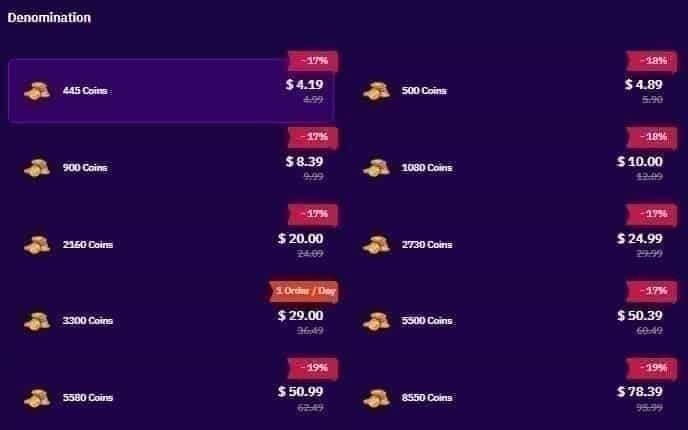
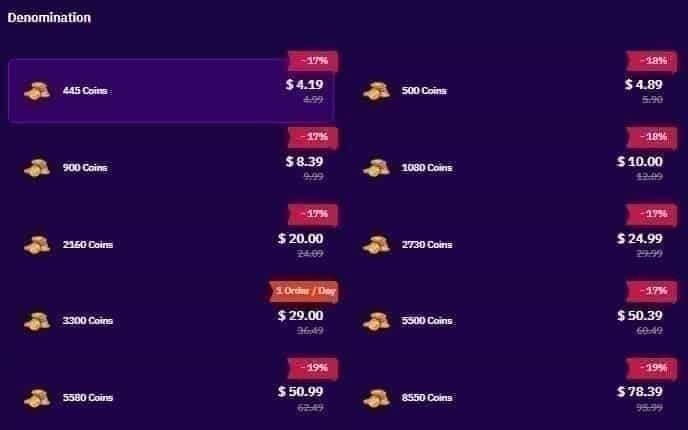
For efficient replenishment, BitTopup offers competitive rates with fast delivery. The platform's Poppo Live agency top up service provides secure transactions and excellent support.
Optimal Timing for Coin Purchases
Never purchase immediately after losing session. Implement mandatory 24-hour cooling-off period between losing sessions and purchases.
Optimal timing: before planned session when calm and strategic. Review recovery plan, confirm you're following guidelines, then purchase as session preparation. Treats buying as business decision rather than emotional reaction.
Consider scheduling regular purchases on specific days regardless of current balance. Example: purchase every Monday and Thursday as part of recovery plan. Removes emotion from decision, ensures adequate bankroll for consistent strategy implementation.
Avoid mid-session purchases unless you've hit win goal and want to start new session with fresh capital. Mid-session purchases almost always indicate violated stop-loss and chasing losses.
Maximizing BitTopup Bonus Offers
BitTopup regularly offers promotional bonuses and enhanced rates. Monitor promotions, time purchases to coincide with bonus periods. 10% bonus on 100,000 purchase provides 10,000 extra coins—equivalent to several hours grinding profit.
Larger purchases typically offer better per-coin rates. Need 100,000 total? Purchasing once at 100,000 costs less than five purchases at 20,000 each. Plan purchases for volume discounts while maintaining budget discipline.
However, never purchase more than recovery plan allocates simply because promotion offers good value. Plan calls for 50,000 this month? Don't purchase 200,000 just because there's 15% bonus. Excess coins create temptation to violate session budgets and stop-losses.
Create tracking sheet for purchases: date, amount, cost, bonuses received. Helps calculate true cost basis—essential for determining whether recovery strategy is actually profitable or breaking even.
Budget Allocation Between Gameplay and Purchases
Determine total monthly Ocean Hunt budget, divide into gameplay allocation and purchase allocation. Sustainable ratio: 70% for gameplay (coins you'll actually use), 30% for strategic purchases (coins you'll buy during promotions or to maintain minimum bankroll).
Monthly budget $50? Allocate $35 regular gameplay, $15 strategic purchases during promotions. Ensures adequate bankroll while taking advantage of value opportunities without overspending.
Track actual spending against budget weekly. Many lose track of cumulative purchases, spending far more than intended because each individual purchase seems small.
Consider coin purchases as business investments. Calculate ROI: net profit ÷ total purchase costs. Spent $100 on coins, generated $120 value through play? ROI = 20%. Negative ROI indicates strategy needs adjustment before additional purchases.
Integrating Daily Quests and Free Resources
Daily quests, login bonuses, event rewards provide free coins supplementing recovery without additional spending. Many ignore these resources—wastes thousands of coins monthly that could accelerate recovery.
Systematic collection provides 10-20% of total monthly coin income. Player using 200,000 monthly? That's 20,000-40,000 free coins—equivalent to several hours grinding profit.
Maximizing Daily Quest Coin Rewards
Poppo's daily quests typically offer 500-2,000 coins for simple tasks: logging in, watching streams, sending gifts. Complete every day without exception. Set phone reminder for same time daily to establish habit.
Prioritize quests offering coin rewards over other prizes. Limited time? Complete coin quests first, tackle others if time permits.
Some quests require minimal Ocean Hunt play. Quest requires play any game for 10 minutes? Use this as warm-up with low-stakes small fish grinding. Completes quest while implementing Foundation Phase—dual purposes efficiently.
Track monthly quest earnings separately from gameplay profits. Reveals true value of completion, motivates consistent engagement. Many are surprised discovering they earn 15,000-25,000 monthly from quests alone.
Free Spin and Bonus Event Timing
Poppo regularly offers free spin events and bonus coin opportunities during specific hours/days. These typically provide better expected value than normal play because house edge is reduced or eliminated. Prioritize participation.
Schedule Ocean Hunt sessions to coincide with bonus events when possible. Bonus events daily 8-10 PM? Plan primary session during this window. Enhanced returns during bonus periods can improve overall profitability 5-10%.
However, never violate session time limits just because bonus event is active. Already played your 30-minute session? Don't play another just because bonus event started. Maintain discipline—event returns tomorrow.
Free spins often offer better expected value than purchased play. Receive 10 free spins? Use strategically rather than burning through quickly. Apply same targeting and weapon selection principles you use during purchased play.
Building Recovery Buffer Without Spending
Combine daily quests, free spins, event bonuses to build free coin buffer supplementing purchased bankroll. Mentally separate free coins from purchased, using free coins for slightly more aggressive plays since they represent zero-cost capital.
This psychological separation allows calculated risks with free coins you wouldn't take with purchased coins. Example: attempt boss with 1,000-coin weapons using free coins, limit to 500-coin with purchased coins.
However, never treat free coins as worthless just because they didn't cost money. Free coins have identical gameplay value. Distinction is psychological—free coins allow slightly more aggressive play without emotional impact of losing purchased capital.
Set goal to cover 15-20% of monthly coin needs through free resources. Need 200,000 monthly? Aim to collect 30,000-40,000 through quests, events, bonuses. Reduces purchase requirements, improves overall ROI.
Performance Tracking and Continuous Improvement
Systematic tracking separates players who successfully recover from those stuck in loss cycles. Without data, you can't identify what works. You'll repeat mistakes indefinitely.
Professional players track every session meticulously, analyzing data weekly to identify patterns and optimize strategy.
Essential Metrics to Monitor Daily
Track every session: starting balance, ending balance, duration, primary weapons, target categories, largest win, largest loss, boss attempts.
Calculate profit/hour each session: net profit ÷ duration. Reveals which sessions were genuinely profitable versus those that felt successful but produced minimal returns.
Monitor capture rate by target category. Count successful captures versus total shots for small, medium, large fish separately. Declining rates indicate weapon inefficiency or targeting problems needing immediate correction.
Track emotional state at session start/end using 1-10 scale. Correlate with profitability. Most discover worst sessions occur when starting frustrated or continuing while tilted.
Creating Your Ocean Hunt Performance Log
Use simple spreadsheet: date, starting balance, ending balance, profit/loss, duration, profit/hour, primary weapons, target focus, boss attempts, notes. Update immediately after each session while details are fresh.
Notes column is critical for qualitative observations numbers don't capture. Record: felt rushed, made poor target choices or patient play, good weapon discipline. Reveals patterns pure numbers miss.
Review weekly, calculating: cumulative profit, average profit/session, average profit/hour, win rate (percentage of profitable sessions). Aggregate metrics reveal whether recovery strategy is working or needs adjustment.
Create visual charts of progress. Simple line graph showing cumulative profit over time provides powerful motivation. Seeing upward trend, even if gradual, reinforces strategy is working.
Identifying Profitable vs Unprofitable Sessions
Analyze most profitable sessions to identify common factors. Specific times of day? Particular target categories? Specific weapons? Identifying patterns allows replicating success systematically.
Similarly, analyze worst sessions for common failure factors. Many discover losses cluster around specific times (late night when tired), specific strategies (boss hunting), or specific emotional states (playing while frustrated).
Calculate profitability by weapon type. Divide total profit by total shots for each weapon category. Reveals which weapons actually generate profit versus those that feel effective but produce losses.
Determine optimal session length by correlating duration with profitability. Most find profit/hour peaks at 20-30 minutes, then declines as sessions extend. Provides objective evidence for implementing time-based stop-losses.
Adjusting Strategy Based on Data Trends
Review performance data monthly to identify trends requiring adjustment. Capture rate declined 10% over past month? Adjust weapon selection or target choices. Profit/hour decreased? Tighten discipline around bet sizing or session limits.
Compare actual results to recovery plan projections. Planned to recover 50,000 this month but only recovered 20,000? Analyze why. Violated stop-losses? Too many bosses? Played while emotionally compromised?
Implement one strategy change at a time, track results for at least 10 sessions before additional changes. Changing multiple variables simultaneously makes it impossible to identify which change produced which result.
Celebrate small wins and milestones. Complete first week of perfect stop-loss compliance? Acknowledge this. Reach first 10,000-coin recovery milestone? Recognize progress. Maintains motivation through extended recovery.
FAQ
Why do I keep losing money on Ocean Hunt?
Poor bankroll management, emotional betting after losses, inappropriately-powered weapons. Ocean Hunt has 4-8% house edge—you'll lose over time without disciplined strategy. Implement strict stop-losses, limit bets to 5% of session budget, focus on high-probability targets with efficient weapons.
What's the best betting strategy?
Conservative bankroll management (5% max bet rule), target-appropriate weapon selection, phased session structure. Start each session with small fish grinding using low-power weapons to build profit buffer, gradually progress to medium fish with medium-power weapons. Only attempt bosses after achieving 50%+ session profit, maintain strict stop-loss at 40-50% of starting balance.
How much bankroll do I need to recover losses?
At least 10-20 session budgets to survive variance. Plan 10,000-coin sessions? Maintain 100,000-200,000 total bankroll. Attempting recovery with insufficient bankroll leads to premature depletion during inevitable losing streaks. Never risk more than 5-10% of total bankroll in single session.
Which weapons have highest efficiency ratio?
Medium-power (100-200 coins/shot) offer best efficiency across categories, achieving 60-80% capture rates against medium fish while returning 130-180% of shot cost. Low-power (10-50 coins) excel for small fish grinding with 85-95% capture rates. High-power (500+ coins) should be reserved for bosses, representing no more than 10-15% of total shots during recovery.
How long should each session last?
Limit recovery sessions to 30 minutes maximum during first two weeks. Prevents decision-making deterioration from fatigue while providing frequent data points. After establishing consistent profitability, gradually extend to 45 minutes maximum. Never exceed 45 minutes during active recovery—extended play correlates with poor outcomes and emotional decisions.
When's the best time to buy coins?
During calm, strategic moments before planned sessions, never immediately after losses. Implement mandatory 24-hour cooling-off period between losing sessions and purchases. Time purchases to coincide with BitTopup promotional periods offering bonuses, schedule regular purchase days (like every Monday/Thursday) to remove emotion from buying decisions.
Ready to rebuild your balance with proven mathematical strategies? Visit BitTopup now for competitive Poppo coin packages with fast delivery and secure transactions!