Choosing between an Indonesian Rupiah (IDR) Steam Wallet voucher and direct checkout depends on whether you prioritize banking privacy or checkout convenience. Redeeming a digital voucher adds balance without exposing bank accounts or debit cards to Valve, though it requires manual key entry and strict currency matching. Direct in-client checkout charges your payment instrument directly without leaving unspent wallet remnants, and displayed store prices already include Indonesia's 11% Value Added Tax (PPN). Deciding between them comes down to whether you prefer isolating your financial details or paying the exact cart total in a single step.
Payment Mechanics and Banking Privacy
Direct payment charges the exact purchase total to your funding source through an external payment processor or linked card. That bypasses code entry entirely—a clear advantage if you buy standalone games or seasonal sales items frequently and do not want unspent balance sitting in your account.
Prepaid Steam Wallet Code (IDR) vouchers credit your balance before you shop, removing any requirement to link a local debit card, credit card, or international payment instrument (BitTopup). This completely isolates gaming purchases from your primary bank account. Once loaded, the balance spends across games, DLC, cosmetics, and the Steam Community Market.
Regional Locking and Currency Restrictions
Valve strictly enforces regional boundaries on retail wallet vouchers. Cross-border vouchers denominated in foreign currencies will fail if your store region is set to Indonesia.
Indonesian Account (IDR) + IDR Voucher   --> Success (Funds Credited)
Indonesian Account (IDR) + Other Voucher --> Error (Currency Mismatch)
Valve disabled automatic cross-border currency conversion on retail wallet vouchers to curb cross-region store arbitrage (BitTopup). An account set to Indonesia requires a voucher specifically issued for that market. If a player attempts to redeem a code denominated in alternative currencies like USD or SGD onto an Indonesian account, the client rejects the transaction outright.
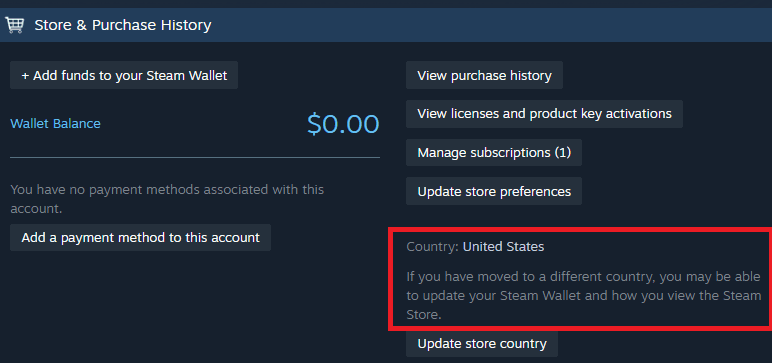
To confirm account eligibility before obtaining a voucher, open Steam, click your profile name in the top right corner, open "Account Details", and verify that the country displays as Indonesia (BitTopup).
Tax Treatment and Final Store Checkout
On the Indonesian Steam store, tax handling is integrated directly into catalog prices rather than calculated as a surprise surcharge at the final payment step.
Indonesia applies an 11% Value Added Tax (PPN) to digital services, a policy active since 2024 (MRCODA). Store prices displayed in the client already include this 11% PPN. Because taxes are incorporated into the listed price, paying with your wallet balance deducts the exact number shown on the store page.
Direct payment processors also process this tax-inclusive total. However, certain banking providers or intermediaries apply separate transaction processing fees or administrative service charges on their end. A wallet voucher guarantees that once balance is loaded, no extra payment processing charges occur at the moment of game purchase.
Cooldowns, Lockouts, and Error Handling
Payment failures interrupt checkouts differently depending on whether you hit a bank gateway decline or Valve's automated anti-fraud lock.
Direct payments can fail due to bank declines, session timeouts, or gateway rejections. In those cases, the transaction simply halts, leaving the cart intact for another attempt.
Voucher redemption involves code-entry security checks. Valve monitors invalid activation attempts to prevent brute-force cracking. Entering mistyped or invalid keys repeatedly triggers a safety lock on the Steam account, preventing further redemption attempts for 30 to 60 minutes (BitTopup).
Storefronts also present conflicting claims regarding voucher lifespans. Distributor documentation from BitTopup indicates that digital wallet codes do not expire before redemption. Conversely, platform claims on Lotkeys assert that codes remain valid for only one year from purchase. Given these conflicting statements, redeeming any digital voucher promptly after receipt avoids administrative disputes.
Choosing Between Vouchers and Direct Checkout
The practical trade-offs between vouchers and direct billing center on banking exposure, secondary processing fees, and whether you want unspent funds remaining in your wallet.
| Evaluation Factor | Digital Steam Wallet Code | Direct In-Client Payment |
|---|
| Banking Security | High; no card details or banking data shared with Steam | Moderate; requires entering card or processor details |
| Store Pricing Taxes | Deducted against balance containing 11% PPN (MRCODA) | Listed prices include 11% PPN (MRCODA) |
| Currency Flexibility | Strict lock; requires exact currency match (BitTopup) | Tied directly to supported local payment methods |
| Cart Remnants | Often leaves small unspent balance increments | Exact billing; charges only the required amount |
| Failure Risk | 30 to 60-minute lockout on repeated entry errors (BitTopup) | Bank gateway decline or timeout |
Wallet vouchers suit users who lack a supported local payment card, wish to enforce strict personal spending limits, or prefer keeping gaming purchases detached from their bank statements. Direct checkout suits buyers who purchase infrequently and prefer paying the exact item total without managing leftover wallet balances.