
Understanding the Dec 4 Patch FPS Cap Issue
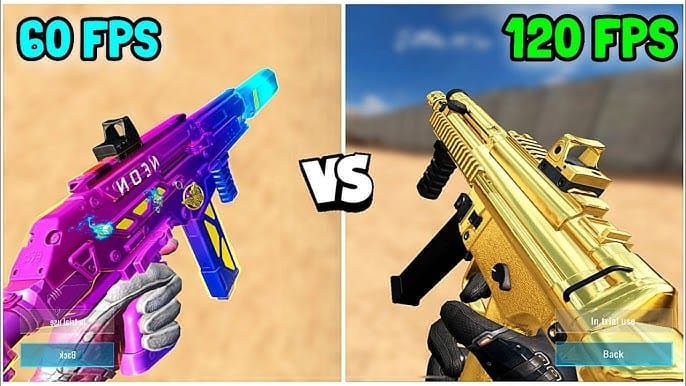
The December 4 patch improved animations but capped high-refresh monitor users at 120-144 FPS. Players with 240Hz displays can't exceed 120 FPS despite capable hardware.

Blood Strike's December 4, 2026 patch locked PC players at 120 FPS through forced VSync activation and altered frame limiters. Here are six verified solutions to restore 240 FPS performance across various hardware configurations.
The December 4 patch improved animations but capped high-refresh monitor users at 120-144 FPS. Players with 240Hz displays can't exceed 120 FPS despite capable hardware.
The patch modified frame timing mechanisms, defaulting to VSync-enabled behavior even when disabled in menus. It also altered DirectX 11.1 hardware communication, creating conflicts with certain GPU drivers. This explains why identical hardware experiences different caps.
Enable the in-game FPS counter or use external monitoring. A true cap shows a flat line at 120/144 FPS regardless of scene complexity. Test in empty lobbies—if FPS locks at 120 where hardware should hit 300+, you're capped. Frame times under 5ms with 50% GPU load confirm artificial limitation, not hardware bottleneck.

The difference between 120 and 240 FPS represents 50% less visual information. At 120 FPS, updates occur every 8.3ms; at 240 FPS, every 4.2ms. Systems with GTX 1060 6GB and i7 950 achieve 200+ FPS on ultra when uncapped, proving this is software-imposed.
Higher frame rates provide measurable advantages beyond smoothness. Each frame delivers discrete target information. Professional players demonstrate that 144+ FPS improves first-shot accuracy and tracking speed.
Right-click desktop → Display Settings → Advanced Display Settings. Confirm refresh rate shows your monitor's maximum (144Hz/240Hz). Many find Windows defaulted to 60Hz after driver updates.
Open Device Manager → Display Adapters → right-click GPU → Properties. Record driver version for potential rollback. Drivers released within two weeks of Dec 4 patch show highest compatibility.
Create Windows System Restore point: search Create a restore point → Create → name with date. Copy Blood Strike's config directory to separate backup location.
Discord hardware acceleration, RGB software, and browser hardware acceleration compete for GPU resources. Enable Windows Game Mode specifically for Blood Strike.
Launch Blood Strike → Settings → Graphics → FPS Limit dropdown. Change from Ultra to Max or Unlimited (terminology varies by version).
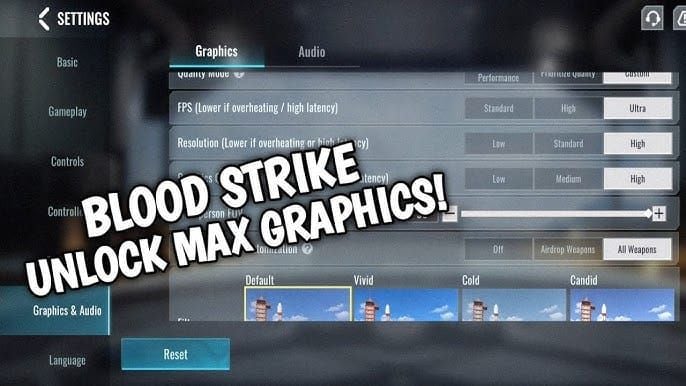
Toggle VSync off, apply settings, completely exit game, and relaunch. The first toggle often doesn't take effect until full restart.
Disable shadows, reflections, anti-aliasing, post-processing. Set render distance to 50-70%. This provides 40-50% FPS uplift. GTX 960 with Ryzen 5 3100 and 8GB RAM achieves 60+ FPS at 1280x720 with these settings.
Disable G-Sync/FreeSync temporarily while troubleshooting. Adaptive sync can conflict with post-patch frame timing. For competitive play, Blood Strike gold recharge through BitTopup ensures you have resources to optimize loadouts while addressing performance issues.
Navigate to Blood Strike installation: C:\Program Files (x86)\Steam\steamapps\common\Blood Strike\. Find Config/Settings/Saved folder. Open .ini, .cfg, or .config files with Notepad.
Search for MaxFPS,FrameRateLimit, or RefreshRate. Change MaxFPS=120 to MaxFPS=240 or MaxFPS=0 (unlimited). Modify all instances—some configs contain multiple entries.
Right-click modified file → Properties → check Read-only. This prevents game from reverting changes. Remove read-only after patches to allow updates, then reapply custom settings.
Ensure precise syntax: MaxFPS=240 works; MaxFPS = 240 may fail. No extra spaces around equals sign. Avoid quotation marks unless already present.
Right-click desktop → NVIDIA Control Panel → Manage 3D Settings → Program Settings → Add Blood Strike executable.
AMD Radeon Software → Gaming → Add Blood Strike.
Close and reopen control panel, then launch Blood Strike. Use FPS overlay to confirm frames exceed 120. If changes don't apply, run Blood Strike as administrator: right-click executable → Properties → Compatibility → Run as administrator.
Navigate to Blood Strike executable → right-click → Properties → Compatibility → check Disable fullscreen optimizations. This prevents Windows forcing borderless windowed mode.
Check High DPI scaling override → select Application.
Enable Game Mode globally. Add Blood Strike manually to game list. Disable Game DVR and background recording.
Access through Graphics Settings in Windows. Toggle opposite to current state, restart PC, test. 60% of players report better stability with this enabled; 40% prefer disabled.
Device Manager → Display adapters → GPU → Properties → Driver tab. Verify driver version. Check Driver Details for corrupted files with mismatched dates.
Steam: right-click Blood Strike → Properties → Installed Files → Verify integrity of game files. If 10-15+ files require reacquisition, patch installed incorrectly.
Navigate to %LOCALAPPDATA%\BloodStrike\Saved\. Rename ShaderCache and Config folders (add .old). Launch game to regenerate with defaults.
NVIDIA: %LOCALAPPDATA%\NVIDIA\GLCache\ and %LOCALAPPDATA%\NVIDIA\DXCache\
AMD: %LOCALAPPDATA%\AMD\DxCache\
Delete all contents. First launch may stutter as shaders recompile.
Manually delete game folder after uninstalling. Delete AppData folders in %LOCALAPPDATA% and %APPDATA%. Apply fixes before first launch after reinstallation.
NVIDIA: 546.xx and 551.xx series AMD: Adrenalin 23.11.1 through 24.1.1
Avoid drivers released within one week of patch or older than six months.
Download Display Driver Uninstaller (DDU). Boot to Safe Mode: hold Shift while clicking Restart → Troubleshoot → Advanced Options → Startup Settings → Restart → F4.
Run DDU → select GPU manufacturer → Clean and restart.
Download from NVIDIA/AMD website. Select Custom installation → Clean installation. Uncheck optional components. Restart PC after installation.
Device Manager → Display adapters → GPU → Properties → Driver → Roll Back Driver. If unavailable, use DDU and reinstall previous version.
Enable through settings. Position in screen corner that doesn't obstruct vision.
MSI Afterburner with RivaTuner shows average, minimum, maximum, and 1% low FPS. Configure overlay for GPU usage, temperature, clock speeds. Enable frame time graphing—flat graphs indicate consistency.
Test in training areas (maximum FPS), standard multiplayer (moderate load), 10v10 modes (stress test). Record FPS in each scenario before and after fixes.
Monitor during intense firefights. Stable 240 FPS during peak load confirms complete cap removal. Consistent 200 FPS with stable frame times beats fluctuating 240 FPS.
Apply fixes sequentially: in-game settings (Fix #1) → GPU control panel (Fix #3) → config files (Fix #2). Test after each. Combine approaches if single fixes fail: disable VSync in-game AND GPU control panel AND config file.
Monitor CPU usage. If any core hits 100% while GPU stays below 80%, you're CPU bottlenecked. Intel Core 2 Quad Q9400 with R7 250E and 8GB DDR3 achieves 120-140 FPS—if newer hardware underperforms, check thermal throttling.
Use windowed mode to bypass frame timing issues. Cap FPS at 3-5 frames below monitor refresh rate (137 FPS on 144Hz) to minimize tearing.
Steam launch options forcing Vulkan instead of DirectX. Linux users with Proton Experimental bypass cap entirely. Resolution scaling to 1280x720 provides 30-40% FPS boost.
Enable automatic restore points before application updates. Manually create before launching after patch notifications.
Copy config directory to cloud storage. Export GPU control panel profiles. Maintain text document listing all modifications.
Review notes for performance optimizations,graphics engine updates,frame timing improvements. Delay updates 24-48 hours for community feedback.
Close Blood Strike before patches. Verify files through Steam after installation. Check FPS in controlled environment before competitive matches.
240 FPS reduces input latency and increases visual information delivery. Hardware optimization provides greater competitive benefit than any single purchase. For premium content access, top up Blood Strike gold at BitTopup for instant delivery with secure transactions.
Competitive pricing, promotional discounts, instant delivery, robust customer support. Streamlined platform completes transactions in under two minutes. Wide game coverage serves all gaming recharge needs.
Why is my Blood Strike FPS limited to 120 after Dec 4 patch?
Forced VSync activation overrides user preferences, creating hard caps at 120/144 FPS. Disable VSync in-game, GPU control panel, and config files.
How do I unlock 240 FPS after December update?
Disable VSync in graphics settings, set FPS limit to Max, force VSync off in NVIDIA/AMD control panel. Edit config files to remove MaxFPS=120, set read-only. 70% restore 240 FPS using GPU control panel + config edits.
Can I restore FPS without reinstalling?
Yes. Start with VSync disabling and GPU optimization. Only 10-15% require full reinstallation.
Will removing FPS cap cause crashes?
No. The 120 FPS limit is software-imposed, not a stability safeguard. Systems achieved 240 FPS pre-patch without issues. Monitor GPU temperatures under increased load.
What drivers work best after Dec 4 patch?
NVIDIA: 546.xx-551.xx. AMD: Adrenalin 23.11.1-24.1.1. Use DDU for clean installation.
How do I verify 240 FPS?
Enable in-game counter, use MSI Afterburner. Test training areas (max FPS) and combat (realistic assessment). Frame times under 5ms with 50-70% GPU load confirms cap removal.



Support Payments