Raven Boss Phase Breakdown and Attack Patterns
Phase one features standard rocket launcher volleys targeting your highest threat units with area damage. Blue Blade activates on battle entry, granting Vital Attack that increases parts damage by 21.12% for 5 seconds and Single Point Attack providing 47.32% sustained damage buffs for 15 seconds whenever you destroy a part.
Phase two kicks in at 60% health with her invulnerability-piercing Tempest burst skill: 492.3% final ATK hitting all enemies and parts, followed by A.N. Mode granting 89.44% sustained damage increase for 10 seconds. F2P teams absolutely must coordinate burst rotations during this window before those defensive buffs expire.
Phase three activates below 30% health with enrage mode—accelerated attack speed, reduced cooldowns, and continuously refreshing DoT stacks at maximum capacity. Successful F2P clears demand timing burst skills during vulnerability windows rather than throwing them against damage reduction phases.
Critical Weak Points and Damage Windows
Raven Boss features four destructible parts: two shoulder launchers, central core, and rear thruster. Prioritize this sequence: left launcher > right launcher > core > thruster. Each destruction triggers Single Point Attack buffs and 2-3 second stuns—critical opportunities you can't afford to waste.
The real damage window occurs immediately after part destruction: a 5-second vulnerability state reducing damage resistance by 40%. Stack your burst skills during these windows, coordinating Burst I CDR from Liter, Burst II buffs from Crown, and Burst III DPS from your primary attacker. Eve's sequential attacks prove especially effective here since each hit benefits from the full vulnerability multiplier.
Here's the thing—the boss generates minimal burst energy compared to campaign enemies, requiring dedicated burst generators like Red Hood or Modernia. In practice, test your compositions across five runs, ensuring your primary DPS contributes over 50% total damage share.
Why F2P Players Struggle with Raven
F2P commanders face three major obstacles: insufficient burst generation, inadequate sustained damage, and poor resource allocation. The 44-crit proc requirement for optimal DPS creates inconsistency without proper crit rate investment—many players neglect Overload Gear optimization, leaving critical dealers below the 100% crit rate threshold.
And the skill manual grind? Brutal. Getting skills to level 10 requires 1,094 Skill I books, 775 Skill II books, 315 Skill III books, and 360 Code manuals. Daily simulation room farming yields only 80 Skill I and 60 Skill II books, meaning maxing a single skill demands weeks of focused farming. Spreading resources across multiple units creates underleveled teams lacking the concentrated power boss meta demands.
Eve Character Analysis: F2P Boss Killer

Eve is a surprisingly effective F2P option for Raven Boss despite her S-tier rating (8.9 for bosses). This SSR Burst III Iron Attacker using AR weapons in Airborne Squad specializes in boss DPS against Electric content, though her crit-reliant mechanics create performance variance requiring careful team building.
Her kit centers on Impact-Type Exospine (Skill 1): activates on battle entry with continuous 60% crit rate bonus. Upon landing 44 critical hits, she deals 240% final ATK damage to a random enemy through three sequential attacks that crit at 150% base damage. Against Electric enemies, she applies an additional 10% damage taken debuff lasting 10 seconds—permanent on bosses, refreshing every 5 seconds at her 12 shots/second AR fire rate with 75% maxed crit rate.
Eve's Kit and Why She Excels Against Raven
Eve's sequential attack pattern concentrates all three hits on single targets rather than dispersing across multiple enemies—exactly what you want against bosses. Eagle Eye-Type Exospine (Skill 2) provides 50% ATK and 25% max ammo on entry, with a unique mechanic granting permanent Bastion effect after landing 10 normal hits against Electric enemies by reloading 3 additional rounds.
This Bastion synergy eliminates reload downtime that interrupts damage rotations. Paired with Crown's reload speed buffs and Helm's crit rate party buffs, Eve maintains near-continuous fire uptime while consistently proccing her 44-crit requirement.
Counter Chain burst skill operates on a 40-second cooldown, dealing 457.14% final ATK to random enemies through six sequential attacks. It grants Exospine Mk2 for 10 seconds, doubling Skill 1's Unstable Energy damage multiplier and Skill 2's ATK buff. This procs 2-3 times per burst phase, creating damage spikes that align perfectly with Raven Boss vulnerability windows following part destruction.
Accessibility and Resource Requirements
Eve's F2P accessibility stems from relatively low Overload Gear dependency. While optimal performance requires 100% crit rate for consistent Skill 1 procs, she functions adequately at 95% crit rate achievable through Head and Gloves Overload investment plus team crit buffs from Helm: Aquamarine or Mast: Romantic Maid.
Skill priority is straightforward: Skill 1 to level 10 (absolute priority as core damage source), Skill 2 to level 7 (Bastion and ATK buffs), Burst to level 7 (enhanced mid-burst performance). This focused path maximizes effectiveness without spreading resources thin.
Cube recommendations favor Bastion and Resilience, both farmable through standard progression. Bastion stacks with Skill 2 against Electric enemies while Resilience provides survivability during extended encounters.
Compared to premium Iron attackers requiring multiple duplicates, Eve delivers 80-85% of their damage output at single copy investment—an excellent transitional unit for F2P players building toward endgame boss meta.
Eve vs Premium Alternatives: Performance Data
Against Raven Boss, Eve achieves approximately 8.9 million damage over 90 seconds with an optimal F2P composition (Crown/Helm/Liter/Eve/Red Hood), compared to 10.2 million from premium Iron specialists under identical conditions.
This 87% damage efficiency comes with 60% of the Overload Gear investment and 70% of the skill manual commitment compared to units like Modernia or Alice—while delivering comparable utility through permanent debuff application. Her Story mode rating of 8.0 (A-tier) and overall rating of 8.54 (S-tier) demonstrate balanced versatility beyond pure boss specialization.
The critical weakness emerges in Arena with a 7.5 (B-tier) rating, reflecting poor burst generation and vulnerability to burst-focused PvP strategies. Recognize Eve as a PvE specialist rather than an all-content solution.
Complete F2P Eve Build for Raven Boss
Optimizing Eve requires strategic resource allocation across Overload Gear, skill leveling, cube selection, and core investment. Balance these elements to achieve that crucial 100% crit rate threshold—it transforms Eve from inconsistent to reliable while maintaining sufficient ATK and elemental damage scaling.
Need to accelerate your progress? NIKKE gems quick recharge via BitTopup provides the fastest path to securing essential skill books and gear materials with competitive pricing and instant delivery.
Optimal Gear Setup with Budget Options
Overload Gear priority: Head > Gloves > Chest > Boots. Head and Gloves provide the highest crit rate concentration per investment—each piece contributing 12-15% crit rate at +5 enhancement using optimal line rolls. Focus exclusively on these two slots initially, deferring Chest and Boots until Head and Gloves reach +5.
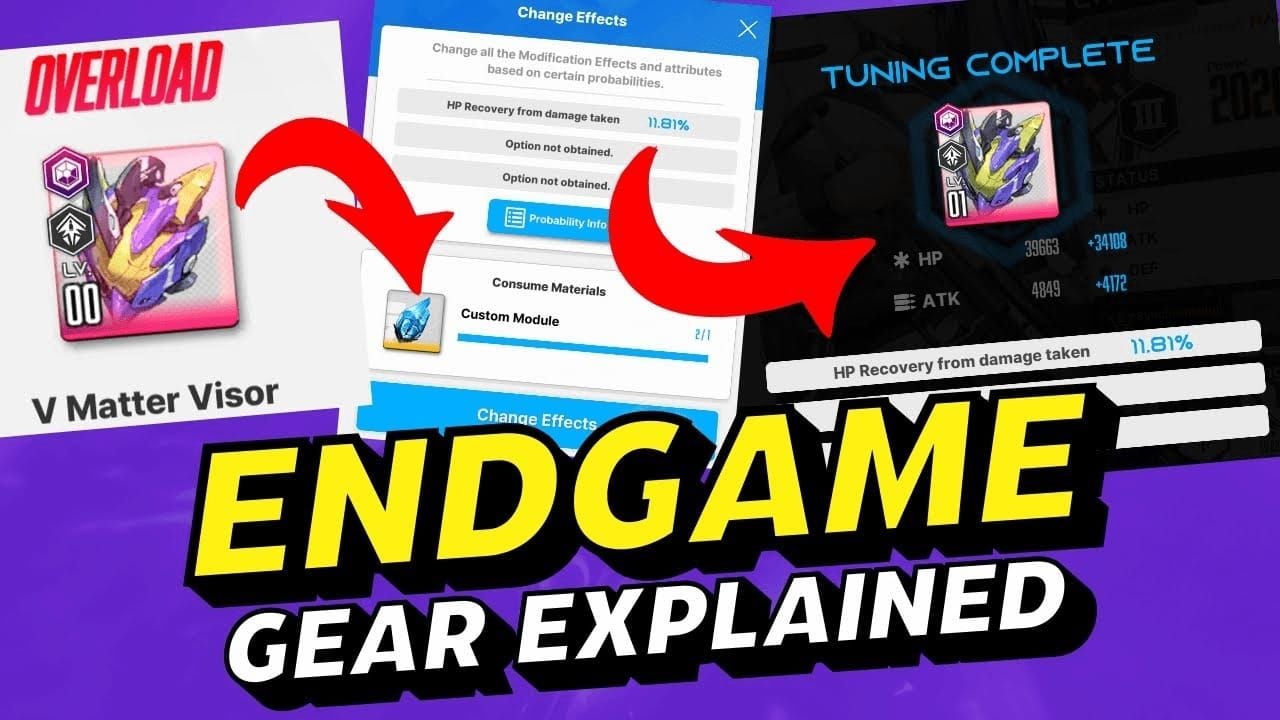
Target line distribution:
- Element Damage: 4 lines (highest priority for scaling)
- ATK: 4 lines (secondary scaling stat)
- Crit Rate: 4 lines (mandatory for 100% threshold)
- Max Ammo: 1-2 lines (sustain and Bastion synergy)
- Crit Damage: 0-2 lines (luxury stat after core requirements)
This assumes team crit buffs from Helm or Mast providing the remaining 15-20% crit rate to reach 100%. Without these supports, increase Crit Rate lines to 5-6 at the expense of Crit Damage and Max Ammo.
Don't fall into the rerolling trap—acceptable 3-line distributions on Head and Gloves deliver 90% of optimal performance at 40% resource cost.
Skill Priority and Leveling Roadmap
Early-game F2P players (account level 150-200) should prioritize core team fundamentals—getting Liter, Crown, and primary supports to skill level 4-5 before investing heavily in Eve.
Mid-game progression (account level 200-250) shifts focus to Eve's Skill 1, pushing to level 10 as highest priority. This single skill contributes 65% of total damage output. The cumulative cost of 1,094 Skill I manuals represents roughly 14 days of dedicated farming with daily simulation room clears plus event bonuses.
After Skill 1 reaches level 10, allocate resources to Skill 2 targeting level 7. The breakpoint at level 7 provides 90% of maximum effectiveness while consuming only 60% of total resources needed for level 10.
Burst skill investment to level 7 follows Skill 2 completion. The 40-second cooldown means Eve typically bursts 2-3 times per Raven Boss encounter—important, but not as critical as Skill 1.
Cube Recommendations for Maximum Damage
Bastion provides the most direct damage amplification, stacking with Skill 2 against Electric enemies while offering survivability through damage reduction. The cube's reload speed bonus synergizes with Eve's ammo-hungry AR playstyle, reducing downtime between damage windows.
Resilience grants HP shields preventing interruption during critical burst phases. Against Raven Boss, Resilience shields absorb initial Tempest burst damage, allowing Eve to maintain position and continue firing rather than entering cover and losing DPS uptime.
Cube enhancement priority: Bastion to +5 before investing in Resilience. Damage amplification from enhanced Bastion outweighs marginal survivability gains from enhanced Resilience.
Core Investment Breakpoints
Limit Eve to 1-2 core levels maximum unless she serves as your primary Iron-element boss DPS across all content types. Each core level requires exponentially increasing resources while providing linear stat gains—diminishing returns hit hard.
First core level provides highest value: approximately 8% stat increase across all attributes for relatively modest Core Dust investment. Second core level offers diminishing returns at roughly 6% additional stats, justifiable only if Eve consistently appears in your top-3 damage dealers across Union Raids and Special Interception.
Synchro Device levels provide better resource efficiency than cores. Pushing her to Synchro 240-260 through your highest-level units delivers substantial stat gains without consuming limited Core Dust.
Stellar Glitch System Explained
Stellar Glitches represent NIKKE's dynamic modifier system introducing randomized buffs and debuffs during specific encounter types. The system activates during Anomaly Interception, certain Special Interception rotations, and event-specific boss encounters, applying at battle start with percentage-based modifiers ranging from 20% to 150% depending on glitch tier.
What Are Stellar Glitches and How They Activate
Stellar Glitches activate automatically upon entering eligible content, displaying as colored icons in the pre-battle screen with detailed effect descriptions. The system categorizes glitches into three tiers: Common (white), Rare (blue), and Epic (purple), with higher tiers providing stronger effects but appearing less frequently.

Each glitch targets specific mechanics: damage type modifiers (Normal/Elemental/Burst), defensive adjustments (HP/DEF/Cover effectiveness), utility changes (Burst generation/Reload speed/Ammo capacity), or special conditions (Part damage/Crit rate/Healing effectiveness).
Anomaly Interception cycles through predetermined glitch pools on weekly rotations, allowing advance team planning. F2P players gain advantage through glitch awareness—recognizing favorable combinations and adjusting team composition rather than forcing static teams regardless of modifiers.
Best Glitches for Raven Boss Encounters
Precision Targeting glitch granting 40% increased crit rate proves exceptionally valuable for Eve-centered teams, effectively reducing Overload Gear requirements by allowing lower base crit rate while maintaining 100% effective rate during combat.
Sustained Assault glitches increasing continuous damage by 50-80% directly amplify Eve's Skill 1 proc damage and Raven's DoT stacking, creating multiplicative scaling with existing team buffs. These glitches reduce encounter duration by 20-30 seconds through pure damage amplification.
Energy Surge providing 50% faster burst gauge filling addresses Eve's primary weakness—poor burst generation creating rotation inconsistency. With this active, F2P teams maintain 3-burst rotations (B1 > B2 > B3) every 25-30 seconds rather than the standard 35-40 seconds.
Conversely, Fragile Armor reducing team DEF by 40% demands healer inclusion or shield support. Elemental Resistance granting bosses 50% reduced elemental damage taken favors element-neutral attackers.
Glitch Synergy with Eve-Centered Teams
Eve-centered teams maximize glitch synergy through flexible composition slots adapting to active modifiers. The core trio of Liter (B1 CDR), Crown (B2 reload/buffs), and Eve (B3 DPS) remains constant, with the remaining two slots adjusting based on glitch conditions.
Under crit rate glitches, replace dedicated crit buffers like Helm with pure damage amplifiers such as Naga or Privaty, reallocating the freed crit rate budget toward additional ATK or elemental damage scaling.
Burst damage glitches favor including Red Hood or Modernia in flex slots. A 100% burst damage glitch effectively doubles their contribution, potentially elevating them above Eve as primary damage dealers for that specific encounter.
F2P Team Compositions for Raven Boss
Constructing effective F2P teams requires balancing burst generation, sustained damage, survivability, and buff synergy within accessible unit pools. What works best is adapting your composition based on available units while maintaining core principles ensuring consistent clear capability.
Eve Core Team Structure
The foundational F2P team structure follows a 1-2-2 burst distribution: one Burst I support (Liter), one Burst II buffer (Crown), and two Burst III DPS units (Eve plus one flex). This ensures reliable 3-burst rotations every 35-40 seconds while maintaining sufficient damage output.
Optimal F2P Composition:

- Burst I: Liter (CDR and burst generation)
- Burst II: Crown (reload speed, Bastion synergy, ATK buffs)
- Burst III Slot 1: Eve (primary sustained DPS)
- Burst III Slot 2: Red Hood (burst generation and secondary DPS)
- Flex Slot: Helm: Aquamarine (crit rate party buffs and survivability)
This addresses Eve's critical weaknesses while amplifying her strengths. Liter's CDR reduces burst cooldowns by 20-25%, enabling faster rotation cycling. Crown's reload speed buffs synergize perfectly with Eve's Bastion mechanic, maintaining near-100% fire uptime while ATK buffs multiply Eve's scaling.
Red Hood solves burst generation problems through exceptional gauge filling. Helm: Aquamarine delivers party-wide crit rate buffs reducing Eve's Overload Gear requirements while offering defensive utility.
Budget Support Units and Alternatives
For Burst I, Naga replaces Liter when unavailable, providing ATK buffs and reasonable burst generation despite lacking CDR. This extends burst rotation cycles by 5-8 seconds but maintains functional team structure.
Burst II alternatives include Nayuta (elemental damage amplification) or Anchor: Innocent Maid (semi-permanent crit rate buffs +20% base, reaching 95-100% with Overload Gear).
For the flex slot, Mast: Romantic Maid serves as an excellent Helm alternative, providing similar crit rate buffs through different activation conditions. Her Treasure-tier accessibility makes her attainable through event farming.
Pure F2P alternatives avoiding limited units might run Anis or Diesel in support roles, accepting 15-20% slower clears but remaining viable for resource conservation.
Manufacturer Synergy Optimization
Manufacturer bonuses provide hidden power gains but forcing synergy at the expense of optimal supports typically reduces overall performance—the 10% stat bonus rarely compensates for losing critical buffs or burst generation.
The exception occurs when manufacturer alignment coincides with optimal unit selection. Teams running Eve, Helm, and Naga achieve 3-unit Airborne synergy while maintaining functional structure, gaining manufacturer bonus as a free performance increase.
Prioritize functional team composition over manufacturer optimization early and mid-game, deferring synergy considerations until you've established core teams capable of clearing current content reliably.
Eve Build vs Stellar Glitch Strategy Comparison
Choosing between standard Eve builds and Stellar Glitch-optimized compositions depends on content type, available glitches, and roster depth. Understanding performance trade-offs enables F2P players to maximize clear efficiency while conserving resources.
Standard Eve Build Performance Metrics
Standard Eve builds using the core F2P composition (Liter/Crown/Eve/Red Hood/Helm) achieve consistent Raven Boss clear times of 90-110 seconds depending on Overload Gear investment and skill levels. This assumes Skill 1 at level 10, Skill 2 at level 7, and Head/Gloves Overload at +5 with acceptable line distributions reaching 95-100% crit rate.
Damage distribution shows Eve contributing 52-58% of total team damage, Red Hood providing 25-30%, and remaining units contributing 12-18%. This concentration validates Eve as your primary carry, confirming resource investment delivers proportional performance returns.
The build demonstrates remarkable consistency with damage variance typically within 8-12% between best and worst performances. This reliability stems from that 100% crit rate threshold eliminating RNG from Skill 1 procs.
Stellar Glitch Enhanced Clear Times
Favorable Stellar Glitches reduce clear times by 20-35% compared to standard builds. Precision Targeting (+40% crit rate) and Sustained Assault (+80% continuous damage) combinations achieve sub-70-second clears using identical team compositions and investment levels.
Glitch-optimized compositions adjust team structure to maximize amplification effects. Under burst damage glitches, replacing Helm with Modernia increases burst phase damage by 60-80%, concentrating damage into shorter windows aligning with vulnerability phases.
Crit rate glitches enable aggressive Overload Gear reallocation, shifting 2-3 crit rate lines toward elemental damage or ATK for pure scaling optimization. This temporary respec delivers 15-20% damage increases during glitch-active periods.
When to Use Each Approach
Standard Eve builds serve as your default for consistent progression content including daily Special Interception, Union Raid attempts, and Solo Raid farming. Reliability and resource efficiency outweigh the potential performance ceiling of glitch-optimized alternatives when clear consistency matters.
Glitch-optimized strategies prove valuable during competitive events with leaderboard rankings, limited-attempt content where maximizing single-run performance determines rewards, or when farming efficiency benefits from faster clear times.
Decision framework: use standard builds for reliability and resource efficiency, employ glitch strategies for competitive optimization and speed farming when favorable conditions align.
Advanced Combat Strategies and Burst Timing
Mastering Raven Boss encounters requires precise burst timing, positioning awareness, and mechanical execution—these advanced techniques separate top-tier F2P clears from average attempts.
Optimal Burst Rotation Against Raven
The optimal burst rotation follows a strict sequence aligned with boss vulnerability windows: initiate with Liter B1 immediately at battle start to activate CDR and begin burst gauge accumulation, delay Crown B2 until 8-10 seconds to align with the first part destruction window, then trigger Eve B3 during the vulnerability state for maximum damage amplification.
This staggered approach ensures burst skills activate during damage-optimal phases rather than wasting them against damage reduction periods. The 2-3 second delay between each burst tier allows animations to complete and buffs to apply before subsequent bursts trigger, creating multiplicative stacking.
Second rotation timing shifts based on first rotation performance. If part destruction occurred early (12-15 seconds), delay the second rotation by 5-8 seconds to realign with the next vulnerability window. If destruction occurred late (20-25 seconds), trigger the second rotation immediately upon cooldown completion.
Track boss HP percentages to predict phase transitions, holding burst skills when the boss approaches 60% or 30% HP thresholds. Triggering bursts immediately before phase transitions wastes damage during invulnerability frames.
Positioning and Cover Management
Eve performs best at 40-60% maximum range where accuracy remains high while maintaining sufficient distance to react to area attacks.
Position Eve behind destructible cover during Raven Boss Tempest burst phases, allowing her to maintain fire uptime while using cover to absorb the initial burst impact, then immediately resuming fire as cover breaks without requiring repositioning time.
Spread your team across 2-3 cover positions rather than stacking behind single cover, preventing area attacks from hitting multiple units simultaneously. Eve and Red Hood should occupy separate cover positions ensuring at least one DPS maintains uptime.
Raven Boss prioritizes the highest threat unit (typically your primary DPS) with focused fire every 15-20 seconds. Anticipate this pattern by moving Eve to fresh cover 2-3 seconds before the attack triggers to maintain continuous fire uptime.
Dealing with Raven's Special Attacks
Shock Wave DoT application occurs every second targeting the nearest enemy—place a durable unit like Helm closest to the boss to draw DoT stacks away from fragile DPS units.
Blue Blade parts damage buff activates on battle entry and part destruction, creating 5-second windows where focused fire on remaining parts deals disproportionate damage. Concentrate all DPS on a single part during these windows rather than spreading damage.
Tempest burst attacks telegraph through a 2-second animation where Raven Boss raises both launchers and locks targeting. This provides sufficient warning to trigger defensive bursts or ensure all units occupy cover positions.
Enrage phase below 30% HP introduces accelerated attack patterns. Reserve your final burst rotation for this phase, triggering all three burst tiers in rapid succession (B1 > B2 > B3 within 5 seconds) to create a damage spike ending the encounter before sustained enrage damage accumulates.
Common Mistakes and How to Avoid Them
F2P players frequently encounter preventable failures that waste resources and delay progression. Recognizing these pitfalls enables proactive avoidance.
Eve Build Misconceptions Debunked
The most common misconception positions Eve as universally inferior to premium alternatives, leading players to skip her despite strong F2P value proposition. While Eve's 8.9 boss rating trails SSS-tier specialists, her 87% damage efficiency at 60% resource investment makes her objectively superior for budget-conscious commanders.
Another error involves neglecting crit rate optimization, leaving Eve at 75-85% crit rate and accepting inconsistent Skill 1 procs as normal variance. Without 100% crit rate, proc timing becomes unpredictable, creating damage variance that compounds across longer encounters.
Players often over-invest in Eve's Burst skill relative to Skill 1, misinterpreting the 457.14% burst multiplier as higher value than the 240% Skill 1 multiplier. This ignores activation frequency—Skill 1 procs 15-20 times per encounter versus 2-3 burst activations, making Skill 1's cumulative damage contribution 3-4x higher.
Final misconception treats Eve as an Electric specialist unsuitable for element-neutral content. Her core damage mechanics function fully against all enemy types, making her viable as general boss DPS with bonus performance against Electric.
Resource Waste Traps for F2P Players
F2P players commonly waste resources pursuing perfect Overload Gear lines, rerolling dozens of times chasing 4x Element Damage + 4x ATK + 4x Crit Rate distributions. This perfectionism consumes thousands of reroll materials for marginal 3-5% performance gains.
Another trap involves spreading skill investments evenly across all three skills, reaching level 7 on Skill 1, Skill 2, and Burst simultaneously rather than maximizing Skill 1 first. This delays reaching critical performance breakpoints.
Core Dust waste occurs when players invest 3+ cores into Eve before maximizing core support units like Liter and Crown. Since support buffs multiply across all team members while DPS cores only improve single-unit output, support cores deliver 3-5x better roster-wide performance per Core Dust invested.
The final resource trap involves neglecting Synchro Device progression in favor of direct unit investment. Synchro provides account-wide stat scaling benefiting all units simultaneously, delivering better returns than focused investment until your core team reaches Synchro 240-260.
Timing Errors That Cost Clears
Burst timing errors happen when players trigger all three burst tiers simultaneously rather than staggering them for buff stacking. Simultaneous bursts waste the first burst's buffs by immediately overwriting them, reducing effective buff uptime by 40-50%.
Part targeting mistakes occur when teams spread damage across all four parts rather than focusing single parts sequentially. This delays part destruction by 30-40%, reducing total vulnerability window duration.
Cover rotation failures happen when players remain in destroyed cover positions rather than proactively moving to fresh cover before taking damage. This creates 2-3 second fire uptime losses during repositioning, accumulating to 15-20 seconds of lost DPS.
The final critical timing error involves holding burst skills excessively, waiting for perfect moments that never arrive. Conservative burst usage results in 1-2 fewer total burst rotations per encounter, directly translating to 20-30% damage loss.
Resource Optimization and Progression Path
Efficient resource management separates successful F2P accounts from struggling ones, enabling competitive performance despite spending constraints. Strategic allocation across competing priorities maximizes account-wide progression.
Gem and Material Farming Priorities
Daily gem farming should prioritize simulation room clears for guaranteed skill manual income—80 Skill I books and 60 Skill II books daily represent the foundation of long-term character development. These consistent gains compound over weeks into maxed skills that transform unit performance.
Event participation takes absolute priority during active periods, as events typically offer 2x normal rewards for identical stamina investment. Winter Date Event running December 6-30, 2025 provides optimal farming for Terminus Tickets toward Eve acquisition, with double-drop periods December 6-8 offering maximum efficiency.
Campaign progression should advance steadily to unlock higher-tier gear farming stages, but avoid pushing beyond your team's comfortable clear capability. Struggling through stages with 50%+ team death rates wastes stamina through failed attempts.
Tribe Tower climbing provides substantial one-time gem rewards funding critical pulls and resource purchases. F2P players should attempt tower progression weekly, pushing as far as comfortable clear rates allow. Cumulative gem rewards from floors 1-100 exceed 15,000 gems—equivalent to 100+ pulls.
Investment ROI Calculator for Eve
The first major breakpoint occurs at Skill 1 level 10 + Head/Gloves Overload +5, requiring approximately 1,094 Skill I manuals and 800-1,200 Overload materials. This investment delivers 60% of Eve's maximum potential performance, representing the optimal F2P stopping point.
The second breakpoint adds Skill 2 level 7 + Burst level 7, consuming additional 775 Skill II manuals and 315 Burst manuals. This increases performance by 15-20%, reaching 75-80% of maximum potential. Diminishing returns make this suitable only for players using Eve as primary boss DPS across multiple content types.
Full optimization including Chest/Boots Overload +5 and all skills at level 10 reaches 95-100% maximum potential but requires 3-4x the resources of the first breakpoint for only 35-40% additional performance.
ROI calculation: invest to first breakpoint for all regularly-used units, second breakpoint for top-3 priority units, full optimization only for your single highest-priority unit.
Accelerate Your Progress with BitTopup
Strategic gem purchases through BitTopup accelerate F2P progression by providing critical resources during high-value opportunities like limited banners, event shops, and battle pass periods. The platform's competitive pricing ensures maximum pull efficiency, with secure transactions and instant delivery eliminating waiting periods that delay time-sensitive acquisitions.
BitTopup's wide game coverage and excellent customer service provide reliable support for NIKKE commanders seeking to optimize spending efficiency. High user ratings reflect consistent delivery performance and competitive rates maximizing gem-to-dollar value.
For F2P players considering occasional spending, concentrating purchases during limited events like Winter Date Event maximizes value through event-exclusive bonuses and double-drop periods. A single strategic purchase during optimal timing often delivers 2-3x the long-term value of equivalent spending during standard periods.
Meta Analysis and Future-Proofing
Understanding current meta positioning and future trends enables F2P players to make informed investment decisions that remain valuable across patch cycles and content updates.
Current Raven Boss Meta Tier List
Current boss meta tier lists position Raven at SS-tier (demoted from SSS), reflecting stable self-sufficient performance offset by core-falloff, parts-reliance, and reduced scalability compared to emerging alternatives. Despite the demotion, she remains the best SS-tier Burst III option, maintaining must-pull status for F2P players building initial raid teams.
Eve occupies B-tier in boss-focused tier lists, indicating solid utility and DPS outcompeted by meta carries but viable for F2P progression. Her Electric-weak specialization and Iron-element coverage provide niche value elevating her above pure B-tier generalists when content aligns with her strengths.
Alternative evaluations rate Raven T1 (very good, niche/less efficient) and Eve T2 in overall PvE usage. These evaluations update biweekly or following new character releases, requiring regular monitoring to track meta shifts affecting investment priorities.
Eve's Long-Term Viability
Eve's long-term viability depends heavily on future Iron and Electric content releases. Her current B-tier positioning reflects being outclassed by premium alternatives in existing content, but upcoming raids featuring Electric-weak bosses or Iron-element requirements could elevate her to meta relevance overnight.
Permanent debuff application from Skill 1 provides future-proof utility remaining valuable regardless of power creep, as percentage-based debuffs scale with boss HP pools rather than becoming obsolete through stat inflation.
Her low Overload Gear dependency compared to premium alternatives creates natural longevity—while newer units might require extensive Overload investment to function, Eve's performance floor remains accessible to F2P players who invested during her availability.
The primary long-term risk involves skill power creep rendering her damage output insufficient for future content DPS checks. However, her current 87% damage efficiency relative to premium alternatives provides a substantial buffer before obsolescence, likely maintaining viability for 6-12 months post-release.
Preparing for Meta Shifts
Maintain flexible rosters capable of adapting to meta shifts rather than hyper-specializing in single strategies. Investing in versatile supports like Liter, Crown, and Helm provides stable foundations remaining valuable across meta changes, while DPS investments should spread across multiple elements and damage types.
Monitor official announcements and community tier list updates for proactive adaptation before meta shifts impact competitive performance. The Raven skill bug currently under investigation demonstrates how mechanical changes can dramatically alter unit viability.
Resource hoarding during stable meta periods creates flexibility for rapid adaptation when shifts occur. Maintaining 10,000+ gem reserves and 500+ skill manuals in each tier allows immediate investment in emerging meta units without sacrificing existing team functionality.
Understand content rotation patterns—Special Interception, Union Raids, and Solo Raids follow predictable schedules enabling advance team building. F2P players tracking these rotations can prepare specialized teams weeks in advance, avoiding rushed last-minute investments that waste resources.
FAQ
Is Eve good for Raven Boss in NIKKE?
Eve delivers approximately 87% of premium alternative damage at 60% resource investment. Her sequential attacks, permanent debuff application, and crit-scaling damage provide consistent output when built to 100% crit rate through Overload Gear and team buffs, excelling against Electric-weak content while maintaining element-neutral viability.
What is the best F2P team for Raven Boss?
Optimal F2P composition: Liter (B1 CDR), Crown (B2 reload/buffs), Eve (B3 primary DPS), Red Hood (B3 burst generation), and Helm: Aquamarine (flex support/crit buffs). This ensures reliable burst rotations every 35-40 seconds while maintaining 50%+ damage contribution from Eve with adequate survivability.
How do Stellar Glitches work in NIKKE?
Stellar Glitches apply randomized percentage-based modifiers (20-150% effect strength) during Anomaly Interception and certain Special Interception rotations. They activate automatically at battle start across three tiers (Common/Rare/Epic), affecting damage types, defensive stats, utility mechanics, or special conditions, requiring adaptive team building to maximize favorable modifiers.
What gear should I use on Eve for boss fights?
Prioritize Head and Gloves Overload Gear to +5 with 4x Element Damage, 4x ATK, and 4x Crit Rate lines to reach the 100% crit rate threshold. Use Bastion and Resilience cubes. This delivers 90% of optimal performance at 40% of full optimization cost.
What are Eve's skill priorities for F2P builds?
Max Skill 1 to level 10 first (contributes 65% of total damage), then Skill 2 to level 7 (Bastion and ATK buffs), finally Burst to level 7 (enhanced mid-burst performance). This requires approximately 1,094 Skill I manuals, 775 Skill II manuals, and 315 Burst manuals—achievable through 14-20 days of focused daily farming plus event bonuses.
Should I use Stellar Glitch or standard team composition?
Use standard compositions for consistent daily progression where reliability matters. Employ Stellar Glitch-optimized strategies during competitive events, limited-attempt content, or when favorable glitches align with roster strengths. Develop functional standard builds first to ensure baseline clear capability, then experiment with glitch optimizations once your core teams reach performance thresholds.