Understanding the COA IX Score Formula
The COA IX scoring system calculates team points by taking the highest Hunter score × 2, then adding the four highest Survivor scores. This 2:1 weighting makes Hunter performance the most impactful position.
Example: Hunter scoring 8,000 + four Survivors at 6,000 each = 40,000 total points (8,000 × 2 + 24,000). Compare to Hunter at 6,000 + Survivors at 7,000 each = 40,000 points (6,000 × 2 + 28,000), despite higher Survivor performance.
For character unlocks and skins providing strategic advantages, Identity V Echoes top up instant via BitTopup offers secure transactions with fast delivery.
Real Match Point Calculations
Quick Match: Hunter averaging 1,200-1,500 + Survivors at 800-1,000 = 5,600-7,000 team points per match (1,500 × 2 + 4,000).
 Identity V Quick Match post-game score screen showing Hunter and Survivor points" loading="lazy">
Ranked Match: Hunter averaging 1,560-1,950 + Survivors at 1,040-1,300 = 7,280-9,100 team points (1,950 × 2 + 5,200).
Top teams during Sacred Sanctum accumulated 250,000-350,000 total points across 60-match maximum per role, with theoretical maximums exceeding 450,000. Divine Procession's 20-match limit enables 120,000-180,000 additional points.
Tournament Structure Differences
- Team Registration: 1-7 players, minimum 5 for Online Qualifiers
- Sacred Sanctum: Daily 12:00-22:00, 6-match daily limit per role, 60 total matches
- Divine Procession: Daily 19:00-21:00, 5-match daily limit per role, 20 total matches
- Registration Deadline: Jan 14, 2026 at 09:00 UTC+8 (effective Jan 13, 21:00 UTC+8)
Only highest scores per role count—6th/7th members provide strategic depth without diluting totals.
The Hunter×2 Role Swap Strategy
Hunter×2 leverages the 2x multiplier by having players alternate between Hunter and Survivor roles. Instead of one permanent Hunter, teams deploy multiple players capable of high performance in both roles, fielding their strongest Hunter for each match while maintaining competitive Survivor scores.
Mathematical Advantage
A flex player scoring 1,800 as Hunter + 1,200 as Survivor across two matches contributes 4,800 points (1,800 × 2 + 1,200). A single-role Hunter at 1,500 both matches contributes 6,000 (1,500 × 2 × 2), while single-role Survivor at 1,200 twice contributes 2,400.
Concrete Example:
- Traditional team: Hunter at 1,600 + four Survivors at 1,100 = 7,600 per match (1,600 × 2 + 4,400)
- Role-swap team: Three players alternating Hunter at 1,750 + Survivors at 1,050 = 8,300 per match (1,750 × 2 + 4,200)
- Advantage: 700 points/match × 60 matches = 42,000 additional points
Step-by-Step Execution
Pre-Match Preparation
- Skill Assessment: Test each member's Hunter proficiency across 5+ characters in scrims, tracking average points over 10+ matches per Hunter
- Survivor Evaluation: Flex players should maintain 80-90% of specialist Survivor scores (900 vs 1,100 acceptable if Hunter score is 1,800)
- Match Assignment Matrix: Document each flex player's strongest Hunter-map combinations, performance against specific strategies, pressure scenarios
Optimal Timing Windows
Sacred Sanctum: 12:00-22:00 daily, 6-match limit per role
- Queue times: 2-3 min (Hunter), <1 min (Survivor)
- Point accumulation: 4,800-6,000/hour (Hunter), 4,000-5,000/hour (Survivor)
Divine Procession: 19:00-21:00 daily, 5-match limit per role
- Compressed window creates heightened pressure
- Every role assignment carries critical consequences
Communication Protocols:
- Designate shot-caller for role assignments
- Create backup assignments
- Maintain flexibility based on opponent patterns
Character Pool Requirements
Essential Hunter Mastery
Flex players need minimum 3 Hunters spanning different playstyles:
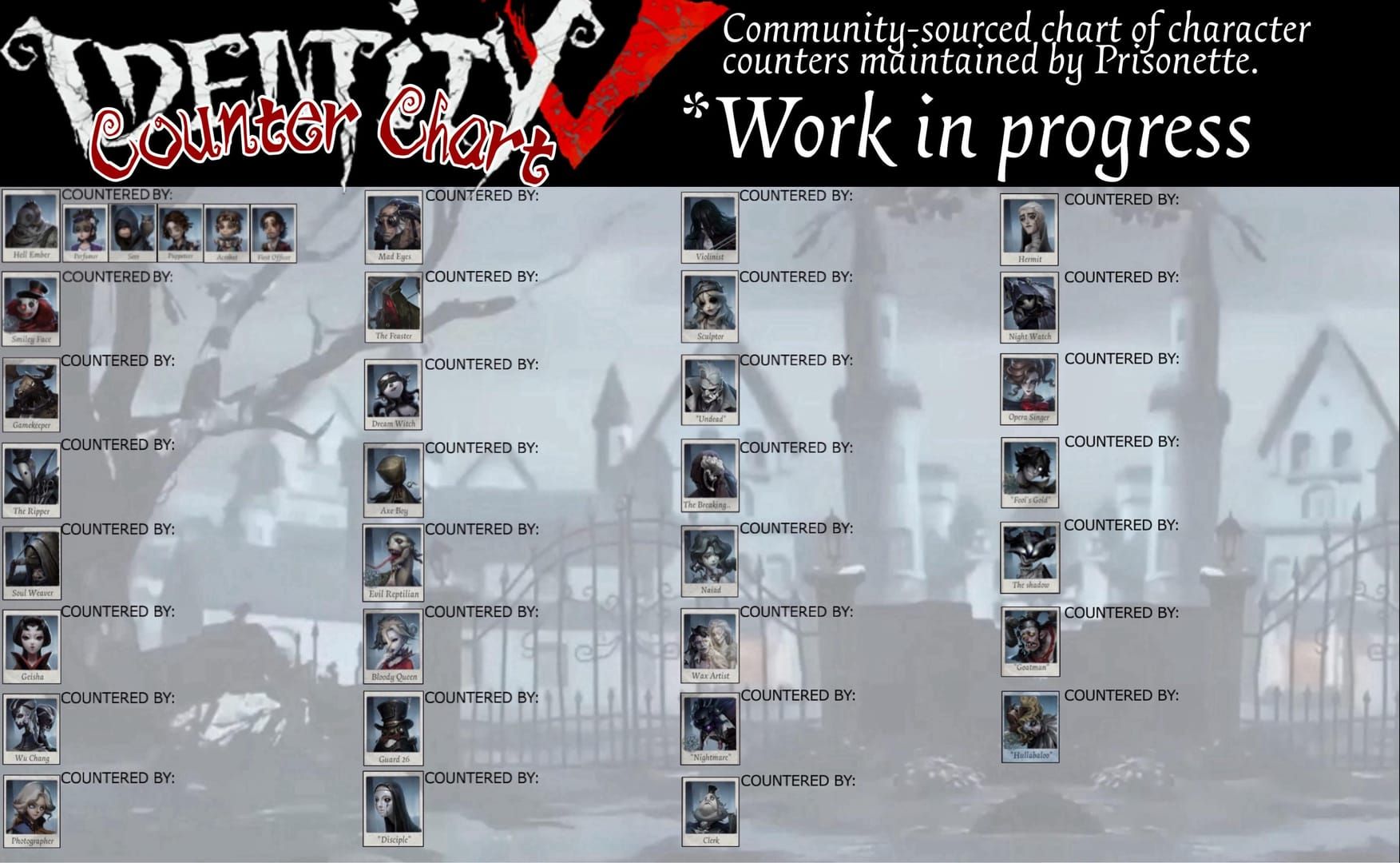
- Chase-oriented: Ripper, Geisha
- Camp-control: Sculptor, Clerk
- Mobility-specialist: Nightmare, Violinist

Beginner-Friendly Options:
- Sculptor: Strong camp control, manageable mechanics
- Clerk: Map pressure through servants, simpler chase mechanics
Advanced Options:
- Violinist, Nightmare: Superior point-scoring through faster downs, multi-elimination potential
Survivor Characters
Flex players need 4+ Survivors covering essential functions:
- Decoder: Prisoner, Mechanic
- Rescuer: Mercenary, Gravekeeper
- Kiter: Forward, Wildling
- Support: Seer, Psychologist
Recommended for Flex Players:
- Seer: Owl timing rewards Hunter perspective
- Psychologist: Patience management leverages Hunter knowledge
Avoid Initially:
- Acrobat, Batter, Entomologist: Unique mechanics require dedicated practice
Team Composition Strategies
Optimal Roster Structure
5-Player Minimum (Online Qualifiers):
- 2 elite flex players (alternate primary Hunter duties)
- 1 Hunter specialist (backup)
- 2 Survivor specialists (consistent top-tier scores)
7-Player Maximum:
- Add specialists for specific Hunters, maps, or counter-strategies
- Additional members don't need full flex capability
Balancing Specialists vs Flex Players
Pure specialists typically outperform flex players by 10-15% in dedicated roles. However, flex players provide strategic unpredictability and tactical adaptability.
Critical Rule: Only top 4 Survivor scores count. If your 3rd flex player consistently scores below your 4th-best Survivor specialist, they contribute zero value regardless of effort.
Countering Opponent Anticipation
- Implement misinformation in public scrims
- Have different players assume Hunter roles than planned for critical matches
- Maintain genuine flexibility—multiple members competitively performing Hunter on any map
- Designate role assignments only after seeing opponent composition
Point Maximization Tactics
Real-Time Point Tracking
Designate one member to track cumulative points after each match.
Sacred Sanctum Benchmarks (60-match max):
- After 20 matches: 80,000-120,000 points
- After 40 matches: 160,000-240,000 points
Quick Calculation Method:
- Average Hunter score × 120 (60 matches × 2 multiplier)
- Average Survivor score × 240 (60 matches × 4 players)
Example: Flex players averaging 1,650 as Hunter + top 4 Survivors averaging 1,150 = ~474,000 projected total (1,650 × 120 + 1,150 × 240).
Advancement Thresholds:
- Leviathan Shore: Top 100 teams
- Japan Division: 5-6 teams
- NA-EU and Southeast Asia: 8 teams each to Online Qualifiers
Aggressive Cipher Control Synergy
Flex players develop better intuition for opponent decision-making:
- As Hunter: Understand Survivor desperation tactics, recognize risky rescue vs abandonment patterns
- As Survivor: Predict Hunter ability cooldowns, movement speed calculations, optimal chase commitments
This cross-role perspective creates virtuous cycle elevating performance in both roles.
Common Mistakes to Avoid
Execution Errors
- Assuming automatic improvement: Poorly executed role swaps often decrease points by 20-30% when players operate outside comfort zones
- Communication breakdowns: Confusion leads to wrong character selections, mismatched compositions, incorrect builds/personas
- Psychological pressure: Performance anxiety in high-stakes matches causes mechanical errors
Solution: Implement rigid pre-match checklists verifying role assignments, character selections, persona loadouts before queuing.
Over-Reliance Without Fundamentals
Role swap amplifies existing capabilities—it can't compensate for poor mechanics, weak game sense, or inadequate character knowledge.
Practice Balance:
- 70% fundamental skill development
- 30% role swap coordination
Teams inverting this ratio plateau quickly against opponents with superior execution.
Finals Preparation Checklist
Key Dates
- Jan 8, 2026: Maintenance 08:00 UTC+8 (240 min), transition from Sacred Sanctum to Divine Procession
- Jan 9, 2026: Complete Sacred Sanctum data analysis
- Jan 8-22, 2026: Divine Procession phase
- Jan 22-29, 2026: Radiant Altar finals
Scrim Practice Priorities
Focus on 19:00-21:00 window to simulate Divine Procession conditions:
- Close matches where 500-1,000 points determine victory
- Comeback situations requiring strongest Hunter
- Map-specific scenarios where flex players dramatically outperform
Decision Criteria: Swap roles when projected point gain exceeds 10%; maintain assignments when performance meets/exceeds targets.
Contingency Planning
Build roster depth for rapid strategy pivots:
- Hunter-focused strategy: Multiple competent Hunter players
- Survivor-focused strategy: Strong Survivor specialists
- Balanced approach: Documented alternative playbooks
Advanced Competitive Insights
Psychological Warfare
Elite teams showcase different players in Hunter roles during early rounds, creating uncertainty about true capabilities. Opponents waste preparation time on decoy strategies while actual finals approach remains concealed.
Trade-off: Accept suboptimal early performance to maintain strategic surprise for critical matches.
Map-Specific Optimization
Track each player's average scores across different maps in both roles.
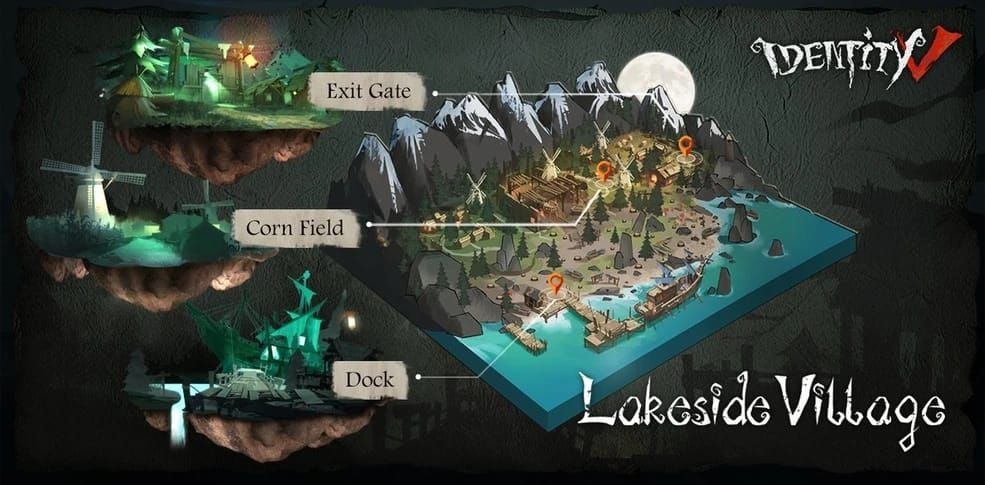
Example: Player A averages 1,900 as Hunter on Lakeside Village but 1,500 on Moonlit River Park; Player B shows inverse pattern. Assign Hunter based on map selection for 200-400 additional points per match.
Map-Specific Protocols:
- Cipher rush maps: Assign Hunter to player best at early-game pressure
- Strong kiting route maps: Assign Hunter to player with superior chase mechanics
FAQ
How does the COA IX scoring formula calculate team points?
Highest Hunter score × 2 + sum of four highest Survivor scores. Example: Hunter at 8,000 + four Survivors at 6,000 each = 40,000 total (8,000 × 2 + 24,000).
What is the Hunter×2 role swap strategy?
Multiple team members alternate between Hunter and Survivor roles across matches, fielding the strongest Hunter performer for each specific match based on map, opponent composition, and performance streaks.
When should teams use role swap?
When 2-3 players score within 80-90% of specialist performance in both roles, map-specific advantages favor different players, and projected point gains exceed 10%. Avoid if it creates confusion, anxiety, or when specialists already exceed targets.
How many points can role swap add?
500-1,000 points per match, accumulating to 30,000-60,000 additional points across 60-match limit. 700-point advantage × 60 matches = 42,000 total additional points.
What character pool is needed?
Minimum 3 Hunters (chase-oriented, camp-control, mobility-specialist) + 4 Survivors (decoder, rescuer, kiter, support). Elite flex players expand to 5+ Hunters and 6+ Survivors.
How do finals scoring rules differ from qualifiers?
Core formula remains consistent. Match limits differ: Sacred Sanctum allows 60 matches per role (Dec 31, 2025 - Jan 8, 2026); Divine Procession restricts to 20 matches per role (Jan 8-22, 2026) during 19:00-21:00 windows.
Ready to dominate COA IX with optimized rosters? For cheap Identity V Echoes recharge, BitTopup delivers instant access to premium characters and skins essential for competitive flex player capabilities. Secure transactions, competitive pricing, 24/7 support—power up your tournament preparation before Jan 29, 2026 finals.