Event Task Top-Up Gifts Explained
Event systems create multi-tiered achievement structures. Standard events establish thresholds at $10, $50, $100—each delivering bonus diamonds, exclusive gifts, or badges. Track progress through Task Center interface.
Events emphasize specific behaviors beyond spending. Some require gift-sending to particular users, others mandate party room participation or PK battles where winners receive 70% of prize pools. A two-Rocket competition (1,998 Diamonds total) awards 1,398 Diamonds to the victor.
Bonus structures vary significantly. First-time exclusives offer 62,500, 375,000, or 625,000 Diamond packages at substantial discounts. Regular weekly events provide 10-15% bonuses.
Critical math: understand how bonuses apply. A 20% event bonus on a 62,500 Diamond package ($10.71 base) delivers 12,500 additional diamonds, reducing cost from $0.171 per 1,000 diamonds to $0.143—meaningful for high-volume users.
Direct Diamond Purchase Mechanics
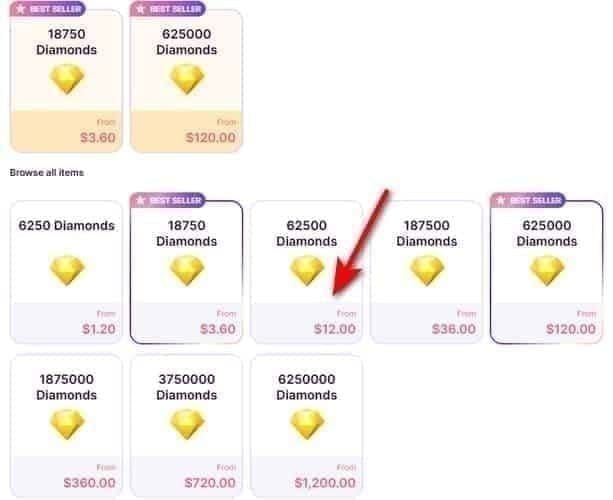
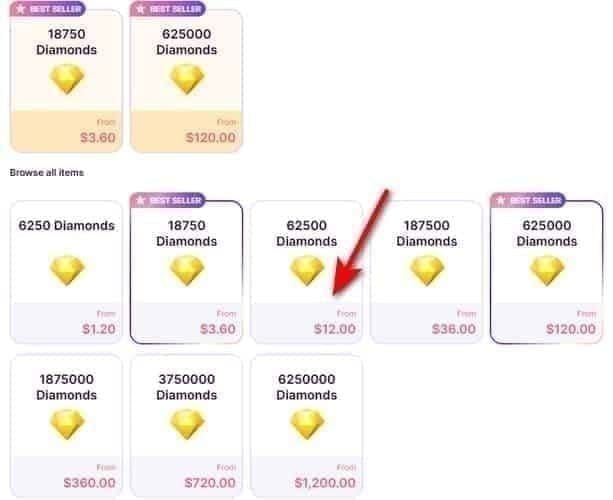
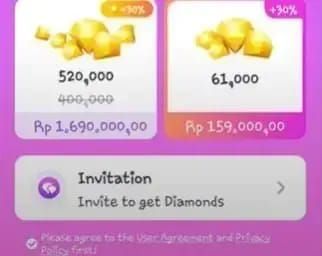
Direct purchases follow straightforward transactions. Navigate to diamond shop, select from seven packages (6,250 to 3,750,000 Diamonds), complete payment via PayPal, credit cards, or regional options.
Pricing reveals built-in volume discounts:

- 18,750 Diamonds: $3.55 (24% off $3.99)
- 62,500 Diamonds: $10.71 (24% off $13.99)
- 187,500 Diamonds: $35.00 (12% off $39.99)
- 625,000 Diamonds: $118.00 (12% off $139.99)
- 1,875,000 Diamonds: $352.55 (12% off $399.99)
These permanent discounts establish baseline against which event bonuses compete. Processing speed is the primary advantage—delivery within 1-10 minutes enables immediate use for time-sensitive opportunities.
Key System Differences
Value delivery: Direct purchases provide 100% diamonds immediately. Events split value between instant base diamonds and delayed bonus rewards.
Flexibility: Direct purchases impose no minimums or behavioral conditions. Events typically establish $10-$20 entry points and may require specific actions.
Cost efficiency: Context-dependent. For $100 monthly spenders, 20% event bonus delivers $20 additional value. But users needing exactly 10,000 Diamonds find direct purchase more efficient than meeting $10 event minimum.
Risk profiles: Direct purchases carry zero participation risk. Events introduce completion risk—missing thresholds forfeits bonus value entirely.
The Mathematics Behind Event Gift Value
Calculating event ROI requires establishing baseline direct purchase value, quantifying event bonuses, and accounting for participation costs.
Base ROI Formula
Event ROI = [(Base Diamonds + Bonus Diamonds) / Total Cost] / [Direct Purchase Diamonds / Direct Purchase Cost] - 1
Example: $50 event requiring three top-ups, offering 20% bonus. Purchase two 62,500 packages ($21.42) and one 187,500 package ($35.00) = 250,000 base + 50,000 bonus (300,000 total) for $56.42. Direct equivalent costs ~$18.00, yielding 67.9% value improvement.
But this omits critical variables:
- Time value: Bonus diamonds arriving days later vs. immediate availability
- Participation costs: Events mandating gift-sending (5 Rockets = 4,995 Diamonds) consume diamonds you wouldn't otherwise spend
- Opportunity costs: Diamonds could generate 60% revenue sharing during waiting period
Direct Purchase Baseline Values
Analyze tiered pricing for cost-efficient packages:
- 18,750 Diamonds at $3.55 = 5,282 diamonds/dollar
- 62,500 Diamonds at $10.71 = 5,836 diamonds/dollar (10.5% better)
- 187,500 Diamonds at $35.00 = 5,357 diamonds/dollar (worse than 62,500)
- 3,750,000 Diamonds at $706.62 = 5,307 diamonds/dollar
Pricing anomaly: combining mid-tier packages sometimes outperforms single large purchases, especially when event bonuses apply to individual transactions.
Bonus Calculation Methods
Flat percentage bonuses:20% extra diamonds = multiply by 1.20. A 62,500 package becomes 75,000 total.
Tiered milestone bonuses: Non-linear value curves. Event offering 5,000 bonus at $20, 15,000 at $50, 40,000 at $100:
- First $20: 5,000 bonus (25% rate)
- Next $30: 10,000 bonus (33.3% rate)
- Final $50: 25,000 bonus (50% rate)
- Average across $100: 40% bonus
Exclusive gift bonuses: Require diamond-equivalent valuation. Limited-edition item worth 50,000 Diamonds has zero value if you wouldn't buy it independently.
Multiplier events:VIP 5+ users receive double bonuses creates segmented value. 15% base becomes 30% for qualifying users.
Real-World Example Breakdown
Weekend Warrior event (Friday 00:00 to Sunday 23:59 UTC+8):
- Tier 1: $20 total = 10,000 bonus diamonds
- Tier 2: $50 total = additional 30,000 bonus (40,000 cumulative)
- Tier 3: $100 total = additional 70,000 bonus (110,000 cumulative)
User targeting Tier 3 with $100 spending:
- Select optimal packages for base efficiency
- Total base: varies by package selection
- Event bonuses: 110,000 diamonds
- Compare effective rate vs. direct purchase baseline
Critical principle: event value depends on whether bonus incentives align with natural spending patterns. Users who'd spend threshold amounts anyway gain pure bonus value. Those stretching budgets must calculate if bonus diamonds justify accelerated spending.
Comprehensive Comparison: Events vs Direct
Value Across Different Amounts
Under $10: Direct purchases superior due to event minimums. User needing 20,000 Diamonds buys 18,750 package at $3.55. Most events require $10-$20 minimums.
$10-$50 range: Event sweet spot where bonuses frequently exceed 15-25%. $20 threshold offering 10,000 bonus on 62,500 package delivers 16% improvement.
$50-$200: Variable results. Flat 20%+ bonuses favor events. Tiered systems require marginal value calculation at each threshold.
Above $500: Rarely justify event participation unless bonuses exceed 30%. The 3,750,000 package already incorporates volume discounting.
Time-Sensitive Benefits
Event calendars enable strategic timing. Users consolidating monthly spending into high-bonus periods achieve 20-30% annual savings. $200 monthly spender saving 25% retains $600 annually.
Weekly cycles (Monday-Sunday UTC+8) enable predictable planning. Time Thursday-Friday top-ups to capture bonuses while ensuring weekend availability.
However, time constraints create pressure. Events ending Sunday 23:59 UTC+8 force rushed purchases, potentially exceeding budgets.
Daily check-in rewards (10-50 Diamonds) and Task Center bonuses amplify event value for active users. 300 Diamonds weekly through engagement reduces event cost by $0.05-$0.10.
Additional Rewards
Many events bundle non-diamond rewards:
- Exclusive avatar frames, chat bubbles (social currency value)
- VIP experience points (accelerate progression to 60-70% party room revenue sharing)
- Direct Bean bonuses (0.6 Beans per Diamond standard conversion)
- Host-specific revenue multipliers (2x PK prize pools)
Hidden Costs
Spending pattern requirements:Three separate $10+ top-ups prevents single efficient $30 package.
Behavioral requirements:Send 50 Roses to new users or host 3 party rooms consume resources and time. 2 hours at $20/hour personal valuation = $40 opportunity cost.
Withdrawal restrictions: Thursdays 06:00 UTC+8, $10 minimum (100,000 Beans). Verification levels impact limits: $50/day basic, $5,000/day semi-verified, $10,000/day full verification.
When Events Offer Superior Value
High-Bonus Scenarios (30%+ Value)
Premium events offering 30%+ bonuses represent clear opportunities. 35% bonus on 62,500 package reduces cost from $0.171 to $0.127 per 1,000 diamonds—26% reduction.
First-time exclusives frequently exceed 50% bonuses. New users should front-load several months of needs. $100 first-time at 50% bonus = $150 equivalent value.
Holiday/anniversary events typically feature 40-50% bonuses. Track patterns to defer non-urgent spending.
Comeback events (30+ days inactive) sometimes match first-time bonuses.
Tiered Reward Events
Multi-tier events (4+ milestones) create cumulative value exceeding flat bonuses. Structure offering bonuses at $10 (5,000), $25 (15,000), $50 (35,000), $100 (80,000), $200 (180,000) provides 315,000 total bonus for $200—157.5% rate.
Advantage emerges from stacking: each threshold adds incremental value. However, partial completion underperforms. Spending $45 toward $50 threshold misses 35,000 Diamond reward—7,000 diamonds per dollar foregone.
Calculate marginal value at each tier. If $100 tier offers 80,000 bonus (requiring $50 beyond $50 tier), marginal rate = 160% on incremental $50.
Limited-Time Exclusive Packages
Flash events (24-48 hours) bundle exclusive items unavailable through regular purchases. 48-hour event offering exclusive animated entrance + 100,000 Diamonds for $50 provides functional and social value.
Exclusive items' value depends on individual preferences. Indifferent users should ignore cosmetic components. Those who'd buy separately should add full item value to ROI.
Some packages include functional advantages: temporary VIP upgrades or revenue multipliers. VIP 8 benefits for 72 hours + 200,000 Diamonds for $100 provides earning potential through improved party room sharing.
First-Time and Comeback Specials
New user bonuses provide 60-100% additional value—highest most users encounter. Strategic approach: calculate 3-6 month consumption and purchase that volume during first-time windows.
User averaging 100,000 Diamonds monthly should consider 300,000-600,000 purchase during new user events—accepting short-term budget concentration for 30-50% long-term savings.
Comeback events (30-90 days inactive) offer 30-50% bonuses. Creates strategic possibilities but sacrifices daily check-ins and Task Center bonuses.
When Direct Purchases Make More Sense
Urgent Needs Outside Events
Time-sensitive opportunities demand immediate availability. Party rooms offering 60% revenue sharing with 500 Diamond entry can't wait for milestone completion. Direct purchase within 1-10 minutes enables participation.
Private calls at premium rates (12,000-20,000 Diamonds/minute cost, 12,000 Beans/minute earning) require instant funding. 30-minute call needs 360,000-600,000 Diamonds immediately.
PK battles with large prize pools (100,000 Diamond pools, 70% to winner) need instant matching capacity.
Opportunity cost favors direct purchases. Party room offering 100,000 Beans earning potential but requiring immediate 500 Diamond entry justifies 10-15% premium vs. waiting for 20% event bonus.
Small Amounts Below Thresholds
Users needing modest quantities find direct purchases efficient. 20,000 Diamonds for 20 Rockets: buy 18,750 package at $3.55 without meeting $10-$20 event minimums.
Event minimums force inefficient spending. $10 threshold requiring 62,500 package when needing only 10,000 creates 52,500 excess inventory.
Casual users ($5-$15 monthly) rarely benefit from events. One 18,750 package monthly ($3.55) = $42.60 annually—below most minimums.
Restrictive Event Requirements
Events mandating send gifts to 10 new users or host 5 party rooms impose costs exceeding bonus value for users who wouldn't naturally complete those activities.
Geographic/time zone restrictions create barriers. Friday-Sunday UTC+8 events occur during weekday work hours for American users.
Payment method limitations exclude users preferring specific transaction types.
Verification requirements (semi/full verification needing 2-5 days documentation) exclude privacy-conscious users.
Flexibility vs Value Trade-Off
Direct purchases provide complete autonomy—buy exact amounts at chosen times without behavioral requirements.
Budget management simplifies. Implement strict monthly limits without pressure to reach thresholds exceeding budgets.
Psychological comfort with straightforward transactions matters. Event complexity creates cognitive load some find stressful.
Trade-off depends on circumstances. Sophisticated users comfortable with optimization should prioritize events. Those valuing simplicity achieve better satisfaction through direct purchases despite slightly higher costs.
Advanced Event Task Math
Stacking Multiple Bonuses
Some structures allow simultaneous participation. Weekend Bonus (15%) + New VIP Celebration (10%) = 25% total (bonuses add, not multiply).
Payment promotions occasionally stack. PayPal Week (5% cashback) + event bonus (20%) = 25% total value improvement.
First-time bonuses sometimes stack with concurrent events if terms don't exclude. Read carefully to identify opportunities.
VIP anniversary bonuses for account milestones occasionally stack with regular events.
VIP Level Multipliers
VIP system creates tiered event value. Standard 20% might provide 25% to VIP 5+, 30% to VIP 8+, 35% to VIP 10+.
Strategic implication: time VIP progression before major events. Accelerate to VIP 5 immediately before high-value events to capture enhanced multipliers.
Events awarding double VIP XP enable rapid progression unlocking permanent benefits (65-70% party room sharing).
Long-term optimization: model cumulative event value across 6-12 months. Reaching VIP 8 (30% bonuses) in month 3 vs. month 9 captures 6 additional months of enhanced bonuses worth ~$180.
Optimal Tier Completion Amounts
Tiered events create optimization puzzles. Event with tiers at $10, $25, $50, $100 requires strategic package selection.
For $10 tier: 62,500 package at $10.71 provides optimal value despite slight overspend.
$50 tier: two 187,500 packages ($70 total) exceeds threshold but maximizes base efficiency. Or one 625,000 package ($118) captures both $50 and $100 tiers.
Precision hitting uses combinations but often sacrifices base efficiency. Optimal strategy: accept 5-10% overspend when purchasing high-efficiency packages.
Timing Within Event Windows
Early purchases (Friday for weekend events): maximum time for behavioral requirements, reduces completion risk.
Late purchases (Sunday evening): observe natural spending patterns, base purchases on actual needs. Prevents over-purchasing but risks missing thresholds.
Split-timing: minimum threshold early (ensure baseline bonus), strategic additions late based on consumption.
Time zone considerations: UTC+8 deadlines mean Sunday morning for Americans, afternoon/evening for Europeans. Plan 6-12 hours before deadlines for processing buffer.
Common Misconceptions
Myth: Events Always Offer Better Value
Reality: Events provide better value only when bonus percentages exceed 15-20% AND spending aligns with thresholds AND behavioral requirements match organic usage. Perhaps 40-60% of events meet these criteria.
10% bonuses on packages already discounted 24% provide minimal incremental value—just 2.4% additional diamonds.
Small spenders forced to meet $10 minimums when needing $3.55 worth pay 181% more to capture 20% bonus—catastrophically poor value.
Myth: Direct Purchases Process Faster
Reality: Both use identical payment/delivery systems. Diamond delivery occurs within 1-10 minutes for both. Difference lies in when bonus diamonds arrive, not base purchase speed.
Instant bonus events provide identical speed to direct purchases. Milestone events delay bonus portions until completion.
Myth: Event Diamonds Have Different Rules
Reality: All diamonds function identically regardless of acquisition method. Event diamonds, direct purchase diamonds, and free daily check-ins (10-50/day) spend the same.
Myth may originate from confusion with bonus items (avatar frames, chat effects) that carry expiration dates. Diamonds themselves never expire.
Some events impose time limits on claiming bonuses (7-30 days). But once claimed, diamonds function permanently.
Truth: Context Determines Optimal Choice
No universal answer exists. Optimal choice depends on spending patterns, timing needs, budget flexibility, preferences.
High-volume users ($200+ monthly): almost always benefit from events. $500 monthly at 25% average bonuses saves $125 monthly ($1,500 annually).
Low-volume users ($20-50 monthly): mixed results. Participate selectively in events matching natural spending levels.
Irregular users: typically better with direct purchases despite higher costs. Flexibility to purchase exact amounts anytime provides value beyond pure efficiency.
Optimal strategy: combine both approaches. Participate in high-value events (20%+ bonuses) when spending aligns with thresholds, use direct purchases for urgent needs or small amounts, maintain discipline to avoid forced spending.
Practical Strategy Guide
Monthly Calendar Planning
Track Chamet's event patterns: weekly (Friday-Sunday or Monday-Sunday UTC+8), monthly mega-events (first/last weekend), quarterly specials (holidays, anniversaries).
Document historical events over 2-3 months. If Chamet runs 30%+ bonuses on month-end weekends, defer large purchases to those windows. Pattern-based planning captures 15-25% additional value.
Estimate monthly consumption. User averaging 5 party entries weekly (2,500 Diamonds), 10 Rockets (9,990), 2 hours private calls (144,000) consumes ~156,490 monthly. Purchase 150,000-200,000 during high-value events.
Build 20-30% buffer inventory for unexpected opportunities.
Budget Allocation
Optimal split: 70-80% to high-value events, 20-30% for direct purchases covering urgent needs.
Establish monthly caps independent of event incentives. $100 monthly budget stays $100 regardless of bonuses at $150 levels.
Emergency reserves ($20-$50) enable unexpected opportunities without disrupting planned participation. Replenish from earnings (Beans to diamonds).
Track actual vs. budgets monthly. Users consistently exceeding by 20-30% should increase budgets or improve discipline.
Tracking Personal ROI
Implement spreadsheet logging: purchase dates, amounts, packages, event bonuses, effective cost-per-1,000-diamonds.
Calculate monthly average cost-per-1,000-diamonds vs. direct baseline (~$0.17-$0.19). Achieving $0.13-$0.15 demonstrates 18-32% savings.
Track time investment. If 3-4 hours monthly achieves $20 savings, effective hourly value = $5-$7. Users valuing time above $10-$15/hour might rationally choose direct purchases.
Annual reviews: total diamonds acquired, total spending, average cost, time invested. Compare vs. hypothetical direct costs.
Decision-Making Flowchart
Step 1: Need diamonds within 24 hours? Yes → Direct. No → Step 2.
Step 2: Amount aligns with event thresholds (within 10%)? Yes → Step 3. No → Direct.
Step 3: Event offers 15%+ bonus? Yes → Step 4. No → Direct (unless waiting viable).
Step 4: Can complete behavioral requirements through natural usage? Yes → Step 5. No → Calculate requirement cost; if cost < bonus → Event, else → Direct.
Step 5: Fits monthly budget? Yes → Event. No → Direct smaller amount or defer.
Using BitTopup for Optimal Participation
Why BitTopup Enhances Event Value
BitTopup's 12-24% discounts stack with event bonuses. 18,750 package at $3.55 (24% off) + 20% event = 22,500 total for $3.55 = $0.158 per 1,000 vs. $0.213 in-app (26% total savings).
Payment diversity enables optimization: PayPal (cashback), credit cards (points/miles), regional methods. 2% credit card cashback adds 2% to event bonuses.
Customer service provides event-related support. Clarify eligibility, thresholds, bonus delivery before purchasing.
Transaction history enables better ROI measurement. Export data for spreadsheet analysis.
Secure Fast Process During Events
Delivery within 1-10 minutes even during high-traffic periods. Critical for tight deadlines (Sunday evening before UTC+8 midnight).
Four-step process:
- Copy Chamet User ID (Me > My Profile)
- Select package, enter User ID
- Choose payment method
- Confirm—diamonds deliver in 1-10 minutes
Security: encrypted transactions, verified processors. Multiple device compatibility (desktop, mobile, app).
Advantage for Task Completion
Events requiring multiple transactions (3 top-ups of $10+ each): BitTopup's streamlined process makes successive purchases less burdensome. Saved payment methods enable rapid transactions.
Package variety ensures precise threshold hitting. All standard packages from 6,250 ($1.13-$1.30) to 3,750,000 ($706.62).
Transaction confirmations provide documentation for disputes. If bonuses fail despite threshold completion, records support resolution.
Promotional calendar sometimes aligns with Chamet events, creating double-bonus opportunities.
Step-by-Step Maximization
Phase 1: Check event announcements for bonuses, thresholds, deadlines. Note instant vs. milestone-based.
Phase 2: Calculate effective cost-per-1,000-diamonds at each threshold including BitTopup discounts. Compare vs. baseline ($0.17-$0.19).
Phase 3: Identify package combinations reaching thresholds with minimal overspend.
Phase 4: Purchase early (Friday) for behavioral requirement time, or late (Sunday) based on consumption patterns.
Phase 5: Execute BitTopup purchase, verify delivery within 10 minutes.
Phase 6: Complete behavioral requirements promptly.
Phase 7: Claim bonuses through Task Center. Set reminders for end-of-event delivery (Monday 00:00 UTC+8).
Phase 8: Log details in tracking system. Compare actual vs. projections.
Real Player Case Studies
Case 1: Small Spender - 62,500 Comparison
Profile: Casual, $10-$15 monthly, sends Rockets (999 each), occasional party entry (10-500).
Scenario: Needs 60,000 Diamonds. Weekend event offers 20% bonus, no minimum.
Direct: 62,500 package at $10.71, rate: $0.171 per 1,000.
Event: Same package, 20% bonus = 75,000 total (62,500 + 12,500). Rate: $0.143 per 1,000.
Analysis: Event saves $1.75 diamond value for zero additional cost/effort. 15,000 excess carries forward.
Decision: Event clearly superior—same cost, 20% more diamonds.
Lesson: Small spenders benefit from simple percentage bonuses without thresholds.
Case 2: Medium Spender - 625,000 Event vs Direct
Profile: Active host, $100-$150 monthly, party rooms (60% revenue), PK battles (70% prize pool), private calls.
Scenario: Consumes 500,000-600,000 monthly. Tiered event: $50 = 30,000 bonus, $100 = +80,000 (110,000 total), $150 = +150,000 (260,000 total).
Direct: One 625,000 package ($118), rate: $0.189 per 1,000.
Event Tier 2: $118 reaches $100, delivers 625,000 + 110,000 = 735,000. Rate: $0.161 per 1,000.
Event Tier 3: Add 187,500 package ($35) = $153 total, delivers 812,500 + 260,000 = 1,072,500. Rate: $0.143 per 1,000.
Analysis: Tier 2 provides 110,000 bonus ($18.85 value) for zero cost—clear win. Tier 3 requires $35 for 337,500 total diamonds (9,643/dollar marginal)—exceptional. But creates 472,500 excess vs. 600,000 consumption.
Decision: Tier 2 optimal—substantial bonus without excess inventory. Tier 3 only if anticipating increased consumption.
Lesson: Target tiers aligning with consumption plus 10-20% buffer. Avoid excess inventory tying up capital.
Case 3: High Spender - Monthly Optimization
Profile: Professional host, $400-$500 monthly, multiple daily party rooms, 10+ hours private calls weekly, high-stakes PK.
Scenario: Consumes 2,000,000-2,500,000 monthly. Weekly events: Week 1 (15%), Week 2 (25%), Week 3 (tiered 20%/30%/40% at $100/$300/$500), Week 4 (10%).
Baseline Direct: Four 625,000 packages ($472 total) = 2,500,000 at $0.189 per 1,000.
Optimized Strategy:
- Week 1: Skip (15% below threshold)
- Week 2: Two 625,000 packages ($236), receive 1,562,500 total (1,250,000 + 312,500 bonus)
- Week 3: Remaining $236, receive 1,562,500 total
- Week 4: Skip—use accumulated
Analysis: Concentrating in Weeks 2-3 captures 25% average vs. 15% spread evenly. Total: $472 (same), diamonds: 3,125,000 (vs. 2,500,000), rate: $0.151 per 1,000—20% improvement.
Requires discipline to skip low-value weeks, maintain inventory buffers.
Decision: Selective participation in 20%+ events only, build inventory during high-bonus periods.
Lesson: High-volume users optimize through selective premium event participation. Can save $800-$1,200 annually on $5,000-$6,000 spending.
Lessons from Veterans
Threshold Discipline: Never increase spending purely for thresholds unless marginal bonus clearly exceeds marginal cost.
Inventory Management: Maintain 20-30% buffer from high-value events to cover low-value periods.
Time Value Recognition: Account for opportunity costs. $20 savings requiring 3 hours unwanted activity = poor value at $7+/hour.
Pattern Learning: Track calendars 3-6 months to identify predictable cycles.
Emotional Detachment: Treat as financial optimization, not gaming. Emotional attachment drives budget inflation.
Applied consistently: 15-35% savings vs. random purchasing while maintaining discipline.
FAQ
Are event gifts always worth more?
No. Value depends on 20%+ bonuses aligning with natural spending. Small users needing diamonds below $10-$20 minimums find direct purchases more efficient. Calculate effective cost-per-1,000-diamonds including all costs before assuming events offer better value.
How do I calculate real event value?
Formula: (Base + Bonus Diamonds) ÷ Total Cost = Diamonds/Dollar. Compare vs. baseline (5,300-5,800/dollar). Subtract behavioral requirement costs from bonuses. For tiered events, calculate marginal value: Incremental Bonus ÷ Incremental Cost.
What percentage do events typically offer?
Weekly: 10-20%. Monthly premium: 25-35%. Special occasions: 40-50%. First-time: 60%+. Comeback: 30-40%. Focus on effective cost-per-diamond vs. headline percentages.
When should I top-up during events?
Early (Friday) if behavioral requirements exist. Late (Sunday) to base on actual consumption. Split-timing: minimum early, strategic additions late. Plan 6-12 hours before deadlines for processing buffer.
Do event gifts expire?
Bonus diamonds never expire once claimed—function identically to direct purchases permanently. Unclaimed milestone rewards may expire 7-30 days after event. Claim promptly. Temporary items (avatar frames) may have separate expiration.
Can I combine multiple bonuses?
Sometimes—depends on terms. Platform-wide may stack with personal milestones if not explicitly excluded. Payment promotions typically stack. Most events state cannot combine. Read terms carefully, test small before committing large amounts.
Ready to maximize Chamet event rewards? Top up through BitTopup now—secure, fast, optimized for event participation. Start saving today!