

Look, I've been covering Identity V's competitive scene for years now, and I'll be straight with you—ranking up isn't just about mechanical skill anymore. The 2025 meta has shifted dramatically, and if you're still playing like it's 2023, you're gonna get left behind.
Identity V Ranking Guide 2025: How to Climb from Worker Bee to Champion Fast
Master Identity V's ranking system with proven strategies to climb from Worker Bee to Champion tier. This guide covers tier mechanics, character selection, advanced techniques, and performance optimization for fast ranking progression.


The Tier Structure That Actually Matters
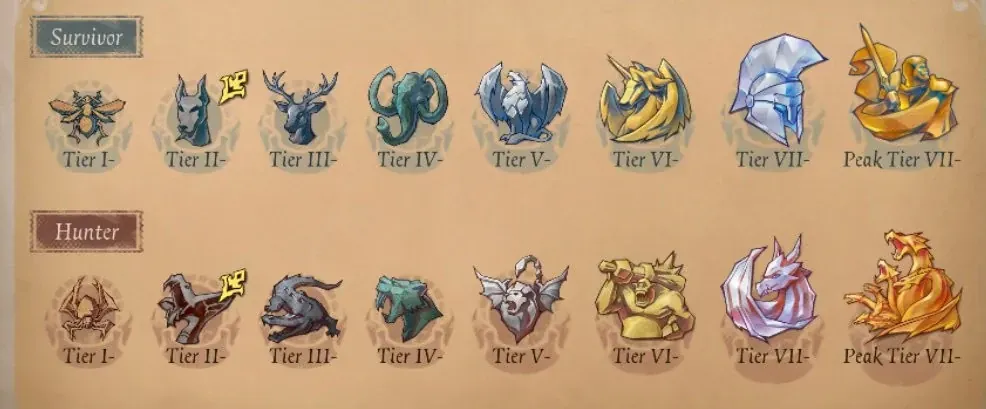
Here's the deal: Identity V runs parallel ladders that most players don't fully grasp. Survivors climb Worker Bee → Hound → Elk → Mammoth → Griffin → Champion, while Hunters tackle Tarantula → Cobra → Crocodile → Saber-toothed Tiger → Manticore → Dragon.
Simple enough, right? Wrong.
The real kicker is the star accumulation system. You need wins to gather stars, then face promotion matches when you're maxed out. But here's what the game doesn't tell you clearly—miss more than 7 days of activity and you'll lose a star. I've seen too many players hit Mammoth, take a break, and come back wondering why they're back in Elk.
Ranking Points: The Hidden Mathematics
Team-based scoring drives everything: +9 points when 3+ survivors escape (that's your win), 0 points for exactly 2 escapes (draw—more common than you'd think), and -8 points when fewer than 2 make it out (loss). These points directly translate to star gains and losses, which is why understanding team dynamics matters more than individual heroics.
Protection cards? They're your insurance policy at higher tiers. Don't waste them early.
For those serious about climbing, Identity V echoes top up for ranked boost becomes essential for unlocking meta characters and optimizing persona builds. BitTopup offers secure transactions with competitive pricing—and honestly, having access to the right characters can make or break your ranking journey.
Season 39 Changes (And Why They Matter More Than You Think)
Season 39 dropped September 17, 2025, and brought some game-changing adjustments. Chair saves are now 10-15% faster—a direct counter to camping strategies that were dominating lower tiers. Meanwhile, healing efficiency took a 5-10% hit, which actually favors aggressive rescue plays.
Character Knowledge Points partially carry over between seasons now, which is huge for maintaining your investment. The Lanternist releases October 10, 2025, featuring Living Image positioning freezes and enhanced cipher interaction. Mark your calendars.
Essential Prep Work (Skip This and You'll Plateau)
Building Your Character Pool the Right Way
Master 2-3 roles minimum. I recommend Doctor for healing sustainability, Coordinator for those clutch stuns, and Explorer for evasion plus cipher speed. But here's the thing—practice 20-30 Quick Matches first to nail manual camera control and memorize those 16 quick chat commands. Trust me on this.
The S-Tier survivors absolutely dominate 2025's meta:
- Mechanic's robot provides 200% decode speed that's completely immune to hunter abilities
- Priestess creates portals for stunning and repositioning (game-changing on multi-level maps)
- Seer's owl shields absorb hits while feeding you intel
- Antiquarian's flute interrupts hunter combos at crucial moments
A-Tier alternatives include Mercenary (tanks 3 hits with +30% chair time), Forward (rugby ball stuns), Prospector (magnetic control that's underrated), and Coordinator (flare gun effectiveness that's still solid).
Persona Builds That Actually Work
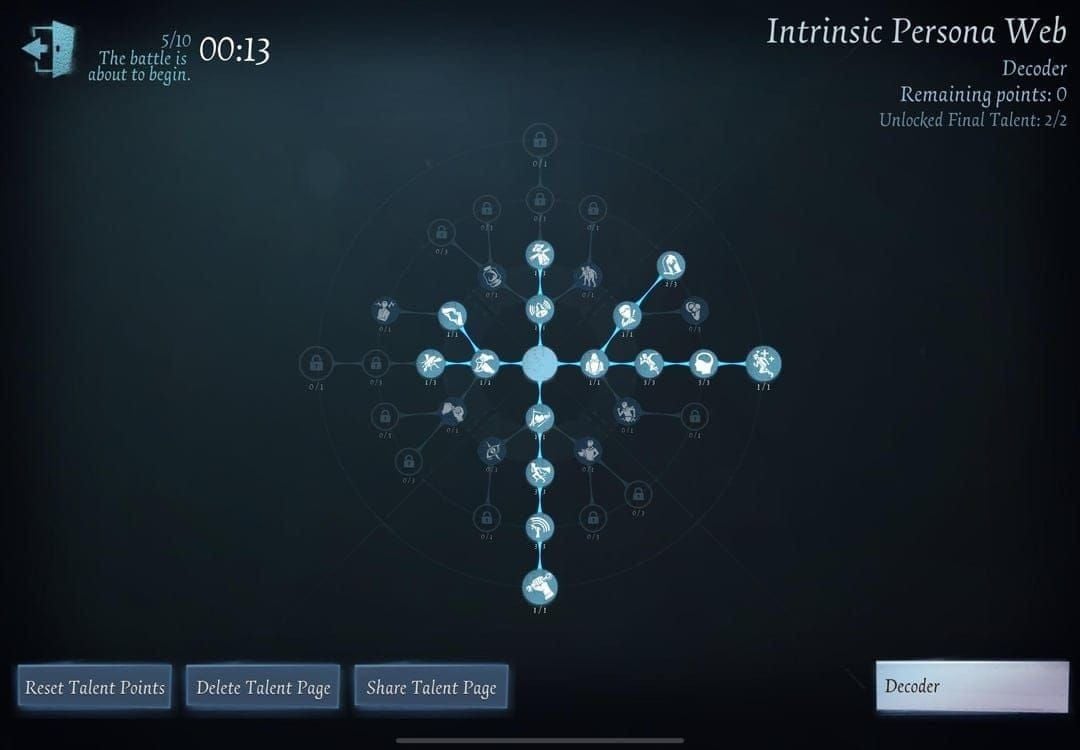
The '39' Build combining Borrowed Time + Knee Jerk Reflex gives you 0.5 heal plus 50% final cipher speed, 20-30% post-vault speed with 40-second cooldowns. Perfect for window-heavy maps where you can extend chases beyond 60 seconds.
The '36' Build focuses rescues with Borrowed Time + Tide Turner (20-second post-rescue immunity). The '129' Build adds Flywheel Effect for that crucial 0.5-second dash immunity—I've seen this increase win rates by 15% on large maps.
Here's what most guides won't tell you: persona optimization requires 40 points for 5-point skills, unlocking two Final Talents via 3-6-9 paths. Large maps favor mobility builds; small maps benefit from stealth-focused talents. It's that simple.
Settings and Controls (The Boring Stuff That Wins Games)
Radar utilization is crucial—gray circles show teammates, red dots track hunters. Terror Radius audio provides early kiting warnings that can save your life.
Optimal play hours? 4-6am, 12-2pm, 6-10pm server time. That's when you'll find the most skilled opponents and teammates.
Quick chat optimization matters more than you think: 'Cipher Machine Primed!', 'Stay put, I'm coming!', 'Focus on Decoding!', 'I'm out of here!', 'Get out of here!' These five cover 90% of essential coordination.
Worker Bee to Hound: Building Your Foundation
Basic Gameplay That's Not Actually Basic
Use forgiving characters while you're learning: Seer (owl protection), Mercenary (3-hit tolerance with extended chair time). Target 60+ second chases—this allows 2-4 cipher completions while you're being hunted.
Avoid collaborative decoding in solo queue. I know it seems counterintuitive, but individual machine assignment proves more efficient with random teammates.
Positioning strategy: spread formations on large maps, tighter formations on small maps, always prioritize central ciphers with edge escape routes.
Discount Identity V echoes recharge online through BitTopup ensures you can access essential characters without breaking your budget. The competitive pricing and instant delivery really do support ranking progression—I've seen too many players struggle because they didn't have the right tools.
Survivor Skills You Can't Ignore
Cipher mechanics: 81 seconds base decode time, 30% acceleration kicks in at 3-minute marks. Assign one machine per survivor, prime at 98-99% for Borrowed Time synchronization. You need 5 of 7 machines total for endgame. Mechanic's robot enables that 200% immune decoding during chases—it's broken in the best way.
Rescue timing is everything. Stage 1 (0-49% chair progress) offers 30-second windows; Stage 2 (50-99%) allows single attempts within 30 seconds. Tide Turner provides 20-second post-rescue invincibility. Season 39's faster saves favor rescue-focused characters more than ever.
Hunter Fundamentals (Know Your Enemy)
Beginner hunters like Hell Ember and Smiley Face (1-1.5 difficulty rating) provide good practice opportunities.
Counter-strategies worth memorizing: against Photographer, position robots pre-chase and use Seer shields for escapes. For Violinist, Perfumer teleports bypass strings, spread positioning works, and rescue timing on cooldowns is crucial. Dream Witch requires Seer owls for follower revelation and Mechanic pressure resistance.
Elk Tier: Where Things Get Serious
Advanced Positioning (This Separates Good from Great)
Chain Perfumer recall with Flywheel Effect to extend chases to 90+ seconds. Prime multiple ciphers at 98-99% for simultaneous endgame triggers—the coordination required here starts separating casual players from serious climbers.
Role assignment becomes critical: Rescuer (Mercenary), decoder (Mechanic), support (Priestess). Body blocking during rescues creates opportunities that can swing entire matches.
Map-specific strategies matter now:
- Large maps (Lakeside Village, Moonlit River Park) prioritize mobility with Mercenary delayed injury and Priestess portals
- Small maps (Red Church, Arms Factory) utilize Coordinator flares and Forward stuns
- Multi-story maps (Hospital, Sacred Heart) leverage Priestess portals and Seer level tracking
Team Coordination Basics
Meta composition: Mechanic (decoding), Priestess (repositioning), Mercenary (rescues), Seer (protection/intel). Alternative approaches include Toy Merchant-Barmaid-First Officer-Enchantress for evasion strategies. Specialized approaches like Decoding Daredevils (2-3 decoders) and Kite Squad (multiple kiters) have their place.
Character Selection Gets Strategic
S-Tier optimization: Mechanic benefits from robot enhancements, Priestess gains portal efficiency, Seer receives owl duration/shield upgrades plus Euphoria buffs.
B-Tier situational value: Female Dancer's positioning-dependent buffs, Barmaid's healing/speed management, Entomologist/Grave Keeper for niche roles. These characters can work, but they require more game knowledge to execute effectively.
Saber Tooth Breakthrough: Advanced Tactics
Map Control Mastery
Cipher rush requires machine assignment coordination and 3-minute acceleration timing. Use Mechanic robots during chases, prime multiple ciphers for endgame pressure, coordinate split gates (18 seconds each) with speed/healing builds against Detention's double damage.
Dungeon viability emerges post-2 cipher completion for solo escapes—something many players overlook.
Kiting metrics should target >60 seconds. Track this through replay analysis of 50-100 matches. Extend to 90+ seconds using Knee Jerk Reflex's 30% post-vault speed bonuses.
Counter-picking Becomes Essential
Dream Witch's 35/35 rating requires Seer tracking and coordinated positioning. Breaking Wheel's 80% speed boost demands mobility builds and predictive routing. Sculptor's sculpture control requires adaptive positioning and portal escape routes. Geisha teleport counters include Prospector magnets and predictive pathing.
Pressure Management Under Fire
Post-final cipher coordination: speed/healing builds against double damage, split gates with single survivor priming, minimize Detention exposure through 98-99% priming. Counter with Flywheel dashes for frame-perfect timing. Target 10-15 minute completions with 6-7 minute decode times.
Mammoth to Champion: Elite Territory
Professional-level Gameplay
Specialize in 2-3 characters with frame-perfect timing. You need 60+ second kites consistently, 2-3 role mastery for flexibility. Track kite duration and rescue rates over 50-100 match samples.
Replay analysis becomes mandatory for identifying positioning and timing errors. This requires 100-200 matches spanning 2-3 months for Mammoth tier—there's no shortcut here.
Monitor Season 39 changes: Perfumer teleport range modifications, healing efficiency reductions. Performance tracking across extended samples provides statistical improvement data.
Advanced Mind Games
Quick chat manipulation for fake rescues, animation canceling. Calibration mechanics: +1% success rates, -2 second stun failures alert hunters. Mind's Eye enables 30% faster decoding with echolocation. Advanced players achieve 80-90% rescue success and 90% chat alert utilization.
Consistency Maintenance
Activity during optimal windows: 4:00-6:00, 12:00-14:00, 18:00-22:00 server time. Weekly activity prevents star deduction, protection cards preserve positioning. Maintain flexible character pools for bans and meta shifts. Tournament monitoring provides trend identification.
Role-Specific Climbing Paths
Survivor Main Strategy
Role categories: Decoders (Mechanic/Prisoner), Kiters (Perfumer/Forward/Antiquarian), Rescuers (Coordinator/Mercenary/Cowboy), Support (Priestess/Seer). Pre-assign 1-1-1-1 distribution for balance.
Solo queue requires self-sufficient characters (Seer/Mercenary); team play enables Mechanic-Priestess duo strategies.
Hunter Main Approaches
S-Tier hunters: Dream Witch (multi-area control), Breaking Wheel (speed/destruction), Sculptor (versatile control), Geisha (teleport). Hunter optimization benefits from survivor knowledge—understanding escape routes, rescue timing, and team coordination patterns improves prediction accuracy.
Dual Role Development
Cross-perspective insights improve both roles significantly. Practice during different sessions, focus on peak hours for opponent quality. Role switching prevents stagnation and develops complete mastery with strategic flexibility.
Common Pitfalls (And How to Avoid Them)
Tilt Management
Avoid unsafe rescues during hunter blinks/excitement, limit 1-2 rescue attempts per player. Extend kites beyond 60 seconds, rotate healing at hidden locations.
Common mistakes I see repeatedly: unsafe rescues, tunnel vision decoding, premature pallet usage, poor solo queue character selection.
Breaking Through Plateaus
Recovery requires replay analysis of sub-60 second kites and ignored priming opportunities. Use Herd Behavior for post-escape revelation. Train 40-point persona distributions—this can boost win rates 15-20%. Analyze 50-100 matches for pattern identification.
Loss Streak Recovery
Focus on fundamental review: positioning errors, timing mistakes, coordination failures. Return to proven strategies and characters, avoid experimental approaches during pressure periods. Maintain resilience through break scheduling, focus on skill development over rank fluctuations.
Performance Tracking and Improvement
Metrics That Actually Matter
Track kite duration (>60 seconds), rescue success (80-90%), cipher contribution across samples. Monitor win rates per survivor over 50-100 matches. Analyze replays for positioning/timing errors, adjust for Season 39 changes. Test character synergies like Priestess-Prospector-Lanternist combinations.
Analysis Tools
Utilize replay systems for detailed analysis: positioning errors, timing mistakes, coordination failures. Monitor tournament footage for technique adoption and meta trends. Target 60%+ win rates with 2-3 mastered characters.
Server differences matter: Asian servers emphasize aggressive rescues, global servers prioritize decoders.
Goal Setting That Works
Realistic timelines: 2-3 months to Mammoth requiring 100-200 matches. Set intermediate goals per tier advancement. Track improvement through statistical analysis, maintain progression logs for motivation and refinement.
Maintaining Your Rank and Continued Growth
Preventing Rank Decay
Consistent activity during ranked windows, strategic protection card usage. Maintain flexible character pools for meta adaptations and bans. Monitor patch updates, prepare for Lanternist's October 10, 2025 debut.
Skill Maintenance
Continuous practice across multiple characters and roles prevents stagnation. Study professional matches for advanced techniques. Maintain mechanical skills through regular sessions focusing on frame-perfect timing and complex routing for Champion-level play.
Future Season Preparation
Monitor balance changes, character releases, meta shifts. Season 39 trends favor active abilities over passive mechanics—utility characters dominate competitive play. Emerging Priestess-Prospector-Lanternist synergies will reshape elite strategies.
FAQ
How long does it take to reach Champion in Identity V? 2-3 months of focused practice with 100-200 matches for consistency. Progress depends on starting skill, character mastery, and meta understanding.
Which survivors are best for ranking up in Identity V 2025? S-Tier: Mechanic (200% robot decoding), Priestess (portal repositioning), Seer (owl protection/intel), Antiquarian (flute interrupts). They excel in utility, decoding, and team synergy.
How does the Identity V ranking point system work? +9 points for 3+ escapes (win), 0 points for 2 escapes (draw), -8 points for <2 escapes (loss). Team-based scoring emphasizes coordination over individual performance.
What persona builds are best for competitive Identity V? '39' Build (Borrowed Time + Knee Jerk Reflex) for kiting; '36' Build for rescues with Tide Turner immunity; '129' Build adds Flywheel Effect for large map evasion.
Should I play survivor or hunter to rank up faster? Both are viable. Survivors benefit from team coordination and meta advantages; hunters provide individual match control. Choose based on preference and skill strengths.
How do I avoid common ranking mistakes in Identity V? Avoid unsafe rescues during hunter abilities, limit 1-2 rescue attempts per player, extend kites beyond 60 seconds, select self-sufficient characters for solo queue. Use quick chats effectively and analyze replays regularly.
Recommended News





Recommend products



Table of Contents
- Understanding Identity V's Ranking System (It's More Complex Than You Think)
- The Tier Structure That Actually Matters
- Ranking Points: The Hidden Mathematics
- Season 39 Changes (And Why They Matter More Than You Think)
- Essential Prep Work (Skip This and You'll Plateau)
- Building Your Character Pool the Right Way
- Persona Builds That Actually Work
- Settings and Controls (The Boring Stuff That Wins Games)
- Worker Bee to Hound: Building Your Foundation
- Basic Gameplay That's Not Actually Basic
- Survivor Skills You Can't Ignore
- Hunter Fundamentals (Know Your Enemy)
- Elk Tier: Where Things Get Serious
- Advanced Positioning (This Separates Good from Great)
- Team Coordination Basics
- Character Selection Gets Strategic
- Saber Tooth Breakthrough: Advanced Tactics
- Map Control Mastery
- Counter-picking Becomes Essential
- Pressure Management Under Fire
- Mammoth to Champion: Elite Territory
- Professional-level Gameplay
- Advanced Mind Games
- Consistency Maintenance
- Role-Specific Climbing Paths
- Survivor Main Strategy
- Hunter Main Approaches
- Dual Role Development
- Common Pitfalls (And How to Avoid Them)
- Tilt Management
- Breaking Through Plateaus
- Loss Streak Recovery
- Performance Tracking and Improvement
- Metrics That Actually Matter
- Analysis Tools
- Goal Setting That Works
- Maintaining Your Rank and Continued Growth
- Preventing Rank Decay
- Skill Maintenance
- Future Season Preparation
- FAQ



Recommended News
Blood Strike Top-Up Guide (October 2026): Gold Value Ladder, Triple Top-Up Timing and Bunny Force Pass Math

Free Fire Beginner Guide: What to Unlock and What to Skip in 2026

Guild Fest Rewards Worth It? 2026 Selection Priority Guide

Are Microsoft Rewards Milestones Worth It for Office in 2026?

How to Get Free Gold in Marvel Snap in 2026 (All F2P Methods)
Never After Free Gift Packs: Active Codes and Drops Guide (2026)
How to Reach Eggsecutive VP Salmon Run in Solo Freelance Matches

How to Farm Rare Skin Fragments in MLBB | August 2026