Simple Ability Mechanics
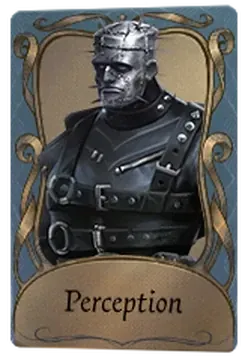
Here's the thing about beginner-friendly hunters—they don't make you juggle fifteen different mechanics while you're still figuring out basic camera controls. Hell Ember's your perfect example. His Infernal Soul ability? Dead simple. Build Fury charges by stunning yourself (yeah, it sounds weird), then either summon Phantoms to mess with survivors or drop Puppets for quick teleports.
Smiley Face takes a similar approach. Rocket Dash does exactly what it says on the tin—you dash really fast in a straight line. No complex timing windows, no intricate combos. Just point and zoom.
These straightforward mechanics let you focus on what actually matters during your first 20-30 matches: learning to manually control your camera, understanding Terror Radius positioning, and developing basic patrol patterns. You can't master advanced strategies if you're still fumbling with ability rotations.
Forgiving Learning Curve
Now, I know what you're thinking—But won't I be stuck with weak hunters? Not exactly. Here's where it gets interesting.
Hell Ember sits at 5/35 in our overall hunter rankings, which sounds terrible until you realize he's specifically designed to teach you presence buildup and map control without punishing every mistake. Gamekeeper's another great example—ranked 16/35 in C-tier, but his hook-based mechanics are forgiving enough that you can mess up positioning and still contribute meaningfully to matches.
For new players looking to enhance their gameplay experience, Identity V echoes recharge for new players through BitTopup provides convenient access to characters and cosmetics. BitTopup offers competitive pricing, fast delivery, and secure transactions, making it easier for beginners to access the full roster of hunters for practice.
The beauty of these hunters? They remain viable even when you're not playing them optimally. That's crucial for maintaining motivation during the learning process.
Meta Viability Assessment
Season 39 dropped on September 17, 2025, and honestly? The changes favor exactly the kind of direct pressure tactics that beginner hunters excel at. We're seeing 10-15% faster chair saves and 5-10% healing efficiency reductions—changes that reward straightforward camping and pressure over complex mind games.
Current tier distributions show our beginner picks spanning D-tier through B-tier: Hell Ember (5/35), Smiley Face (10/35), Gamekeeper (16/35), Wu Chang (23/35), and Violinist (25/35). That's a clear progression path from foundation to advancement.
Here's something most guides won't tell you—tournament play frequently bans S-tier hunters, which means these beginner picks suddenly become viable in competitive environments. That's not coincidence; that's smart design.
Top 5 Best Beginner Hunters for 2025
Complete Character Rankings
Let me break this down by tier, because understanding progression matters more than arbitrary lists:
D-Tier Foundation (0-14 points):
- Hell Ember (5/35): Your starting point. Simple puppet mechanics, teaches fundamentals
- Smiley Face (10/35): Mobility focus with rocket systems that actually make sense
C-Tier Development (15-19 points):
- Gamekeeper (16/35): Hook mastery and trap fundamentals. This is where you start feeling like a real hunter
B-Tier Advancement (20-29 points):
- Wu Chang (23/35): Dual-form complexity with teleportation. Advanced but manageable
- Violinist (25/35): Precision debuff application. High skill ceiling, but the fundamentals are learnable
Each tier represents roughly 50-100 matches of focused practice. Don't rush it.
Win Rate Analysis
Numbers don't lie, and these hunters deliver consistent results across skill levels. Hell Ember maintains 40-50% win rates from Worker Bee through Elk tiers—not spectacular, but reliable enough to learn on. His camping effectiveness teaches you essential hunter fundamentals without requiring mechanical mastery.
Smiley Face shows 45-55% success rates, particularly on large maps like Lakeside Village where rocket mobility provides maximum advantage. The key here is understanding when and where to use that mobility—something you'll learn naturally through repetition.
Gamekeeper's the interesting one. Consistent 50-60% performance thanks to reliable hook control and trap mechanics. Once you nail hook accuracy (and you will, with practice), this hunter becomes genuinely threatening.
Wu Chang achieves 55-65% win rates when players master form switching, though recent nerfs—including those annoying teleport sound cues—have impacted higher-tier viability. Still excellent for learning versatility.
Violinist maintains 60-70% success in coordinated play where debuff stacking proves most effective. This is your graduation hunter—master Violinist, and you're ready for anything.
Hell Ember: The Perfect Starting Hunter
Ability Breakdown
Hell Ember's Infernal Soul operates through the most straightforward charge system in the game. You accumulate Fury charges by performing self-stun actions (hitting walls, missing attacks, etc.), then deploy either Phantoms for area control or Puppets for positioning.
Phantoms are slow-moving area denial tools—think of them as mobile obstacles that force survivors to take longer routes. Puppets? Basic teleportation to chairs or cipher machines. Simple, effective, learnable.
Optimal usage: self-stun near active ciphers to build charges, place Puppets at chokepoints, use Phantoms during rescue attempts to create chaos. It's not rocket science, which is exactly the point.
Gameplay Strategy
Hell Ember excels at double-hit camping scenarios. Here's your basic gameplan: down a survivor, chair them, place a Puppet nearby, then defend. When rescuers approach, use your Puppet placement to secure eliminations against uncoordinated teams.
Critical rule: avoid chases exceeding 2 minutes. Hell Ember's slow speed makes extended pursuits counterproductive. Instead, focus on defending 3 nearby cipher machines, use Tinnitus persona for decoding detection, and redirect failed chases to basement areas where Puppet placement provides maximum advantage.
This character teaches three essential hunter fundamentals: presence management, chair timing, and positional awareness. Master these with Hell Ember, and every other hunter becomes easier to learn.
Common Builds
Your standard 3-6-9 endurance path includes Confined Space for 20-second window blocking, Insolence for enhanced presence gains, and Detention for endgame one-hit potential. Trait selection focuses on Tinnitus for cipher detection, Patroller for survivor movement penalties, and Teleport for emergency repositioning.
Aim to accumulate 40 persona points per match through consistent basic attacks and presence-building activities. It's not glamorous, but it works.
Smiley Face: Reliable Map Control
Rocket Dash Mechanics
Smiley Face's Rocket Dash provides high-speed chase capabilities that feel immediately satisfying. Rocket Modification enhances duration and applies healing delay debuffs to injured survivors—a simple but effective combo that teaches you about ability synergy without overwhelming complexity.

The ability relies on map collectibles for optimal performance, which means you'll naturally learn patrol routes while gathering items. Proper usage involves initiating dashes on detected survivors within Terror Radius range, then following up with Modification for extended pursuit.
Here's the catch: cooldown limitations require strategic usage. Don't waste dashes on obstacles or predictable survivor movements. Learn to read survivor behavior, and your dash effectiveness improves dramatically.
Positioning Tips
Smiley Face achieves maximum effectiveness on large, open maps where rocket mobility provides clear advantages. Lakeside Village and similar expansive areas allow for predictable dash paths with minimal obstacle interference.
Start matches by patrolling 3-4 central ciphers using initial survivor reveals, then use rocket mobility to respond quickly to decoding activities. Central positioning maximizes dash utility across multiple cipher machines—a lesson that applies to every hunter you'll ever play.
The positioning skills you develop with Smiley Face transfer directly to more complex hunters later.
Counter-Play Strategies
Against mobile survivors like Mercenary or Forward, use rocket dashes to cut off escape routes rather than direct pursuit. It's about positioning, not speed. Target decoders like Mind's Eye or Mechanic who lack strong kiting abilities and can be eliminated quickly with proper dash timing.
For those seeking reliable access to premium content, safe Identity V echoes top up website services through BitTopup ensure secure transactions with competitive rates and fast delivery. BitTopup's platform provides 24/7 customer support and multiple payment options.
Gamekeeper: Hook and Control Master
Hook Accuracy Training
Gamekeeper's hook mechanics require precision, but they're learnable through systematic practice. Hooks attach to objects for positioning advantages and can pull survivors from vaulting animations or kiting loops. Thorny Hook enables distant Terror Shock applications—incredibly satisfying when you nail the timing.

Training hook accuracy involves practicing in custom matches during off-peak hours (6:00-12:00 server time works well). Focus on common vaulting points, pallet locations, and rescue approach angles. Successful hooks require predicting survivor movement during hook travel time, which sounds complex but becomes intuitive with repetition.
Pro tip: start with stationary targets (survivors on ciphers) before attempting moving hooks. Build confidence, then increase difficulty.
Map-Specific Strategies
Gamekeeper excels on maps with numerous hookable objects and chokepoint control opportunities. Sacred Heart Hospital provides optimal hook angles through its corridor design, while Red Church offers basement control advantages for trap placement.
Position traps near chairs for Terror Shock on rescuers, place them at cipher machine clusters for decoding interruption. Destroy pallets post-seating to limit survivor options during subsequent chases, and prioritize Gardener elimination to prevent sabotage attempts.
Each map teaches different lessons about positioning and control. Embrace the learning process.
Advanced Techniques
Advanced Gamekeeper play involves chaining hooks with trap placement for guaranteed double hits. Use hook pulls to position survivors near pre-placed traps, then follow up with basic attacks for quick eliminations.
Energy management proves crucial—avoid overusing hooks during early game when presence levels limit effectiveness. Build presence through basic attacks and patrol activities, then transition to hook-heavy gameplay during mid-to-late game phases.
This is where Gamekeeper starts feeling genuinely powerful.
Wu Chang: Versatile Dual-Form Hunter
Black and White Guard Mechanics
Wu Chang's Dual Soul switches between White Guard for charged attacks and fast chase scenarios, and Black Guard for stun recovery and camping effectiveness. White Guard provides 80% movement speed during charged attacks, while Black Guard offers stun immunity and enhanced camping abilities.
Recent nerfs include 1.2-second damage delays post-hit and teleport sound cues, but the core mechanics remain solid. Infinite Nirvana provides umbrella buffs and debuffs that enhance both forms' effectiveness with 70-second cooldowns for repositioning.
The complexity here is manageable because each form has a clear purpose. You're not juggling random abilities—you're choosing the right tool for each situation.
Form Switching Strategies
Optimal Wu Chang play begins in White Guard for initial chases using charged attacks to close gaps. Switch to Black Guard for chair camping and stun recovery during rescue attempts, then return to White Guard for subsequent pursuits.
Teleport to interrupt distant cipher machines at 98-99% completion, respond to rescue attempts, or reposition during failed chases. Form switching requires anticipating game flow rather than reacting to immediate threats—a skill that separates good Wu Chang players from great ones.
This is advanced thinking, but it's learnable through systematic practice.
Team Coordination
Target rescuers like Mercenary or Coordinator during Black Guard phases when stun immunity prevents harassment. Use White Guard mobility against kiters like Perfumer or Enchantress who rely on distance maintenance.
Accumulate presence through consistent basic attacks rather than elimination focus, then leverage enhanced abilities during critical moments. Presence building through Insolence trait enhances both forms' effectiveness during endgame scenarios.
Wu Chang teaches you to think strategically about matchups and timing—skills that transfer to every hunter in the game.
Violinist: Precision and Elegance
String Mechanics
Violinist's Demon Notes stack up to 3 times, applying -12% movement speed and -50% action speeds for decoding, healing, and gate operations. Terrifying String Music delivers long-range damage during vaulting animations or predictable movement patterns. Rhapsody enables rapid attacks that ignore backswing animations.
String accuracy requires predicting survivor movement patterns and timing attacks during animation locks. Target survivors during vaulting, pallet dropping, or rescue attempts when movement becomes predictable.
This is precision gameplay at its finest—demanding, but incredibly rewarding when mastered.
Note Combinations
Effective note stacking involves applying Demon Notes during chase initiation, then using String Music for follow-up damage during survivor evasion attempts. Three-stack debuffs significantly reduce survivor effectiveness, making eliminations achievable through sustained pressure.
Rhapsody proves most valuable during endgame scenarios where rapid attacks can secure eliminations. Infinite Movement creates AoE disruption that complements note application—use area effects to force survivors into predictable positions.
The key is patience. Build your stacks methodically, then capitalize on debuffed survivors.
Advanced String Plays
Tournament-level Violinist play emphasizes debuff timing and precision targeting. Focus on decoders like Mind's Eye or Mechanic who cannot effectively counter string attacks through mobility. Chain note applications with presence gains to maximize debuff duration during critical game phases.
Counter stunning survivors like Forward or Coordinator using Excitement trait combinations that prevent harassment during string sequences.
Master Violinist, and you've mastered precision gameplay in Identity V.
Essential Hunter Personas and Builds
Meta Persona Combinations
The 2025 meta favors active persona traits over passive abilities—a shift that benefits aggressive players willing to make decisive moves. Essential builds include Confined Space for 20-second window blocking, Teleport for 70-second cooldown repositioning, and Detention for endgame one-hit elimination potential.
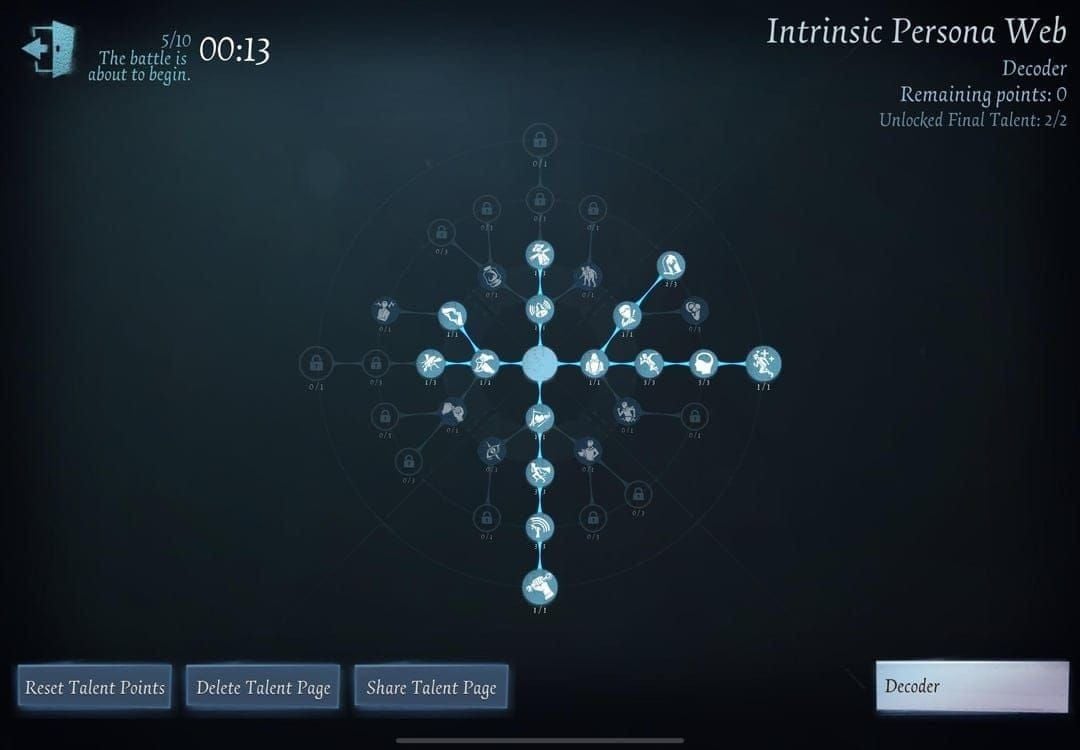
Standard persona paths follow 3-6-9 endurance builds that accumulate 40 points per match. Insolence enhances presence generation for all beginner hunters, while Patroller provides movement penalties every 5 seconds against nearby survivors. Tinnitus proves essential for cipher detection and decoding interruption timing.
These aren't suggestions—they're requirements for competitive play.
Character-Specific Builds
Hell Ember builds prioritize camping effectiveness: Confined Space, Insolence, and Detention with Tinnitus and Patroller traits. Straightforward and effective.
Smiley Face requires mobility enhancement: Excitement against stunning survivors, Blink for versatility, and Teleport for repositioning. Gamekeeper benefits from control-focused builds: Confined Space for window blocking, Patroller for area denial, and Detention for elimination security.
Wu Chang builds emphasize versatility: Insolence for presence generation, Teleport for map control, and Detention for dual-form effectiveness. Violinist requires precision builds: Excitement against stunning survivors, Teleport for positioning, and Detention for endgame note combinations.
Each build reflects the hunter's core strengths and playstyle requirements.
Situational Adjustments
Adapt persona builds based on survivor compositions and map characteristics. Against decoder-heavy teams, prioritize Tinnitus and Teleport for cipher interruption. Versus rescue-focused compositions, emphasize Confined Space and Detention for camping effectiveness.
Large maps benefit from mobility traits like Blink and Teleport, while small maps favor control options. Server differences influence optimal builds: Asian servers require aggressive rescue counters, while global servers benefit from control-focused approaches.
Flexibility in build adaptation separates good hunters from great ones.
Common Beginner Hunter Mistakes to Avoid
Positioning Errors
The most frequent beginner mistake? Prolonged chases exceeding 2 minutes. I see this constantly—new players get tunnel vision on a single survivor while three ciphers pop in the background. Hell Ember and Gamekeeper particularly suffer from extended pursuits due to limited mobility.
Solution: Limit chases to 60-90 seconds maximum, then redirect to active cipher machines or basement areas. It feels counterintuitive at first, but trust the process.
Clustering mistakes occur when hunters focus on single areas rather than maintaining map control. Proper positioning requires central patrol patterns that cover 3-4 cipher machines while maintaining response capability for rescue attempts.
Learn to think territorially, not individually.
Ability Misuse
Rocket cooldown waste represents a common Smiley Face error—players use dashes without collecting map items or targeting injured survivors for healing delay application. Wu Chang form switching errors include remaining in single forms rather than adapting to game phases.
Violinist note stacking failures occur when players attempt String Music without proper Demon Notes application. These mistakes are fixable through systematic practice and understanding ability synergies.
Test dash extensions in training mode to understand optimal timing and distance management. Knowledge beats instinct every time.
Time Management Issues
Chair timing mistakes involve camping without patrol coverage, allowing cipher completion during elimination attempts. Gamekeeper players frequently focus on hook accuracy while neglecting map pressure, resulting in 3-4 cipher completions during single eliminations.
Solution: Maintain 50% chair presence maximum without patrol. Balance is everything.
Endgame management errors include poor gate control and Tide Turner timing misunderstanding. With gates requiring 18 seconds each for opening, position eliminated survivors far from exits and use Detention for one-hit potential.
Practice Tips and Skill Development
Training Mode Exercises
Structured practice beats random grinding every time. Spend 20-30 Quick Matches with Hell Ember or Smiley Face focusing on fundamental mechanics: 60-second chase limits, chair patrol patterns, and cipher interruption timing.
Use training mode for 40-point persona simulations and ability practice without match pressure. Advanced exercises include custom room practice during 14:00-19:00 server time for duo scenarios and replay analysis.
Track key metrics: kite duration, rescue interruptions, and cipher contribution percentages. Data-driven improvement works.
Ranked Progression Strategy
Skill development follows a predictable timeline: 20-30 matches for Hell Ember and Smiley Face basics, 50-100 matches for Gamekeeper and Wu Chang intermediate techniques, and 100+ matches for Violinist precision mastery.
Progress from Worker Bee through Hound tiers using beginner hunters before transitioning to higher-tier characters. Specialize in 2-3 hunters rather than attempting to master the entire roster.
Recommended combinations include Hell Ember and Wu Chang for camp-to-versatility progression, or Smiley Face and Violinist for mobility-to-precision development. Choose your path and commit to it.
Community Resources
Utilize in-game resources for skill development: replay analysis for positioning improvement, custom matches for ability practice, and Quick Match grinding for consistent experience. Tournament observation provides advanced technique examples, particularly during Bo3/Bo5 formats where beginner hunters appear due to S-tier bans.
Monitor patch updates every 2-3 months for balance changes affecting beginner hunter viability, and adapt builds and strategies accordingly. The meta evolves—stay current or fall behind.
FAQ
Which Identity V hunter is easiest for absolute beginners?
Hell Ember, hands down. With its simple puppet mechanics and 5/35 difficulty rating, this hunter teaches fundamental concepts like presence building and camping without complex ability combinations. Perfect for players learning basic hunter mechanics during their first 20-30 matches.
How long does it take to master each beginner hunter?
Hell Ember and Smiley Face require 20-30 matches for basic competency—you'll feel comfortable with their mechanics pretty quickly. Gamekeeper needs 50-100 matches for hook accuracy (it's all about muscle memory), while Wu Chang and Violinist demand 100+ matches for form switching and precision mastery. Don't rush it.
What persona build works best for new hunter players?
The standard 3-6-9 endurance build with Confined Space, Insolence, and Detention. Add Tinnitus for cipher detection and Patroller for area control. Avoid passive traits in favor of active abilities—you want tools that help you make plays, not sit back and hope.
How do I counter cipher rush as a beginner hunter?
Limit chases to 60-90 seconds maximum, then redirect to active cipher machines using Teleport. Focus on defending 3 central ciphers rather than map-wide pressure, and use Tinnitus persona for decoding detection. It's about efficiency, not heroics.
Which maps are best for practicing beginner hunters?
Smiley Face excels on large maps like Lakeside Village for rocket mobility, while Gamekeeper performs best on Sacred Heart Hospital for hook angles. Hell Ember works well on Red Church for basement control. Learn these map-hunter combinations first.
When should I switch from beginner hunters to advanced characters?
Transition after achieving consistent 55-60% win rates and mastering core mechanics like manual camera control, presence management, and chair timing. This typically occurs after 100-150 total matches across multiple beginner hunters. Don't rush the progression—solid fundamentals matter more than flashy plays.