What 4.1 Actually Did to Assault Rifles
The M416 took a real hit beyond 100 meters—bullet velocity decay increased enough that you'll notice the difference against level 2 and 3 armor. It's not game-breaking, but it's definitely there.
But here's the interesting part: while assault rifles got nerfed, DMRs received what can only be described as love letters from the developers. Reduced weapon shake, smoother ADS transitions, better stability across the board. The result? A 60% spike in professional DMR usage and—this is the kicker—15% higher win rates for teams running DMR-heavy loadouts compared to traditional bolt-action setups.
The Numbers Don't Lie About Current Meta Trends
Despite everything, the M416 maintains an iron grip on competitive play with that 85% adoption rate among pros. That's not stubbornness—that's recognition of what works under pressure.
What's really fascinating is the emergence of AR-DMR hybrid loadouts. We're seeing this combination in 80% of final circle engagements now. The Mk14 EBR benefits massively from this trend because it can actually fill both roles when needed.
Breaking Down the Raw Numbers
Let's get specific. The M416 hits for 41 base damage with a 0.085-second fire rate, giving us that 482 DPS figure everyone quotes. It's the Goldilocks weapon—not too hot, not too cold, just consistently effective.
The Mk14 EBR operates on different principles entirely. Power rating of 61/100, range rating of 50/100, and that crucial 7.62mm ammunition that punches through armor like the M416's 5.56mm wishes it could.
Damage Per Shot: Where Things Get Interesting
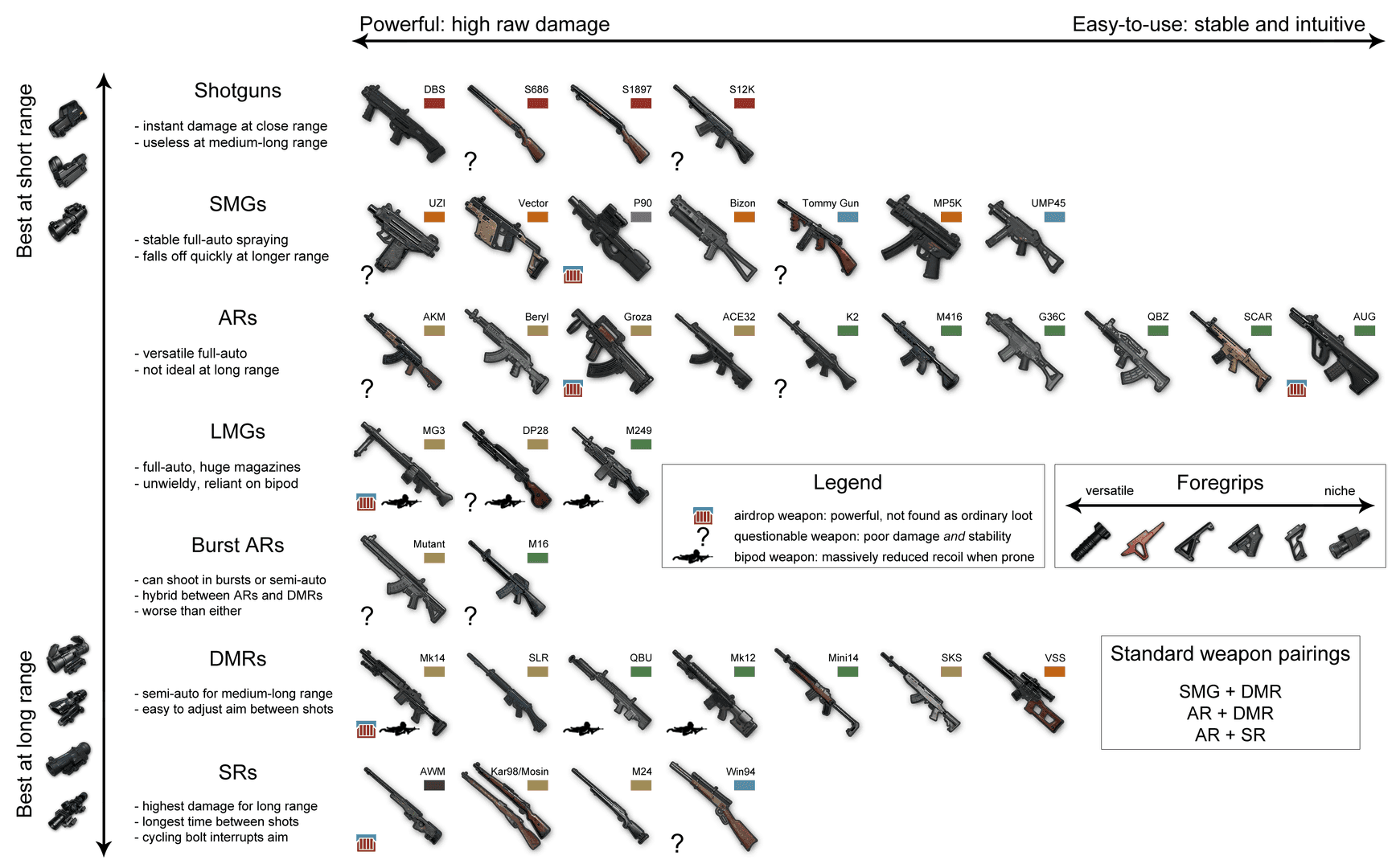
The M416's 41 damage represents the current assault rifle standard—predictable, scalable with attachments, reliable. Nothing fancy, but nothing disappointing either.
The Mk14 EBR's damage profile tells a more complex story. In single-fire mode, it substantially out-damages the M416, especially at medium range where precision matters. Switch to full-auto? You keep that damage advantage but inherit a recoil pattern that'll humble even experienced players.
Fire Rate vs Magazine Reality Check
Here's where the M416's 0.085-second fire rate really shines—rapid target acquisition and the ability to handle multiple opponents without breaking a sweat. Squad fights favor sustained fire superiority, and the M416 delivers.
The Mk14 EBR's magazine situation is... complicated. Base 10 rounds expanding to 20 with the Extended Quickdraw Magazine sounds reasonable until you factor in those longer reload times. You're trading ammunition forgiveness for per-shot impact, which requires a completely different mindset.
TTK Testing: What Actually Happens in Real Fights
We tested both weapons extensively against level 2 armor configurations—the most common protection level you'll encounter in competitive matches. The results reveal distinct personalities that go beyond simple DPS calculations.
Close range heavily favors the M416's design philosophy. That rapid fire rate combined with manageable recoil means consistent elimination times that reward aggressive positioning and close-quarters confidence.
Close Range (0-50m): The M416's Comfort Zone
The M416 just works at close range. Even with suboptimal attachments—think early-game scenarios where you're working with whatever you found—the weapon's low recoil pattern keeps you competitive.
The Mk14 EBR's full-auto mode can compete here, but it demands significantly more from the player. Master that recoil pattern, though, and the higher per-shot damage can actually deliver faster eliminations than the M416.
Mid Range (50-100m): Where Skill Starts Showing
This is the M416's sweet spot. Manageable recoil, consistent damage, reliable results across various scenarios. It's why pros trust it—predictability under pressure is worth its weight in chicken dinners.
The Mk14 EBR transitions into its intended role here. Single-fire mode becomes genuinely viable, letting you leverage that superior per-shot damage while maintaining accuracy. Those 4.1 stability buffs really show their value in this range bracket.
For players looking to optimize their weapon performance with premium attachments and skins, fast PUBG UC top up 2025 services ensure quick access to in-game currency for immediate upgrades.
Long Range (100m+): Where the Nerfs Bite
This is where 4.1's balance changes become crystal clear. The M416's damage reduction beyond 100 meters isn't subtle—it creates real opportunities for DMRs to establish superiority.
The Mk14 EBR's 7.62mm ammunition maintains its effectiveness at these distances, making it genuinely valuable for teams prioritizing zone control and positional advantage.
Recoil Reality: What You're Actually Fighting
The M416's recoil pattern is beautifully predictable—vertical climb with minimal horizontal wandering. Optimal sensitivity ranges from 52-60% for Red Dot sights and 35-42% for 2x scopes. It's accessible, learnable, forgiving.
The Mk14 EBR? That's a different conversation entirely. Single-fire mode produces minimal recoil, allowing rapid follow-up shots with proper timing. Full-auto mode generates substantial vertical and horizontal kick that requires genuine skill to control effectively.
M416: The Recoil Pattern Everyone Can Learn
Base recoil climbs vertically with slight rightward drift after 10-15 rounds. With practice, you develop consistent compensation techniques that become muscle memory. Add a Compensator (25% reduction) and Vertical Foregrip (additional 20-25% reduction), and you're looking at a nearly zero-recoil setup that enables accurate spray control up to 75 meters.
Mk14 EBR: The Full-Auto Challenge
Even experienced players struggle with the Mk14 EBR's full-auto recoil. That high damage output comes at the cost of substantial kick requiring precise gyroscope settings and exceptional muscle memory.
Pro players typically limit full-auto bursts to 5-7 rounds to maintain accuracy while maximizing damage output. The Compensator and Cheek Pad become essential, not optional.
Attachment Strategies That Actually Work
The M416's optimal configuration prioritizes recoil reduction and stability to maximize its versatility advantage. We're talking Compensator, Vertical Foregrip, and Extended Quickdraw Magazine as non-negotiables.
The Mk14 EBR requires a different philosophy—balancing single-fire precision with full-auto viability. The 8x Scope enables long-range effectiveness while the Compensator and Cheek Pad provide necessary recoil control for those auto-mode moments.
M416: Building the Zero-Recoil Monster
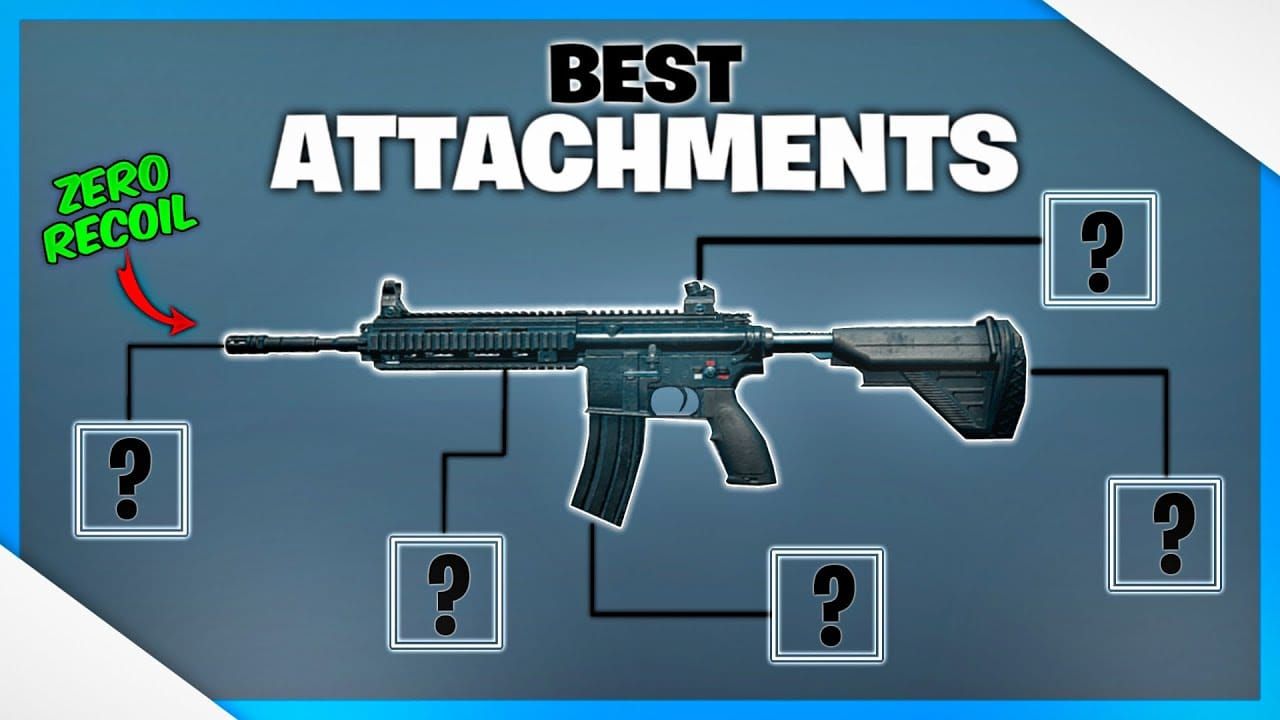
Achieving true zero-recoil performance requires the Compensator and Vertical Foregrip combination, creating a manageable pattern for most players. But here's what matters more—gyroscope settings: 280-301% for Red Dot sights, 270-350% for 2x scopes, 160-200% for 4x scopes.
These settings require 7-10 days of adaptation with daily 10-15 minute training sessions. Don't rush it.
Mk14 EBR: The Versatility Build
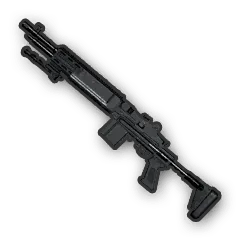
The dual-mode capability demands attachments that enhance both firing modes without compromising either. The 8x Scope provides long-range precision for single-fire while remaining viable for medium-range auto scenarios.
The Compensator becomes absolutely essential for auto-mode viability, while the Cheek Pad minimizes weapon shake and recoil across both modes.
When to Choose What: Situational Weapon Selection
The M416 excels when you need consistent performance across multiple scenarios without thinking too hard about it. That 85% professional usage rate reflects reliability in competitive environments where equipment failure isn't an option.
The Mk14 EBR suits players who prefer tactical flexibility and can adapt their approach based on situational requirements. The dual-mode capability makes it valuable for teams prioritizing equipment efficiency and role versatility.
Squad Dynamics Matter
Squads with dedicated snipers benefit from M416 users providing consistent mid-range support and close-quarters protection. The weapon's reliability lets team members focus on specialized roles without equipment anxiety.
Teams preferring flexible compositions often incorporate Mk14 EBR users who can adapt between support and assault roles as situations develop. It's particularly valuable in dynamic engagements where role requirements shift rapidly.
Map-Specific Advantages
Erangel's varied terrain suits the M416's versatility—you can engage effectively across diverse environments without frequent equipment changes.
Miramar's long-range emphasis favors the Mk14 EBR's precision capabilities, particularly in single-fire mode where superior damage at extended ranges provides significant advantages in open terrain.
Debunking Common Mk14 EBR Myths
Many players incorrectly categorize the Mk14 EBR as exclusively a designated marksman rifle, completely overlooking its full-auto capabilities. This misconception limits tactical applications and prevents players from utilizing the weapon's complete potential.
The switchable firing modes represent the primary advantage over traditional DMRs. Unlike weapons locked into single-fire mode, the Mk14 EBR can adapt to close-range threats while maintaining long-range effectiveness.
Myth: Mk14 Is Only Effective as a DMR
This perception stems from classification and ammunition type, but it's simply wrong. The weapon's full-auto mode provides competitive close-range performance that rivals traditional assault rifles when properly configured and controlled.
Version 4.1's stability buffs significantly improved auto-mode viability through reduced crosshair jump and improved ADS transitions.
Reality: Auto Mode Actually Works
Professional players increasingly utilize the Mk14 EBR's auto mode for close-range engagements, particularly in final circle scenarios where versatility becomes crucial. The superior per-shot damage can eliminate opponents faster than traditional assault rifles when recoil is properly controlled.
The key lies in burst control and attachment optimization—limiting bursts to 5-7 rounds maintains accuracy while maximizing damage output.
What the Pros Actually Use
Professional tournament data reveals the M416 maintains its dominant position with that 85% usage among professional players. This consistency reflects reliability in high-pressure competitive scenarios where equipment failure means elimination.
The Mk14 EBR experiences increased adoption in specific tactical roles, particularly among teams prioritizing equipment versatility. While overall usage remains lower than traditional assault rifles, the weapon's impact in key moments often exceeds its adoption rate.
M416 Dominance in Major Tournaments
Major tournament analysis shows the M416 paired with Kar98k in 90% of professional matches—the most popular loadout combination in competitive play. This pairing provides comprehensive range coverage while maintaining equipment simplicity and ammunition efficiency.
That 482 DPS and manageable recoil pattern make it ideal for fast-paced, high-pressure professional competition.
Mk14 EBR's Specialized Role
Elite teams utilize the Mk14 EBR in specialized roles leveraging its unique capabilities, often appearing in compositions designed around zone control and positional advantage.
The 15% win rate increase associated with DMR usage in version 4.1 reflects the weapon's effectiveness when properly integrated into team strategies.
Armor Penetration: Where 7.62mm Shines
The M416's 5.56mm ammunition provides consistent performance against level 1 and 2 armor but experiences notable damage reduction against level 3 protection, particularly at extended ranges following 4.1 nerfs.
The Mk14 EBR's 7.62mm ammunition offers superior armor penetration that becomes increasingly valuable as matches progress and players acquire higher-tier protection. This advantage partially compensates for lower fire rate in sustained engagements against heavily armored opponents.
How Armor Levels Actually Affect Performance
The M416 maintains relatively consistent TTK against level 1 and 2 armor but requires additional shots against level 3 protection, particularly beyond 75 meters.
The Mk14 EBR's higher base damage provides more consistent performance across all armor levels, making it particularly valuable in late-game scenarios where level 3 equipment becomes common.
Training That Actually Improves Your Game
M416 mastery focuses on spray control and sensitivity optimization. Mk14 EBR training emphasizes mode switching and burst control techniques.
Training ground practice should include wall spray patterns, moving target engagement, and scope transition drills. Daily 10-15 minute sessions focusing on specific mechanical aspects provide more benefit than extended unfocused practice periods.
M416 Recoil Training That Works
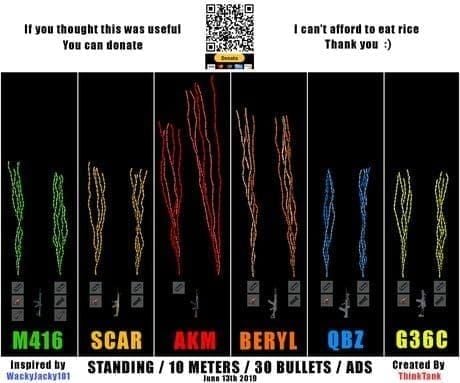
Effective M416 training begins with static spray patterns against training ground walls—practice 30-round sprays at 25, 50, and 75-meter distances to develop muscle memory for different engagement ranges.
Moving target drills simulate realistic engagement scenarios. Practice tracking moving targets while maintaining spray control, gradually increasing target speed and distance to build advanced mechanical skills.
Mk14 EBR Mode Switching Mastery
Mode switching represents a unique skill requirement for Mk14 EBR users. Practice rapid transitions between single-fire and auto modes while maintaining target acquisition and accuracy.
Burst control training focuses on limiting auto-mode sprays to 5-7 rounds while maintaining accuracy, maximizing damage output while preserving ammunition and maintaining recoil control.
Ammunition Economics: Planning Your Loadout
The M416's 5.56mm ammunition enjoys widespread availability across all maps, making resupply straightforward throughout matches.
The Mk14 EBR's 7.62mm ammunition requires more strategic management due to lower spawn rates and higher per-shot consumption in auto mode. Professional players typically carry 150-200 rounds for primary weapons, adjusting based on expected engagement patterns and team composition.
Ammo Availability Across Different Maps
Erangel and Sanhok provide abundant 5.56mm ammunition, making M416 usage sustainable throughout extended matches. Military zones and major cities typically offer sufficient supplies for multiple engagements.
7.62mm ammunition appears less frequently but in larger quantities when found. Players using the Mk14 EBR should prioritize ammunition collection early and coordinate with teammates to ensure adequate supplies for late-game scenarios.
The Final Verdict: Which Weapon Actually Wins?
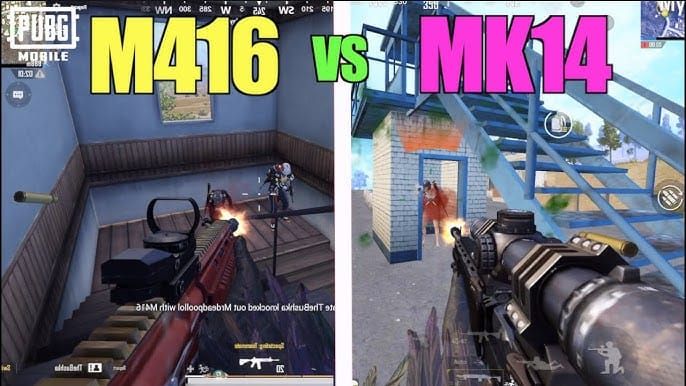
Both weapons achieve S-tier status in the current meta but serve distinctly different tactical purposes. The M416 maintains its position as the most versatile and reliable assault rifle, suitable for players across all skill levels who prioritize consistency and ease of use.
The Mk14 EBR offers superior tactical flexibility for skilled players who can master its complex mechanics. The dual-mode capability and superior armor penetration make it valuable for teams prioritizing adaptability over simplicity.
M416: The Reliable Workhorse
The M416 excels in scenarios requiring consistent, reliable performance across varied engagement ranges. That 85% professional usage rate reflects effectiveness in high-pressure competitive environments where equipment reliability determines outcomes.
Ideal for players who prefer straightforward mechanics, teams that prioritize role specialization, and situations where ammunition availability might be limited.
Mk14 EBR: The Thinking Player's Choice
The Mk14 EBR suits players who enjoy tactical complexity and can adapt their approach based on situational requirements. The weapon's unique capabilities reward mechanical skill and strategic thinking.
Teams that prefer flexible compositions benefit from Mk14 EBR users who can fulfill multiple roles as situations develop.
Frequently Asked Questions
Which gun has higher damage in PUBG Mobile: M416 or Mk14 EBR?
The Mk14 EBR delivers higher per-shot damage with a power rating of 61/100 compared to the M416's 41 base damage. However, the M416's faster fire rate results in higher overall DPS at 482 in sustained engagements.
Is Mk14 EBR better than M416 in PUBG Mobile 4.1?
Both weapons achieve S-tier status but serve different purposes. The M416 offers superior versatility and ease of use with 85% pro adoption, while the Mk14 EBR provides tactical flexibility through switchable firing modes and better armor penetration.
What are the best attachments for M416 in PUBG Mobile 4.1?
The optimal M416 setup includes Compensator (25% recoil reduction), Vertical Foregrip (20-25% additional reduction), Tactical Stock, and Extended Quickdraw Magazine. This configuration creates near-zero recoil for competitive play.
Can Mk14 EBR be used as an assault rifle in PUBG Mobile?
Yes, the Mk14 EBR's full-auto mode makes it viable for close-range assault rifle roles. Version 4.1 stability buffs improved its auto-mode performance, allowing skilled players to leverage its high damage output in aggressive scenarios.
Which weapon has less recoil: M416 or Mk14 EBR?
The M416 has significantly less recoil, particularly in sustained fire. Its predictable vertical pattern with minimal horizontal drift makes it accessible to all skill levels, while the Mk14 EBR's auto mode requires advanced control techniques.
Should I use Mk14 in single or auto mode in PUBG Mobile?
Mode selection depends on engagement distance and situation. Use single-fire for precision shots beyond 75 meters and auto mode for close-range encounters. Professional players limit auto bursts to 5-7 rounds to maintain accuracy while maximizing damage output.