What is Mock Battle in NIKKE?
Mock Battle offers unlimited zero-cost simulations through the Union Raid interface. Test any team configuration without expending weekly battle allocations or resources. Displays damage numbers, skill rotations, and burst timing exactly as they'd appear in actual attempts.
Uses same character stats, skill multipliers, and base damage formulas as real raids. Characters deal damage based on actual attack values, equipped gear, and skill levels. Boss models show identical visual appearances and attack animations.
However, it's a static snapshot, not dynamic simulation. Boss defense values stay constant, phase transitions trigger on simplified health thresholds, and environmental factors affecting real raids don't apply.
Core Purpose of Mock Battle Feature
Designed for comparative team testing, not absolute damage prediction. Excels at answering Does Team A beat Team B? rather than providing exact damage forecasts.
This framework lets you test skill rotation timing, identify synergy issues, and practice burst coordination. A team dealing 45M in Mock Battle will likely outperform one dealing 38M in real raids, even if both numbers drop proportionally.
Also serves educational purposes—observe attack patterns, identify core hit opportunities (Obelisk's head maximizes core damage), understand phase triggers without risking limited weekly attempts.
Why Players Notice Damage Discrepancies
Gap becomes apparent when exceptional Mock Battle performance (60M damage) drops to 48M in actual raids—a 20% reduction that frustrates commanders who invested resources expecting direct translation.
Psychological factors amplify this. Commanders remember best Mock Battle attempts while comparing to average real raid results. The three-attempt limit creates pressure absent in unlimited Mock Battle testing, potentially affecting execution.
Union Raid damage calculation incorporates numerous multipliers—base critical rate 15%, critical damage 50%, core hit bonuses 200-250%, elemental modifiers—all calculate correctly in both modes but apply differently when boss defense fluctuates dynamically.
It's Not a Bug: Real Mechanics Behind Damage Variance
The higher Mock Battle damage stems from intentional mechanical differences, not system errors.
Boss Defense Stat Differences Explained
Union Raid bosses feature defense scaling with stage progression and dynamic response to incoming damage in real raids:
- Obelisk Stage 1: 4,326 defense, 17,920,249 HP
- Obelisk Stage 6: 9,660 defense, 429,279,564 HP
- Modernia Stage 6: 9,660 defense, 1,337,370,974 HP
- Storm Bringer Stage 6: 13,329 defense, 1,225,923,379 HP
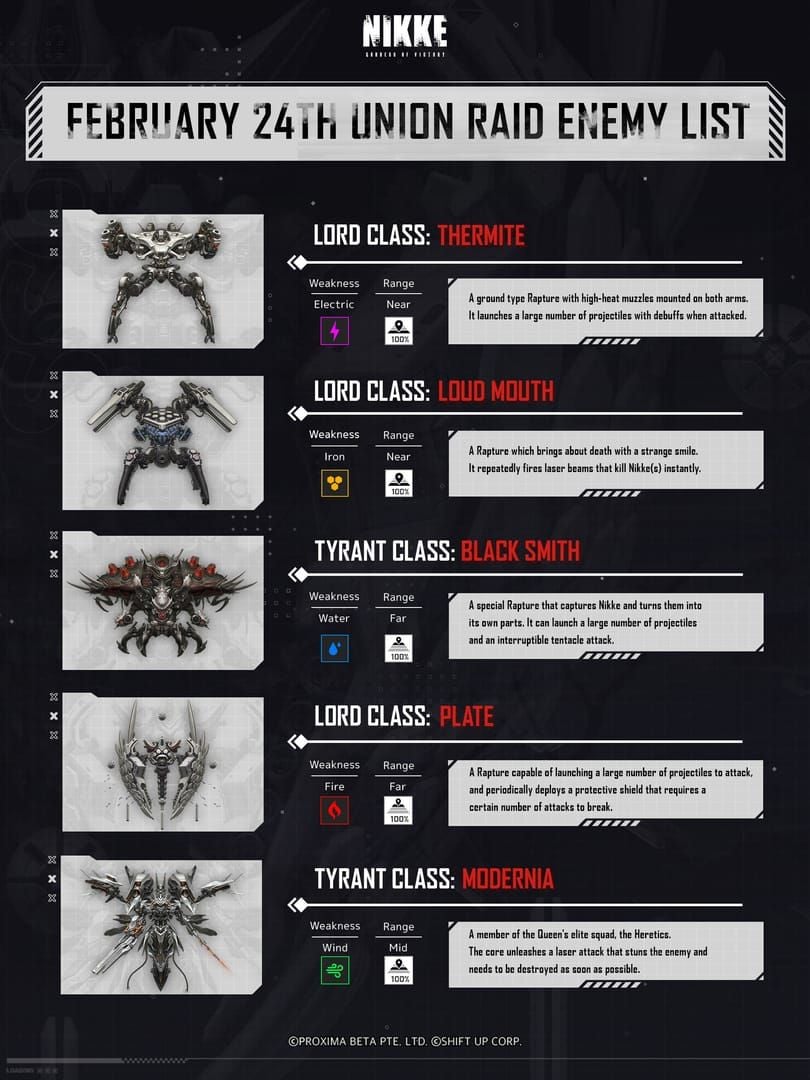
Mock Battle uses baseline defense without dynamic resistance scaling. Real raids add temporary defense increases during attack animations, phase transitions, and mechanic activations. Damage formula specifies target defense can't drop below zero—defense reduction debuffs hit diminishing returns faster in real combat where base defense fluctuates.
A team reducing boss defense 40% might apply that against static 9,660 in Mock Battle but against 9,660-12,000+ in real combat as bosses cycle through defensive phases.
Phase Transition Impact on Damage Output
Boss phase transitions interrupt damage windows differently. When Modernia transitions, she becomes briefly invulnerable while triggering enrage—unless you pause before timer expires to skip enrage. This invulnerability consumes 2-4 seconds of burst windows, directly reducing damage.
Mock Battle simplifies transitions, often allowing damage through periods where real raids force interruptions. Storm Bringer's phase changes create damage-immune windows in actual combat Mock Battle doesn't fully replicate.
Timing relative to burst rotation creates variance. If Full Burst (50% damage bonus) activates as phase transition begins, you lose significant burst window to invulnerability frames. Mock Battle's simplified timing rarely penalizes burst coordination this severely.
Environmental Debuffs in Real Raids
Certain bosses apply environmental debuffs reducing team damage or survivability in actual attempts. These don't exist or operate with reduced intensity in Mock Battle. Storm Bringer's turret mechanics have documented bugs in real raids unexpectedly reducing damage.
Doctor's healing parts require destruction to negate boss healing—functions identically in both modes but interacts differently with team DPS allocation. Mock Battle lets you ignore healing mechanics; real raids punish this by extending fight duration.
Positioning requirements affect damage application. Rocket launcher splash damage hits Obelisk's floating balls effectively in both modes, but real raid positioning pressure from boss attacks forces characters out of optimal splash ranges.
Burst Gauge Generation Timing Variations
Burst gauge follows identical base rules, but practical generation rates differ. Real raids feature interruptions from boss mechanics, character repositioning, brief target unavailability—all reducing consistency versus Mock Battle's smoother flow.
Network latency introduces 0.2-0.5 second delays in burst activation. A rotation executing perfectly in Mock Battle might experience delays in actual combat due to server communication, causing burst windows to misalign with optimal damage phases or defensive debuff uptimes.
Particularly affects teams requiring precise coordination. Compositions using Liter, Dolla, Scarlet, Modernia, Rapunzel need exact burst sequencing. Minor timing shifts cause defensive debuffs to expire before primary damage dealers activate bursts, substantially reducing damage versus Mock Battle.
Detailed Damage Calculation Breakdown
Base Damage Formula in NIKKE
Damage calculation: character attack × skill multipliers, modified by conditional bonuses. Default critical rate 15%, base critical damage 50%—roughly one in seven shots deals 150% damage.
Core hit mechanics add substantial multipliers:
- Standard core hits: 200%
- Charge weapon users: 250%
- Base core damage: 200%
Landing shots on boss weak points (Obelisk's head) effectively triples damage before other multipliers.
Charge damage multipliers: 150%/250%/350% by charge level, with charge weapon users receiving additional 250% multiplier. Collection items boost these—SG SMG items increase Normal Attack Damage, RL SR items boost Charge Damage × Base Charge Damage.
Full Burst adds 50% damage during burst windows. Effective range bonuses contribute 30% at optimal distances. Element bonus starts at base 10% against weak bosses.
Defense Reduction Mechanics
Defense reduction subtracts from boss effective defense before damage calculation. Critical limitation: target defense can't drop below zero.
If boss has 9,660 defense and your team applies 10,000 reduction, effective defense becomes zero in Mock Battle. In real raids, that boss might have 11,500 defense during certain phases, leaving 1,500 effective defense—reducing damage versus Mock Battle.
Creates scenarios where defense-focused teams show diminishing returns. Units like Zwei, Nayuta, K, Snow White negatively impacted by certain mechanics may show different performance between modes, while Maxwell, Eunhwa Tactical Upgrade, Moran, Red Hood remain technically unaffected.
Longer real raids mean bosses spend more time in high-defense states versus Mock Battle's streamlined flow, reducing average damage across encounters.
Critical Hit and Elemental Multipliers
Critical hits calculate identically using 15% base rate and 50% base damage, but practical counts vary due to fight duration differences. Mock Battle lasting 90 seconds generates different critical distributions than real raids extending to 110 seconds.
Elemental multipliers apply consistently, but practical impact varies with composition constraints. Union Raids limit each Nikke to one use per event week across all three battles, forcing distribution of strongest units rather than concentrating optimal element matchups.
This doesn't affect Mock Battle where you freely test ideal element compositions. Perfect elemental advantage teams might achieve exceptional Mock Battle damage but prove impractical for real progression where you preserve characters for harder stages.
Critical hits on core hits apply both 150% critical multiplier and 200-250% core multiplier, resulting in 300-375% damage. Small core hit accuracy differences compound through multiplicative relationships.
How Debuff Stacks Calculate Differently
Debuff stacking mechanics function identically regarding stack limits and duration, but practical uptime percentages differ substantially. Mock Battle's uninterrupted flow makes maintaining maximum stacks easier than real raids where phase transitions, invulnerability, positioning create gaps.
A debuff requiring continuous attack application might achieve 95% uptime in Mock Battle but only 75% in real raids. This 20% reduction directly translates to proportional damage reduction.
Debuff resistance scales differently. Some bosses gain increasing resistance as fights progress, reducing duration or effectiveness in longer encounters. Real raids typically run longer than Mock Battle, meaning higher average debuff resistance.
Stack refresh timing creates variance. Debuffs refreshing on hit maintain perfect uptime in Mock Battle's consistent flow but experience lapses in real raids when mechanics force brief interruptions, allowing stacks to expire.
Real-World Examples: Mock vs Actual Damage Comparison
Case Study: High-Performance Team Variance
Recorded attempt using Cinderella, Rupee, Snow White, Mary, Clude achieved over 8 billion damage in specific configurations. However, commanders replicating in Mock Battle consistently observed 10-15% higher damage than actual raids. Team's reliance on precise burst timing and debuff coordination meant minor timing variations from latency or phase transitions substantially reduced real effectiveness.
Composition using Sailor, Mast, Frunny, Anchor, Clude recorded over 6 billion damage. Showed smaller variance—8-12%—due to less reliance on precise timing and more consistent damage throughout encounters.
Variance percentage differences highlight how composition design affects Mock Battle accuracy. Timing-independent teams show smaller discrepancies; burst-dependent compositions experience larger gaps.
Specific Team Composition Analysis
Obelisk RL composition (N102, Centi, Laplace, Vesti, Noise): Rocket launcher splash hitting floating balls works identically, but positioning pressure in real raids occasionally forces suboptimal angles reducing splash effectiveness. Shows 12-18% higher Mock Battle damage.

Primary variance sources: positioning interruptions from Obelisk's attacks reducing splash efficiency, phase transition timing interrupting rocket launcher charges, network latency affecting charge release timing.
Modernia DPS composition (Liter, Dolla, Scarlet, Modernia, Rapunzel): Requires Synch Level 221+ for Modernia Level 6. Shows 15-22% variance, primarily from burst timing sensitivity and pause-to-skip-enrage technique.
Pause technique to skip Modernia's enrage adds execution complexity absent in Mock Battle. Mistiming by one second triggers enrage substantially reducing damage—variance Mock Battle can't predict.
Frame-by-Frame Damage Output Tracking
Mock Battle delivers consistent frame-by-frame damage. Character dealing 50K per shot maintains that throughout, creating smooth damage curves.

Real raids show fluctuations—same character alternates between 50K and 42-48K as boss defense shifts during animations and phase states. Micro-variations accumulate over 90-120 second encounters, creating 15-30% total gaps.
Burst window analysis shows patterns. Full Burst in Mock Battle might generate 15M damage; identical team in real raids generates 12.5-13.5M due to brief interruptions, mistimed activations from latency, defensive scaling during burst.
Core hit tracking reveals accuracy differences. Mock Battle's predictable positioning allows 85-90% core hit rates; real raid movement patterns reduce practical rates to 75-82%, directly reducing damage through lost 200-250% multipliers.
Factors Only in Real Union Raids
Boss Resistance Scaling Over Time
Union Raid bosses implement progressive resistance scaling increasing defensive values as encounters extend beyond expected thresholds. Anti-stall mechanism prevents infinite damage through extended fights but penalizes teams experiencing interruptions or errors.
Mock Battle doesn't implement time-based scaling. Teams taking 120 seconds face same defense throughout; real raids encounter increasing defense after ~90 seconds, reducing damage during final 30 seconds.
Particularly affects lower burst, sustained output teams. Gradual debuff stacking and sustained damage windows show excellent Mock Battle performance but hit resistance scaling in real raids Mock Battle never predicted.
Scaling interacts negatively with execution errors. Mistiming burst or failing pause-to-skip-enrage extends time, triggering resistance scaling that compounds original error's damage loss—cascading degradation Mock Battle can't simulate.
Network Latency and Input Delay Effects
Real-time network communication introduces 50-200ms delays between input commands and server execution. Burst activation, skill triggers, basic attacks all experience delays creating timing variance absent in Mock Battle's client-side simulation.
Delays accumulate throughout encounters. 100ms delay on ten burst activations totals one second lost damage time—enough to miss 2-4 high-damage attacks during critical windows. Mock Battle executes instantly without network communication.
Latency particularly affects precise rotations. Teams requiring specific skill sequences to maximize debuff overlap experience degraded performance when delays cause skills to activate 0.1-0.3 seconds late, potentially causing buff windows to expire before damage skills activate.
Input buffering differences create variance. Mock Battle allows perfect buffering where commands queue instantly; real raids sometimes drop or delay buffered inputs during high-action moments, forcing repeated inputs or suboptimal timing.
Random Number Generation (RNG) Impact
Both modes use identical RNG for critical hits, skill procs, damage variance, but practical impact differs due to attempt volume. Commanders run dozens of Mock Battle tests, naturally selecting best results, while real raids limit to three attempts weekly, making unfavorable RNG more impactful.
Team with 15% critical rate might achieve 18-20% across fifty Mock Battle attempts due to variance, with commanders remembering high-performing attempts. Same team in three real attempts might experience 12-15%, creating perceived gaps from sample size differences rather than mechanical changes.
Skill proc RNG creates similar variance. Characters with 30% bonus damage proc chance might proc favorably in selected Mock Battle attempts but average closer to expected values across limited real attempts.
Damage range RNG contributes. Most attacks deal damage within ±5% range. Mock Battle's unlimited attempts let commanders experience high end more frequently than three-attempt real raid limit permits.
Union Chip Activation Timing
Union Chips provide temporary buffs—Obelisk Stage 1 provides 40 chips, Stage 6 offers 80, Modernia/Storm Bringer Stage 6 provide 90. Activate during combat for temporary advantages, but timing varies between modes.
Mock Battle chip activations follow simplified timing not accounting for combat flow interruptions. Real raids experience delays when bosses enter invulnerability or phase transitions occur, causing chip buffs to activate during low-value moments rather than optimal damage windows.
Interaction between chip buffs and burst windows creates variance. Chip activating before Full Burst in Mock Battle gains full benefit during highest damage phase. Real raids might delay activation until after burst expires, substantially reducing practical value.
Chip buff duration interacts differently with fight length. Mock Battle attempts run shorter due to uninterrupted flow, meaning chip buffs cover higher percentage of fight time. Real raids run longer, diluting chip effectiveness across extended duration.
Common Misconceptions About Mock Battle Testing
Myth: Mock Battle is Completely Accurate
Many treat Mock Battle as precise damage calculator predicting real raid performance within 1-2%. This expectation stems from visual similarity and identical character stats.
Reality: Mock Battle serves as relative comparison tool, not absolute predictor. Excels at Which team is stronger? but can't account for dynamic variables. The 15-30% gap represents normal behavior, not errors.
Developers designed it for composition testing and rotation practice, not damage calculation. Understanding this design intent helps use the feature appropriately.
Experienced commanders use it for relative baselines—if Team A deals 20% more than Team B in Mock Battle, Team A likely outperforms Team B in real raids by similar margin, even if both absolute numbers drop proportionally.
Myth: Higher Mock Damage Guarantees Better Results
Some assume maximizing Mock Battle damage automatically translates to optimal real raid performance. Leads to compositions excelling in simplified environments but struggling with real mechanics.
Glass cannon teams might achieve exceptional Mock Battle numbers but fail to survive real raid patterns, resulting in early wipes delivering lower total damage than balanced compositions. Mock Battle doesn't penalize glass cannon strategies the same way.
Teams optimized for perfect execution under ideal conditions show impressive Mock Battle performance but prove inconsistent in real raids where latency, phase timing, positioning create execution challenges. Team dealing 55M in Mock Battle with perfect play might average only 42M in real raids; more forgiving team dealing 48M in Mock Battle might average 44M through consistent execution.
Most effective approach combines Mock Battle testing with real raid experience. Use Mock Battle to identify promising compositions and practice rotations, then refine based on actual performance data.
Myth: The System is Bugged or Broken
When encountering damage gaps, many conclude system contains bugs. Perception intensifies when gap seems inconsistent—sometimes 15%, sometimes 25%—leading to beliefs that randomness indicates broken mechanics.
However, variance stems from legitimate mechanical differences, not errors. Boss defense scaling, phase timing, network latency, RNG all contribute to variable gaps changing between attempts based on how factors align.
Union Storm Bringer turret bug represents actual documented issue, but most perceived bugs are intended mechanical differences. Developers haven't indicated plans to make Mock Battle more accurate, suggesting current implementation serves intended purpose.
Understanding system works as designed—Mock Battle intentionally simplified for testing—helps adjust expectations and use feature appropriately rather than waiting for fixes that won't arrive.
Truth: Mock Battle as Relative Comparison Tool
Most productive perspective treats Mock Battle as relative performance measurement. When testing Character A versus Character B replacement, Mock Battle accurately indicates which improves team performance, even if it can't predict exact numbers.
Relative framework extends to skill rotation testing. If Rotation A produces 10% more damage than Rotation B in Mock Battle, that relationship likely holds in real raids even if both absolute damages drop.
Mock Battle effectively identifies synergy issues. If adding supposedly powerful character reduces Mock Battle damage, that indicates anti-synergy problems affecting real raids too.
For maximizing Union Raid performance, well-developed characters become essential. Buy goddess of victory nikke gems through BitTopup for character progression resources with secure transactions and excellent customer service.
How to Effectively Use Mock Battle for Team Testing
Establishing Baseline Damage Benchmarks
Begin by establishing baseline with current best team. Run 5-10 Mock Battle attempts accounting for RNG variance, recording damage totals. Calculate average and note range between highest and lowest.
Baseline provides context for evaluating alternatives. If baseline averages 42M with 39-45M range, new teams need to consistently exceed 42M to represent genuine improvement versus normal variance.
Document specific conditions: which boss, stage level, relevant combat notes like burst timing or core hit accuracy. Details help replicate testing conditions when evaluating alternatives, ensuring fair comparisons.
Baseline reveals execution consistency. Large variance (39-45M = 15%) indicates execution inconsistency addressable through rotation practice. Smaller variance (41-43M = 5%) suggests consistent execution where composition changes show clearer impact.
Comparative Testing Methodology
Change only one variable at a time. Replace single character rather than rebuilding entire team, isolating that character's specific contribution. If damage increases, you've identified improvement; if decreases, anti-synergy or weaker option.
Run multiple attempts with each variation accounting for RNG. Single exceptional attempt doesn't confirm improvement—need consistent performance across 3-5 attempts showing average damage increases of 5-8%+ to confidently identify genuine improvements over variance.
Document skill rotation changes required by composition adjustments. Sometimes character replacement requires different burst timing or activation sequences. If new rotation proves difficult to execute consistently, team might underperform in real raids despite Mock Battle improvements.
Compare teams under identical conditions. Test all variations against same boss at same stage during same play session when possible. Controls for variables like alertness, connection quality, familiarity with patterns.
Skill Rotation Practice and Optimization
Mock Battle's unlimited attempts make it ideal for practicing precise rotations until they become muscle memory. Complex rotations requiring specific burst timing, skill sequences, pause-to-skip-enrage benefit enormously from repetition in zero-cost environments.
Practice until you execute consistently without conscious thought. If you need to think about each step, latency and combat pressure in real raids will disrupt timing. Rotations flowing automatically from muscle memory prove more resilient to real raid stress.
Experiment with timing variations to find execution windows accommodating network latency. If optimal rotation requires activating Skill A exactly 0.5 seconds before Burst B, test whether 0.7-second gap maintains similar effectiveness while providing latency buffer. Slightly suboptimal but consistent execution often outperforms theoretically perfect but inconsistent execution.
Use Mock Battle to identify rotation failure points. If you consistently struggle executing specific step, that step proves even more problematic in real raids. Either practice until reliable, or modify rotation to avoid problematic execution requirement.
Identifying Synergy Issues Before Real Attempts
Mock Battle reveals team synergy problems not obvious from character descriptions. Sometimes theoretically compatible kits interfere through buff overlap, debuff conflicts, burst timing incompatibilities.
If adding supposedly powerful character reduces total damage, investigate specific interference. Does new character's burst timing conflict with primary DPS's optimal window? Do debuffs overwrite more powerful debuffs from others? Does skill rotation consume burst gauge needed for other characters?
Test character combinations for debuff synergy. Stack multiple defense reduction sources and observe whether total damage increases proportionally to combined debuff values. If damage increases less than expected, you've likely hit defense-cannot-drop-below-zero cap, indicating diminishing returns.
Evaluate burst gauge generation across compositions. Teams consistently reaching Full Burst faster provide more frequent damage windows, potentially outperforming teams with higher theoretical damage but slower generation. Mock Battle's consistent flow makes burst timing comparisons reliable.
Optimization Strategies for Real Union Raid Performance
Accounting for Defense Scaling in Team Building
Build teams expecting 15-30% lower damage in real raids versus Mock Battle. If Mock Battle shows 50M damage, plan for 35-42.5M in actual attempts. Realistic expectation prevents frustration and helps set appropriate damage targets.
Prioritize consistent damage over peak burst potential when defense scaling becomes significant. Teams maintaining steady damage throughout prove more resilient to scaling than teams relying entirely on brief burst windows.
Consider defense scaling when allocating characters across multiple attempts. Save strongest defense-shredding units for bosses with highest base defense (Storm Bringer's 13,329 at Stage 6) where reduction provides maximum value, while using balanced teams against lower-defense bosses where shredding hits diminishing returns faster.
Test team performance at multiple Mock Battle duration points. If team deals 50M in 90 seconds but only 52M in 120 seconds, you're experiencing simulated scaling effects. Real raids show even more pronounced scaling, suggesting this composition may underperform expectations.
Timing Burst Windows with Phase Transitions
Study boss phase transition timing in real raids and adjust burst rotation to avoid wasting windows during invulnerability. If boss transitions at 60% health, delay second Full Burst until after transition completes rather than activating just before phase change.
Practice pause-to-skip-enrage for Modernia and Storm Bringer in Mock Battle until automatic. Pause before timer expires to skip enrage, but practice exact timing to avoid pausing too early (wasting damage time) or too late (triggering enrage). Can improve damage 10-15% when executed correctly.
Coordinate burst timing with Union Chip activations when possible. If chips typically activate around specific health thresholds, plan burst windows to coincide with chip buffs, maximizing multiplicative benefit.
Build buffer time into burst rotations accommodating network latency. If optimal rotation requires skills in 5-second window, plan for 6-second window in real raids accounting for input delays. Reduces risk of mistimed activations causing burst windows to miss critical damage phases.
Maximizing Debuff Uptime and Stack Efficiency
Prioritize debuff application consistency over peak stack counts. Debuff maintained at 80% uptime throughout encounter often delivers more total damage than debuff reaching maximum stacks but experiencing frequent gaps.
Front-load debuff application at encounter start to establish stacks before first phase transition. Many bosses transition around 75-80% health, so achieving maximum stacks before this threshold ensures maintaining stacks through transition rather than rebuilding afterward.
Use characters with passive or automatic debuff application for more consistent uptime versus characters requiring active skill use. Passive debuffs maintain coverage during phase transitions and positioning adjustments; active debuffs risk gaps when interruptions prevent skill activation.
Monitor debuff duration relative to phase transition timing. If key debuff lasts 10 seconds but transitions occur every 25 seconds, you'll experience coverage gaps. Either adjust rotation timing to reapply immediately after transitions, or consider alternative sources with longer durations bridging transition gaps.
Pre-Raid Preparation Checklist
Before attempting actual raids:
- Verify all characters have optimal gear equipped and skills leveled appropriately
- Confirm you meet level requirements (Modernia Level 6 requires Synch Level 221+)
- Review Union level requirements (Union level 3 requires cumulative 34,000 experience)
- Plan character allocation across all three weekly attempts—each Nikke usable once per event week
Mock Battle testing helps identify which characters provide most value for specific boss matchups, informing allocation decisions.
Advanced Tips from Experienced Players
When to Adjust Strategy Based on Mock Results
If Mock Battle shows less than 10% damage difference between two compositions, consider factors beyond raw damage. More consistent, easier-to-execute team often outperforms theoretically stronger but execution-intensive team when latency and combat pressure affect performance.
When Mock Battle reveals composition significantly outperforming alternatives (20%+ advantage), trust those results despite knowing real numbers will drop. Relative performance advantage likely persists even if absolute numbers decrease.
Adjust expectations based on team damage profile. Burst-heavy teams typically show larger gaps (20-30%) due to timing sensitivity; sustained damage teams show smaller gaps (12-18%) due to consistent output. Factor profile-specific variance patterns into damage predictions.
If Mock Battle shows inconsistent results with high variance between attempts, identify and address execution issues before attempting real raids. Practice problematic rotation elements until variance decreases, indicating improved consistency translating to more reliable real performance.
Recording and Analyzing Real Raid Attempts
Record real raids when possible to analyze performance differences from Mock Battle expectations. Video review reveals specific moments where damage dropped—phase transitions interrupting burst windows, missed core hits from boss movement, debuff gaps from positioning adjustments.
Compare recorded real raid burst windows to Mock Battle frame-by-frame. Identify specific losses: Did latency delay burst activation 0.5 seconds? Did phase transition consume 3 seconds of burst window? Did boss movement cause missing 4 core hits during highest damage phase?
Track debuff uptime percentages across real attempts. If Mock Battle assumed 90% uptime but real raids only achieved 70%, you've identified 20% damage loss source explaining part of gap between modes. Adjust future team building to prioritize more consistent debuff application.
Analyze damage distribution across encounter phases. If team deals expected damage during Phase 1 but underperforms in Phase 2-3, boss defense scaling or phase-specific mechanics are reducing effectiveness. Insight helps adjust composition or rotation timing for subsequent attempts.
Community-Tested Damage Optimization Techniques
Rocket launcher compositions (N102, Centi, Laplace, Vesti, Noise) benefit from positioning practice Mock Battle doesn't require. Real raid positioning pressure forces movement reducing splash efficiency, so practicing optimal positioning under pressure improves real performance beyond Mock Battle predictions.
Modernia DPS composition (Liter, Dolla, Scarlet, Modernia, Rapunzel) requires precise pause timing to skip enrage. Community testing shows pausing 0.5-1.0 seconds before timer expiration provides optimal results—early enough to reliably skip enrage but late enough to maximize damage time.
For Obelisk: Aiming at head for core damage provides largest single damage increase. Commanders improving core hit accuracy from 70% to 85% see 15-20% damage increases exceeding benefits of most composition changes, making accuracy practice more valuable than character substitutions.
Doctor encounters: Prioritize healing part destruction over pure damage. Teams dealing 15% less raw damage but destroying healing parts faster often achieve higher total damage than pure DPS teams allowing boss healing to extend encounter duration.
Seasonal Boss-Specific Considerations
Union Raid boss rotation: Obelisk, Doctor, Halo, Modernia, Storm Bringer. Each presents unique mechanics affecting gap between Mock Battle and real performance differently.
Obelisk: Floating ball mechanics work consistently between modes, making Mock Battle relatively accurate (12-15% variance). Can trust Mock Battle testing more confidently for Obelisk, though core hit accuracy still varies.
Doctor: Healing mechanics create larger variance (18-25%) because Mock Battle doesn't penalize teams ignoring healing parts as severely. Teams optimized for Mock Battle damage often underperform in real Doctor raids due to extended fight duration from uncontrolled healing.
Modernia and Storm Bringer: Show largest variance (22-30%) due to enrage mechanics and pause-to-skip technique requirement. Mock Battle can't replicate execution pressure of timing pauses correctly while maintaining damage, making these bosses least predictable from practice testing.
Plan three weekly attempts around boss-specific variance expectations. Use most reliable, consistent teams for high-variance bosses like Modernia and Storm Bringer, while accepting more execution-intensive teams for lower-variance bosses like Obelisk where Mock Battle predictions prove more accurate.
Maximizing Your Union Raid Success
Resource Management for Multiple Attempts
Allocate strongest characters strategically across three weekly attempts rather than concentrating in single team. Since each Nikke usable once per event week, spreading power ensures consistent performance rather than one exceptional attempt followed by two weak attempts.
Prioritize character development for units performing well across multiple bosses rather than specialists excelling against specific encounters. Versatile characters like Maxwell, Eunhwa Tactical Upgrade, Moran, Red Hood unaffected by various mechanical differences provide more value across full boss rotation.
Plan skill level investments around Union Raid priorities if raid performance represents primary game mode focus. Characters seeing frequent raid use justify maximum skill investment; situational units can remain at lower levels until resources become abundant.
Consider collection item investments boosting damage multipliers relevant to preferred team compositions. SG SMG items boosting Normal Attack Damage benefit sustained damage teams; RL SR items boosting Charge Damage benefit burst-focused compositions.
Coordinating with Union Members
Communicate with Union members about boss stage targeting ensuring Union collectively progresses through stages efficiently. Coordinate attempts so stronger members tackle higher stages while developing members handle lower stages, maximizing total Union Chip acquisition.
Share team composition insights and Mock Battle testing results. If you discover particularly effective composition or rotation technique, sharing knowledge helps entire Union improve, increasing collective raid performance and chip generation.
Coordinate character usage across members when possible. If multiple members need same limited characters, discuss allocation ensuring everyone can field competitive teams rather than some monopolizing key units while others struggle with suboptimal compositions.
Plan Union progression activities maintaining Union level 3 status (34,000 cumulative experience) required for raid access. Each member contributing maximum 100 daily points ensures consistent raid availability.
Long-Term Progression Planning
Track Union Raid performance over multiple weeks identifying progression trends. If average damage increases 5-8% weekly, character development investments effectively improve raid performance. Stagnant or declining performance indicates need to reassess team compositions or skill investment priorities.
Set realistic damage improvement goals based on current performance and available resources. Expecting 50% increases without significant character development or composition changes leads to frustration; targeting 10-15% improvements through focused optimization proves achievable and motivating.
Balance Union Raid optimization with other game mode requirements. Over-specializing for raids may weaken campaign, arena, or other content performance. Maintain versatile character development supporting multiple game modes unless specifically prioritizing raid performance above all else.
Monitor game updates for mechanic changes affecting Mock Battle versus real raid relationship. While core damage formula remains stable, new character releases, skill adjustments, or boss mechanic updates can shift variance between modes, requiring periodic reassessment of testing methodology and damage expectations.
FAQ
Is NIKKE mock battle damage accurate?
Mock Battle provides relative accuracy for comparing teams but shows 15-30% higher damage than real raids. Accurately indicates which teams perform better relative to each other but can't predict exact real raid numbers due to dynamic boss defense scaling, phase transitions, network latency, and other factors present only in actual combat.
Why is my Union Raid damage lower than mock battle?
Real raids feature dynamic boss defense scaling, phase transition invulnerability periods, network latency affecting skill timing, environmental debuffs, and time-based resistance increases Mock Battle doesn't replicate. These combine to reduce damage 15-30% compared to practice attempts—normal system behavior, not bugs.
Does NIKKE mock battle have different mechanics?
Mock Battle uses simplified mechanics with static boss defense, streamlined phase transitions, no network latency, and no time-based resistance scaling. While base damage formula, character stats, and skill effects remain identical to real raids, combat environment lacks dynamic variables affecting actual Union Raid performance.
How to calculate real Union Raid damage?
Expect real raid damage to be 70-85% of Mock Battle results depending on composition. Burst-heavy teams typically achieve 70-78% of Mock Battle damage due to timing sensitivity; sustained damage teams reach 80-85% due to consistent output. Account for execution consistency, network connection quality, and boss-specific mechanics when estimating real performance.
What affects NIKKE Union Raid damage output?
Core hit accuracy (200-250% multiplier), critical hits (15% base rate, 50% base damage), Full Burst timing (50% bonus), effective range positioning (30% bonus), elemental advantages (10%+ bonus), debuff uptime, defense reduction effectiveness, charge damage optimization (150-350% multipliers), and skill rotation execution all significantly impact total damage in both modes.
Are mock battle results reliable for team testing?
Mock Battle reliably indicates relative team performance for composition comparison and rotation optimization. If Team A outperforms Team B by 20% in Mock Battle, Team A likely outperforms Team B by similar margins in real raids despite both teams' absolute damage dropping. Use for comparative testing and skill practice rather than absolute damage prediction.
Ready to dominate Union Raids? Power up your NIKKE account with instant gem top-ups at BitTopup—fast, secure, and the best rates for serious commanders. Upgrade your roster and climb the rankings today!