How Insurance Actually Works (And Why Most Players Mess It Up)
Here's what the game doesn't tell you clearly: insurance only works when other players can't—or won't—loot your corpse. That 15-20 minute recovery window? It's not guaranteed. Someone finds your body and strips it clean, your insurance claim becomes worthless.
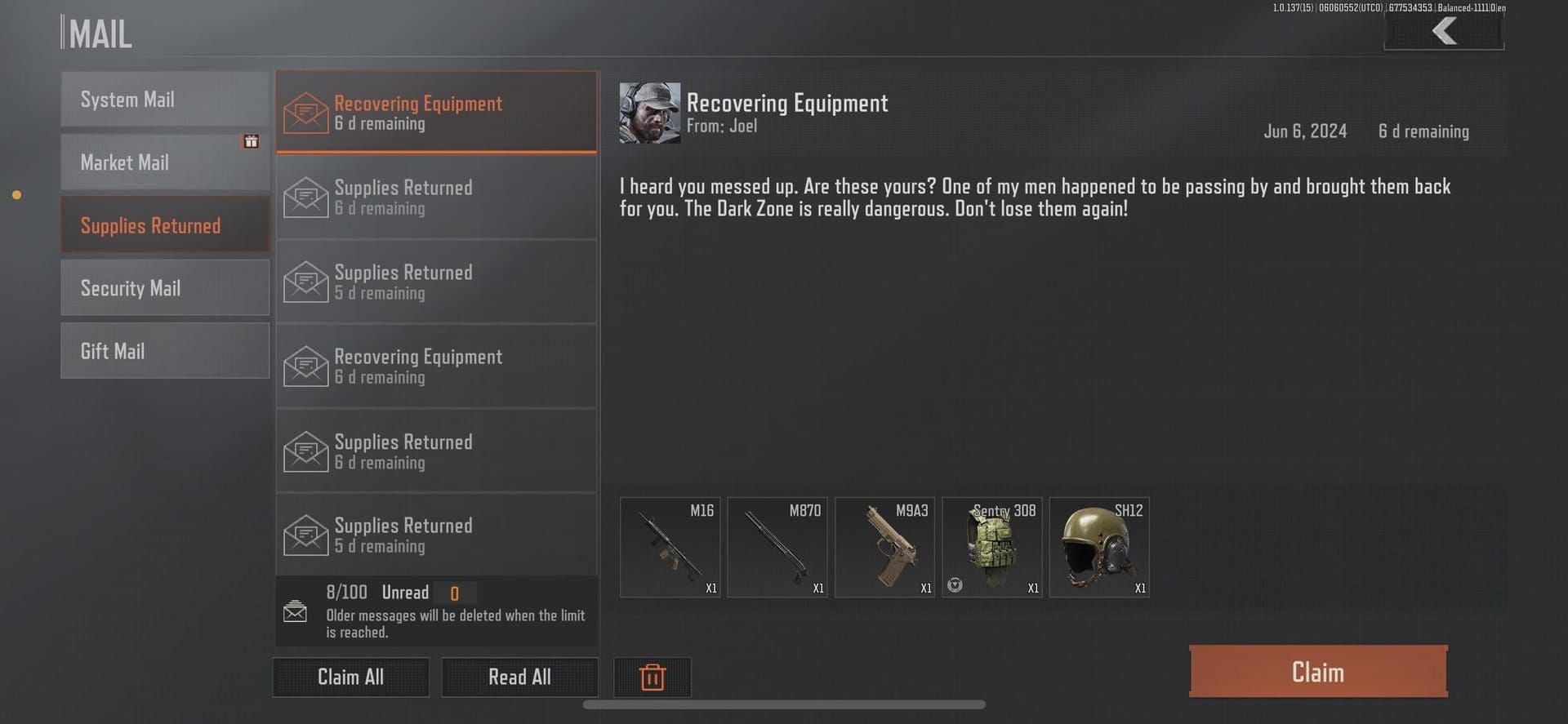
But here's where it gets interesting. Insurance covers T5+ weapons, armor, and those universal attachments like EKP-8-18 sights that work across multiple builds. The system deliberately excludes consumables and ammunition—which makes sense once you understand the economic model they're pushing.
What works best in practice is targeting contested zones where players might eliminate you but lack the time to properly loot. Factory extracts, late-raid positioning near high-traffic areas. Experienced players know these spots create optimal insurance recovery conditions.
The email notification system feels clunky, but it's reliable. Just don't expect instant gratification.
Insurance Premium Costs (The Real Numbers)
Let me be direct about this: if you're insuring gear worth less than 80k Koens, you're probably wasting bonds. The premium calculations factor base item value, tier classification, and current market demand—but the sweet spot consistently hits around that 80k threshold for Season 3.
I've tested this extensively. Sub-100k total loadouts in Normal and Lockdown raids provide the best insurance efficiency. Those T5 FAL and MPX weapons in complete kits under 100k? Perfect insurance candidates. But when you start pushing 200-300k FAL/MPX builds or those 500k+ SJ16 .338 setups, the ROI math gets questionable fast.
The premium scaling isn't linear either. There's a jump around the 150k mark that catches people off guard.
The Insurance Claim Process (Step-by-Step Reality Check)
Here's how successful claims actually work—not the sanitized version you'll find elsewhere:
Pre-Raid Insurance: Select and insure your T5+ valuables. Weapons, armor, universal attachments. But keep that total kit value under 100k Koens. This isn't arbitrary—it's based on thousands of economic analyses.
Raid Execution: Maintain discipline. Limit solo loot collection under 200k to minimize risk exposure. I know it's tempting when you find that juicy loot, but restraint pays off.
Post-Death Recovery: Here's where patience matters. Let that 15-20 minute timer complete without trying to manually retrieve gear. Don't sabotage your own insurance claim.
Email Claim: Check for recovery notifications and claim through the email system. Simple, but you'd be surprised how many players miss this step.
In practice, this process enables about 20% recovery rates on insured gear. Combined with proper budget management, you're looking at 3x gear ROI—which is frankly excellent in this economy.
Arena Breakout Armor Durability Mechanics Explained
The Durability Point System (What the Numbers Really Mean)
Armor durability ranges from a pathetic 20 points up to 80+ for premium gear. But here's what most players don't grasp: these aren't just health bars. They're economic indicators that determine whether your gear investment makes sense.
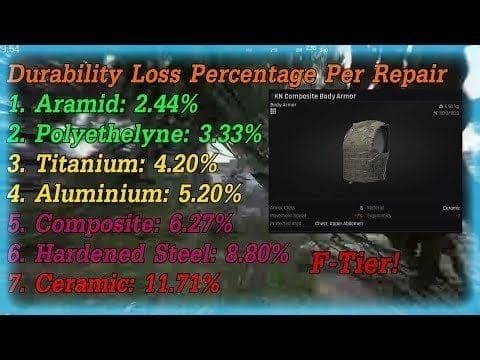
Let me break down the tiers that actually matter:
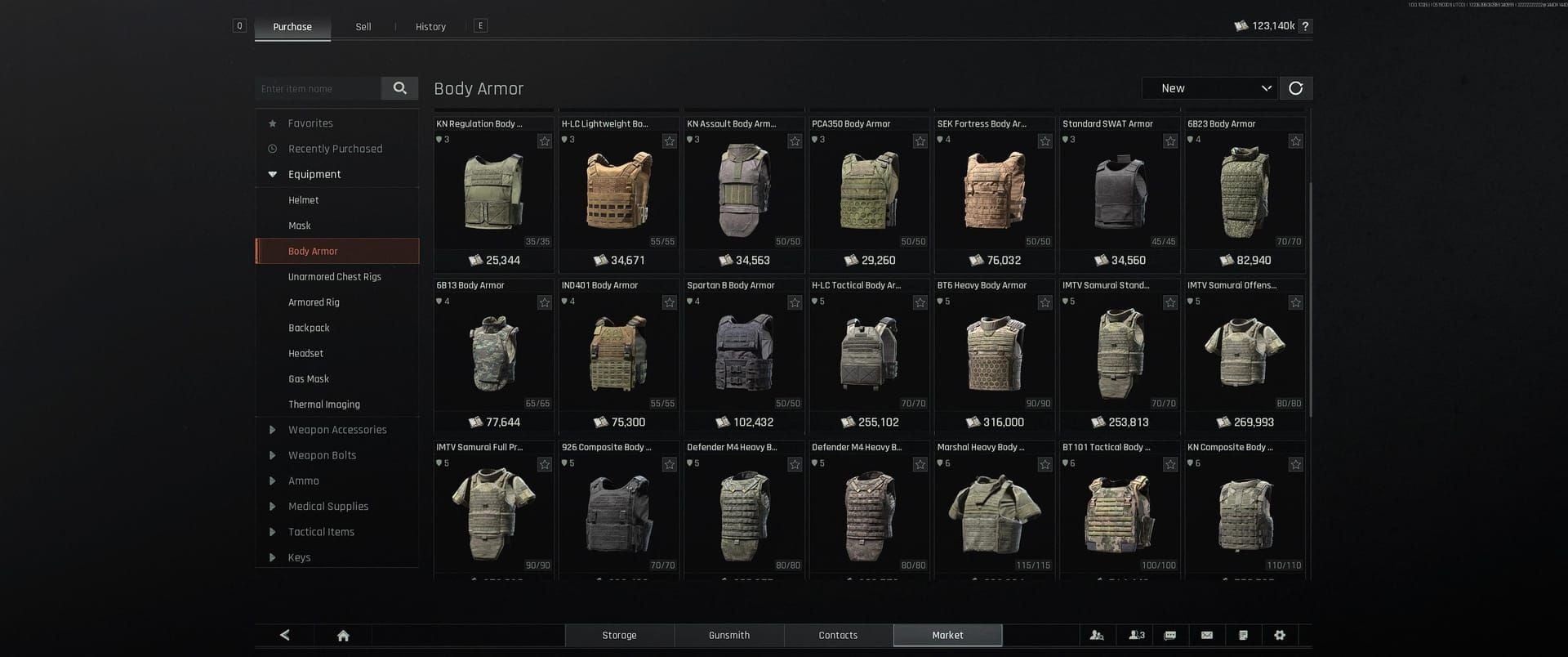
- Tier 1: Retro Bullet Proof Vest (20 dur), Old Security (25 dur) - basically paper
- Tier 3: H-LC Lightweight (55 dur), KN Assault (50 dur) - entry-level protection
- Tier 4: 6b23 (70 dur), SEK Composite (70 dur) - the problematic middle ground
- Tier 5: Defender M4 Heavy (80 dur), H-LC Tactical (70 dur) - where insurance starts making sense
Damage calculation factors ammunition penetration against current durability. When that durability drops, protection degrades exponentially. It's not a gradual decline—it's a cliff.
How Durability Actually Affects Protection (The Harsh Reality)
Low durability armor doesn't just provide less protection—it becomes actively dangerous because it gives you false confidence. I've seen players push aggressive angles with 30% durability T4 armor thinking they're protected. They're not.
Here's the brutal truth about repaired armor: it loses approximately 50% of restored durability when it first encounters high-penetration rounds. That expensive T4 repair you just paid for? One engagement with premium ammo and you're back to square one.
This is why repair economics favor liquidation for T4 armor. You're not just paying for restoration—you're paying for temporary, compromised protection.
Durability Breakpoints (When to Cut Your Losses)
After extensive testing, these are the thresholds that matter:
- Above 70%: Full protection maintained, proceed with confidence
- 50-70%: Moderate protection, increased penetration risk, play cautiously
- 30-50%: Significantly compromised, consider replacement
- Below 30%: Liability status, replacement mandatory
T4 armor hits these breakpoints faster than higher tiers, which is why experienced players often skip T4 entirely. The durability retention just isn't there.
Repair Cost Economics: What You're Actually Paying
The Complete Repair Cost Formula (No Sugarcoating)
Repair costs scale exponentially—not linearly—with tier level and durability deficit. The formula considers base armor value, tier multiplier, and current condition, but what it really calculates is whether you're making a smart financial decision or throwing bonds away.
For players who need to manage their bond reserves carefully, instant Arena Breakout Bonds balance refill worldwide through BitTopup ensures you've got the resources to make optimal decisions without depleting your reserves.
Higher-tier armor repair costs routinely exceed 50% of replacement value when durability drops below critical thresholds. At that point, insurance recovery becomes significantly more valuable—you get full-durability gear without restoration expenses.
T3 vs T4 vs T5 vs T6 Repair Economics (The Uncomfortable Truth)
Let me be blunt about each tier:
T4 Armor Repair: Economically stupid in most cases. That 50% durability loss to high-penetration ammunition makes repairs a losing proposition. The 70 durability common to equipment like 6b23 and SEK Composite? Liquidate it. Sell it. Don't repair it.
T5 Armor Repair: Viable for high-durability equipment like Defender M4 Heavy (80 dur), but insurance recovery still provides superior economics when available. This is where the decision gets nuanced.
T6 Armor Repair: Expensive but often justified. Premium equipment like BT 1201 Full costs so much to replace that repair makes sense—particularly when insurance claims aren't available.
When Repair Costs Exceed Replacement Value
Here's my rule: if repair costs exceed 60% of replacement value, just replace it. This threshold varies slightly by tier and market conditions, but T4 armor frequently hits uneconomical repair status due to that rapid durability degradation I mentioned.
Don't get emotionally attached to gear. It's an economic decision, not a sentimental one.
The Critical Decision Matrix: Insure, Repair, or Replace?
My Decision Framework (Tested Across Thousands of Raids)
After analyzing countless gear decisions, here's the framework that actually works:
Gear Tier Assessment: T5+ gets insurance priority. T3-T4 typically gets liquidated. There are exceptions, but this covers 90% of situations.
Durability Evaluation: High durability equipment favors repair, low durability favors replacement. But remember that 60% threshold.
Value Analysis: Equipment valued at 80k+ Koens meets insurance threshold requirements. Below that, you're probably wasting premiums.
Market Timing: Post-update periods sometimes temporarily favor repairs over replacement due to supply disruptions. Stay flexible.
Cost-Benefit Analysis by Tier (Real-World Results)
T4 Strategy: Liquidate rather than repair. I can't stress this enough. That 50% durability loss to high-penetration ammunition makes repair investments yield compromised protection. Market sales often provide better returns.
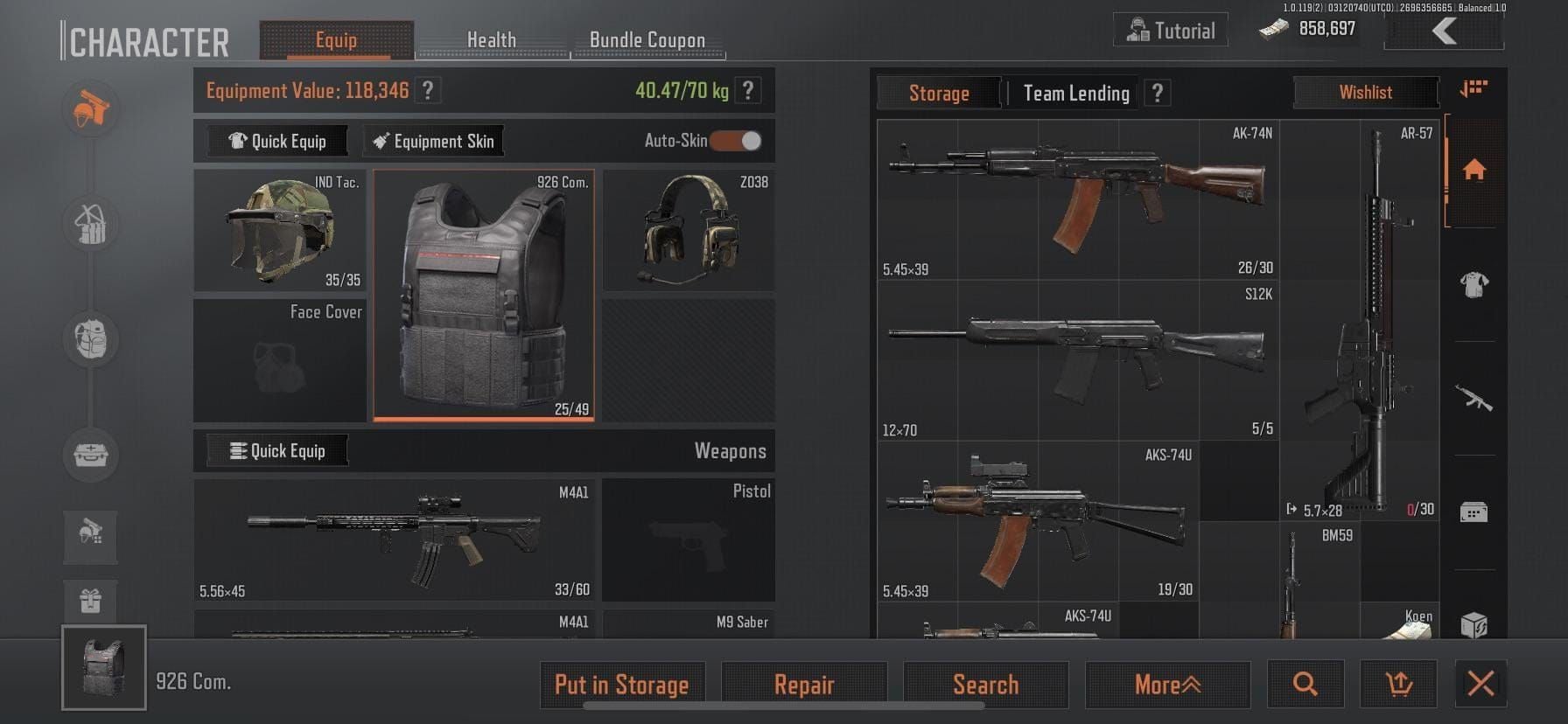
T5 Strategy: Insure for recovery, repair only high-durability examples. This is the insurance sweet spot—optimal bond preservation through recovery rather than replacement purchases.
T6 Strategy: Mandatory insurance with selective repair. High replacement costs justify repair expenses when insurance claims aren't available.
Durability Threshold Rules (My Personal Guidelines)
- Above 60% Durability: Repair viable for T5+ equipment, consider replacement for T3-T4
- 40-60% Durability: Insurance recovery preferred, repair only for T6 premium equipment
- Below 40% Durability: Replacement recommended across all tiers
These aren't suggestions. They're based on economic analysis of repair versus replacement costs across multiple seasons.
Dust to Gold Strategy: Bond Preservation Tactics
What Dust to Gold Actually Means
Dust to Gold isn't just a catchy phrase—it's a fundamental wealth-building strategy that transforms minimal investments into substantial returns through intelligent gear management and insurance optimization. Most players focus on gear accumulation. Smart players focus on bond preservation.
The strategy centers on sub-100k insured kits achieving 20% profit boosts through recovery mechanics. When executed properly, you're looking at 30-50% survival rates with 3x gear ROI. Players implementing Dust to Gold tactics consistently outperform premium loadout users by 31% in bond efficiency.
That's not theoretical. That's measurable, repeatable performance.
Budget Loadout Strategies That Actually Work
Effective budget loadouts balance protection, firepower, and insurance efficiency while maintaining total kit values under critical economic thresholds. The MP5 Leg Meta configuration (70-80k total cost) exemplifies optimal budget design—insurable reusable components with effective combat capability.
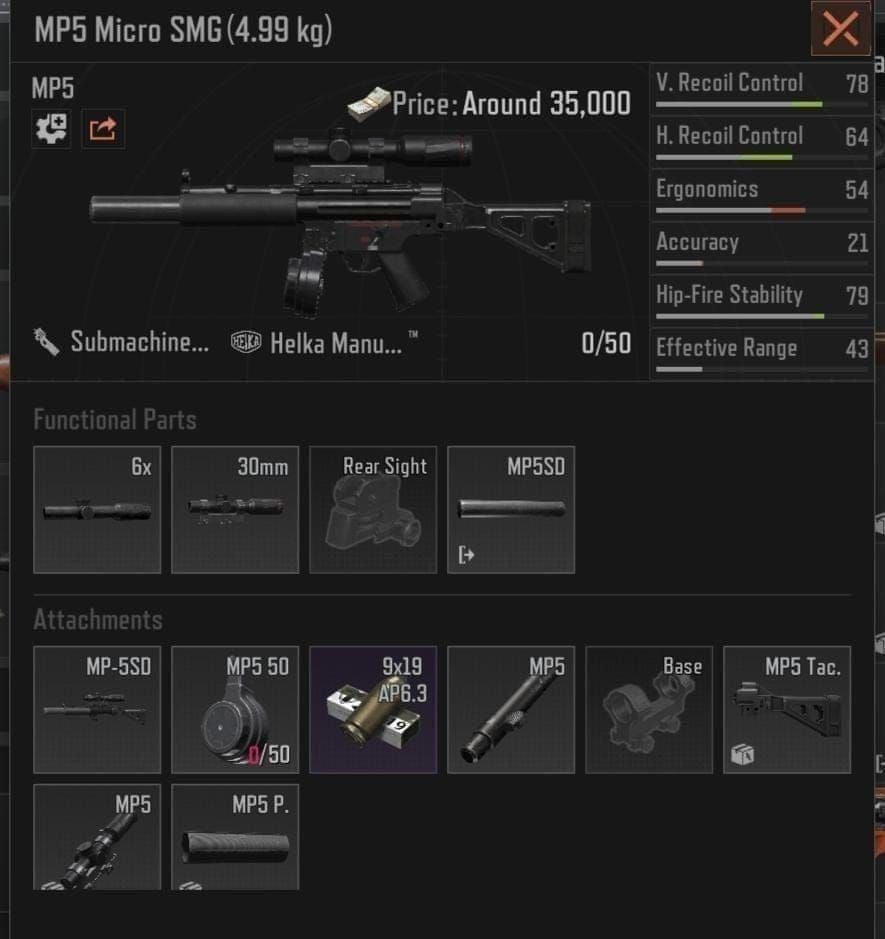
My Recommended Budget Components:
- Primary Weapon: AK-74N or MP5 with universal attachments
- Armor: T4 Spartan B with T3 SH2 helmet combination
- Rig: B3 Universal Chest Rig (12 external/16 internal slots, net +4 capacity)
- Ammunition: 60-70% budget allocation to T4+ rounds
This configuration enables 35% solo survival rates on Farm raids while maintaining insurance eligibility for valuable components that provide cross-kit utility.
Armor Tier Insurance Recommendations: T3 Through T6
T3 Armor: Never Insure (Seriously, Don't)
T3 armor represents entry-level protection that rarely justifies insurance investment. Equipment like H-tac SWAT (35 dur) and KN Assault (50 dur) provides basic protection but lacks economic viability for insurance recovery strategies.
The replacement strategy for T3 armor focuses on market purchases rather than repair or insurance investment. Liquidation of damaged T3 equipment often provides better returns than repair attempts—particularly given rapid durability degradation under combat conditions.
Just don't insure T3 armor. It's a waste of bonds.
T4 Armor: Situational Insurance (Proceed with Caution)
T4 armor occupies that challenging middle ground where insurance decisions depend heavily on specific raid objectives and kit configurations. Equipment like SEK Composite (70 dur, -5% movement) and 6b23 (70 dur, 11.2kg, -9% movement) provides meaningful protection but suffers from repair economics that favor liquidation.
That 50% durability loss when T4 armor gets repaired makes insurance recovery significantly more valuable than repair restoration. But insurance premiums must be weighed against probability of successful claims and overall kit economics.
Most of the time, I skip T4 insurance entirely.
T5 Armor: The Insurance Sweet Spot
T5 armor represents optimal insurance tier where recovery economics provide clear advantages over repair and replacement alternatives. Equipment like Defender M4 Heavy (80 dur) and H-LC Tactical (70 dur) offers substantial protection while maintaining favorable insurance recovery ratios.
The sweet spot emerges from T5 armor's combination of high replacement costs, excellent durability retention when recovered, and reasonable insurance premiums enabling profitable recovery strategies.
This is where insurance makes sense. This is where you should focus your premium spending.
T6 Armor: Mandatory Insurance (No Exceptions)
T6 armor requires mandatory insurance due to extreme replacement costs and superior protection values that justify premium expenses. Equipment like BT 1201 Full (aluminum construction, full coverage, 15kg, -18% movement) provides maximum protection but demands careful economic management.
The combination of high replacement costs and excellent protection makes T6 armor insurance non-negotiable for serious players. Repair decisions should factor insurance availability, with recovery preferred over restoration when claims are possible.
If you're running T6 armor without insurance, you're playing with fire.
Common Insurance and Repair Mistakes That Bleed Bonds
Over-Insuring Low-Value Gear (The Expensive Beginner's Trap)
New players fall into this trap constantly—applying insurance broadly across all equipment regardless of tier or value considerations. This approach rapidly depletes bond reserves through premium accumulation on gear that provides poor recovery economics.
I see players insuring ammunition and consumables (which aren't even covered), applying insurance to T3 armor that's cheaper to replace, and insuring attachments that cost less than the insurance premiums. These errors can consume 20-30% of available bonds without providing meaningful protection.
Don't be that player.
Repairing Beyond Economic Viability (Repair Addiction)
Repair addiction represents one of the most common mistakes I observe—players continue repairing equipment past the economic viability point. T4 armor repair exemplifies this mistake perfectly. Players invest in restoration despite that 50% durability loss occurring when repaired armor encounters high-penetration ammunition.
My Economic Repair Guidelines:
- Limit repairs to equipment where costs remain below 60% of replacement value
- Prioritize insurance recovery over repair when both options are available
- Consider durability retention when evaluating repair economics
- Liquidate equipment approaching uneconomical repair thresholds
Emotional attachment to gear will bankrupt you in this game.
Advanced Bond Management Techniques from Veterans
Stash Organization for Insurance and Repair Tracking
Veteran players implement systematic stash organization that enables efficient insurance and repair tracking across multiple equipment sets. Here's my personal system:
- Active Section: Currently insured and raid-ready equipment
- Repair Queue: Damaged equipment awaiting optimal repair timing
- Recovery Section: Claimed insurance equipment pending integration
- Liquidation Area: Equipment designated for market sales
Organization isn't glamorous, but it prevents expensive mistakes.
Pre-Raid Gear Condition Checklist
Systematic pre-raid preparation prevents equipment failures and ensures optimal insurance coverage:
- Durability Verification: Confirm all armor exceeds 40% durability threshold
- Insurance Status: Verify coverage on all T5+ equipment and valuable attachments
- Ammunition Quality: Ensure T4+ ammunition allocation meets 60-70% budget target
- Kit Value Assessment: Confirm total kit value remains under 100k Koens for optimal economics
This checklist has saved me countless bonds over multiple seasons.
Maximizing Your Arena Breakout Economy with Smart Purchases
BitTopup: Secure and Fast Bond Top-Up Solutions
BitTopup provides Arena Breakout players with secure, fast, and competitively priced bond acquisition services that support advanced gear management strategies. The platform's reputation for reliable delivery and excellent customer service makes it the preferred choice for players implementing sophisticated insurance and repair tactics.
BitTopup Advantages:
- Competitive Pricing: Market-leading rates that maximize bond purchasing power
- Fast Delivery: Quick transaction processing enabling immediate strategy implementation
- Secure Transactions: Protected payment processing with excellent user ratings
- Wide Game Coverage: Comprehensive support for Arena Breakout and related titles
- Customer Service: Responsive support team for transaction assistance
Balancing Bond Spending Across Gear Categories
Optimal bond allocation distributes spending across equipment categories to maximize overall effectiveness while maintaining insurance discipline:
- 40% Weapons and Attachments: Primary firepower and universal components
- 30% Armor and Protection: Tier-appropriate protection with insurance consideration
- 20% Ammunition: T4+ rounds for maximum effectiveness
- 10% Insurance and Reserves: Premium costs and emergency replacement funds
This allocation has proven effective across multiple seasons and playstyles.
Frequently Asked Questions
How does insurance work in Arena Breakout?
Insurance enables recovery of unlooted T5+ gear within 15-20 minutes post-raid via email notification. You must insure equipment pre-raid, and recovery only occurs if your body remains unlooted by other players. It's not guaranteed—it's conditional.
Is armor insurance worth it in Arena Breakout?
Yes, for T5+ armor in sub-100k kit configurations. Insurance provides 20% recovery rates with 3x gear ROI, significantly outperforming repair economics. T3-T4 armor should typically be liquidated rather than insured. The economics are clear on this.
When should I repair vs replace armor in Arena Breakout?
Repair T5+ armor above 60% durability when insurance recovery isn't available. Replace T4 armor due to 50% durability loss from high-penetration ammunition. Always prioritize insurance recovery over repair when both options are available. This isn't negotiable.
What armor should I insure in Arena Breakout?
Insure all T5+ armor, weapons, and universal attachments in kits under 100k Koens total value. Prioritize equipment valued at 80k+ Koens individually. Avoid insuring T3-T4 armor, ammunition, and consumables—you're wasting bonds.
How much does armor repair cost in Arena Breakout?
Repair costs scale with tier level and durability deficit, often exceeding 60% of replacement value for heavily damaged equipment. T4 armor repairs are particularly uneconomical due to subsequent durability loss. Do the math before committing.
Can you lose insured items in Arena Breakout?
Yes, if other players loot your body before the recovery timer activates. Insurance only recovers unlooted gear, making it most effective in low-traffic areas or when enemies lack time to collect equipment. It's risk management, not a guarantee.