What Makes Blood Strike's Resurrection Logic Unique
Blood Strike differentiates through integrated buyback systems and mode-adaptive timers. The market kiosk buyback feature allows teammates to purchase fallen squad members back into matches, creating economic strategy layers. This transforms gold management from purely equipment-focused to life-preservation calculations.
Buyback price multiplies with each consecutive death, establishing escalating penalties that discourage suicide tactics while rewarding survival skills. First buyback might cost 500 gold, but subsequent deaths push costs to 1,000, 2,000, or higher—forcing teams to weigh revival costs against equipment purchases.
Mode-specific adjustments further complicate calculations. Hot Zone matches reduce respawn times when teammates capture designated hotspots, rewarding objective play with faster reinforcements.
Base Respawn Timer: The Starting Point
The confirmed 2-second base respawn timer serves as the universal starting point across most game modes. This duration begins immediately upon death confirmation and represents the minimum time before re-entering combat.
However, this base timer functions as just the foundation. Additional modifiers apply based on game mode, death circumstances, and team performance. In Team Deathmatch, the 2-second timer remains consistent, allowing rapid re-engagement.
Battle Royale modes introduce more complex variables. While the base 2-second timer still applies, buyback requirements and limited revival opportunities create longer effective respawn times. Players must wait for teammates to reach kiosks, accumulate necessary gold, and complete purchase transactions—extending practical respawn duration to 15-30+ seconds.
Exact Respawn Timer Increase Formula Per Teammate Death
The available data confirms a 2-second base respawn timer but doesn't specify exact incremental increases per teammate death across all modes. The escalating penalty manifests through buyback costs rather than timer duration directly.
In modes featuring buyback mechanics, the economic penalty increases geometrically with each death:
- First death buyback: Base cost (500-800 gold)
- Second death: 2x base cost
- Third death: 3-4x base cost
- Fourth death and beyond: 5x+ base cost
These multipliers create effective time penalties by extending the gold accumulation phase. A team needing 4,000 gold for a fourth buyback must spend 20-40 additional seconds farming compared to a 500-gold first buyback.
Hot Zone modes implement the most transparent timer reduction mechanics. When teammates successfully capture the designated hotspot, all dead players experience 2-4 second reductions from base timers.
Step-by-Step Calculation Examples
First Death: Player dies in Team Deathmatch. Base 2-second timer. Teammate reaches kiosk with 600 gold. Buyback costs 500 gold. Total: 2s (timer) + 8s (kiosk travel) + 2s (transaction) = 12 seconds.
Second Death: Same player dies again. Base 2-second timer. Buyback now 1,000 gold. Team has 400 gold, needs 600 more. Total: 2s (timer) + 15s (gold farming) + 8s (kiosk travel) + 2s (transaction) = 27 seconds.
Third Death: Player dies third time. Base 2-second timer. Buyback costs 2,000 gold. Team has 800 gold, needs 1,200 more. Total: 2s (timer) + 30s (gold farming) + 8s (kiosk travel) + 2s (transaction) = 42 seconds.
Fourth Death: Player dies fourth time. Base 2-second timer. Buyback costs 4,000 gold. Team lacks resources and chooses not to buy back. Effective respawn time: Remainder of match (permanent elimination in that round).
Maximum Respawn Timer Cap and Limitations
Blood Strike implements practical caps through economic limitations rather than hard timer ceilings. The buyback system naturally caps effective respawn times by making costs prohibitively expensive after 4-5 deaths.
The 30-second combat restriction after landing in certain modes effectively extends the useless respawn period beyond the base timer, creating a 32-second minimum before combat effectiveness returns.
Does Blood Strike Have a Timer Ceiling?
No hard-coded maximum respawn timer exists. The 2-second base timer remains constant regardless of death count. However, the buyback system creates soft caps through escalating costs that become mathematically impossible to afford within match timeframes.
After 5-6 deaths, buyback costs often exceed 8,000-10,000 gold—amounts requiring 60+ seconds of dedicated farming. This creates effective 60-90 second respawn times that functionally serve as maximum durations.
Cap Differences Across Game Modes
- Battle Royale: Soft caps through limited kiosks and gold scarcity. Typical maximum 2-3 buybacks per player
- Team Deathmatch: No hard caps, but match time limits (10 minutes) create temporal ceilings
- Hot Zone: Timer reduction mechanics create lower effective minimums (potentially sub-1-second)
- Weapon Master: Zero caps—infinite respawns with consistent 2-second timers
- Domination: Similar to Team Deathmatch with objective-based timer modifications
Respawn Timer Reset Conditions
Buyback cost multipliers reset between rounds in round-based modes, returning all players to base costs. This prevents snowballing economic disadvantages and gives losing teams fresh starts each round.
Match completion represents the universal reset condition—all death counts, buyback costs, and timer modifications return to default values.
Round-Based vs Continuous Mode Reset Mechanics
Round-based modes like Search and Destroy reset all death penalties between rounds. Players begin each round with base buyback costs and clean death counts.
Continuous modes like Team Deathmatch maintain death counts throughout entire match duration. A player dying 10 times across a 10-minute match accumulates progressively higher buyback costs without reset opportunities.
Hot Zone Showdown implements hybrid mechanics—death counts persist within phases but reset when new hotspots activate, creating mini-reset windows every 2-3 minutes.
Game Mode Variations: How Timers Differ
Each Blood Strike mode implements unique respawn mechanics tailored to gameplay objectives.
For mode-specific advantages through premium content, secure recharge blood strike gold through BitTopup's trusted platform.
Battle Royale Mode Respawn Logic
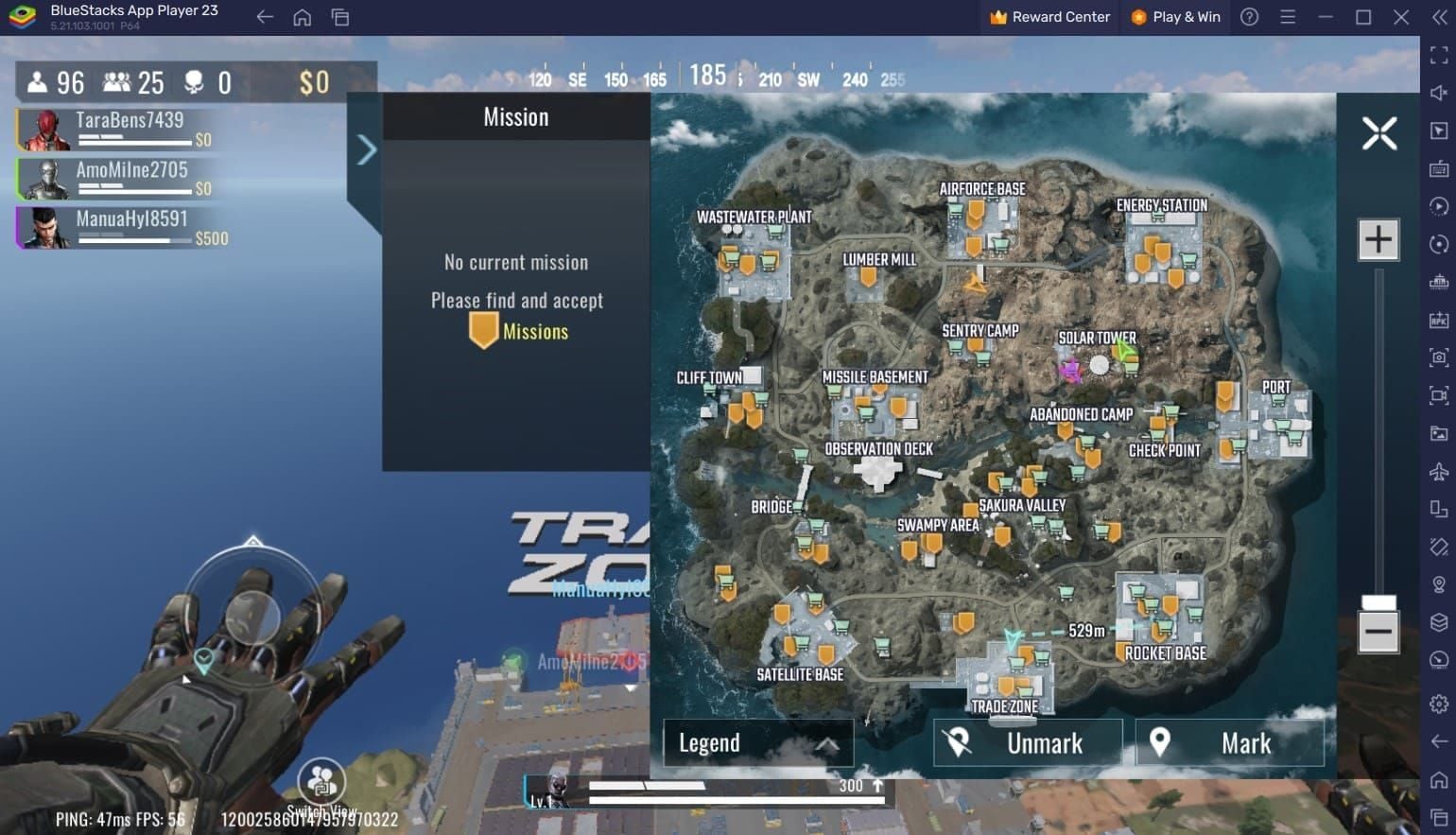
Battle Royale implements the strictest respawn limitations with kiosk-dependent buybacks and permanent elimination after squad wipes. The 2-second base timer applies, but practical respawn times extend to 20-60 seconds based on kiosk locations and gold availability.
Kiosks appear in fixed map locations, creating strategic control points. Late-game scenarios often feature 3-4 kiosks remaining in shrinking safe zones.
Team Deathmatch Timer Mechanics
Team Deathmatch maintains the simplest respawn structure with consistent 2-second timers and automatic respawns without buyback requirements. Players respawn at designated spawn points, cycling through multiple locations to prevent spawn camping.
The lack of economic penalties encourages aggressive playstyles since deaths carry minimal consequences beyond brief 2-second delays.
Domination and Objective Mode Differences
Domination ties respawn efficiency to objective control. Teams holding majority capture points experience reduced respawn times (1-2 seconds below base), while losing teams face standard or extended timers.
Hot Zone modes implement the most dramatic timer modifications. When teammates capture the designated hotspot, all dead players receive significant respawn time reductions.
Strategic Implications: How Timer Knowledge Wins Matches
Understanding respawn mechanics enables precise timing of aggressive pushes. When enemies face 30+ second effective respawn times due to high buyback costs, teams can execute objective captures with minimal interference risk.
Economic warfare becomes viable when tracking enemy death counts. Forcing expensive buybacks depletes enemy resources, creating equipment disadvantages that compound across rounds.
Aggressive Push Timing Based on Enemy Respawns
After eliminating multiple enemies, teams gain 10-30 second windows before reinforcements arrive. Experienced squads use these windows to capture objectives, rotate positions, or secure map control advantages.
In Hot Zone modes, pushing immediately after losing hotspot control prevents enemies from benefiting from reduced respawn times.
Defensive Hold Strategies During Long Timer Phases
When teammates face extended respawn times (30+ seconds due to buyback costs), surviving players should prioritize defensive positions over aggressive plays. Trading eliminations becomes unfavorable when your team respawns slower than enemies.
Holding positions near kiosks enables quick buybacks when gold becomes available.
When to Trade Deaths vs Preserve Lives
Early-round deaths carry minimal economic penalties with low buyback costs, making aggressive trades favorable. Securing early eliminations and map control justifies 500-800 gold buyback costs.
Late-round deaths with 3x-5x buyback multipliers require preservation strategies. Trading eliminations becomes unfavorable when your buyback costs 4,000 gold versus enemy's 500 gold first-death cost.
Advanced Timer Management Techniques from Pro Players
Competitive players maintain mental death count tracking for all players—both teammates and enemies. This enables real-time buyback cost predictions and strategic targeting of high-death-count opponents.
Voice communication protocols include death count callouts alongside standard information. Teams announce third death or expensive buyback to inform economic decisions.
Tracking Enemy Death Counts for Respawn Predictions
Kill feed monitoring provides death count data for enemy players. Experienced teams assign roles for tracking specific opponents, noting each elimination to estimate buyback costs.
When enemies stop buying back teammates despite available kiosks, it signals economic depletion or strategic resource preservation.
Communication Protocols for Respawn Coordination
Standardized callouts include death count status: First death, cheap buyback available versus Fourth death, 3k+ buyback needed.
Respawn timing announcements coordinate team actions: Respawning in 5 seconds, hold position allows teammates to prepare for reinforcement arrival.
Practical Tips: Minimizing Respawn Penalties
Survival-focused positioning reduces death frequency and associated buyback costs. Players should prioritize cover usage, retreat options, and crossfire avoidance.
Team composition affects survival rates through complementary abilities. Balanced squads with defensive specialists, healers, and reconnaissance characters experience fewer deaths.
Positioning to Avoid Unnecessary Deaths
High-ground positions provide visibility and escape routes that reduce elimination risk. Players holding elevated positions die less frequently, maintaining low death counts.
Cover-rich areas enable tactical retreats when overwhelmed. Fighting in open spaces increases death risk and buyback frequency.
When to Disengage to Preserve Timer Advantage
Players on third or fourth deaths should prioritize survival over aggressive plays. The economic cost of additional deaths outweighs potential elimination value.
When teammates have low death counts and cheap buybacks available, high-death-count players should adopt support roles that minimize exposure.
Frequently Asked Questions About Blood Strike Respawn Timers
How much does the respawn timer increase per death in Blood Strike?
The base respawn timer remains constant at 2 seconds regardless of death count. The penalty manifests through escalating buyback costs (2x, 3x, 4x, 5x+ base cost), creating economic penalties that indirectly extend practical respawn times through gold farming requirements.
What is the base respawn time in Blood Strike?
The confirmed base respawn time is 2 seconds across most game modes. Hot Zone captures can reduce this timer by 2-4 seconds, while Weapon Master mode maintains the 2-second standard with infinite respawns.
Does Blood Strike have a maximum respawn timer limit?
No hard-coded maximum timer exists. The 2-second base timer remains constant. However, practical maximum respawn times emerge through buyback economics—after 5-6 deaths, buyback costs (8,000-10,000+ gold) require 60-90 seconds of farming. The 30-second combat restriction after landing extends the effective period to 32 seconds minimum.
How does squad wipe affect respawn timers?
Squad wipes trigger synchronized team respawns where all players return simultaneously after the standard 2-second timer. However, squad wipes don't reset individual death count multipliers—players maintain accumulated buyback cost penalties. In Battle Royale modes, squad wipes typically result in match elimination.
Do different game modes have different respawn timers?
Yes. Team Deathmatch maintains consistent 2-second timers with automatic respawns. Battle Royale uses 2-second base timers but requires kiosk buybacks. Hot Zone modes reduce respawn times by 2-4 seconds when teammates capture objectives. Weapon Master features infinite respawns with standard 2-second timers.
When does the respawn timer reset in Blood Strike?
Buyback cost multipliers reset between rounds in round-based modes. Match completion represents the universal reset—all death counts and timer modifications return to default. Hot Zone Showdown implements phase-based resets when new hotspots activate every 2-3 minutes.
Master Blood Strike's mechanics and dominate every match! Need to top up your Battle Pass or unlock premium characters? Visit BitTopup for instant, secure Blood Strike top-ups with exclusive discounts!