What Are Provincial Badges
Provincial badges are hero-specific titles for top performers of each hero within defined provinces. Unlike rank titles measuring overall standing, provincial badges measure individual hero performance against local players. This creates localized leaderboards where competition varies by regional population and skill density.
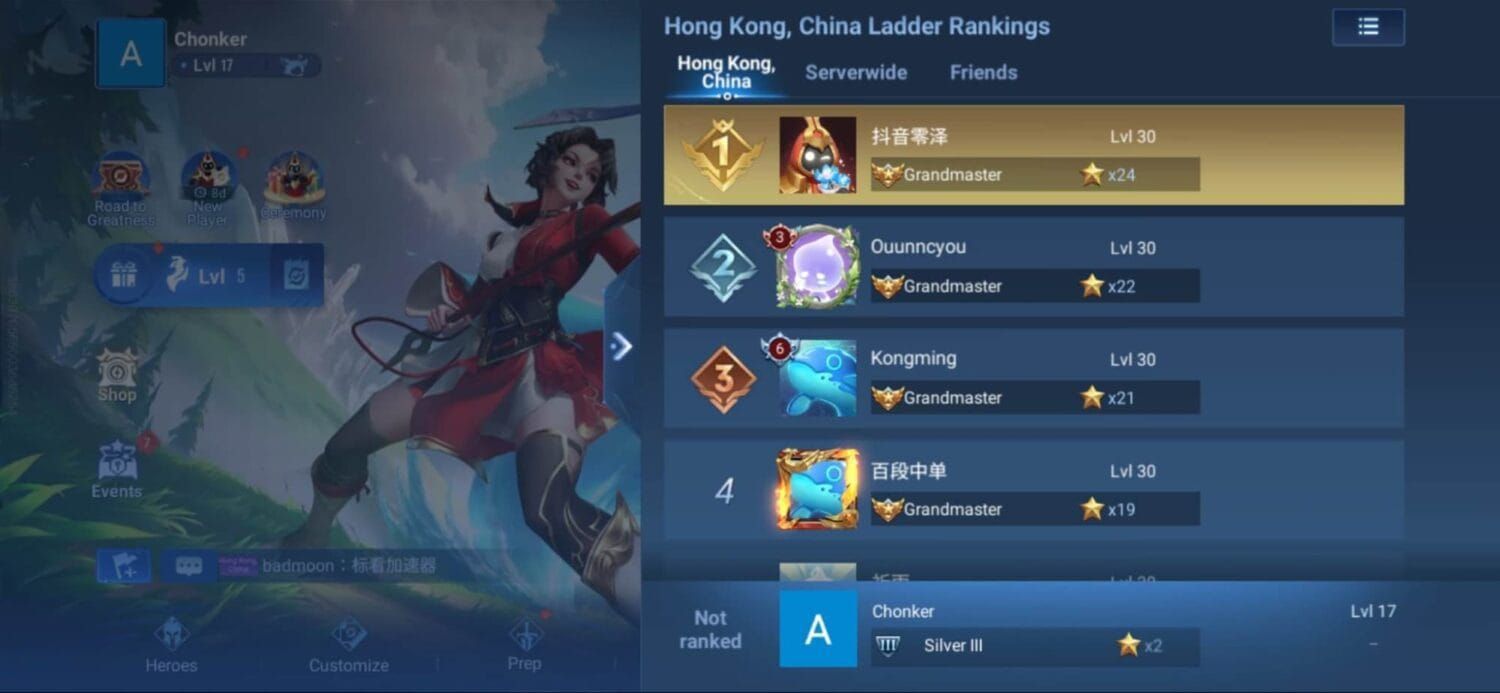
Server-wide titles like Grandmaster span entire regional servers (Americas, Europe, MENA, Pacific, Southeast Asia, Hong Kong/Macau/Chinese Taipei). Provincial badges narrow competition to administrative subdivisions, creating opportunities in less populated areas while making achievement extremely difficult in dense competitive zones.
Prestige and Benefits
Provincial badges display during hero selection and loading screens, signaling expertise to teammates and opponents. This provides psychological advantage and influences draft decisions.
Beyond cosmetics, provincial badges serve as skill verification for competitive teams and tournaments. Emerging 2025 esports leagues (PKL, MKL, IKL, WKS, KMW, KME) use provincial/national title holders for talent scouting. Teams require 4+ players as citizens/permanent residents of home regions, making provincial badge holders valuable.
Title Hierarchy System
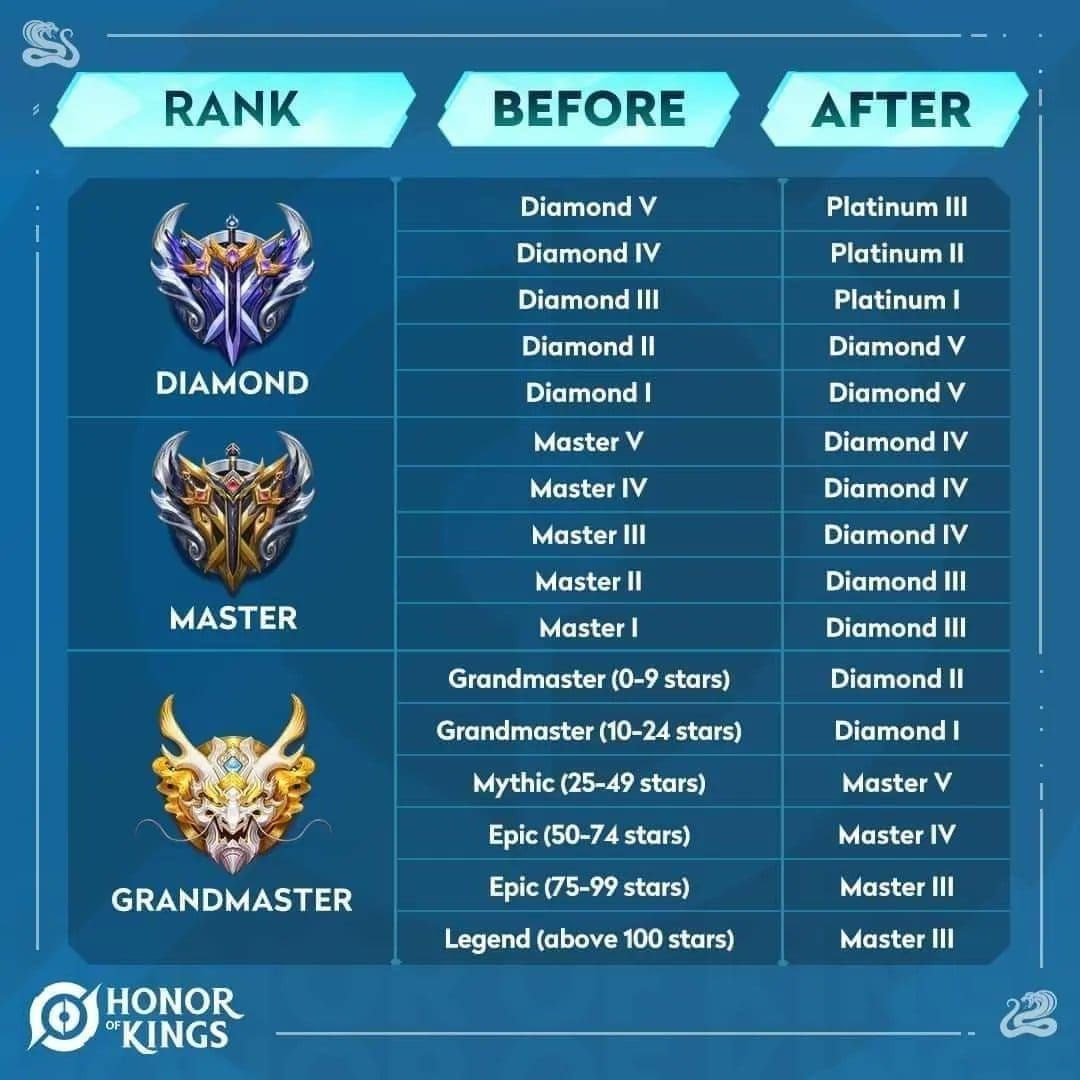
Rank titles reflect current competitive standing requiring active maintenance. Grandmaster lasts 2 seasons, operates server-wide, requires exceptional performance. Inactivity penalties vary: Season 1 imposed 1-star loss after 7 days; Season 2 implemented weekly decay.
Provincial/national titles function as achievement-based recognition. They require sustained excellence with specific heroes within geographic boundaries, measured through algorithms combining win rate, KDA, match frequency, performance consistency. Honor Board (50 diamonds) displays country and server rankings for tracking progress.
How Location Detection Works
Honor of Kings implements sophisticated location detection ensuring provincial badges reflect geographic competition. The game requires location permissions during setup and periodically verifies through multiple technical methods.
Location assignment begins during account creation and first login. The game cross-references GPS coordinates, IP geolocation, app store region, account registration details to determine home province. This multi-factor verification creates baseline location profiles influencing regional ranking eligibility.
Technology Behind Location Rankings
Provincial ranking employs continuous location verification, not one-time assignment. During ranked matches, the game periodically checks GPS against registered province ensuring ongoing eligibility. Real-time verification prevents temporary relocation for title acquisition.
Detection analyzes location patterns over time, flagging inconsistent geographic profiles. Sudden changes, frequent switching between distant provinces, or mismatches between GPS and network routing trigger automated reviews. Algorithms distinguish legitimate travel from manipulation with increasing accuracy.
Province Assignment Process
Initial province assignment occurs automatically based on physical location during first login. GPS coordinates take priority; IP-based geolocation serves as fallback if location services disabled. Global versions integrated with Google Play/Apple Game Center consider account registered country and app store region.
Chinese version players using QQ/WeChat receive assignments based on social platform registration plus device location. This integration creates additional verification layers making province manipulation significantly harder in original Chinese market versus newer global deployments.
GPS Permissions Requirements
Honor of Kings requires location services for full functionality, particularly provincial ranking eligibility. Players denying GPS permissions can play but become ineligible for provincial badges and face regional ranking restrictions. App requests while using and background location access for continuous verification.
Device-level settings must align with in-game configuration. Verify current server assignment through Honor Board rankings displaying country and server classifications. Discrepancies indicate permission issues or account registration mismatches requiring customer support resolution.
Real-Time Verification During Matches
Active ranked matches trigger periodic GPS checks confirming players remain within registered provinces. Verification pings occur at irregular intervals preventing predictable circumvention. System tolerates minor variations from GPS drift but flags significant deviations exceeding normal movement patterns.
Cross-border players near provincial boundaries may experience assignment fluctuations if regularly playing from locations straddling divisions. Game typically assigns to province where majority playtime occurs, calculated through cumulative location data over rolling 30-day windows.
Official Requirements for Provincial Badges
Provincial badge achievement requires stringent performance thresholds varying by hero popularity, province competition level, seasonal ranking distributions. System evaluates multiple performance dimensions simultaneously, creating composite scores determining ranking position within province's hero-specific leaderboard.
Minimum requirements include reaching high-tier ranks—typically Eternal Diamond or above—before provincial consideration. Rank alone proves insufficient; players must demonstrate exceptional hero-specific performance through win rate, average KDA, damage output, objective control, match frequency.
Rank and MMR Thresholds
Provincial badge eligibility begins at different ranks depending on province population and competitive density. Highly populated provinces may require Master Star or higher; less competitive regions might grant badges to consistent Eternal Diamond performers. Underlying MMR provides actual competitive measurement; visible rank serves as general indicator.
MMR requirements fluctuate throughout seasons as more players compete for limited slots. Early season pushes face lower thresholds due to rank resets; late-season competition intensifies as title hunters concentrate efforts. Track provincial ranking through Honor Board throughout season to identify optimal timing.
Performance Metrics Required
Provincial badges demand sustained excellence across multiple dimensions:
- Win rate: Typically 55-60%+ over minimum match volume (varies by hero role and province)
- KDA ratios: 3.5+ for damage dealers, 4.0+ for supports (kills + assists ÷ deaths)
- Damage output: Relative to match duration
- Objective participation: Rates and vision control contributions
- Teamfight impact: Scores preventing one-dimensional stat padding
Assassins/carries face higher win rate expectations than supports/tanks due to greater individual impact potential.
Match Volume and Consistency
Provincial rankings require substantial match volume establishing statistical significance, preventing lucky streaks from distorting standings. Most provinces require 50-100 ranked matches with specific hero during current season; competitive regions need higher volumes where hundreds vie for limited slots.
Consistency matters as much as peak performance. Ranking algorithm weights recent matches more heavily than early-season games, allowing improvement through sustained excellence. However, recency bias means performance declines near season end can cost positions, requiring maintained activity through final calculation.
Seasonal Reset and Maintenance
Provincial badges reset at each competitive season end, requiring re-earning through fresh competition. Unlike Grandmaster (lasts 2 seasons), provincial badges provide no carryover protection, ensuring rankings reflect current performance. Reset system maintains competitive integrity and prevents leaderboard stagnation.
Title maintenance during active seasons requires continued play preventing ranking decay from inactivity. Specific decay rates vary by province and season; extended absences typically result in gradual ranking drops as active competitors surpass inactive players. System balances accessibility against rewarding dedicated grinders.
GPS Manipulation and Fake Location Apps
GPS manipulation represents common attempted exploits in provincial badge systems. Players seeking easier competition in less populated provinces frequently attempt location spoofing using various technical methods. Understanding why these fail and consequences they trigger is essential for account security.
Fundamental appeal lies in competitive disparity between regions. Densely populated provinces with high skilled player concentrations create extremely difficult environments; rural/less populated areas offer theoretically easier paths. This disparity motivates artificial location changes rather than competing within actual geographic areas.
How Players Attempt Exploitation
Common manipulation methods:
- Fake GPS apps overriding device location reporting
- VPN services masking IP addresses
- Modified app installations with altered location verification code
- Physical device relocation to different provinces specifically for ranking
Each approach targets different components of multi-factor location verification.
Fake GPS apps claim to set arbitrary coordinates applications read as genuine. Players attempt setting coordinates to less competitive provinces before launching Honor of Kings. VPN services route network traffic through servers in target provinces, hoping to convince IP geolocation systems of false location.
Why GPS Spoofing is Detectable
Multi-layered verification makes successful GPS spoofing extremely difficult. Fake GPS apps may deceive individual location queries but can't simultaneously spoof GPS coordinates, IP routing paths, cellular network tower connections, account registration details. Inconsistencies between data sources immediately flag accounts for security review.
Advanced detection algorithms analyze location patterns over time, identifying physically impossible movements, inconsistent timezone activity, mismatches between reported location and network latency characteristics. Players whose GPS indicates rural province presence while network routing/ping times suggest urban data center proximity trigger automated fraud detection.
TiMi Studio Anti-Cheat Detection
TiMi Studio employs sophisticated anti-cheat extending beyond simple location verification. Security infrastructure analyzes device fingerprints, application integrity checks, behavioral patterns, cross-reference databases of known manipulation tools. Accounts using modified clients or running alongside known cheating applications face immediate flagging regardless of location spoofing success.
System implements honeypot techniques, deliberately allowing some manipulation attempts while monitoring account behavior for additional violations. This enables security teams to identify manipulation tool signatures, track distribution networks for cheating software, build comprehensive exploitation attempt profiles informing future detection improvements.
Fake GPS App Failure Rates
Popular fake GPS applications marketed for gaming include various location spoofer and GPS emulator tools from third-party app stores. Despite marketing claims, these face near-universal failure rates against Honor of Kings' verification. Game specifically checks for known manipulation tools and flags accounts running these applications even if location spoofing technically succeeds.
Even when fake GPS apps temporarily deceive location checks, broader security ecosystem detects manipulation through secondary indicators: mismatches between spoofed coordinates and network characteristics, impossible travel speeds between sessions, correlation with other flagged accounts using identical tools. Cumulative failure rate for GPS manipulation exceeds 95% within first week of implementation.
Risks and Consequences of Violations
Attempting provincial badge system manipulation through GPS spoofing carries severe consequences far outweighing potential benefits. TiMi Studio enforces strict policies against competitive integrity violations, with penalties ranging from temporary suspensions to permanent account termination depending on severity and repetition.
Risk-reward calculation heavily favors legitimate play. Provincial badges, while prestigious, represent cosmetic achievements without gameplay advantages. Risking account suspension/permanent ban—losing all purchased content, earned titles, progression—for regional title demonstrates poor judgment experienced players universally avoid.
Account Suspension and Bans
First-time location manipulation detection typically results in temporary suspensions (7-30 days), accompanied by fraudulently obtained provincial badge removal and ranking resets. Account receives permanent security flag increasing scrutiny on future activity and reducing tolerance for subsequent violations.
Repeated violations or egregious manipulation attempts—modified game clients or automated ranking bots with GPS spoofing—trigger permanent account termination. Bans extend across all devices and prevent new account creation using same registration credentials, effectively ending participation in Honor of Kings' competitive ecosystem.
Real Ban Case Studies
Community forums document numerous ban cases after provincial badge manipulation attempts. Common patterns:
- Accounts suddenly appearing on provincial leaderboards in regions inconsistent with historical play patterns
- Players achieving multiple provincial badges across geographically distant provinces within single seasons
- Accounts exhibiting impossible travel patterns between ranked sessions
One documented case: player achieved provincial badges in three different provinces over two weeks—physically impossible given distances. Account received permanent ban within 48 hours of third badge acquisition, all titles revoked, account flagged across TiMi Studio's security database.
Title Revocation and Resets
Even when manipulation temporarily succeeds obtaining provincial badges, subsequent detection results in complete title revocation and ranking resets. System removes not only fraudulent provincial badges but often strips all competitive titles and resets seasonal rankings to baseline as additional punishment.
Resets extend beyond current season, with security flags preventing affected accounts from earning provincial badges in future seasons even through legitimate play. Permanent reputation damage effectively ends competitive aspirations for serious title hunters, making temporary fraudulent badge achievement a pyrrhic victory with lasting negative consequences.
Account Trust Score Impact
Honor of Kings implements account trust scoring influencing matchmaking quality, customer support responsiveness, eligibility for special events/promotions. Security violations severely damage trust scores, relegating flagged accounts to lower-priority matchmaking pools with increased likelihood of matching other flagged players.
Reduced trust scores limit customer support access for legitimate issues, with flagged accounts receiving automated responses rather than personalized assistance. Degraded service quality persists even after temporary suspension periods end, creating long-term account value reduction extending far beyond immediate penalty period.
Legitimate Strategies for Provincial Badges
Achieving provincial badges through legitimate methods requires strategic planning, consistent execution, realistic assessment of competitive environments. Experienced players approach provincial title hunting as long-term projects requiring hundreds of matches, careful hero selection, optimal timing to maximize success probability within actual geographic location.
Foundation involves accepting actual province assignment and developing strategies to compete effectively within that environment. Rather than seeking artificial advantages through location manipulation, successful players identify competitive edges through hero selection, meta adaptation, strategic timing of ranking pushes.
Province Difficulty Analysis
While you can't legitimately change province assignment, understanding relative competition levels helps set realistic expectations and identify optimal heroes for provincial pursuit. Urban provinces with high population density and established esports communities present extreme difficulty, often requiring top 10 performance among thousands of active competitors per hero.
Rural provinces and newly developed regions typically offer more accessible provincial badge opportunities due to smaller player populations and less concentrated skill levels. Players naturally residing in these areas enjoy structural advantages in provincial competition, though they still must demonstrate exceptional performance relative to local competition pool.
Optimal Hero Selection
Strategic hero selection dramatically impacts provincial badge feasibility. Choosing less popular heroes with smaller competition pools increases success probability versus contested meta picks where hundreds compete for limited slots. Analyze provincial leaderboards through Honor Board to reveal which heroes have fewer active competitors in your specific region.
Role selection matters significantly. Support/tank heroes typically face less competition than flashy assassins/marksmen attracting larger player populations. Players willing to master less popular roles/heroes can achieve provincial recognition more readily than those competing in oversaturated categories, though this requires genuine skill development rather than superficial stat padding.
Timing Your Ranked Push
Seasonal timing significantly impacts provincial badge competition intensity:
- Early season: Rank distribution compression and MMR recalibration create temporary competitive advantages for skilled players
- Mid-season: Often presents optimal balance between established ranking distributions and manageable competition levels
- Late-season: Intensified competition as serious title hunters concentrate efforts in final weeks
Players maintaining consistent performance throughout season rather than attempting last-minute pushes typically achieve better results, as ranking algorithms reward sustained excellence over brief performance spikes.
Building Consistent Performance
Provincial badge achievement requires statistical consistency across large match samples. Developing reliable performance patterns involves mastering hero mechanics, understanding matchup dynamics, maintaining mental composure across hundreds of ranked games. This consistency separates legitimate provincial contenders from players experiencing temporary win streaks.
Record and analyze performance metrics to identify improvement areas and track progress toward provincial thresholds. Monitor win rates, KDA trends, ranking position changes through Honor Board for objective feedback guiding training focus and strategic adjustments. Successful provincial badge hunters treat pursuit as skill development rather than title collection.
Provincial Badge Difficulty by Region
Provincial badge difficulty varies dramatically across Honor of Kings' global server regions, influenced by player population density, regional skill concentrations, esports infrastructure development, cultural gaming engagement levels. Understanding regional dynamics helps set appropriate expectations and develop realistic timelines for provincial title achievement.
Server structure spans Americas (North America, South America, Brazil), Europe (West, East, Türkiye), MENA (Middle East, North Africa), Pacific (South Asia, South Korea, Japan, Australia), Southeast Asia, Hong Kong/Macau/Chinese Taipei. Within broad regions, individual provinces exhibit vast competitive variance based on local factors.
Tier 1 Provinces: Highest Competition
Tier 1 provinces include major metropolitan areas with established esports ecosystems, high population densities, concentrated skilled player bases. These regions feature professional team training facilities, regular tournament infrastructure, cultural gaming engagement producing exceptional player skill levels. Provincial badges require performance levels comparable to national rankings in less competitive countries.
Examples: major Chinese provinces (where Honor of Kings originated November 2015), Korean regions with deep MOBA heritage, select Southeast Asian provinces with thriving competitive scenes. Players face thousands of active competitors per hero, requiring top 5-10 performance. Win rates exceeding 65% and KDA ratios above 5.0 often necessary in extreme competitive environments.
Tier 2 Provinces: Moderate Difficulty
Tier 2 provinces encompass secondary cities, developing esports markets, regions with substantial player populations but less concentrated elite skill levels. These areas offer more accessible provincial badge opportunities while still requiring genuine competitive excellence and sustained performance across significant match volumes.
Regions receiving Honor of Kings launches in 2023-2025—Brazil (March 2023), MENA/Türkiye/CIS/South Asia (February 21, 2025)—generally fall into this category. Growing competitive scenes with increasing skill levels but haven't developed Tier 1 depth. Provincial badges require approximately top 20-30 performance among active competitors, with win rates around 58-62% and KDA ratios above 4.0.
Tier 3 Provinces: More Accessible Opportunities
Tier 3 provinces include rural areas, newly launched markets, regions with smaller player populations or developing competitive infrastructure. Global Honor of Kings launch on June 20, 2025, created numerous Tier 3 opportunities in previously underserved markets where competitive ecosystems are still forming.
These regions offer most accessible provincial badge opportunities for skilled players, though accessible remains relative—achievement still requires consistent high-level performance and dedicated grinding. Competition pools may number in hundreds rather than thousands, with top 50 performance potentially sufficient. Win rates around 55-58% and KDA ratios above 3.5 can achieve badges in these environments.
Population Density and Skill Correlations
Statistical analysis reveals strong correlations between provincial population density and average player skill levels. Urban provinces with populations exceeding 10 million typically demonstrate skill distributions shifted 2-3 rank tiers higher than rural provinces with populations under 1 million. Density effect compounds with esports infrastructure availability and cultural gaming engagement creating dramatic competitive variance.
However, population alone doesn't determine difficulty—skill concentration matters equally. Provinces hosting professional teams or major tournament venues attract skilled players disproportionate to population size, creating competitive hotspots in otherwise moderate regions. Research your province's esports infrastructure and professional player presence to calibrate difficulty expectations.
Account Safety Best Practices
Pursuing provincial badges through legitimate methods still requires attention to account security and policy compliance. Competitive grinding involves increased account activity, potential exposure to toxic players, heightened visibility attracting unwanted attention. Implementing security best practices protects your investment while pursuing prestigious titles.
Account security extends beyond preventing unauthorized access to encompass behavioral patterns avoiding automated security flags. Understanding boundaries of acceptable competitive play versus suspicious activity helps title hunters maintain clean account standing while maximizing ranking efforts.
Protecting Your Account
Enable all available security features:
- Two-factor authentication
- Strong unique passwords
- Account binding to verified email/phone numbers
- For global versions: ensure Google Play Games/Apple Game Center maintain robust security configurations
- Chinese version: verify QQ/WeChat accounts meet current security standards
Regular security audits identify potential vulnerabilities before exploitation. Review authorized devices, check login history for unfamiliar access patterns, immediately revoke access for unrecognized sessions. Competitive accounts with valuable titles and extensive progression represent attractive targets for account theft, making proactive security essential.
Avoiding Suspicious Activity Flags
Maintain consistent play patterns aligning with historical behavior and geographic location. Sudden dramatic increases in play volume, unusual login times inconsistent with timezone, or performance spikes deviating significantly from established baselines can trigger automated security reviews. Gradual progression and consistent improvement patterns appear more legitimate than sudden transformations.
Avoid account sharing, boosting services, or allowing others to play on your account even temporarily. These activities violate terms of service and create behavioral inconsistencies security systems detect. Temporary convenience of having skilled friends assist with ranking never justifies permanent risk to account standing and title eligibility.
Appealing Wrongful Penalties
Despite sophisticated detection systems, false positives occasionally occur. If wrongfully penalized, immediately submit appeals through official customer support channels with detailed explanations of play patterns and unusual circumstances explaining flagged activity.
Provide specific evidence supporting legitimate play: consistent location data, normal device usage patterns, absence of manipulation tools or modified software. Appeals supported by concrete evidence receive more favorable consideration than generic innocence claims. Maintain professional, factual communication throughout appeals process; emotional or aggressive responses reduce resolution likelihood.
Long-Term Account Health
View your Honor of Kings account as long-term investment requiring ongoing maintenance and care. Regular play sessions maintain skill levels and prevent ranking decay, while consistent positive behavior builds account reputation and trust scores. Avoid toxic communication, intentional feeding, or other behavioral violations damaging account standing even when unrelated to competitive integrity.
Periodically review account security settings, update passwords, verify all contact information remains current. Accounts with outdated recovery information face increased risk during security incidents, potentially resulting in permanent loss of access. Time invested in provincial badge pursuit justifies proportional investment in account protection and maintenance.
Resource Optimization for Competitive Progression
While skill development remains foundation of provincial badge achievement, strategic resource investment accelerates competitive progression and provides tangible advantages in ranked play. Understanding how to optimize in-game purchases and resource allocation enhances your competitive toolkit without compromising legitimate play principles.
Competitive players require access to diverse hero pools, optimal skin advantages, progression resources facilitating consistent ranked grinding. Strategic investment in these areas creates efficiency gains compounding over hundreds of matches, potentially making difference between achieving provincial recognition and falling short of thresholds.
Strategic Top-Ups Accelerate Progress
In-game currency enables hero acquisitions, skin purchases, progression resources directly impacting competitive performance. Rather than grinding free currency through daily missions over months, strategic top-ups provide immediate access to competitive necessities. For secure and efficient resource acquisition, top up hok global tokens through BitTopup offers competitive pricing, instant delivery, reliable service competitive players trust.
Efficiency calculation favors strategic investment for serious title hunters. Time spent grinding free resources could instead be invested in ranked matches and skill development—activities directly contributing to provincial badge achievement. Purchasing essential heroes and competitive skins converts real-world resources into in-game advantages accelerating progression timelines.
Essential Hero and Skin Purchases
Build diverse hero pool spanning multiple roles and playstyles providing draft flexibility and counterpick options crucial for maintaining high win rates across large match samples. Provincial badge hunters should own 3-5 heroes per role, enabling adaptation to team compositions and opponent selections without forcing suboptimal picks.
Certain skins provide subtle competitive advantages through improved visual clarity, optimized ability indicators, psychological intimidation effects. While skill remains paramount, marginal advantages compound across hundreds of matches. Prioritize skins for primary provincial badge target heroes, as combination of mastery and optimal visual presentation maximizes performance potential.
Battle Pass Benefits
Seasonal battle passes offer exceptional value for active ranked players, providing progression rewards, exclusive skins, resource bundles at favorable rates versus individual purchases. Structured reward system aligns perfectly with provincial badge grinding timelines, delivering benefits throughout season as you accumulate ranked matches.
Battle pass missions and challenges provide structured objectives complementing ranked grinding, offering variety during extended play sessions while maintaining progression toward seasonal rewards. Combination of cosmetic rewards and practical resources makes battle pass investment highly efficient for competitive players pursuing provincial titles.
Maximizing Investment Through BitTopup
BitTopup provides competitive players with secure, efficient access to Honor of Kings resources through trusted platform offering competitive pricing, instant delivery, excellent customer service. Platform's high user ratings and established reputation make it preferred choice for players seeking reliable top-up services without security risks or delivery delays.
Strategic resource investment through BitTopup enables focus on skill development and competitive play rather than resource grinding. Time efficiency gained through secure top-ups translates directly into additional ranked matches and practice sessions—actual activities determining provincial badge achievement. Smart players recognize optimizing resource acquisition accelerates competitive journey while maintaining account security.
Expert Tips for Provincial Badge Success in 2025
Achieving provincial badges in 2025 requires adapting to evolving meta dynamics, leveraging current competitive knowledge, implementing advanced strategies separating elite players from broader competitive population. These expert-level insights synthesize lessons from successful title hunters and competitive analysis of provincial ranking systems.
Provincial badge landscape continues evolving as new leagues launch throughout 2025 (PKL, MKL, IKL, WKS, KMW, KME). These competitive developments influence provincial ranking competition as aspiring professional players intensify title pursuits to attract team attention. Understanding broader competitive trends helps position provincial badge efforts within larger ecosystem.
Meta Hero Mastery
Provincial badge success requires deep mastery of current meta heroes providing consistent performance across diverse matchups and team compositions. Rather than chasing flavor-of-the-month picks, focus on heroes with sustained meta relevance and mechanical skill ceilings rewarding dedicated practice. Heroes remaining viable across multiple patches provide better long-term provincial badge investment than temporary overpowered picks likely facing nerfs.
Analyze provincial leaderboards to identify which heroes have achievable competition levels in your specific region. Cross-reference this data with personal playstyle preferences and mechanical strengths to select optimal provincial badge targets. Intersection of personal aptitude, manageable competition, meta viability creates highest probability success scenarios.
Communication and Team Coordination
Provincial badge achievement requires win rate optimization across large match samples, making team coordination and communication essential skills. Develop concise, positive communication patterns facilitating team synergy without creating friction or toxicity. Effective shotcalling, objective coordination, strategic macro decisions significantly impact win probability beyond individual mechanical execution.
Adapt communication strategies to your server region's cultural norms and language preferences. Players on Americas servers face different communication dynamics than Southeast Asia or MENA servers. Understanding regional communication patterns and adapting accordingly improves team coordination effectiveness and win rate consistency.
Mental Game and Consistency
Provincial badge pursuit requires sustained performance across hundreds of matches, making mental resilience and tilt management critical skills. Develop routines for managing losing streaks, maintaining focus during extended play sessions, recovering from frustrating matches without performance degradation. Psychological demands of high-volume ranked grinding often exceed mechanical skill requirements.
Implement structured practice schedules balancing intensive ranked grinding with recovery periods preventing burnout. Provincial badge achievement represents marathon rather than sprint—players maintaining consistent performance over months typically succeed where those attempting unsustainable grinding schedules burn out before reaching goals.
Tracking Your Progress
Systematic progress tracking provides objective feedback on provincial badge journey and identifies areas requiring improvement. Monitor ranking position through Honor Board regularly, tracking both absolute position and relative movement compared to competitors. Understanding whether you're gaining or losing ground helps calibrate effort levels and strategic adjustments.
Maintain detailed performance logs tracking win rates, KDA trends, match volumes across play sessions. This data reveals performance patterns, identifies optimal play times when you perform best, highlights heroes or roles where you demonstrate strongest results. Data-driven decision making separates systematic title hunters from players relying on intuition and hope.
FAQ
What are provincial badges in Honor of Kings?
Provincial badges are hero-specific titles awarded to top-performing players of each hero within specific geographic provinces. They require exceptional performance metrics including high win rates, strong KDA ratios, substantial match volumes. Provincial badges appear during hero selection and loading screens, providing visible recognition of mastery.
How does Honor of Kings detect my location for provincial titles?
Honor of Kings uses multi-factor location verification combining GPS coordinates, IP address geolocation, cellular network data, app store region settings, account registration details. System performs real-time verification during ranked matches and analyzes location patterns over time ensuring provincial badge eligibility reflects actual geographic location.
Can you change your province in Honor of Kings?
You can't legitimately change province assignment. System assigns provinces based on actual physical location during account creation and ongoing play. Attempting manipulation through GPS spoofing, VPNs, or other methods violates terms of service and results in account penalties including suspensions, permanent bans, title revocations.
What happens if you fake GPS for provincial badges?
GPS manipulation triggers detection systems identifying inconsistencies between spoofed coordinates and other location indicators. Consequences include temporary suspensions (7-30 days for first offenses), permanent account bans for repeated violations, complete title revocations, ranking resets, permanent security flags damaging account trust scores and future competitive eligibility.
Which provinces are easiest for legendary titles?
Provincial difficulty correlates with population density, esports infrastructure development, regional skill concentrations. Rural provinces and newly launched markets generally offer more accessible opportunities than major metropolitan areas with established competitive scenes. However, you can't legitimately change province assignment—success requires competing effectively within actual geographic location.
How long does it take to earn a provincial title?
Provincial badge timelines vary dramatically based on province competition level, hero selection, current skill level, available play time. Competitive provinces may require 200-500+ matches over 2-3 months of dedicated grinding; less competitive regions might achieve badges in 100-150 matches over 4-6 weeks. Consistent high-level performance matters more than raw time investment.
Ready to accelerate your journey to provincial glory? Get the heroes, skins, and resources you need faster with BitTopup's secure top-up services. Enjoy instant delivery, competitive rates, and 24/7 support for all your Honor of Kings purchases. Visit BitTopup now and power up your competitive edge!