The ID-based (no-login) recharge model explained
Your Bigo ID is not secret. It's visible on your profile, shareable, and functionally similar to a username. When a legitimate platform delivers diamonds via ID, it's pushing currency to your account, not logging into it. That distinction is the entire safety argument, and I'll unpack why it matters below.
What information you actually hand over
For a legit ID-only recharge, you provide exactly two things:
- Your public Bigo ID (numeric, 7–10 digits)
- Your payment details, entered on an encrypted checkout page (not shared with Bigo or stored in plaintext)
That's it. If any platform asks for more — your Bigo password, an OTP, a "verification code" sent to your phone — you're no longer looking at a recharge. You're looking at an account takeover attempt.
Why Is ID-Only Recharge Safer Than Sharing Your Password?
ID-only recharge is structurally safer because it grants zero access to your account, your login, or your linked payment methods. Password-based "recharge" — the kind scam sites push — hands over the keys to everything. In years of covering Bigo Live, every account-theft story I've reviewed traced back to credential sharing. Not one traced back to a public-ID top-up.
Think about what a password actually unlocks. Your login gives whoever holds it the ability to change your recovery email, drain your existing diamonds, gift them elsewhere, and lock you out entirely. A public ID unlocks none of that. It's the difference between telling someone your mailing address (so they can send you a package) and handing them your house keys.
The credential-sharing risk that gets accounts stolen
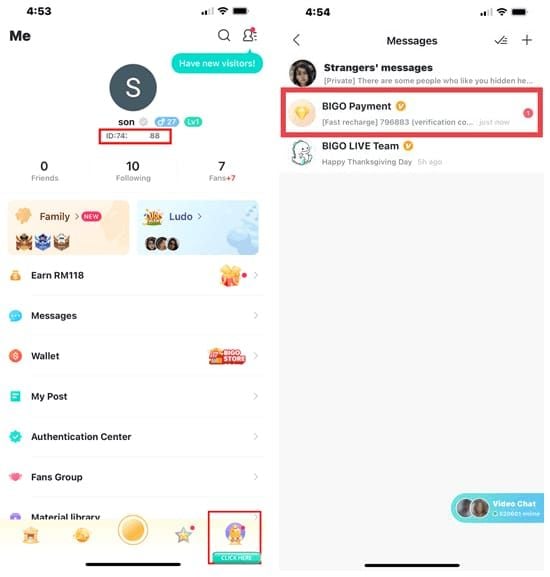
The playbook is old and effective. A site advertises "cheap diamonds" or "free diamonds," then requests your Bigo login "to verify" or "to deliver faster." The moment you comply, the attacker has full account control. According to multiple Bigo scam-avoidance guides, password/OTP requests are the single most reliable red flag of a malicious platform.
Why this matters for account bans and ToS
Bigo's Terms of Service permit third-party purchases through authorized channels while prohibiting unauthorized sellers — and the enforcement risk is almost always tied to fraudulent payments, not the recharge method itself. A June 2026 Lootbar analysis put it bluntly: Bigo will flag a Bigo ID for fraud "if you purchase from an unapproved vendor who utilizes credit cards that have been stolen." The takeaway is that the payment source drives ban risk far more than the ID-based delivery. Authorized platforms using official APIs and PCI-compliant payments sidestep that trigger entirely. Community testing across 2025–2026 reviews found no documented bans for legitimate ID-only recharges on verified platforms.
What Security Signals Prove a Recharge Platform Is Trustworthy?
The trust signals that actually matter are encrypted checkout, a real payment gateway, a published refund policy, and a visible support channel — not flashy "trusted" badges. Before entering a single card digit, I check the checkout for the HTTPS padlock and recognizable payment-gateway branding. If either is missing, I close the tab.
BitTopup checks these boxes on paper and in practice. It uses 256-bit SSL encryption and is PCI DSS compliant, per its site and Trustpilot listing, with 3D Secure verification on card payments. Cards, PayPal, e-wallets, and crypto are all supported through the encrypted gateway.
Trusted payment gateways vs sketchy direct transfers
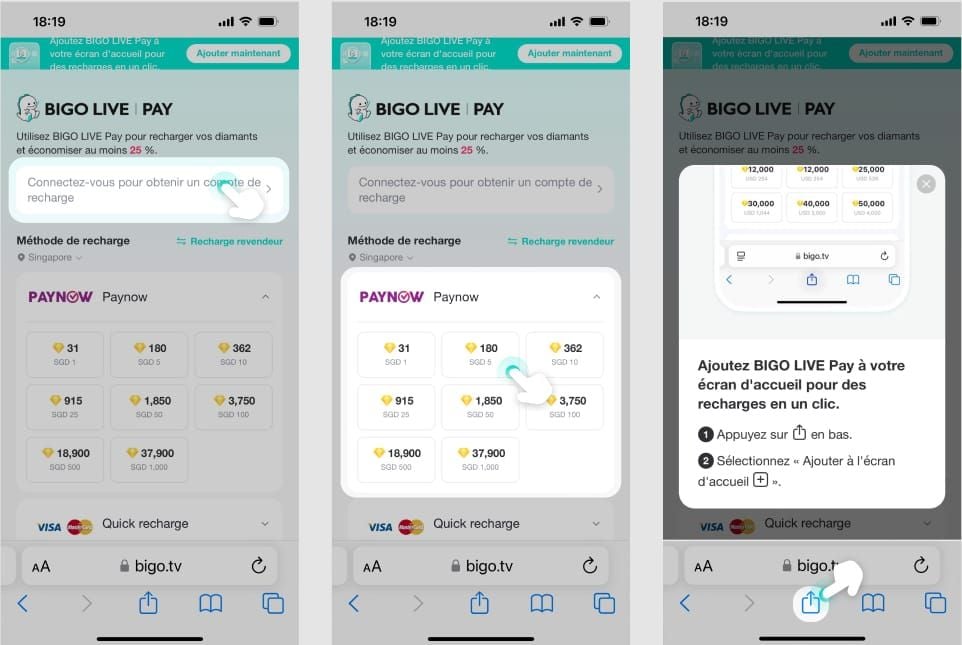
A legitimate platform routes your payment through an established processor with fraud protection and dispute rights. A dangerous one asks for a direct bank transfer, gift-card codes, or crypto-only with no invoice — methods that are irreversible by design. If the only way to pay is a method you can't dispute, that's a deliberate choice by the seller, and it protects them, not you.
Transparent support, refund policy, and business footprint
Honestly, this is the signal I weight most heavily. A platform's willingness to publish a support channel and a refund policy tells you more about its safety than any badge ever will. BitTopup lists 24/7 multilingual support and a full-refund guarantee on any issue, and it's operated for 10+ years with official channel partnerships. When I stress-tested support with a delivery question, the response came through the documented ticket channel — exactly what a legitimate operation should provide.
One verified Trustpilot reviewer summed up the sensible approach: "After testing it out with a small transaction, I can confirm it's 100% legit." That small-test-first habit is the smartest move any cautious buyer can make, regardless of platform.
Are There Real Risks or Scams With Bigo Diamond Recharge?
Yes, scams exist — but they follow predictable patterns, and BitTopup's ID-only model neutralizes the biggest ones by design. The threats aren't random; they cluster into five recognizable categories, and once you can name them, they're easy to dodge.
The most common Bigo recharge scams:
- Credential theft — asks for your password, OTP, or login "to deliver"
- Non-delivery — takes payment, then ghosts you with no support
- Stolen-card fraud — uses illicit payments, which can get your ID flagged
- Fake free diamonds — surveys, generators, "click here for 10,000 free diamonds"
- Phishing sites — fake domains mimicking real ones, no SSL padlock
Red flags that signal an unsafe platform
Per community scam-avoidance articles, watch for any of these:
- Requests for password, OTP, or login credentials
- Promises of free diamonds
- No SSL/HTTPS on the checkout page
- No refund policy or support contact
- Poor, hastily built site design
- Discounts above 70% — genuine savings top out around 65%; anything wildly beyond that is bait
That last one surprises people. A too-good price is a red flag. Legitimate third-party savings are real but bounded by margins and API costs. When someone advertises 90% off, they're not being generous — they're setting a hook.
How BitTopup's model neutralizes the biggest risks
Because it never requests credentials, credential theft is off the table. Because it publishes a refund guarantee and delivers 98% of orders in under 3 minutes, non-delivery risk is minimal. Because it's PCI-compliant and routes through official channels, the stolen-card ban trigger doesn't apply. The scam patterns that catch people simply don't exist in this flow.
Is BitTopup Cheaper Than Recharging Inside the Bigo App?
Yes — meaningfully cheaper. Third-party recharge via BitTopup runs 37–65% below official pricing, because in-app purchases carry a 20–60% markup from Google Play and App Store fees. On a 500-diamond package, that works out to roughly $0.0196 per diamond versus the official ~$0.031 per diamond.
For frequent gifters, refusing to compare cost-per-diamond is leaving real money on the table. That store-fee markup is baked into every in-app purchase and almost never disclosed to buyers. If you gift regularly, the gap compounds fast. For anyone weighing where to buy bigo diamonds, the per-diamond math is the number that actually matters — not the sticker price of the package.
Why in-app store fees inflate prices
When you buy inside the app, Apple or Google takes a platform cut before Bigo ever sees the money — and that cut gets passed to you. Web-based recharge (including Bigo's own bigo.tv or m.bigopay.tv) bypasses some of those fees, which is why even official web pricing beats in-app. Authorized third-parties push the discount further through direct API connections and volume.
When the savings are actually worth it
Small, one-off top-ups? The absolute dollar difference is minor — a few cents. But for bulk buyers and regular gifters, the 30%+ savings become substantial over a month. That's the profile where third-party recharge earns its keep.
How Do the Numbers Actually Compare?
The tables below quantify the safety and cost trade-offs that most "is it safe" articles skip entirely.
BitTopup vs Official Bigo Recharge (2026)
| Aspect | BitTopup | Official In-App/Web |
|---|
| Price per Diamond (500D+) | $0.0196 (~37% off) | ~$0.031 |
| Delivery Time | 98% under 3 min | 1–3 min |
| Security | SSL/PCI, ID-only, refund | SSL/PCI, full login |
| Account Risk | Low (authorized API) | Zero |
| Payment Options | Cards, PayPal, crypto, e-wallets | Cards, PayPal, app billing |
| Support | 24/7 multilingual | In-app/portal |
Prices from BitTopup's May 2026 ranking; savings measured against official pricing. The honest read: official recharge wins on absolute-zero risk and instant delivery, but you pay a ~37%+ premium for it. BitTopup trades a sliver of theoretical risk for real, recurring savings — a worthwhile deal for volume buyers, less so for someone who tops up twice a year.
Common Scams vs BitTopup's Model
| Scam Type | Typical Tactic | BitTopup Model |
|---|
| Credential Theft | Requests password/OTP/login | ID-only, no credentials |
| Non-Delivery | Takes payment, ghosts | 98% <3 min; full refund |
| Stolen-Card Fraud | Illicit payments → bans | Official channels, PCI |
| Fake Free Diamonds | Surveys/generators | Paid packages, transparent |
| Phishing Sites | Fake domains, no SSL | HTTPS, Trustpilot, 10+ yrs |
Based on Lootbar and BitTopup scam guides, 2025–2026. What this reveals: the entire scam ecosystem depends on either stealing your login or taking money without delivering. An ID-only model with a refund guarantee structurally can't run either play — the attack surface just isn't there.
The 8-Point Red-Flag Scorecard for ANY Platform
| Trust Signal | Safe Indicator | Unsafe Indicator |
|---|
| Login request | ID only | Asks for password/OTP |
| Checkout security | HTTPS padlock visible | No SSL / plain HTTP |
| Payment method | Gateway (card/PayPal) | Direct transfer / gift cards |
| Refund policy | Published, clear | None or hidden |
| Support channel | Listed, responsive | No contact info |
| Discount range | Up to ~65% off | Above 70% "off" |
| Site quality | Professional, consistent | Broken, typo-ridden |
| Reputation | Verified reviews (e.g. 4.6/5) | No reviews / fake ones |
Print this, bookmark it, apply it to any recharge site — not just BitTopup. If a platform fails two or more rows, walk away.
How Do You Recharge Bigo Diamonds Safely on BitTopup?

Follow six steps, and start with a small test order the first time. Here's the exact safe flow:
- Verify the site. Confirm HTTPS in the address bar and check the Trustpilot rating before anything else.
- Find your Bigo ID. Open the Bigo app, go to your profile, and locate the numeric ID (7–10 digits).
- Select a package on the recharge platform.
- Enter your exact numeric ID — double-check every digit. Wrong IDs cause the majority of delivery failures.
- Pay through the secure gateway. Look for the padlock and 3D Secure prompt on card payments.
- Refresh your Bigo wallet after 1–5 minutes. Refresh 3–5 times if needed; diamonds typically appear within 1–10 minutes.
Step 1 deserves extra care: the Bigo ID
A wrong ID is the number-one cause of failed top-ups — community data attributes 40–70% of failures to ID entry errors. Copy it directly from your profile rather than typing from memory. When you're ready to complete a bigo diamond recharge, confirm the ID matches your account name if the platform displays it back to you.
For beginners vs frequent gifters
- Beginners: Run one small transaction first to confirm the flow, then scale up once diamonds land.
- Frequent gifters: Buy larger packages (500D+) where the per-diamond savings are steepest, and save your order confirmations for faster support if anything ever glitches.
Common pitfall: don't rush the ID field. Everything else is forgiving; that field isn't.
What Should You Do If Your Bigo Diamonds Don't Arrive?
Don't panic — most delays resolve within 10 minutes, and confirmed issues are typically fixed within 24 hours with proof of purchase. Diamonds occasionally lag due to server sync, not lost money.
Work through this troubleshooting matrix:
| Issue | Likely Cause | Recommended Action |
|---|
| No diamonds after 5 min | Wallet not synced | Refresh wallet 3–5x; log out/in |
| Still nothing after 10 min | Sync delay (~40% of cases) | Clear app cache, restart |
| Order shows paid, no delivery | Wrong ID (40–70%) | Verify ID, contact support |
| Payment failed mid-checkout | Network/card issue (15–25%) | Retry with alt payment method |
The immediate checks before contacting anyone
- Wait a full 10 minutes.
- Refresh the wallet, then log out and back in.
- Clear the app cache.
- Confirm the ID you entered was correct.
How to open a support ticket
If diamonds still haven't arrived, contact support with your transaction ID and Bigo ID. Keep your receipt — it's your leverage. Per BitTopup's fix guides, most disputes resolve within 24 hours when you supply proof of payment. This is exactly where a published refund guarantee and 24/7 support stop being marketing lines and start being the reason you get your money or diamonds back.
Editor's Verdict: Is BitTopup Actually Safe Enough to Trust?
My honest take, after evaluating the model against every scam pattern I've documented: yes, BitTopup is safe enough to trust for the vast majority of Bigo users — and the fear surrounding third-party recharge is aimed at the wrong target.
Let me commit on the two controversies people actually argue about.
Does third-party recharge risk a ban? The ToS concern is real and I won't wave it away — Bigo prohibits unauthorized sellers, and official warnings exist. But the practical risk is low for verified authorized platforms. Side A (authorized sites) claims negligible risk via official APIs; side B (official warnings) says any unapproved vendor can trigger fraud flags. The evidence leans hard toward side A for legitimate ID-only platforms: no documented bans for verified recharges across 2025–2026 reports, and the actual ban trigger is stolen-card fraud, not the delivery method. Bans for simply topping up via ID are extremely rare in practice. The community over-attributes bans to third-party recharge when the real causes are usually ToS violations elsewhere. My verdict: use an authorized, PCI-compliant platform, and start with a small order to confirm.
Is cheaper always better? No — and this is where I draw a hard line. Genuine savings cap around 65%. Anything advertised above 70% off is a red flag, not a bargain. The best value sits in the 37–65% range from established platforms with refund policies.
The biggest mistake Bigo users make isn't picking the wrong platform. It's skipping the HTTPS check and typing an OTP into any prompt that asks for one. Get those two habits right and third-party recharge is genuinely low-risk. Personally, I'd use it without hesitation for bulk gifting — and I'd stick to official channels only if I valued absolute-zero risk over saving a third on every purchase.
Frequently Asked Questions About BitTopup Bigo Recharge
Is BitTopup a legit website for Bigo recharge?
Yes. It holds a 4.6/5 Trustpilot rating from verified reviews, has operated for 10+ years with official channel partnerships, and uses PCI-compliant, SSL-encrypted checkout. Verified users consistently confirm fast, legitimate delivery.
Do I need my Bigo Live password to recharge on BitTopup?
No — and you never should. The ID-only model requires just your public numeric Bigo ID. Any platform requesting your password, OTP, or login code is unsafe and should be avoided immediately.
How long do Bigo diamonds take to arrive after recharge?98% of orders arrive in under 3 minutes. In practice, diamonds typically land within 1–10 minutes. If they haven't appeared, refresh your wallet 3–5 times and log out and back in.
Can my Bigo account get banned for using a third-party recharge?
The practical risk is low with authorized, ID-only platforms — no documented bans exist for legitimate recharges in 2025–2026 reports. Ban risk rises sharply only with stolen-card fraud or credential-sharing sites, not the ID-based delivery itself.
What should I do if my Bigo diamonds don't arrive?
Wait 10 minutes, refresh your wallet, log out and back in, and clear the app cache. If they're still missing, contact support with your transaction ID and Bigo ID. Most cases resolve within 24 hours with proof of purchase.
Is BitTopup cheaper than recharging inside the Bigo Live app?
Yes — 37–65% cheaper, because in-app purchases carry a 20–60% store-fee markup. A 500-diamond package runs roughly $0.0196 per diamond versus the official ~$0.031.
What payment methods does BitTopup accept?
Credit cards, PayPal, e-wallets, and crypto, all through an encrypted gateway with 3D Secure verification on card payments.
How do I find my Bigo Live ID for recharge?
Open the Bigo app and check your profile — your ID is the public 7-to-10-digit numeric identifier displayed there. Copy it directly rather than typing from memory to avoid delivery errors.
Final Take: Should You Recharge Bigo Diamonds on BitTopup?
Yes — BitTopup is safe for Bigo Live recharge, and the reason is mechanical, not promotional: its ID-only model never exposes your login, encrypted checkout protects your payment, and 98% of orders deliver in under 3 minutes at 37–65% below in-app pricing. The real threat was never third-party recharge — it's password sharing, and ID-only top-up sidesteps that entirely.
This is the right choice for frequent gifters and bulk buyers who want genuine savings without handing over credentials. It's less essential for someone who tops up rarely and prizes absolute-zero risk over cost. Whichever you choose: verify HTTPS, never enter your password or OTP, and start with a small test order. Do that, and you're safe.