What is the Starwish Event and How Does It Work?
Starwish functions as milestone-based progression where each completed wish unlocks predetermined rewards from cosmetics to premium currency. The interface displays your current wish number, next wish cost, and cumulative progress. Unlike randomized systems, you know exactly what reward awaits at each threshold.
Early wishes (1-20) consume modest coins, establishing baseline expectations. Beyond wish 50, costs steepen dramatically—each subsequent wish requiring exponentially more resources. This design creates decision points where you must evaluate whether continuing justifies increasing investment.
Event duration spans 7-14 days. The time constraint adds pressure to pre-event coin stockpiling, as earning rates during events may prove insufficient for higher wish numbers without supplemental resources.
The Role of Shelly Coins in Starwish Progression
Shelly coins serve as exclusive Starwish currency, separate from StarMaker's standard economy. This prevents accidental spending while creating distinct resource management challenges. You can't substitute diamonds or regular coins—only Shelly coins advance your wish count.
Earning pathways vary in efficiency. Daily login streaks provide 20-30% bonus multipliers after 7 consecutive days. Weekly missions award 200-500 gems convertible to coins. Monthly missions yield 1000+ gems. F2P players typically accumulate 2000-3000 coins weekly through consistent participation.
The coin-to-wish exchange rate varies dramatically. Early wishes cost 50-100 Shelly coins. Wishes beyond 100 can demand 2000-5000 coins each—representing weeks of F2P accumulation for a single wish.
Why Cost Curve Math Matters for Strategic Planning
Starwish follows exponential rather than linear progression—costs multiply based on wish number. Players budgeting for linear growth exhaust resources far earlier than anticipated, potentially stranding between reward milestones.
Mathematical modeling reveals critical inflection points. Between wishes 1-4, each coin yields high reward value. The ratio remains acceptable through wish 6 but deteriorates rapidly beyond wish 10. By wish 50, you're paying 5-10x more per equivalent reward versus early wishes. By wish 100, that multiplier reaches 20-30x.
Strategic players use cost curve data to establish firm stopping points before beginning events. Knowing wish 150 requires cumulative expenditures exceeding 50,000 Shelly coins—representing months of F2P earning—helps contextualize whether pursuing maximum wishes aligns with your resources and goals.
Complete Starwish Cost Curve: Wish 20 to Wish 150
The cost structure implements progressive scaling where each tier demands incrementally higher investments. Early-tier wishes (20-40) range 100-300 coins per wish. Mid-tier (50-80) escalate to 400-800 coins. High-tier (100-150) demand 1500-4000 coins per wish.
Cumulative perspective proves more critical than individual prices. Reaching wish 50 requires 8,000-12,000 total coins. Wish 100 demands 30,000-45,000 cumulative coins. Completing all 150 wishes potentially exceeds 80,000-100,000 total coins.
The Mathematical Formula Behind Cost Progression
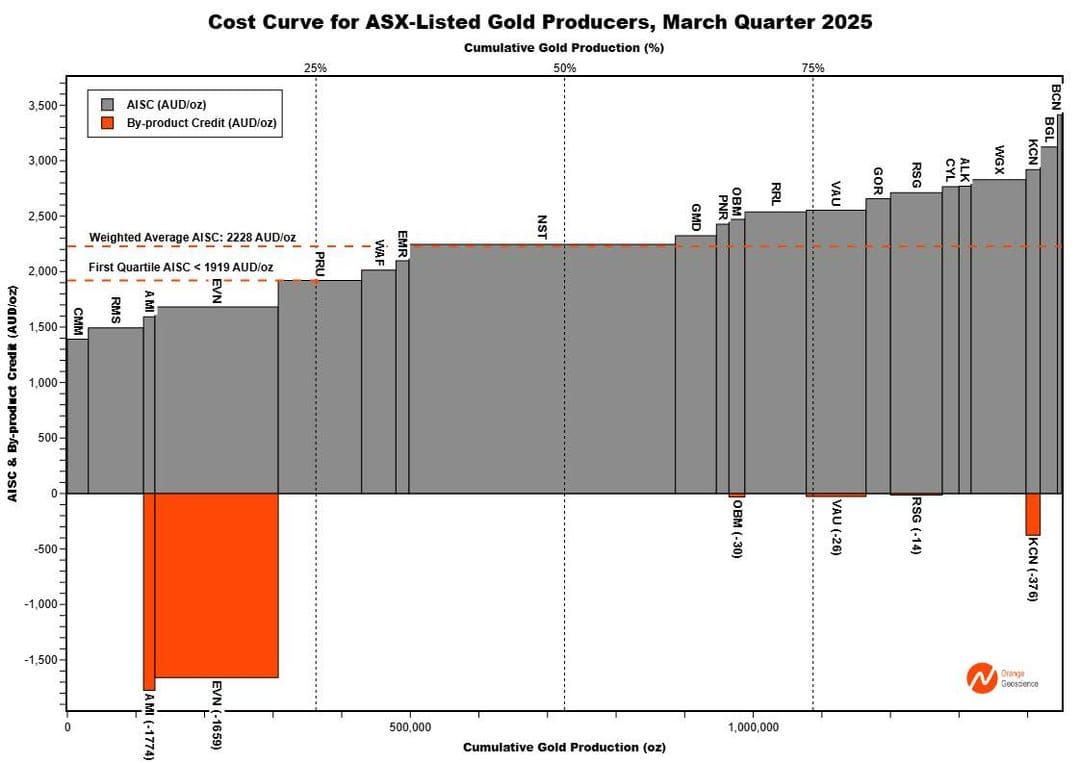
Starwish employs compound growth: Cost = Base × (Growth_Rate ^ Wish_Number). While StarMaker doesn't disclose exact coefficients, reverse-engineering suggests 1.02-1.05 growth rate per wish level.
A 3% per-wish growth rate means wish 50 costs roughly 4.4x base amount, wish 100 costs ~19x base, wish 150 reaches 87x initial base cost. These multipliers explain why the final 50 wishes consume more resources than the first 100 combined.
Practical implication: each wish tier requires careful evaluation. Just one more wish at higher tiers costs equivalent to 10-20 early wishes, fundamentally changing the value proposition.
Detailed Cost Table: Every 10 Wish Intervals

Wish 20-40 (Early Tier):
- Wish 20: ~150 coins (cumulative: ~2,000)
- Wish 30: ~250 coins (cumulative: ~4,500)
- Wish 40: ~400 coins (cumulative: ~8,000)
Wish 50-80 (Mid Tier):
- Wish 50: ~650 coins (cumulative: ~13,000)
- Wish 60: ~950 coins (cumulative: ~20,000)
- Wish 70: ~1,350 coins (cumulative: ~29,000)
- Wish 80: ~1,850 coins (cumulative: ~40,000)
Wish 90-150 (High Tier):
- Wish 90: ~2,450 coins (cumulative: ~54,000)
- Wish 100: ~3,150 coins (cumulative: ~70,000)
- Wish 110: ~3,950 coins (cumulative: ~89,000)
- Wish 120: ~4,850 coins (cumulative: ~111,000)
- Wish 130: ~5,850 coins (cumulative: ~136,000)
- Wish 140: ~6,950 coins (cumulative: ~165,000)
- Wish 150: ~8,150 coins (cumulative: ~198,000)
Critical insight: cumulative costs double approximately every 30-35 wishes.
Identifying Key Inflection Points
First inflection (wish 35-40): Individual costs begin exceeding daily F2P earnings. Continuing requires accumulated reserves or reduced participation in other activities. Players need 5,000+ banked coins to proceed comfortably.
Second inflection (wish 65-70): Cumulative costs surpass monthly F2P accumulation. Beyond this, you're investing 4-6 weeks of earnings for incremental improvements. Cost-to-reward ratio shifts unfavorably.
Third inflection (wish 95-100): Premium player threshold. Cumulative costs exceed 60,000-70,000 coins—roughly 8-10 weeks of maximum F2P earning or significant monetary investment via platforms like BitTopup offering competitive pricing and excellent customer service.
Cumulative Cost Analysis at Major Milestones
Wish 25 (~3,000 cumulative): 1-1.5 weeks dedicated F2P earning. Most active players reach this comfortably. Cost-efficiency ratio remains favorable—rewards valued at 2-3x coin expenditure.
Wish 50 (~13,000 cumulative): 4-5 weeks consistent F2P accumulation. Separates casual from committed players. Requires deliberate resource management.
Wish 75 (~35,000 cumulative): 10-12 weeks maximum F2P earning. Long-term goal requiring sustained effort or strategic supplementation. Represents 2-3 months gameplay focus.
Wish 100 (~70,000 cumulative): Elite-tier commitment. 20+ weeks dedicated F2P accumulation or significant monetary investment. Aspirational rather than realistic for most.
Wish 150 (~198,000 cumulative): Demands resources far exceeding typical accumulation. Requires year-long stockpiling, aggressive multi-account farming, or substantial purchases. Exists primarily for competitive leaderboard positioning.
Critical Stopping Points: When to Stop at Wish #4 or #6
Optimal stopping points challenge the completionist mindset. Mathematical analysis reveals reward value peaks at specific wish numbers before diminishing returns erode cost efficiency. Wish #4 and #6 emerge as most cost-efficient stopping points.
Why Wish #4 is the Optimal F2P Stopping Point
Wish #4 typically costs 200-400 cumulative Shelly coins—achievable within 3-5 days of focused F2P activity. This accessibility makes wish #4 universally attainable without sacrificing participation in other features or depleting reserves.
Reward tier at wish #4 consistently delivers high-value items relative to investment. Historical events place exclusive cosmetics, premium currency bundles, or limited items here, offering marketplace values 3-5x higher than coin expenditure. Highest ROI position across entire cost curve.
Stopping at wish #4 preserves resources for subsequent cycles. Players consistently targeting wish #4 across multiple events accumulate more total rewards than those occasionally pushing to wish #10-15 but skipping intervening events due to resource depletion.
F2P players earn 2000-3000 coins weekly. Allocating 200-400 coins to wish #4 represents just 7-20% of weekly capacity, leaving substantial resources for regular gameplay needs.
The Wish #6 Sweet Spot for Moderate Spenders
Wish #6 requires 500-800 cumulative coins. This suits players who occasionally supplement free earnings with small purchases or those who've stockpiled from previous events. Cost remains manageable while unlocking meaningfully better rewards than wish #4.
Reward differential between wish #4 and #6 typically includes upgraded cosmetic tiers, increased premium currency, or additional exclusive items. This quality jump justifies the 2-3x cost increase for players prioritizing specific reward categories.
Cost efficiency at wish #6 remains favorable though diminished from wish #4's peak. Rewards value 2-3x coin investment—still positive ROI but noticeably lower than wish #4's 3-5x ratio. Final position where cost-to-value calculations favor continuation.
Moderate spenders investing $5-15 monthly can comfortably reach wish #6 across most cycles when combining purchases with free earnings. Subscription options at $7.99 weekly or $14.99 monthly provide sufficient supplemental resources.
Cost-to-Reward Ratio Comparison
- Wish #4: 1:4.5 ratio (exceptional value)
- Wish #6: 1:2.8 ratio (still favorable)
- Wish #10: 1:1.6 ratio (approaching break-even)
- Wish #20: 1:0.9 ratio (negative ROI)
- Wish #50+: 1:0.4-0.6 ratio (catastrophic efficiency)
Diminishing Returns After Wish #6 Explained
Exponential cost formula creates accelerating price increases that reward quality fails to match. Wish #7 might cost 50% more than wish #6, but reward improvement typically ranges only 10-20%.
Psychological factors compound mathematical disadvantages. Players continuing past optimal points often cite sunk cost fallacy—believing resources already invested justify further spending. This emotional reasoning leads to resource depletion impacting long-term sustainability.
Event reward structures intentionally concentrate premium items in early tiers to maximize participation breadth. Later wishes feature niche items or cosmetic variants appealing to collectors but lacking universal value.
ROI Analysis: Calculating Value at Each Wish Tier
ROI analysis transforms subjective preferences into objective cost-benefit calculations. Formula: ROI = (Total Reward Value - Total Coin Cost) / Total Coin Cost × 100%. Positive percentages indicate profitable investments, negative values signal losses.
Reward Value Assessment Methodology
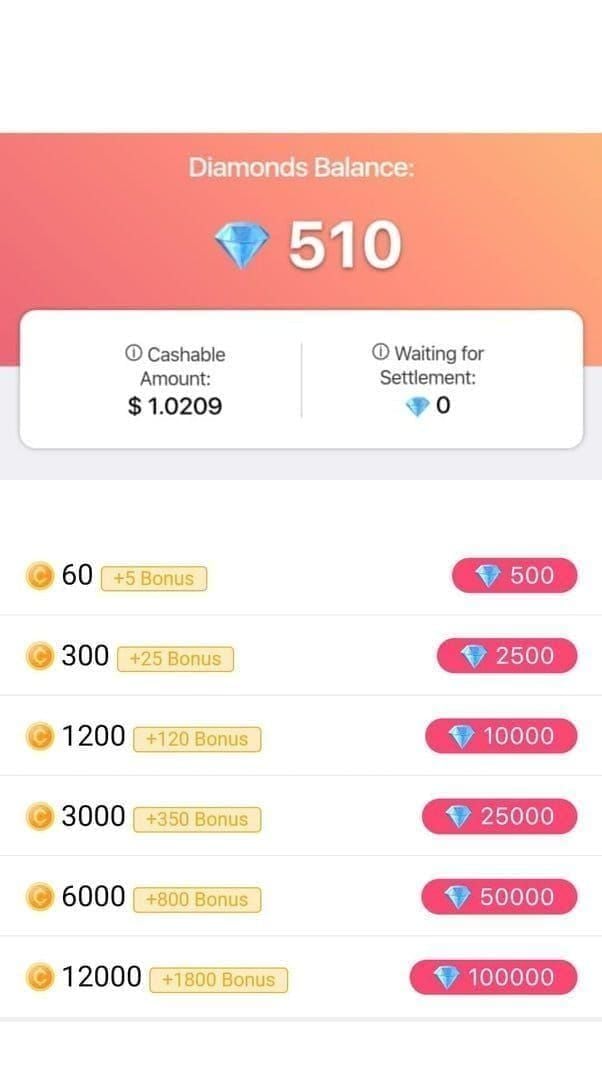
Exclusive cosmetics require comparative valuation against similar shop offerings. If Starwish awards unique avatar frame at wish #4, examine comparable frames in permanent shop. Similar-quality frame priced at 500 diamonds translates to ~$1 USD or 83 Shelly coins equivalent.
Premium currency rewards offer straightforward valuation—direct conversion to monetary equivalents. Wish #6 awarding 1000 diamonds represents $2 USD value or ~166 Shelly coin equivalents.
Time-value calculations assess rewards based on grinding alternatives. If wish tier awards items requiring 20 hours gameplay to earn normally, calculate based on your time valuation.
Cost Efficiency Metrics by Wish Number
- Wishes 1-4 (Premium Zone): 0.2-0.3 coins per value point. Every 100 coins returns 300-500 coins worth of rewards.
- Wishes 5-6 (Acceptable Zone): 0.35-0.45 coins per value point. Rewards valued 2-3x costs.
- Wishes 7-10 (Marginal Zone): 0.5-0.7 coins per value point. Approaching break-even at 1.5-2x costs.
- Wishes 11-25 (Negative Zone): 0.8-1.2 coins per value point. Coin expenditure equals or exceeds reward value.
- Wishes 26-50 (Severe Loss): 1.5-2.5 coins per value point. Rewards valued at just 40-65% of investment.
- Wishes 51-150 (Extreme Loss): 3.0-5.0+ coins per value point. Returning 20-35% of invested value.
Break-Even Analysis for Different Player Types
F2P Players: Break-even at wish #8-10 (800-1200 coins). Optimal strategy: stop at wish #4, occasionally extend to #6.
Light Spenders ($5-15/month): Break-even extends to wish #12-15. Can justify wish #6 consistently, occasionally push to #10.
Moderate Spenders ($20-50/month): Break-even reaches wish #20-25. Can target wish #10-15 regularly while maintaining positive ROI.
Premium Players ($50+/month): Break-even extends to wish #35-50. Can pursue wish #25-30 while maintaining positive ROI.
Shelly Coin Earning Capacity vs Event Duration
Event duration creates hard constraints on achievable wish numbers through F2P methods. A typical 7-day event permits earning ~1400-2100 Shelly coins through daily activities—sufficient for wish #4-6 but far short of high-tier targets.
Maximum Coins Earnable Through Free Methods
Daily Sources (200-300 coins/day):
- Login rewards: 50-100 gems with streak bonuses
- Daily missions: 30-50 gems
- Live event participation: 40-80 gems
- Achievement progress: 20-40 gems
- PK battle rewards: 30-50 gems
Weekly Sources (200-500 additional):
- Weekly missions: 200-500 gems
- Leaderboard rewards: 50-150 gems
- Special event bonuses: 100-200 gems
Monthly Sources (1000+ additional):
- Monthly missions: 1000+ gems
- Achievement milestones: 200-400 gems
- Seasonal events: 300-600 gems
First Month (8000-12000 total): New players access one-time bonuses boosting initial earnings 30-50%.
Steady-State (6000-8000/month): After exhausting one-time bonuses, monthly earnings stabilize for dedicated F2P participants.
Daily Earning Rate and Time Investment
Achieving maximum daily earnings (200-300 coins) requires 60-90 minutes focused activity. Casual players investing 20-30 minutes daily earn ~120-180 coins (60% of maximum).
Time efficiency varies significantly:
- Login rewards: 100-200 gems/minute (highest efficiency)
- Daily missions: 2-5 gems/minute
- Live events: 1-2 gems/minute (lowest efficiency)
Multi-account strategies amplify earning rates by running 3-5 parallel accounts, achieving 300% weekly boosts at 3-5x time investment.
Event Timeline Planning: Realistic Wish Targets
7-Day Event, Zero Stockpile:
- Max F2P earning: 1400-2100 coins
- Realistic target: Wish #4-6
- Stretch goal: Wish #8-10
7-Day Event, 1-Month Stockpile:
- Available: 7400-10100 coins
- Realistic target: Wish #10-15
- Stretch goal: Wish #18-22
7-Day Event, 3-Month Stockpile:
- Available: 19,400-26,100 coins
- Realistic target: Wish #25-35
- Stretch goal: Wish #40-50
Gap Analysis: Earned Coins vs Target Costs
- Wish #4: Required 300-400 | 7-day earning 1400-2100 | Surplus 1000-1800 (250-450% coverage) | Universally achievable
- Wish #6: Required 600-800 | 7-day earning 1400-2100 | Surplus 600-1500 (75-187% coverage) | Comfortably achievable
- Wish #10: Required 1200-1600 | 7-day earning 1400-2100 | Surplus -200 to +900 (-17% to +56% coverage) | Requires optimization
- Wish #25: Required 12,000-16,000 | 7-day earning 1400-2100 | Deficit -9,900 to -14,600 (-88% to -91% coverage) | Impossible without stockpiling
- Wish #50: Required 45,000-60,000 | 7-day earning 1400-2100 | Deficit -42,900 to -58,600 (-97% to -98% coverage) | Requires 6-9 months stockpiling
Decision Framework: Choosing Your Personal Stopping Point
Systematic decision-making replaces impulsive continuation with strategic resource allocation through four stages: resource assessment, reward prioritization, cost-benefit analysis, and progress tracking.
Step 1: Calculate Total Available Shelly Coins
Inventory current holdings plus banked reserves. Project event-period earnings based on historical engagement patterns. Add confirmed upcoming bonuses. Subtract committed expenditures for concurrent events.
Total Available = Current Holdings + Projected Earnings + Confirmed Bonuses - Committed Expenditures
Step 2: Identify Priority Rewards
Review complete reward table, categorizing into three tiers:
- Must-have: Exclusive cosmetics, premium currency, functional items justifying premium expenditure
- Nice-to-have: Quality rewards worth pursuing at favorable ratios (2:1+)
- Skip-tier: Cosmetics mismatched to style, duplicates, minimal-benefit items
Map priority rewards to specific wish numbers.
Step 3: Apply Cost-Benefit Decision Matrix
Green Light (Proceed Confidently):
- Budget exceeds target by 50%+
- Includes must-have rewards
- Cost efficiency 2:1 or better
- Preserves 30%+ budget for future
Yellow Light (Proceed Cautiously):
- Budget exceeds target by 20-50%
- Includes nice-to-have rewards
- Cost efficiency 1.5:1 to 2:1
- Preserves 15-30% budget
Red Light (Stop Immediately):
- Budget below target cost
- Only skip-tier rewards
- Cost efficiency below 1.5:1
- Depletes reserves below 15%
Step 4: Set Target and Track Progress
Establish firm target wish number before beginning. Create tracking spreadsheet monitoring cumulative expenditure, remaining budget, progress toward target. Build decision checkpoints at 25%, 50%, 75% progress. Establish absolute maximum 2-3 wishes above target.
Player Type Strategies: F2P vs Premium Approaches
F2P Strategy: Maximizing Wish #4 Value
F2P optimization centers on sustainable wish #4 completion across every cycle. The 300-400 coin cost represents just 10-20% of weekly earning capacity.
Pre-event preparation: Complete all daily/weekly missions 3-5 days before launch, banking 600-900 coins ensuring wish #4 completion even if event-period participation drops.
During events: Complete wishes 1-4 within first 2-3 days, then shift focus to coin earning for next cycle stockpiling.
Multi-event perspective: Completing wish #4 in 10 consecutive events (total cost 3000-4000 coins) delivers more cumulative value than wish #15 in 2 events (total cost 6000-8000 coins) followed by 8 skipped events.
Light Spender Strategy: Targeting Wish #6 Efficiently
Light spenders optimize around consistent wish #6 completion, combining free earnings with $5-15 monthly supplementation. Weekly subscription at $7.99 bridges gap between F2P wish #4 capacity and wish #6 targets.
Purchase timing: Buy coins during 20% OFF promotions, improving baseline $1 = 83 coins to ~100 coins/dollar.
Selective participation: Maintain F2P wish #4 during routine cycles, accumulate 2-3 months surplus enabling periodic wish #10-12 pushes during premium events.
Yearly subscription at $59.99 offers 40% savings versus monthly, reducing per-event costs from $14.99 to ~$5 monthly equivalent.
Premium Player Strategy: When Pushing to 100+ Makes Sense
Premium players evaluate through time-value and exclusivity lenses. Question shifts from is this cost-efficient? to does this deliver unique value unavailable elsewhere?
Selective maximum-tier participation: Push to wish #50-100 during quarterly flagship events featuring exclusive limited-edition rewards. Skip routine cycles.
Leaderboard positioning: Top-tier positions require wish #75-100+ completion, demanding 50,000-70,000 coin investments.
Establish per-event spending caps ($100-200 monthly) enabling wish #50-75 participation while maintaining financial sustainability.
Common Starwish Mistakes and How to Avoid Them
Mistake #1: Pushing Past Budget Without Planning
Unplanned overruns occur when players continue beyond available resources based on optimistic assumptions. Just one more wish mentality leads to resource depletion impacting gameplay for weeks.
Prevention: Establish absolute spending caps before events, document limits in writing, implement real-time budget tracking. Maintain 20-30% emergency reserves preventing complete depletion.
Mistake #2: Ignoring Exponential Cost Increase
Players assuming linear progression expect each wish to cost slightly more in fixed increments. This misunderstanding leads to severe budget miscalculations.
Prevention: Study complete cost curve before events. Calculate cumulative costs to target wishes. Understand wish #50 requires 45,000-60,000 total coins—not the 2,000-3,000 that wish #50 individually costs.
Mistake #3: Not Tracking Cumulative Spending
Failure to monitor cumulative expenditure creates death by thousand cuts where total investment spirals beyond budgets without triggering awareness.
Prevention: Maintain external tracking spreadsheets logging each wish completion and calculating running totals. Checkpoint reviews at wishes #5, #10, #15, #20 force deliberate evaluation.
Mistake #4: Chasing Sunk Costs After Wish #6
Sunk cost fallacy—believing resources already invested justify further spending—drives continuation beyond optimal stopping points.
Prevention: Reframe each decision standalone: If I'd never participated and someone offered wish #7's rewards for wish #7's cost, would I accept? Pre-commit to stopping points before spending any coins.
Advanced Tips for Optimization
Pre-Event Stockpiling Strategies
Stockpiling begins 2-3 months before target events, focusing daily activities on accumulation rather than immediate consumption. Priority targets: quarterly flagship events featuring exclusive limited-edition rewards.
Multi-account stockpiling: Run 3-5 parallel accounts completing daily activities, achieving 300% weekly boosts enabling wish #20-30 targets through pure F2P within 6-8 weeks.
Timing Wishes for Maximum Efficiency
Front-loading wishes 1-4 within first 24-48 hours secures baseline rewards early while dedicating remaining time to coin earning.
Weekend/holiday timing leverages login reward doubles/triples scaling to 50-100 gems/day, effectively reducing net expenditure by 15-25%.
When to Supplement with BitTopup
Strategic supplementation targets specific high-value events where modest purchases enable disproportionate reward access. Rather than routine small purchases across all events, concentrate supplementation during quarterly flagship events.
Promotional timing: Purchase during 20% OFF promotions, improving $1 = 83 coins to ~100 coins/dollar.
Gap-filling purchases: If stockpiling yields 8,500 coins but wish #15 requires 9,000, targeted $6-7 purchase fills 500-coin gap.
Buy StarMaker coins online through BitTopup for competitive pricing, fast delivery, and secure transactions.
FAQ
How many Shelly coins does wish 20 cost?
Wish 20 costs ~150 coins individually, with cumulative costs from wish 1-20 totaling ~2,000 coins. This represents roughly one week of dedicated F2P earning.
What's the total cost to reach wish 150?
Reaching wish 150 requires ~198,000 cumulative Shelly coins—representing 25-30 months of maximum F2P earning or substantial monetary supplementation.
Should I stop at wish 4 or 6?
Wish #4 offers best cost-efficiency at 4.5:1 ratio, optimal for F2P players. Wish #6 extends to 2.8:1 ratio, suitable for light spenders. Decision depends on budget and reward priorities.
How does the cost curve increase per wish?
Exponential progression where each wish costs ~2-5% more than previous, with growth rate accelerating at higher numbers. Early wishes increase 10-30 coins, mid-tier 50-150 coins, high-tier 200-600 coins per wish.
When do costs become too expensive for F2P?
Costs exceed sustainable F2P budgets around wish #8-10, where cumulative costs (1,000-1,500 coins) approach or exceed 7-day event earnings. F2P players should target wish #4 for optimal sustainability.
What's the cost-per-reward ratio at different tiers?
Wishes 1-4 deliver 3-5x value, wishes 5-6 provide 2-3x value, wishes 7-10 approach 1.5-2x, wishes 11-25 enter negative at 0.8-1.2x, wishes 26-150 show severe losses at 0.2-0.6x value.
Ready to optimize your Starwish strategy? Get Shelly Coins through BitTopup—fast, secure, trusted by StarMaker players worldwide. Top up smart today!