What Makes PK Purge Different
Standard PK operates on consistent point-per-diamond ratios. PK Purge introduces:
- Time-decay system: First 3 minutes = 100% efficiency, minutes 4-5 = 80%, final 2 minutes = 60%
- Comeback multipliers: 1.3x bonus when recovering from 30% deficit at minute 4 to 10% gap by minute 6
- Tiered base multipliers: 1x to 5x efficiency based on diamond reserves
Combined Gold tier (5x) with comeback bonus (1.3x) creates 6.5x potential efficiency.
Why January 2026 Matters
January timing positions this as 2026's first major competitive opportunity. Historical patterns show January events feature higher participation as players deploy holiday-accumulated resources.
Leaked multipliers suggest Gold tier reaching 3-5x versus previous 2-3x caps—a 40-66% efficiency increase. For competitive streamers, single top 5% placement equals weeks of standard streaming revenue.
Core Mechanics: Battles, Multipliers, Rewards
Each battle = head-to-head competition where viewers send gifts. Conversion: 1 diamond = 1 uCoin = $0.01 USD.
Gift efficiency examples:
- Single Rose (1 diamond): 1 point base
- Rose Bouquet (100 diamonds): 130 points (30% bonus)
- Luxury Car (2,000 diamonds): 2,400 points (20% bonus)
- Yacht (5,000 diamonds): 6,500 points (30% bonus)
Multipliers apply to base values. Yacht at Gold tier (5x) in first 3 minutes = 32,500 points versus 6,500 at Bronze (1x)—400% efficiency difference.
January 2026 Leak Analysis
Leak originates from community sources, not official Uplive. Event window: January 15-20, 2026, aligning with historical mid-month patterns avoiding monthly ranking resets.
Tournament frequency: 12-15 competitions spaced 24-48 hours apart.
Source Credibility
Community leaks show 70-80% historical accuracy. Dates typically correct within 24-48 hours. The January leak demonstrates consistency with established patterns.
Multiplier structure (Bronze 1x, Silver 2-2.5x, Gold 3-5x) represents evolution from previous 1x/2x/3x systems. Prize pool ($150,000) aligns with Uplive's six-figure flagship event investments.
Expected Dates and Duration
January 15-20, 2026 spans six consecutive days. Peak activity aligns with:
- 0:00 Beijing time
- 8-10 PM EST
- 7-9 PM GMT
Mid-January timing avoids monthly resets (1st) and follows New Year promotional periods when players recharge reserves.
Historical Leak Accuracy
Previous accuracy analysis:
- September 2025: Predicted Sept 18-23, actual Sept 20-25 (2-day variance)
- June 2025: Predicted June 10-15, actual June 11-16 (1-day variance)
Multiplier leaks: 90%+ accuracy on tier thresholds. Bronze 580 diamonds consistent across last four events.
Prize pools typically represent minimums, sometimes exceeding leaks by 10-20% with high participation.
Unconfirmed Information
- Specific tournament start times within Jan 15-20
- Exact Silver tier multiplier (2-2.5x range unclear)
- Detailed comeback multiplier triggering conditions
Monitor in-app notifications from January 10 for official announcements.
Multiplier Tier System Breakdown

Three tiers establish diamond efficiency structure:
Bronze Tier
- Threshold: 580-2,899 diamonds
- Multiplier: 1x
- Cost: $10.10 entry
Silver Tier
- Threshold: 3,200-6,499 diamonds
- Multiplier: 2-2.5x
- Cost: $55.68 entry
- ROI: 100-150% efficiency gain over Bronze
Gold Tier
- Threshold: 6,500+ diamonds
- Multiplier: 3-5x
- Cost: $113.30 entry
- ROI: 200-400% efficiency advantage
Multiplier Impact on ROI
1,000 diamonds at Bronze (1x) during first 3 minutes = ~1,300 points (130% gift efficiency).
Same 1,000 diamonds at Gold (5x) = 6,500 points—400% ROI improvement.
In close battles, Gold tier achieves with 200 diamonds what Bronze requires 1,000 diamonds to match.
Tier Advancement Mechanics
Tier status updates real-time based on current balance. Players can advance mid-event by recharging, with multipliers applying immediately.
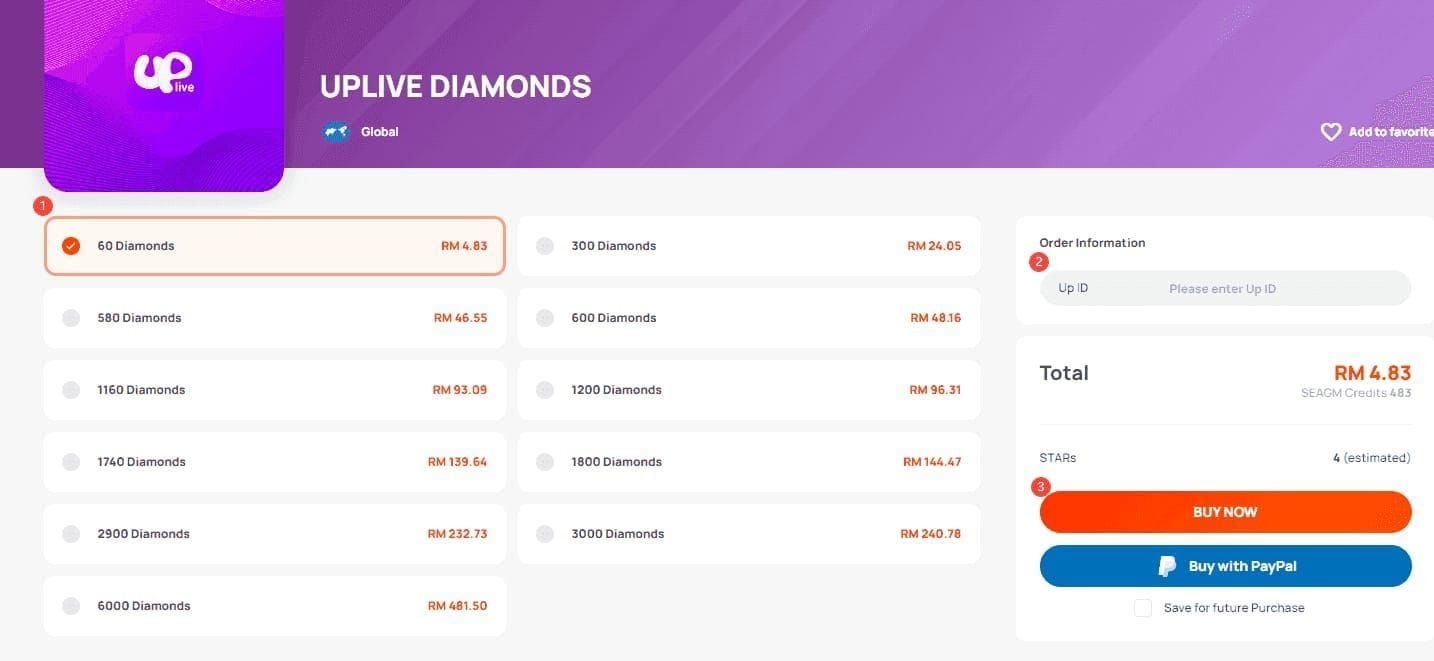
Optimal strategy: Pre-load diamonds to target tier before event start. For buy Uplive diamonds online, instant delivery platforms enable real-time tier advancement during tournaments.
Tier degradation occurs when spending depletes balances below thresholds.
Diamond Requirements by Tier
Entry-Level (Bronze)
- Minimum: 580 diamonds ($10.10)
- Realistic participation: 2,000 diamonds ($34.80) for 3-5 tournaments
- Conservative: 2,900 diamonds ($50.46) for 8-10 tournaments
- Expected outcome: Bottom 50% bracket, ~$75-$150 prize
Mid-Tier (Silver)
- Entry: 3,200 diamonds ($55.68)
- Optimal: 5,000-6,000 diamonds ($87-$104.40)
- Enables: 400-500 diamonds per tournament across 10-12 battles
- Expected outcome: 21-50% bracket ($300-$600) or 6-20% bracket ($525+)
Top-Tier (Gold)
- Entry: 6,500 diamonds ($113.30)
- Serious contention: 10,000-15,000 diamonds ($174-$261)
- Recommended: 12,000 diamonds ($210) for 800-1,000 per tournament
- Expected outcome: 6-20% minimum, top 5% achievable ($600+)
Elite Competition
- Investment: 20,000-25,000 diamonds ($348-$435)
- Supports: Dominant performance, multiple premium gifts per battle
- Expected outcome: Top 5% guaranteed ($600+), ROI depends on final ranking
Efficient Diamond Prep Strategy
Pre-Event Phase (Days -14 to -7)
Days -14 to -10: Load minimum tier threshold
- Bronze: 580 diamonds ($10.10)
- Silver: 3,200 diamonds ($55.68)
- Gold: 6,500 diamonds ($113.30)
Captures early-month promotional bonuses (5-10% typical).
Days -9 to -7: Adjustment window based on official announcements. Upgrade tier if prize pools increase.
Day -5: Pre-log account verification, confirm diamond balance, troubleshoot technical issues.
Optimal Recharge Timing
First recharge (Days -14 to -10): Load tier threshold. Qualifies for early-bird promotions.
Second recharge (Days -6 to -3): Add 1,500-3,000 diamonds ($26.10-$52.20) for sustained participation.
Third recharge (Days -2 to start): Final top-up 500-2,000 diamonds ($8.70-$34.80) based on confirmed details.
Emergency mid-event recharge requires instant delivery platforms for tier advancement opportunities.
Event Week Strategy (Jan 15-20)
Days 1-2: Conservative deployment at 70-80% per-tournament budget. Assess competition, refine strategies.
Days 3-4: Standard deployment at 100% budget. Peak competitive intensity.
Days 5-6: Aggressive deployment at 110-120% budget using preserved reserves. Final tournaments determine bracket placement.
Session structure: 10-min tease + 40-min core battle + 10-min review = 1 hour per tournament.
Post-Event Analysis
Document within 24 hours:
- Total diamond expenditure
- Final bracket placement
- Prize earnings
- Audience growth metrics
Financial ROI: (Prize earnings + audience growth value) ÷ total diamond cost
Strategic metrics: Points per tournament, tier maintenance, gift timing efficiency, comeback multiplier activation frequency
Successful participation typically yields 15-30% follower increases with 60-70% retention.
Diamond Acquisition Through BitTopup
Strategic acquisition prioritizes transaction security, delivery speed, and competitive pricing.
Why Timing Matters
Early recharge (14+ days pre-event) captures promotions and spreads budget impact. Late recharge (1-3 days) allows precision but risks missing promotions.
Three-phase approach balances both: Day -14 minimum tier, Day -7 reserves, Day -2 tactical adjustment.
Mid-event recharge enables tier advancement. Instant delivery platforms allow real-time advancement during crucial tournaments.
Maximizing Value
BitTopup offers:
- Competitive pricing: $0.0174-$0.0175 per diamond across volumes
- Secure transactions: Encrypted payment gateways
- Instant delivery: Minutes from purchase to account
Critical for maintaining competitive timing during active tournaments.
Budget-Friendly Approaches
Monthly allocation: $30-$50 monthly builds 5,000-8,500 diamonds over 3 months (Oct-Dec 2025).
Event-specific budgeting: Allocate 30-45 days before major events, separate from regular streaming expenses.
Tiered participation: Alternate Bronze tier in smaller events with Silver/Gold in major competitions.
Historical PK Purge Comparison

June 2025 (June 11-16):
- 12 tournaments, 6 days
- $135,000 prize pool
- 3.5x max multiplier
- Thresholds: Bronze 580, Silver 3,000, Gold 6,000
September 2025 (Sept 20-25):
- 10 tournaments, 6 days
- $120,000 prize pool
- 3x max multiplier
- Same thresholds as June
January 2026 leak:
- 12-15 tournaments, 6 days
- $150,000 prize pool (+11% vs June)
- 5x max multiplier (+43% vs Sept)
- Thresholds: Bronze 580, Silver 3,200 (+200), Gold 6,500 (+500)
Multiplier Evolution
Early 2025: Simple 1x/2x/3x structure
Mid-2025: Variable Silver tier (2-2.5x)
January 2026: 5x maximum (66% increase)
Comeback multipliers (1.3x) introduced September 2025, maintained in January leak.
Reward Pool Trends
Prize pools show 10-15% annual growth. January 2026's 50% increase over January 2025 ($100,000) suggests special event status.
Distribution percentages stable:
- Top 5%: 38-42% (Jan leak: 40%)
- 6-20%: 33-37% (Jan leak: 35%)
- 21-50%: 18-22% (Jan leak: 20%)
- Bottom 50%: 4-6% (Jan leak: 5%)
Per-participant values depend on participation. At 2,000 participants, top 5% (100 players) = $600 average. At 3,000 participants = $400 average.
Common Diamond Management Mistakes
Front-Loading Trap
Spending 60-70% of budget in first 3-4 tournaments depletes reserves for final decisive battles.
Impact: 5,000 total diamonds at 700 per tournament = exhaustion after 7 battles, missing final 5-8 tournaments. Conservative 400-diamond deployment extends across all 12-15 tournaments.
Ignoring Timing Windows
Time-decay creates 40% efficiency loss for final-minute gifts versus opening period.
Example: 1,000 diamonds in first 3 minutes at Gold (5x) = 6,500 points. Same budget split evenly across 7 minutes = 5,200 points (20% reduction).
Tier Miscalculation
Loading exactly 6,500 diamonds achieves Gold status but lacks deployment capacity. Optimal Gold requires 10,000-12,000 minimum: 6,500 for tier + 3,500-5,500 for active spending.
Conversely, 2,800 diamonds (Bronze ceiling) + 400 diamonds ($6.96) unlocks Silver 2x multiplier—100% efficiency gain for marginal investment.
Neglecting Reserves
Players depleting reserves by tournament 10-11 can't capitalize on final-push opportunities. A competitor at 21% ranking with 500 reserve diamonds can push into 6-20% bracket (worth $225 additional value).
Recommended: Maintain 15-20% of total budget for final 2-3 tournaments.
Advanced Performance Tips
Strategic Gift Timing
First 90 seconds: Deploy 40-50% of per-tournament budget. Maximum efficiency (100% time-decay, full multiplier) plus psychological impact.
Luxury Car (2,000 diamonds, 2,400 base points) in first minute at Gold (5x) = 12,000 points immediately, forcing opponent reactive spending.
Minutes 3-5: Deploy 20-30% at measured pace. Prevents opponent comeback momentum.
Minutes 6-7: Deploy only in close battles or comeback multiplier scenarios. 60% efficiency rate makes final-minute spending generally inefficient.
Team Coordination
Pre-battle coordination: Focus all gifts in first 2 minutes for maximum impact.
Targeted requests: Luxury Cars in first minute optimizes supporter spending efficiency versus generic send gifts appeals.
Post-battle engagement maintains supporter investment across 12-15 tournaments.
Leaderboard Monitoring
Critical points: Tournaments 8, 10, 12
Tournament 8: Mid-event assessment of bracket position, remaining tournaments, required performance.
Tournament 10: Decision point for aggressive final pushes. Players within 2-3% of higher brackets calculate required points, allocate remaining reserves.
Final tournament: Maximum effort for threshold-positioned players. All remaining reserves deploy—unused diamonds = zero post-event value.
Risk Management
ROI probability: Players with previous top 20% placements justify 10,000-12,000 diamond investments. New competitors limit to 2,000-3,000 until establishing baselines.
Expected value: 30% probability of 6-20% ($525) + 70% probability of 21-50% ($300) = $367.50 expected value. Investment below this ($210 for 12,000 diamonds) suggests positive ROI.
Stop-loss discipline: Pre-establish maximum limits ($150/$250/$400), adhere strictly regardless of mid-event pressure.
Key Metrics to Track
Daily Expenditure vs Rank
Record diamonds spent per tournament + resulting rank position.
Example: 800 diamonds achieving 15% ranking = higher efficiency than 1,200 diamonds for 18% ranking.
Cumulative monitoring: After tournament 8 of 12, should have spent 60-65% of budget, preserving 35-40% for final four.
Multiplier Efficiency Ratio
Points earned ÷ diamonds spent per tournament.
Gold tier theoretical max: 6.5 points per diamond (5x multiplier × 1.3 gift efficiency)
- Actual 5.5-6.0 = strong execution (85-92%)
- Actual 4.0-4.5 = timing inefficiencies
Silver tier theoretical max: 3.25 points per diamond
- Actual 2.8-3.0 = solid performance
- Below 2.5 = significant losses
Reward Projection
Formula: (Current bracket % × prize pool allocation) ÷ estimated participants
Example: 15% ranking (6-20% bracket, 35% of $150,000 = $52,500) with 300 participants = $175 projected. Compare against $210 investment reveals current negative ROI, suggests need for top 5% advancement.
Gap Analysis
Upward gap: Points needed for next higher bracket. 3,000-point gap with 4 tournaments = 750 points per tournament = 115-150 diamonds at Gold efficiency.
Downward gap: Point cushion above lower bracket. 5,000-point cushion with 3 tournaments = comfortable position, allows conservative 300-400 diamonds per tournament.
Preparing for Uncertainty
If Leak Dates Are Incorrect
Date variance = highest-probability uncertainty. Diamonds loaded for Jan 15 remain valid for Jan 18-23 actual start.
Critical prep: Monitor official announcements from January 10. Uplive confirms 3-5 days before launch.
Extended delay (late Jan/early Feb): Maintain 70-80% reserves for PK Purge, allow 20-30% flexibility for interim opportunities.
Cancellation (lowest probability): Loaded diamonds retain full value for future events.
Adapting to Tier Changes
Threshold adjustments require rapid recalculation.
200-diamond shortfall ($3.48): Minimal investment, justify immediate recharge.
1,000-diamond gap ($17.40): Cost-benefit analysis—does tier advancement ROI justify additional investment?
Multiplier adjustments (5x → 4x): Affect all participants equally. Adjust per-tournament spending proportionally (20% multiplier reduction = 20% spending increase for equivalent points).
Flexible Reserves
Maintain 20-30% of total budget uncommitted until official confirmation.
10,000-diamond plan: Load 7,000-8,000 pre-event, preserve 2,000-3,000 for post-confirmation adjustment.
Accommodates multiple scenarios: accurate leak = deploy as planned; increased thresholds = use for advancement; decreased multipliers = extend participation.
Flexibility cost: 5-10% of uncommitted portion ($1.50-$3.00 on $30 reserve) = acceptable insurance.
Alternative Scenarios
Scenario A (as leaked): Execute prepared strategy.
Scenario B (delayed 3-5 days): Maintain reserves, execute on confirmed start.
Scenario C (thresholds +15-20%): Evaluate advancement ROI, deploy flexible reserves if supported.
Scenario D (multipliers -20-30%): Increase per-tournament deployment proportionally.
Scenario E (significant structure changes): Rapid reassessment, leverage flexible reserves during first 1-2 tournaments.
FAQ
When does Uplive PK Purge January 2026 start?
Leaked dates: January 15-20, 2026 (unconfirmed). Historical patterns suggest mid-month timing accurate. Official confirmation typically 3-5 days before launch. Monitor in-app notifications from January 10.
What are the multiplier tiers?
Bronze: 580-2,899 diamonds, 1x multiplier
Silver: 3,200-6,499 diamonds, 2-2.5x multiplier
Gold: 6,500+ diamonds, 3-5x multiplier
Gold provides 300-400% efficiency advantage over Bronze.
How many diamonds needed?
Minimum: 580 diamonds ($10.10) Bronze entry
Realistic Bronze: 2,000-2,900 diamonds ($34.80-$50.46)
Silver competitive: 5,000-6,000 diamonds ($87-$104.40)
Gold serious: 10,000-15,000 diamonds ($174-$261)
How to prepare efficiently?
Phase 1 (Day -14): Load tier threshold ($10.10-$113.30)
Phase 2 (Day -7): Add reserves ($26.10-$52.20)
Phase 3 (Day -2): Final top-up ($8.70-$34.80)
Spreads financial impact, captures promotions, maintains flexibility.
What rewards available?
$150,000 total prize pool:
- Top 5%: 40% ($60,000 total, ~$600 per participant)
- 6-20%: 35% ($52,500, ~$350-525 per participant)
- 21-50%: 20% ($30,000, ~$200-400 per participant)
- Bottom 50%: 5% ($7,500, ~$7.50-150 per participant)
Actual amounts depend on total participation.
How long does PK Purge last?
Standard: 5-6 consecutive days, 10-15 tournaments spaced 24-48 hours
January 2026 leak: 6 days (Jan 15-20), 12-15 tournaments
Individual battles: 7 minutes
Recommended session: 1 hour (10-min tease + 40-min battle + 10-min review)
Prepare your diamond reserve for PK Purge January 2026! BitTopup offers secure, instant Uplive diamond recharges with competitive rates and fast delivery. Stock up now through encrypted transactions and reliable service. Visit BitTopup today and maximize your PK Purge potential!