Struggling on upper Endless Tower floors? Learn how to clear Endless Tower in 2026 using optimized free-drag match combos, boss pacing, and zero-wipe team comps.
Tower progression in Ragnarok Crush is punishing. You burn your daily stamina the second you cross the threshold of an instance floor. If you wipe out on a boss wave because you mistimed your turn counter or brought an unranked support unit, that stamina evaporates. There is no refund. Mid-game accounts stall out because players treat the upper tiers like early puzzle levels, swiping tiles haphazardly and hoping random drops carry them through.
Climbing past floor 50 requires intentional board manipulation, strict companion synergy, and ruthless resource management. You must plan your moves across multi-day combat waves, build around the game's free tile manipulation mechanics, and assemble a squad that handles both mob swarms and devastating MVP encounters.
The High Cost of Tower Wipes in Ragnarok Crush
Every failed attempt in Endless Tower sets your account back. Because stamina governs your daily dungeon attempts, throwing entries at upper floors without a tuned roster stalls your entire account cycle. You lose out on equipment crafting mats, evolution materials, and character upgrade currencies like Zeny and Gems.
Classic Ragnarok Online treated Endless Tower as a weekly instance lockout before its original removal in early 2025. In Ragnarok Crush, however, the mode is adapted into an escalating puzzle challenge where floors reset and test your active stamina pool. A single wipe means the stamina spent to enter that floor is completely gone.
Before spending an entry token on an upper floor, benchmark your party against the stage requirements. If your hero lacks key defensive stats or your primary carry companion sits at base rank, stay out of the tower. Run standard resource stages, refine your five equipment slots, and enter only when your baseline numbers guarantee survival.
Board Mechanics: Master Free Drag and Crush Combos
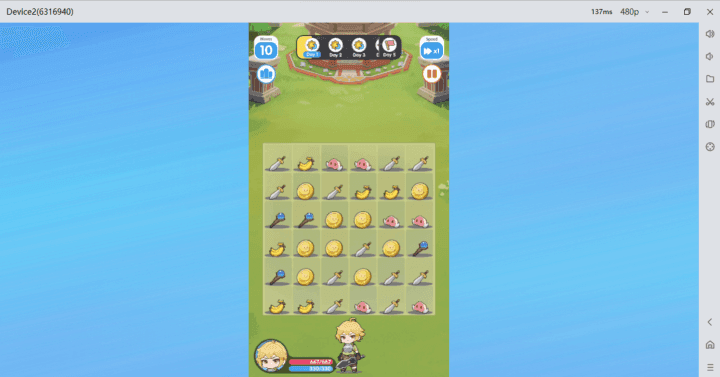
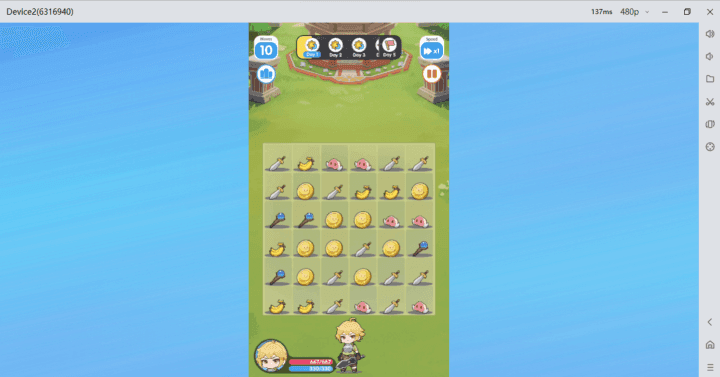
Unlike traditional grid puzzlers where you can only swap adjacent tiles by a single space, Ragnarok Crush features free tile manipulation. You can grab any tile on the board and drag it across multiple rows and columns, rearranging other pieces along your movement path. This mechanic gives you complete tactical control over how the board settles before your turn ends.
Use this freedom to construct five-tile matches intentionally instead of settling for three-tile links. When you line up five identical tiles, you trigger a Crush Combo. This automatically clears five additional matching tiles off the board without consuming an extra turn, and it awards bonus moves to your remaining turn pool. In high-tier tower combat, surviving the turn counter depends entirely on chaining these combos.

Matching tiles directly dictates the raw combat units you deploy onto the field. The following table breaks down the summon output per match configuration:
| Tile Match Size | Units Deployed | Starting Tier | Tactical Role on Grid |
|---|
| 3 Tiles | 1 Unit | Tier 1 | Basic lane filler; creates fodder to merge later. |
| 4 Tiles | 2 Units | Tier 1 | Dual lane pressure; rapid frontline presence against swarms. |
| Merged Tier 1s | 1 Unit | Tier 2 | Reinforced unit; higher baseline attack and survivability. |
| 5 Tiles (Crush) | 1 Unit | Tier 2 | Instant high-stat unit plus bonus turn and auto-clear. |
Takeaway: Never settle for three-tile matches when free dragging allows you to set up four or five-tile connections to immediately secure Tier 2 field presence.
Some early guides disagree on whether four-tile matches grant enhanced bonus effects or simply spawn two separate Tier 1 units. In current 2026 play, a four-tile link deploys two Tier 1 units. While two frontline bodies help absorb aggro, they lack the immediate burst damage of an upgraded Tier 2 unit. Prioritize 5-tile connections to place a Tier 2 soldier on the board while triggering the five-tile auto-clear sweep.
Companion Tier List and Ideal Floor 50 Team Setup
Your party consists of your main hero and four companion slots, representing Earth, Water, Fire, and Wind elements. Upper Endless Tower floors feature aggressive MVP bosses backed by waves of elite trash mobs. Running an unbalanced roster or stacking redundant roles will lead to rapid wipes.
To build a rock-solid Endless Tower floor 50 team, focus on companions with high baseline utility, single-target execution, and active wave control. The table below outlines how top-tier options function in high-difficulty tower battles:
| Companion | Tier & Primary Role | Element | Tower Performance Breakdown |
|---|
| Mistress | SS Tier (Carry DPS) | Wind | Exceptional single-target damage with extreme attack speed; melts boss HP bars rapidly. |
| Whitesmith | SS Tier (Speed Support) | Fire | Supplies party-wide attack speed and tactical buffs without needing finishing blows. |
| Lord Knight | S Tier (Scaling DPS) | Earth | Damage scales directly based on the collective evolution tier of allied companions. |
| Maya | S Tier (Crowd Control) | Earth | Delivers fast attacks and locks down high-threat boss waves using petrification. |
| Garm | S Tier (Frontline Support) | Water | Frontline tank that applies continuous slows to aggressive mob pushes. |
Takeaway: Building a core around Mistress and Whitesmith gives you the speed and damage ceiling needed to eliminate upper-floor MVPs before you hit your turn limit.
When organizing your lineup, Mistress is non-negotiable for boss floors. Her bee-sting abilities deal devastating single-target burst that bypasses the need for long ramp-up windows. Pair her with Whitesmith, whose passive attack speed buffs boost the damage output of the entire team without forcing him to compete for kill shots.
For defensive security, choose between Maya and Garm depending on stage threats. Maya offers hard lockdown via petrification, freezing dangerous targets in place while your backline chips them down. Garm brings stability against swarming mob floors by continuously slowing enemy advances, buying you extra puzzle turns to reset your board.
To keep your roster competitive without burning through excessive stamina, you need consistent access to summoning resources. You can grab Ragnarok Crush items directly to secure the summon currencies and evolution packs needed to break through stubborn progression walls.
Hero Stat Allocation Across the 6 Core Attributes
You select your main hero from five initial classes: Swordsman, Mage, Archer, Thief, and Merchant. That hero supplies four active skills—the only abilities you manually trigger during combat. For mid-game tower climbing, Swordsman remains the most reliable pick, offering natural bulk and high mitigation to absorb hits whenever monsters slip past your front line.
Hero power scales across six core attribute stats: STR, AGI, VIT, INT, DEX, and LUK. Dumping points randomly into all six stats cripples your hero. You must focus your distribution on the mechanics your class relies on to survive upper tower rounds.
STR -> Primary melee attack power and physical skill damage scaling
AGI -> Hero attack speed and evasion check rate against incoming mob hits
VIT -> Maximum HP pool and physical/magical defensive mitigation
INT -> Magic skill scaling, maximum SP pool, and active skill cooldown utility
DEX -> Ranged weapon damage, hit accuracy, and puzzle skill cast consistency
LUK -> Critical strike chance and random item/effect trigger rates
If you run a Swordsman or melee frontline build, distribute your stat points using a 3:2 ratio between STR and VIT. VIT ensures your hero will not get one-shot by an MVP's AoE burst if an elite enemy engages your character directly. STR gives your four active skills enough physical clearing power to obliterate trash mobs when your puzzle board runs dry.
If you play Mage or Archer, do not neglect defensive stats entirely. Many players dump everything into INT or DEX, only to wipe the moment an MVP targets the backline. Invest at least 25% of your available stat points into VIT. Dead heroes cannot cast their four active skills, and losing your active skills turns a manageable boss encounter into an instant loss.
Gold Coin Tile Priority: Which Buffs Actually Matter
During combat, special Gold Coin tiles appear on the puzzle board. Clearing a combination of these gold tiles presents a choice of three random combat enhancements. Choosing the wrong buff in the middle of a high-tier stage can quietly kill your run.

Not all gold tile upgrades offer equal value. The table below ranks the primary gold coin enhancements you will encounter during an Endless Tower run:
| Enhancement Option | Priority Tier | Immediate Effect | Best Situation to Select |
|---|
| Party Attack Speed Boost | S Tier | Dramatically quickens companion auto-attack rotations. | Always pick when available; scales your DPS directly. |
| Auto-Promote Tier 2 Mage | A Tier | Upgrades summoned Tier 1 Mage units straight into Tier 2. | Excellent for clearing multi-target elite mob clusters. |
| +3% Party Attack Increase | B Tier | Flat offensive multiplier applied across the active party. | Decent general pick if speed buffs do not appear. |
| Defensive Barrier / HP | C Tier | Small absorption shield or flat healing burst. | Situational trap; rarely saves a run if DPS is lacking. |
Takeaway: Attack speed and direct unit tier promotions provide immediate battlefield tempo, while flat defense picks are generally traps that waste valuable gold activations.
When a gold match gives you three options, grab the attack speed boost immediately. Attack speed enables companions like Mistress and Maya to unleash their passive procs far more frequently. More attacks translate directly into faster boss kills and reliable crowd control loops.
Unit tier promotions—such as instantly promoting Tier 1 Mages into Tier 2 powerhouses—are your second-best choice. They save you the moves required to manually merge units on the board, flooding the combat lane with high-stat fighters while you preserve your move count for the boss phase.
Turn Economy and Boss Wave Pacing Across 5-10 Days
Combat in Endless Tower unfolds across multi-day phases, typically spanning 5 to 10 days of continuous wave progression. Each day consists of a turn-limited puzzle phase followed by a combat confrontation where your summoned units clash with monsters. Mismanaging your move economy in early days leaves you empty-handed when the floor's MVP appears on the final wave.
Here is how to structure your turn management across a standard 10-day tower encounter:
- Days 1 to 3 (Board Sculpting): Do not burn moves making basic 3-tile matches. Use free dragging to reposition tiles across the board, grouping colors together to prepare multiple 4-tile and 5-tile connections.
- Days 4 to 6 (Lane Flooding): Trigger your prepared combinations. Spawn Tier 2 units and collect gold tiles to lock in your attack speed and unit-tier upgrades. Let your summoned frontliners absorb incoming monster paths.
- Days 7 to 8 (Resource Banking): Conserve your hero's four active skills. Do not burn big cooldowns on weak trash mobs. Clear excess junk tiles to ensure your main element matches will drop cleanly onto the grid.
- Days 9 to 10 (MVP Boss Execution): The MVP boss enters the lane. Immediately fire your hero's active skills to burst down the boss's guard. Trigger any available Crush Combos to gain bonus moves and pump out high-tier companions to overwhelm the target.
Keep a close eye on the boss's incoming attack telegraph. If the boss prepares an unblockable charge or a massive AoE strike, use crowd control skills or trigger a Maya petrification match right before the counter ticks to zero. Freezing an MVP during their windup buys you another round of puzzle turns to finish the floor.
Equipment and Summon Efficiency: The 26-Pull Rule
Raw puzzle skill cannot compensate for poor unit stats on floors 60 and above. Your companions and hero must be properly geared. Equipment progression spans five distinct slots: Weapons, Armor, Rings, Costumes, and Wings. Upgrade your weapons and rings first, as offensive stats carry much greater weight in meeting the tower's strict turn timers.
When expanding your roster, understand banner mechanics. The standard Goddess Summon banner features a hard pity of 26 pulls for a guaranteed Legendary companion. Never pull on the banner sporadically with single summons. Save your gems until you have at least 26 pulls banked, ensuring that your investment produces an elite unit like Mistress or Whitesmith.
For targeted progression, prioritize the Void Summon banner when it appears. Void Summon filters out low-tier common companions from the loot pool, making it the most efficient way to spend Soul Crystals when chasing duplicate copies of top-tier units.
Merging duplicate companions is vital for tower progression. When you pull duplicate copies of a companion, merge them immediately to raise their tier rating. Merging activates enhanced passive abilities that sharpen baseline combat performance. A Tier 3 Lord Knight, for instance, hits substantially harder because his third skill scales based on the evolution tier of the squad around him.
If you want to accelerate your banner pity without waiting through weeks of daily drip-fed resources, pick up a Ragnarok Crush top up to secure the Soul Crystals needed for your next 26-pull pity cycle.
Five Critical Mistakes That Bleed Stamina on Upper Tiers
Most wipes in Endless Tower trace back to avoidable tactical errors rather than bad board RNG. Avoiding these five mistakes will instantly preserve your stamina reserves:
- Swiping Like a Standard Match-3: Swapping adjacent tiles one square at a time wastes your turn economy. Always use free tile manipulation to drag tiles across the entire board, rearranging multiple rows to build five-tile matches.
- Blowing Active Skills Early: Firing off your hero's four active skills during early wave days leaves you defenseless against the MVP boss. Save your active cooldowns for the final boss encounter.
- Ignoring Companion Elements: Bringing an Earth carry into a heavy Fire floor cuts your damage in half. Always scout the stage elements beforehand and adapt your 4-companion slots to counter the enemy lineup.
- Hoarding Duplicate Companions: Leaving duplicates unmerged in your bag wastes potential stat gains. Merge them immediately to activate higher passive tiers and strengthen squad-wide scaling passives.
- Chasing Defensive Gold Buffs: Picking health regeneration or barrier passives from gold coin cards prolongs fights unnecessarily. Prioritize attack speed and unit promotions to eliminate enemies before they reach your backline.
If your squad hits an insurmountable stat wall despite clean puzzle play, do not waste additional stamina on repeat failures. Invest in Ragnarok Crush recharge packages to upgrade your gear slots and level your core companions before stepping back into the tower.
Ragnarok Crush MVP Boss Strategy
Confronting upper-tier MVP bosses requires a clear operational sequence. MVPs hit hard enough to wipe out your frontline units in a couple of swings, and their high HP pools will easily exhaust your remaining move counter if you play reactively.
When entering the final boss phase, follow this execution order:
- Check the Boss Turn Counter: Look at the countdown indicator above the MVP. You must stagger your crowd control effects to interrupt their heaviest special attacks rather than overlapping CC skills uselessly.
- Break the Guard with Hero Skills: Open the encounter by unleashing your hero's active damage skills. This strips away initial monster barriers and allows your summoned units to deal direct HP damage.
- Chain 5-Tile Matches for Free Turns: Look across your grid for any chance to line up five tiles. A single Crush Combo grants you bonus turns, effectively extending the time you have to defeat the boss before the stage timer runs out.
- Keep Lane Pressure High: Continuously drop Tier 2 units into the center lane. Even if the MVP crushes them, each summoned body absorbs a boss attack that would otherwise target your hero directly.
Control lane tempo and chain free turns from Crush Combos to bring down upper-floor MVPs consistently without risking your stamina.
Endless Tower Progression Checklist
Use this operational checklist before spending stamina on upper tower floors:
- Hero stat allocation checked (Swordsman built with 3:2 STR to VIT distribution).
- Companion roster verified (Four elemental slots filled; Mistress and Whitesmith slotted).
- All duplicate companions merged to activate maximum passive tier bonuses.
- Weapon and Ring equipment slots upgraded to current account ceiling.
- Board strategy set: Free dragging planned for 5-tile Crush Combos on every phase.
- Gold card enhancement priority committed: Attack speed over defense.
- Hero's four active skills reserved strictly for the final MVP boss encounter.
FAQ
Why is stamina lost when failing Endless Tower floors?
Stamina is deducted the moment you enter an Endless Tower stage, regardless of whether you clear it. If your squad wipes out on an upper floor, that entry stamina is permanently consumed. To avoid wasting daily attempts, only enter floors when your gear, companion ranks, and elemental match-ups meet the required combat thresholds.
How do you trigger a Crush Combo in Endless Tower?
A Crush Combo activates automatically whenever you form a five-tile match on the puzzle grid. This mechanic clears five additional matching tiles without consuming a move and rewards bonus turns to your move counter. Chaining these five-tile connections is essential for maintaining turn economy on high-tier stages.
What is the best hero class for climbing upper tower floors?
Swordsman is the most reliable class for mid-game tower climbing due to its high base durability and forgiving defensive profile. The natural bulk from high VIT scaling allows your squad to absorb stray boss hits if your puzzle matches fall short. Damage-oriented classes like Mage and Archer can work, but they wipe quickly if elite mobs breach your frontline.
Which buff should you pick from Gold Coin matches?
Prioritize attack speed increases or immediate companion tier promotions, such as auto-promoting Tier 1 Mages into Tier 2 units. Boosting attack speed allows companions like Mistress and Maya to trigger their damage and petrification passives much faster. Flat defensive buffs or minor health shields rarely provide enough value to justify picking them over offensive speed.
How does companion pity work when summoning for tower progression?
The Goddess Summon banner guarantees a Legendary companion within 26 pulls, making it relatively easy to target high-tier units with modest crystal savings. Alternatively, using Void Summon filters out low-tier fodder units entirely, providing a more focused summon pool for securing elite companions.
Why should duplicate companions be merged before climbing higher floors?
Merging duplicate companions raises their tier rank and activates higher-level passive traits. Many S-tier companions, such as Lord Knight, scale their damage output based on the collective evolution ranks of the team. Unmerged duplicates sitting in your inventory represent wasted stats and lost passive potential.
Which companions form the safest core for Endless Tower bosses?
The most reliable core pairs Mistress for extreme single-target burst with Whitesmith for team-wide attack speed acceleration. Adding Maya provides critical crowd control through petrification, while Garm supplies persistent movement slows to keep swarming waves from reaching your backline.
Tower Clear Verdict
Endless Tower is an account check that punishes sloppy puzzle execution and uncoordinated rosters. If you try to play it like a casual match-3 title by simply swapping adjacent tiles, you will burn through your daily stamina pool without making meaningful progress.
Exploit the game's free tile manipulation to build five-tile matches, trigger Crush Combos for extra turns, and stack attack speed through gold coin cards. Focus your summoning resources on hitting the 26-pull pity mark on the Goddess banner, slot Mistress and Whitesmith into your core lineup, and keep your hero's active skills ready for the MVP waves. Execute the mechanics cleanly, and you will clear the upper floors without throwing away a single drop of stamina.