Official BIGO Diamond Pricing Structure
Regional pricing creates significant variations:
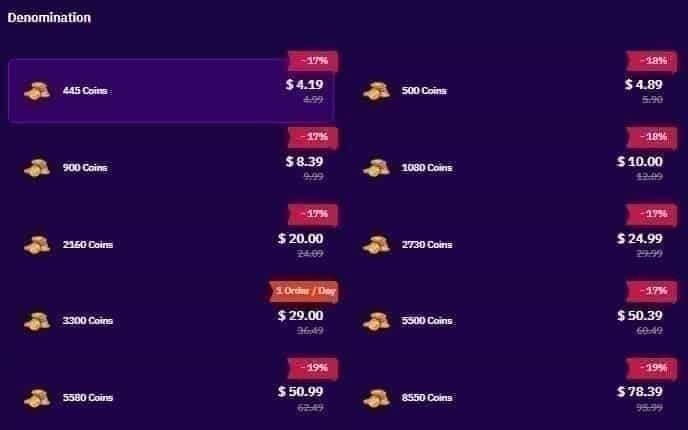
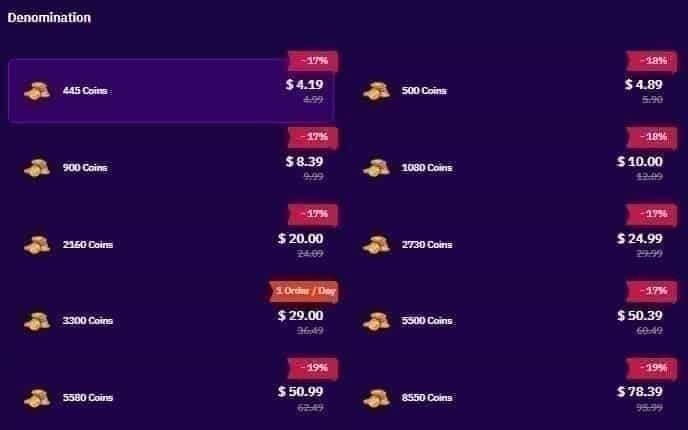
- Indonesia: 210 Diamonds for 20,000 IDR ($1.25)
- Philippines: 100 Diamonds for ₱128 ($2.28) + 12% VAT = $2.55 total
- India: 210 Diamonds for 116.82 INR ($1.40) + 18% GST
- UAE: 848 Diamonds for AED 62.49 ($17.01) + 5% VAT = $0.0201 per diamond
iOS users pay 20-25% more than Android users for identical packages due to Apple's commission structure.
Diamond-to-bean conversion: 1 Diamond = 3 Beans, 210 Beans = $1 USD. Minimum withdrawal requires 6,700 Beans ($31.90). VIP10 status demands 1,667 Diamonds spent.
Why Legitimate Discounts Exist
Authorized platforms leverage three mechanisms:
Regional pricing arbitrage: Purchase diamonds in lower-cost markets, resell below US/EU official prices but above source market costs.
Bulk purchasing agreements: Platforms ordering 100,000+ diamonds monthly negotiate wholesale rates 30-40% below retail.
Promotional events: New users get 20-50% extra Diamonds on 500+ packages. Platforms coordinate with BIGO's marketing calendar for event-specific bonuses.
The 30-60% Discount Range Explained
30-40% discount zone (safest): Aligns with legitimate bulk purchasing savings and sustainable business models. Indicates established platforms with verified supply chains.
40-50% discount tier: Higher-risk but potentially legitimate during promotions. Mid-Year Gala (July 16-22, 2025) offers 30% bonus on 500+ purchases. Black Friday (November 28, 2025) provides 50% bulk discounts limited to 1 order daily.
50-60%+ discounts: Almost universally indicate scams or unsustainable operations. Distribution economics can't support these margins while maintaining security protocols and customer service. 70-90% discounts typically involve stolen diamond reselling or outright fraud.
What Makes a BIGO Diamond Discount 'Safe'?
Safe purchases require only your numeric BIGO ID—a 7-10 digit number under your nickname in Me section. Legitimate platforms never request passwords, OTP codes, email credentials, or login information.

Delivery speed indicator: Legitimate platforms deliver 98% of orders within 3 minutes through automated API integrations. Delays exceeding 5 minutes warrant balance verification in Me > Wallet.

Payment security: Safe sites display HTTPS with SSL lock icons, maintain PCI DSS compliance, and offer buyer protection through established payment gateways. Domain age exceeding 6 months indicates stability.
Characteristics of Legitimate Discount Platforms
Standard top-up flow:
- Enter BIGO ID

- Select Diamond amount
- Choose payment method
- Confirm for instant delivery
Deviations—additional verification steps, account linking, app downloads—signal security risks.
Customer support: Multiple contact channels (live chat, email, tickets) with response times under 2 hours during business hours.
Transaction transparency: Detailed order confirmations, receipt generation, purchase history access, and order tracking numbers.
Safe Discount Range: 30-40% vs 50-60% Analysis
30-40% range (optimal): BitTopup operates here, offering $1.96 per 100 Diamonds (37% off official $3.14) through legitimate bulk purchasing and regional arbitrage. Supports sustainable operations with proper security infrastructure.
50-60% range: Requires verification of promotional authenticity. Black Friday's 50% bulk discount (November 28, 2025) represents legitimate event-based savings, but identical year-round discounts indicate unsustainable operations.
Bulk thresholds: Orders of 10,000+ Diamonds yield 40%+ savings through volume-based wholesale rates. But bulk discounts should still fall within 30-50% range.
Platform Credibility Indicators
SSL certificate verification: Click padlock icon in address bar to view certificate details. Confirm certificate is issued to platform's actual domain name and remains valid. Self-signed certificates or mismatched domains indicate phishing.
Payment gateway authentication: Trusted gateways (PayPal, Stripe, major credit card processors) implement fraud detection, buyer protection, and chargeback mechanisms. Platforms exclusively accepting cryptocurrency, wire transfers, or peer-to-peer apps lack these protections.
Domain age: Use WHOIS lookup—platforms operating 6+ months demonstrate stability. Domains under 3 months require extreme caution. Privacy-protected registration hiding owner information raises red flags.
Common BIGO Diamond Scam Tactics in 2026
Password/login credential requests: Most prevalent scam. Legitimate top-ups never require account access—only your public BIGO ID. Phishing sites harvest credentials to steal accounts, existing diamonds, and linked payment information.
Non-delivery scams: Accept payment but never credit diamonds. Typically offer 70-90% discounts to maximize victims before disappearing. Lack API integration with BIGO's systems.
To verify legitimate platforms and avoid BIGO diamonds top up scam verify issues, BitTopup implements automated delivery, transparent tracking, and comprehensive buyer protection ensuring diamonds arrive within minutes or full refunds process automatically.
Too-Good-To-Be-True Offers: 70-90% Discount Red Flags
Discounts exceeding 70% violate distribution economics. Even with maximum bulk purchasing, regional arbitrage, and promotional bonuses, legitimate platforms can't sustain these margins while maintaining security infrastructure and customer service.
Fake urgency tactics: Countdown timers, limited stock warnings, exclusive offer messaging pressure immediate purchases without verification. Legitimate platforms maintain consistent pricing or announce promotions days in advance.
Price comparison: When platforms offer 10,000 Diamonds for $50 (84% off official $313.70) while established sites charge $196.06 (37% off), the disparity signals fraud.
Account Phishing Through Fake Top-Up Sites
Cloned designs: Phishing operations replicate visual elements, branding, and interfaces of trusted platforms while directing payments to fraudulent accounts.
Domain manipulation: Scammers register domains with minor spelling variations (bittopup.net vs bittopup.com), additional hyphens (bit-topup.com), or different extensions (.co instead of .com).
SSL presence alone doesn't guarantee legitimacy: Scammers obtain basic SSL certificates for phishing domains. Verify certificate is issued to correct domain name and check issuing authority—free Let's Encrypt certificates warrant more scrutiny than commercial DigiCert or Comodo certificates.
Payment Scams: Disappearing Sellers & Non-Delivery
Disappearing seller scams: Launch with aggressive marketing, collect payments for 2-4 weeks, then vanish before chargeback windows close. Often resurface under new domains with identical designs.
Partial fulfillment: Deliver small initial orders to build trust, then fail to fulfill larger subsequent purchases.
Refund obstruction: Legitimate platforms process refunds within 3-5 business days. Scam operations ignore requests, provide non-functional contact info, or demand additional processing fees.
Stolen Diamond Reselling Operations
Stolen diamond operations acquire inventory through compromised accounts, fraudulent payments, or BIGO exploits. These diamonds cost fraudsters nothing, enabling 80-90% discounts legitimate platforms can't match.
Account ban risk: BIGO's terms hold users responsible for diamond sources. When fraud detection identifies stolen diamonds in your account, BIGO may suspend or permanently ban your account regardless of your knowledge.
Chargeback cascades: When original payment methods dispute fraudulent purchases, BIGO reverses transactions, removing diamonds from all accounts in the distribution chain. You lose both diamonds and payment to reseller.
Step-by-Step: How to Verify a Legit BIGO Top-Up Platform
Security infrastructure check: Navigate to site and verify HTTPS protocol with valid SSL certificate. Click padlock icon to view certificate details, confirming it's issued to correct domain by recognized certificate authority.
Test top-up process: Enter BIGO ID and select diamond package without completing payment. Legitimate platforms request only BIGO ID, diamond quantity, and payment info—never passwords, OTP codes, or login credentials.
Research platform reputation: Search [platform name] + scam and [platform name] + review to identify complaint patterns. Check domain age using WHOIS (verify 6+ months). Cross-reference pricing against known legitimate platforms.
Security Certificate Verification (SSL/HTTPS Check)
Click padlock icon in browser address bar. Examine Issued to field—must match exact domain name you're visiting. Mismatched names indicate phishing.
Verify validity dates: Expired certificates or those valid over 2 years suggest security negligence. Check issuing Certificate Authority—trusted authorities include DigiCert, Comodo, GlobalSign, GeoTrust.
Certificate type: Extended Validation (EV) displays company name in green in address bar (highest verification). Organization Validated (OV) confirms business legitimacy. Domain Validated (DV) only verifies domain ownership without business authentication.
Payment Gateway Authentication
Identify processor logos: Legitimate platforms display PayPal, Stripe, Square badges that link to actual gateway interfaces. Fake logos or checkout forms that don't redirect to processor-branded pages indicate direct payment collection without gateway protection.
Test integration: Initiate small transaction. Legitimate gateways redirect to branded payment pages (paypal.com, stripe.com) or display embedded forms with processor branding and security indicators.
Verify buyer protection: PayPal offers Purchase Protection, credit cards provide chargeback rights, established processors implement fraud detection. Platforms exclusively accepting cryptocurrency, wire transfers, or peer-to-peer apps eliminate these protections.
Customer Review Analysis Techniques
Search multiple sources: Legitimate platforms accumulate reviews across Trustpilot, Google Reviews, social media over months/years. Scam sites show only recent reviews (all within 2-3 weeks), exclusively 5-star ratings, or generic praise lacking details.
Analyze content authenticity: Genuine reviews mention specific experiences—delivery times, customer service interactions, problem resolution. Fake reviews use generic language (great service,fast delivery) without concrete details, often posted in clusters.
Investigate negative review responses: Professional platforms respond with specific solutions, order numbers, resolution timelines. Scam operations ignore negative reviews, respond with generic apologies, or attack reviewers without addressing issues.
Transaction History & Delivery Speed Indicators
Request transaction history access: Legitimate platforms provide account dashboards displaying previous orders, delivery times, order statuses. Inability to access history indicates poor infrastructure.
Verify delivery speed claims: Order minimum diamond package and monitor delivery time from payment confirmation to diamond appearance in BIGO account. Legitimate platforms deliver 98% within 3 minutes—delays exceeding 5 minutes warrant refund requests.
Document transaction details: Screenshot order confirmations, payment receipts, delivery notifications. Save email confirmations and note exact transaction times for dispute resolution.
Contact Information & Support Responsiveness Test
Verify completeness: Legitimate platforms display multiple contact methods—email, live chat, tickets, sometimes phone numbers. Physical business addresses and company registration indicate established operations.
Test responsiveness: Contact customer service with pre-purchase questions about delivery times, refund policies, payment methods. Legitimate platforms respond within 2 hours during business hours with specific, detailed answers.
Evaluate quality: Professional support uses proper grammar, provides specific information, demonstrates product knowledge. Poor language, vague responses, or pressure tactics suggest unprofessional or fraudulent operations.
Critical Red Flags: When to Avoid a BIGO Diamond Seller
Password/login credential requests: Absolute deal-breaker. No legitimate top-up requires account access—only your public BIGO ID. Platforms requesting passwords, OTP codes, email credentials, or account linking operate phishing schemes.
Discounts exceeding 60%: Indicate unsustainable operations or fraud. Even during major promotions like Black Friday (November 28, 2025, offering 50% bulk discounts), legitimate platforms rarely exceed 60% savings.
Regional restriction violations: BIGO prohibits diamond sales in Austria, Belgium, and United States through third-party platforms. Sites claiming to serve these regions operate outside authorized distribution, risking account bans.
Requests for BIGO Account Passwords
Password requests enable complete account takeover. Scammers access existing diamond balance, linked payment methods, personal information, account history. They can change passwords, emails, phone numbers—permanently locking you out while draining value.
OTP code requests: Serve identical phishing purposes. One-time passwords bypass two-factor authentication, granting temporary access to change account security settings.
Account linking requirements: Create persistent vulnerabilities. Platforms requesting permission to link or bind your account establish ongoing access enabling future unauthorized transactions or account manipulation.
Unsecured Payment Methods
Wire/bank transfers: Eliminate buyer protection. Irreversible payment methods provide no chargeback rights, fraud protection, or dispute resolution. Once funds transfer, recovery becomes impossible.
Cryptocurrency-only platforms: Avoid payment processor oversight. While some legitimate businesses accept crypto, platforms exclusively requiring cryptocurrency evade fraud detection systems and regulatory compliance protecting consumers.
Peer-to-peer payment apps (Venmo, Cash App, Zelle): Lack commercial transaction protections. Designed for personal transfers between trusted parties, offering minimal fraud protection for commercial purchases.
No Contact Information or Customer Support
Missing contact info: Indicates fly-by-night operations. Legitimate businesses provide multiple contact methods. Platforms listing only generic contact forms without email, live chat, or phone numbers plan to disappear after collecting payments.
Non-functional contact methods: Test provided emails and forms before purchasing. Bounced emails, undelivered messages, or forms generating no responses indicate platform has ceased operations or never intended support.
Social media absence: Established platforms maintain active social media for customer service, announcements, community engagement. Platforms lacking profiles or displaying abandoned accounts operate outside normal business practices.
Fake Urgency Tactics & Limited-Time Pressure
Countdown timers: Create artificial urgency. Scam sites display ticking clocks claiming offer expires in 2 hours that reset when refreshed. Legitimate events announce specific dates (Mid-Year Gala July 16-22, 2025) through official channels.
Limited stock warnings: Diamonds are digital products without inventory constraints—platforms can't run out. Claims of only 50 packages remaining manipulate purchasing decisions through false scarcity.
Exclusive offer claims: Pressure immediate action. Scammers present one-time offers or exclusive discounts available only right now to prevent verification. Legitimate platforms maintain consistent pricing or announce promotions days in advance.
Suspiciously Low Prices Below 30% Discount
Prices below 30% of official rates violate distribution economics. Official 10,000 Diamonds cost $313.70, making legitimate discounted pricing around $196.06 (37% off). Platforms offering same package under $94 (70% off) can't sustain operations through legitimate wholesale purchasing.
Loss-leader pricing: While businesses occasionally offer below-cost promotions to acquire customers, diamond platforms can't sustain 70-90% discounts across all packages indefinitely. Such pricing indicates stolen diamond reselling or payment collection without delivery intent.
Price comparison: When multiple legitimate sites price 1,000 Diamonds at $19-22 (30-40% off official $31.37), platforms offering same package for $5-10 operate outside normal market dynamics.
Payment Security: Choosing Safe Transaction Methods
Credit cards: Provide strongest buyer protection. Card networks (Visa, Mastercard, Amex) offer chargeback rights allowing dispute of unauthorized charges, non-delivered goods, or fraud within 60-120 days. Enables recovery even after scam platforms disappear.
PayPal: Balances buyer protection with convenience. Purchase Protection covers eligible transactions for non-delivery or significantly different items, processing disputes within 180 days. Seller verification and fraud detection add security layers.
Digital wallets (Apple Pay, Google Pay): Inherit underlying payment method protections. Tokenize credit card information, adding transaction security without creating new buyer protection mechanisms. Protection levels match linked credit card or bank account.
Credit Card vs Debit Card vs Digital Wallets
Credit cards offer superior fraud protection: Credit card disputes don't immediately impact bank account—issuers investigate while you retain funds. Debit card fraud drains checking accounts immediately, creating cash flow problems during investigation periods extending weeks.
Virtual credit card numbers: Services like Privacy.com or card issuer virtual numbers generate single-use card numbers for online purchases. If platform experiences data breaches or attempts unauthorized charges, virtual number becomes useless for future fraud.
Debit card risks: Compromised debit card info enables checking account drainage, bounced checks, overdraft fees. Reserve debit cards for trusted platforms with established security track records.
Buyer Protection Features to Look For
Chargeback rights: Credit card networks allow disputes of fraudulent charges, non-delivered goods, or unauthorized transactions. Initiate chargebacks within 60 days of transaction dates by contacting card issuer with transaction documentation and fraud evidence.
Purchase protection programs: PayPal's Purchase Protection, credit card purchase protection, and payment gateway buyer protection policies define covered situations, claim filing procedures, resolution timelines. Review these policies before selecting payment methods.
Fraud monitoring alerts: Enable transaction notifications through payment provider to receive immediate alerts for all charges. Unusual activity notifications help identify unauthorized transactions within minutes.
Avoiding Irreversible Payment Methods
Wire transfers/bank transfers: Offer zero fraud protection. Once funds leave account, recovery requires recipient's voluntary cooperation—impossible with scam operations.
Cryptocurrency payments: Eliminate chargeback options. Blockchain transactions are irreversible by design. While crypto offers privacy and low fees, it provides no buyer protection, dispute resolution, or fraud recovery.
Cash payment services (Western Union, MoneyGram): Enable anonymous fraud. Designed for personal transfers, offering minimal sender verification and no buyer protection. Recipients collect cash anonymously, making fraud prosecution and fund recovery virtually impossible.
Transaction Receipt & Confirmation Best Practices
Screenshot every transaction stage: Capture images of product selection, pricing, payment entry, final confirmation screens. Documents promised services, agreed prices, transaction completion for dispute resolution.
Save all email confirmations: Legitimate platforms send automated confirmation emails immediately after payment. Save in dedicated folders, noting transaction IDs, order numbers, promised delivery times.
Document delivery times: Note exact times when diamonds appear in BIGO account (Me > Wallet). Compare delivery times against platform promises—98% of legitimate orders complete within 3 minutes. Delays exceeding 5 minutes warrant support contact.
BitTopup: A Case Study in Safe BIGO Diamond Discounts
BitTopup demonstrates how legitimate platforms achieve 30-60% discounts while maintaining security and reliability. Operates through authorized bulk purchasing agreements, regional pricing arbitrage, and promotional event coordination enabling sustainable savings without compromising transaction security or account safety.
Security infrastructure: Implements HTTPS/SSL encryption, PCI DSS compliant payment processing, automated API integration with BIGO's systems. These implementations ensure 98% of orders deliver within 3 minutes while protecting customer payment information and account credentials.
Transparent pricing: Displays exact diamond costs, delivery timeframes, refund policies before purchase. Customer service responsiveness, comprehensive transaction history access, buyer protection mechanisms create accountability absent from scam sites.
Why BitTopup Can Offer 30-60% Discounts Safely
Bulk purchasing agreements: Monthly order volumes exceed 100,000 diamonds, qualifying for wholesale rates 30-40% below retail. Platform passes portions of savings to customers while maintaining profit margins supporting security infrastructure and customer service.
Regional pricing arbitrage: Sources diamonds from markets with lower official pricing—Indonesia's 210 Diamonds at $1.25 versus US pricing—then resells at rates below US official prices but above source market costs.
Promotional event coordination: Aligns inventory purchasing with BIGO's promotional calendar—Mid-Year Gala (July 16-22, 2025) offering 30% bonuses, Black Friday (November 28, 2025) providing 50% bulk discounts, New Year promotions (late December/early January 2025). Event timing maximizes discount potential while maintaining legitimacy.
Security Features & Buyer Protection Mechanisms
Automated delivery systems: API integration with BIGO's systems processes orders instantly upon payment confirmation, crediting diamonds directly to user accounts within 3 minutes. Automation prevents non-delivery scams common with manual fulfillment.
Payment gateway diversity: Accepts credit cards through PCI DSS compliant processors, PayPal with Purchase Protection, digital wallets—all offering chargeback rights and fraud protection. Avoids irreversible payment methods like cryptocurrency-only or wire transfers.
Transaction transparency: Users receive immediate email confirmations, access detailed order histories through account dashboards, track delivery status in real-time. Documentation supports dispute resolution and demonstrates operational legitimacy.
Verification Process & Transaction Transparency
BitTopup's verification requires only your BIGO ID—the 7-10 digit number under your nickname in app's Me section. Never requests passwords, OTP codes, or login credentials, adhering to security best practices preventing account compromise.
Four-step top-up process:
- Enter BIGO ID
- Select Diamond amount
- Choose payment method
- Confirm for instant delivery
Streamlined flow eliminates unnecessary verification steps creating security vulnerabilities or delaying delivery.
Real-time order tracking: Users monitor order status from payment confirmation through diamond delivery, receiving notifications at each stage. Transparency enables immediate issue identification and rapid support response if delays occur.
User Experience & Delivery Reliability
Delivery speed metrics: Maintains 98% of orders completing within 3 minutes through automated API integration. Reliability stems from technical infrastructure investments scam operations can't replicate while offering 70-90% discounts.
Customer service responsiveness: Provides live chat, email support, ticket systems with response times under 2 hours during business hours. Support teams handle refund requests, delivery issues, technical questions with specific, detailed solutions.
Refund policies: Processes refunds within 3-5 business days for non-delivered orders or technical issues, returning funds through original payment methods. Policy accountability contrasts sharply with scam operations ignoring refund requests.
Protecting Your BIGO Account After Third-Party Top-Ups
Monitor account balance immediately: Open BIGO Live, navigate to Me > Wallet, verify exact diamond quantity matches purchase. Discrepancies warrant immediate platform contact and potential refund requests before chargeback windows close.
Change password if credentials provided: If you mistakenly entered password information on any top-up site, immediately change BIGO password through app's security settings. Enable two-factor authentication if available.
Review account activity: Check BIGO transaction history for unexpected diamond expenditures, gift sends, or account changes. Unauthorized activity indicates account compromise requiring immediate password changes and BIGO support contact.
Account Security Checklist Post-Purchase
Verify diamond delivery within 5 minutes: Check Me > Wallet for purchased diamond quantity. Legitimate platforms deliver 98% within 3 minutes—delays exceeding 5 minutes require platform support contact.
Confirm no unauthorized account changes: Review profile settings, linked emails, phone numbers, security settings. Unauthorized modifications indicate account compromise requiring immediate password changes and BIGO support notification.
Monitor linked payment methods: Check credit card statements, PayPal activity, bank accounts for unexpected charges beyond diamond purchase. Unauthorized additional charges indicate payment info compromise requiring card cancellation and fraud reporting.
Monitoring for Unauthorized Activity
Enable transaction notifications: Activate push notifications for all account activity, diamond expenditures, payment method charges through BIGO and payment providers. Immediate alerts enable rapid response to unauthorized activity.
Review account activity weekly: Check transaction histories, gift sending records, account settings regularly after using new top-up platforms during first month post-purchase. Establish activity baselines to identify anomalies.
Set up fraud alerts: Credit card issuers and banks offer fraud monitoring services flagging unusual transaction patterns. Automated systems provide additional security layers beyond manual monitoring.
When Third-Party Top-Ups Can Cause Account Issues
Stolen diamond purchases risk bans: BIGO's fraud detection identifies diamonds acquired through compromised accounts or fraudulent payments. When detected, BIGO removes stolen diamonds and may suspend or ban purchasing accounts regardless of buyer knowledge.
Regional restriction violations: BIGO prohibits third-party diamond sales in Austria, Belgium, United States. Purchases violating restrictions may result in diamond removal, account warnings, or permanent bans.
Excessive chargeback activity: While chargebacks protect against fraud, excessive disputes signal potential abuse. BIGO may restrict accounts with high chargeback rates, requiring additional verification or limiting account functionality.
What to Do If You've Been Scammed
Initiate payment disputes immediately: Contact credit card issuer, PayPal, or payment provider within 24 hours to report fraudulent charges. Provide transaction documentation, communication records, evidence of non-delivery or fraud to support chargeback requests.
Document all scam evidence: Screenshot fraudulent website, save email communications, record transaction details, note exact timelines. Documentation proves essential for payment disputes, law enforcement reports, preventing future fraud through platform reporting.
Report scams to authorities: File complaints with Federal Trade Commission (FTC), Internet Crime Complaint Center (IC3), local consumer protection agency. Report fraudulent websites to Google Safe Browsing and domain registrars to prevent future victim targeting.
Immediate Steps: Payment Dispute & Chargeback
Contact payment provider within 60 days: Credit card networks allow chargebacks within 60-120 days, PayPal's Purchase Protection covers 180 days. Earlier disputes improve success rates and demonstrate prompt fraud identification.
Provide comprehensive documentation: Submit transaction receipts, website screenshots, email communications, evidence of non-delivery. Explain fraud clearly: unauthorized charges, non-delivered goods, or significantly different services than promised.
Follow up regularly: Payment providers investigate chargebacks over 30-90 days. Monitor case status through online portals or customer service, providing additional documentation if requested.
Reporting to BIGO Live Support
Contact through official channels: Use in-app support (Me > Settings > Feedback), official email addresses, or verified social media accounts. Explain fraudulent top-up attempt, provide transaction details, request account security verification.
Request account security review: If you provided passwords or OTP codes to fraudulent sites, ask BIGO support to verify no unauthorized account changes occurred. Request password reset assistance and two-factor authentication setup.
Report fraudulent platforms: Provide website URLs, screenshots, operational details of scam sites claiming BIGO affiliation. Information helps BIGO identify and shut down fraudulent operations, protecting future victims.
Documenting Evidence for Recovery
Screenshot fraudulent websites: Capture homepage, pricing pages, checkout process, claims about BIGO affiliation. Scam sites often vanish within weeks—early documentation preserves evidence for disputes and law enforcement.
Save all communications: Preserve emails, chat transcripts, text messages with fraudulent platform. Communications demonstrate promised services, delivery timelines, refund denials supporting payment disputes and fraud reports.
Record detailed timelines: Note exact dates and times of website discovery, purchase completion, expected delivery time, non-delivery identification, refund request, dispute initiation. Precise timelines strengthen payment disputes.
Preventing Future Scams: Lessons Learned
Verify platforms before purchasing: Research discount sites thoroughly before entering payment information. Check SSL certificates, domain age, customer reviews, pricing reasonableness. Post-purchase verification can't prevent fraud—only pre-purchase diligence protects effectively.
Start with small test purchases: Order minimum diamond packages (100-210 Diamonds) to verify delivery speed, customer service quality, transaction transparency before committing to larger purchases.
Maintain payment method diversity: Use credit cards for new or less-verified platforms, reserving debit cards and bank transfers for established trusted sites. Credit card chargeback rights provide essential protection during platform verification periods.
Expert Tips: 15 Best Practices for Safe BIGO Diamond Purchases
Research platforms thoroughly: Verify SSL certificates, check recent negative reviews, confirm contact information remains functional before each transaction—even for repeat purchases.
Compare pricing across multiple platforms: Established sites typically price within 5-10% of each other for identical packages. Outliers offering significantly lower prices (30%+ below market rates) warrant additional scrutiny.
Prioritize established operational history: Sites operating 12+ months with consistent customer reviews, active social media presence, responsive customer service demonstrate stability. Newer platforms require heightened verification and smaller test purchases.
Research Before Every Purchase
Verify current platform security status: Check SSL certificate validity, confirm HTTPS protocol, review recent customer feedback. Security compromises or operational changes may occur between purchases.
Cross-reference promotional claims: Platforms claiming official BIGO partnership or authorized reseller status should provide verifiable proof. Check BIGO's official website and social media for authorized partner lists or promotional event confirmations.
Search for recent scam reports: Query [platform name] + scam + [current month/year] to identify recent fraud complaints. Scam operations evolve rapidly—reviews from 6+ months ago may not reflect current platform status.
Start Small: Test New Platforms with Minimal Amounts
Order 100-210 Diamond packages: These minimum purchases cost $1.96-$4.12 on legitimate discount platforms, limiting potential losses while verifying delivery speed, customer service quality, transaction transparency.
Evaluate delivery speed: Legitimate platforms deliver 98% within 3 minutes. Test order delivery times establish performance baselines—delays exceeding 5 minutes on small orders predict worse performance on larger purchases.
Assess customer service responsiveness: Contact support with questions about larger purchases, refund policies, delivery guarantees. Response quality and speed during test phases predict support availability if problems arise.
Timing Your Purchases for Maximum Safety
Align purchases with verified promotional events: Mid-Year Gala (July 16-22, 2025) offers 30% bonuses on 500+ Diamond purchases. Black Friday (November 28, 2025) provides 50% bulk discounts. Official event timing justifies higher discount rates that would otherwise signal scams.
Avoid perpetual limited-time promotions: Legitimate sales events have specific start and end dates announced in advance. Platforms displaying constant countdown timers or permanent exclusive offers use fake urgency tactics.
Purchase during business hours: Transaction issues arising during platform business hours receive faster resolution than problems occurring overnight or weekends. Time purchases when customer service availability enables immediate assistance.
Community Insights: Learning from Other Users' Experiences
Join BIGO Live user communities: Active communities on social media and forums share platform recommendations, scam warnings, discount opportunities. Community consensus about platform legitimacy provides valuable verification.
Analyze complaint patterns: Single negative reviews may reflect individual issues, but repeated complaints about specific problems (non-delivery, poor support, refund denials) indicate systemic platform issues warranting avoidance.
Share your experiences: Post detailed reviews of platforms you've used, including delivery times, customer service quality, problem resolution. Community knowledge sharing creates collective protection against evolving scam tactics.
Frequently Asked Questions About BIGO Diamond Discounts
Is a 30% discount on BIGO diamonds safe?
Yes, 30% discounts represent the safest range. Legitimate platforms achieve these savings through bulk purchasing agreements and regional pricing arbitrage. BitTopup offers 37% discounts ($1.96 per 100 Diamonds vs $3.14 official) through authorized wholesale channels while maintaining security protocols and 3-minute delivery times. Verify platforms offering 30% discounts display HTTPS/SSL, accept protected payment methods, and require only your BIGO ID—never passwords.
How can I verify a legitimate BIGO diamond top-up platform?
Five critical checks: 1) SSL certificate validity (click padlock icon, confirm domain match), 2) Payment gateway authentication (PayPal, Stripe, major credit cards with buyer protection), 3) Domain age exceeding 6 months (WHOIS lookup), 4) Customer reviews across multiple sources spanning several months, 5) Contact information completeness with responsive support. Test with minimum diamond purchases (100-210) to verify 3-minute delivery before larger orders.
What are the red flags of BIGO diamond scams?
Critical scam indicators: discounts exceeding 60% off official pricing, password or OTP code requests, payment methods limited to cryptocurrency or wire transfers, domains under 6 months old, missing or non-functional contact information, fake urgency tactics with countdown timers, exclusively 5-star reviews posted within short timeframes. Any platform requesting account login credentials operates a phishing scheme—legitimate top-ups require only your 7-10 digit BIGO ID.
Will using discount platforms get my account banned?
Legitimate discount platforms operating through authorized bulk purchasing and regional arbitrage don't risk account bans. However, platforms reselling stolen diamonds or violating regional restrictions (Austria, Belgium, United States) may trigger BIGO enforcement actions. Verify platforms require only your BIGO ID, deliver within 3 minutes through API integration, and operate in permitted regions. Avoid platforms offering 70-90% discounts, which typically resell stolen diamonds that BIGO's fraud detection eventually identifies and removes.
How long should a safe BIGO diamond top-up take?
Legitimate platforms deliver 98% of orders within 3 minutes through automated API integration with BIGO's systems. Delays exceeding 5 minutes warrant balance verification in Me > Wallet and platform support contact. Manual fulfillment operations promising 24-48 hour delivery lack proper technical infrastructure and increase fraud risk. Instant delivery demonstrates platform legitimacy through proper BIGO system integration that scam operations can't replicate.
What should I do if I've been scammed buying BIGO diamonds?
Immediately initiate payment disputes through credit card issuer or PayPal within 24 hours, providing transaction documentation and non-delivery evidence. Change BIGO password if you provided credentials, enable two-factor authentication, contact BIGO support to verify account security. Document all evidence (website screenshots, emails, transaction records) for disputes and fraud reports. File complaints with FTC, IC3, consumer protection agencies. Report fraudulent sites to Google Safe Browsing to prevent future victims.