What Are Chamet Redeem Codes?

Redeem codes store prepurchased diamonds in alphanumeric format. Standard vouchers valid 365 days from purchase midnight UTC. VIP codes: 90 days. Holiday promos: 30-90 days.
New Year 2026 example: codes active February 15-March 1, 2026, feature NY26 prefix, 12-character format. Time-limited codes often bundle bonus diamonds unavailable via direct recharge.
Codes are single-use across all accounts. Standard accounts limited to 2-3 codes/week (resets Monday 00:00 UTC). High-value codes (>1000 diamonds) require 24-48 hour manual approval.
How Direct Recharge Works
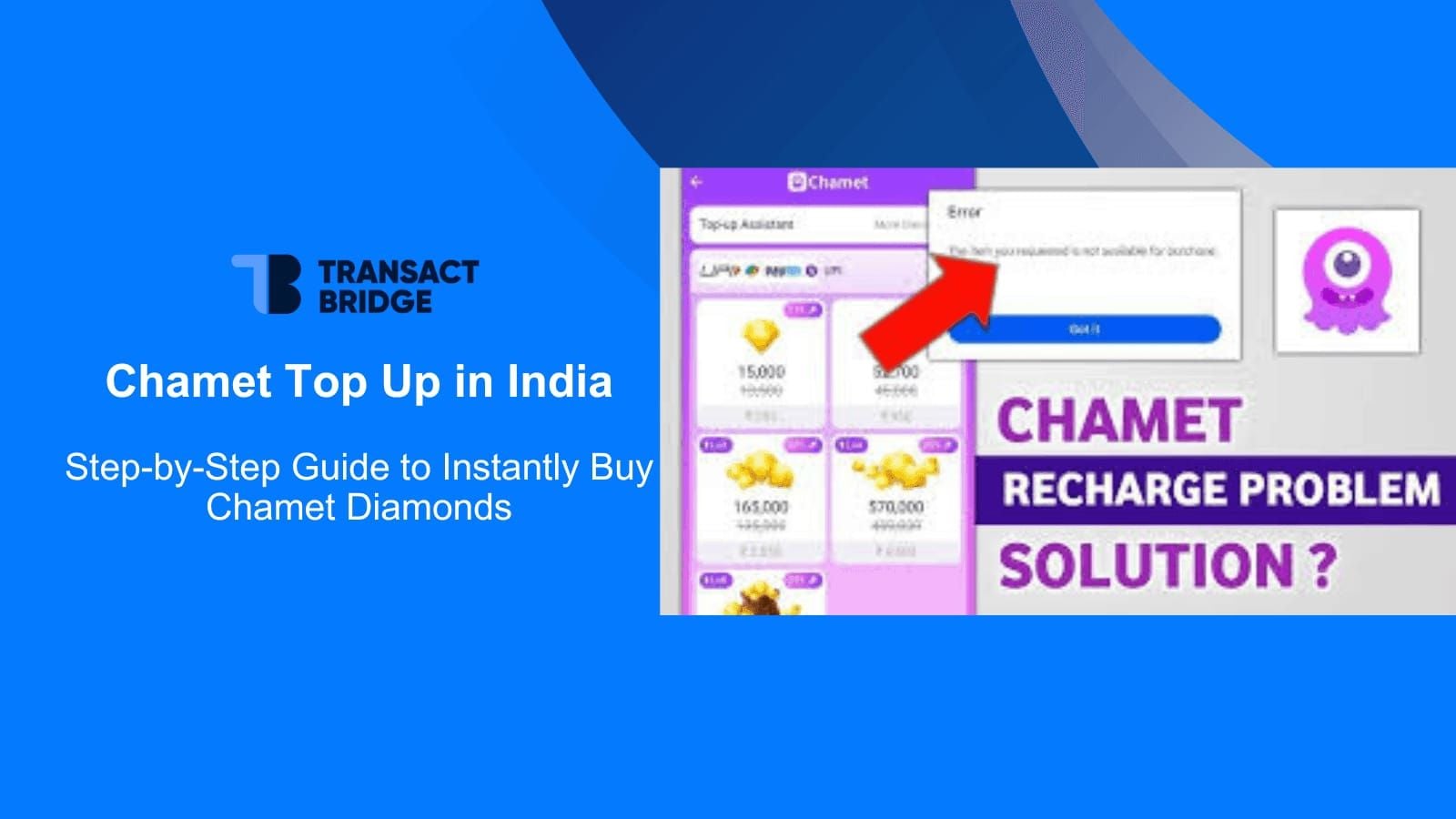
Four steps: enter User ID → select package → choose payment → complete order. System processes immediately, credits diamonds to balance.
Real-time verification through secure gateways supports UPI, crypto, cards, e-wallets. 60-700+ methods by region, 123+ currencies.
Transaction records appear in payment history and potentially Chamet's systems, creating direct financial-account linkage. Better for clear transaction trails, worse for privacy vs codes.
Key Differences at a Glance (2026 Update)

Timing & Privacy: Codes separate purchase from redemption, enabling third-party purchases without linking payment to Chamet. Direct recharge consolidates into single transaction with immediate crediting.
Validity: Standard codes 365 days, VIP 90 days, promos 30-90 days. Direct recharge has no expiration—diamonds stay until used (free diamonds non-expiring, non-transferable).
Giftability: Codes enable cross-account transfers by sharing strings. Direct recharge locks diamonds to purchasing account, no transfers.
Privacy Protection: Which Method Keeps Your Information Safer?
FULIAO HONGKONG LIMITED (Chamet operator) collects name, email, address, device IDs, IP addresses, user content per privacy policy. Shared with affiliates, service providers, third parties. Understanding how each method interacts with this framework helps privacy-aligned choices.
Redeem Code Privacy Advantages
Codes create transactional separation. When buying through BitTopup, payment info (card details, bank accounts, crypto wallets) stays with payment processor, not Chamet.
Redemption needs only User ID + code—no payment details, billing addresses, financial verification. Limits personal info tied to Chamet account, reducing breach exposure.
Maximum privacy: crypto payments on third-party platforms. Chain: crypto payment → code purchase → redemption. No direct link between financial identity and Chamet profile.
Direct Recharge Transaction Visibility
Direct recharge links payment method to Chamet account explicitly. Gateways require User ID + payment credentials, creating records linking financial identity to platform activity.
Payment provider histories display Chamet or processor IDs, making usage visible on financial statements. For shared accounts (family, corporate cards), this compromises privacy.
Data collection extends beyond transactions. Device IDs, IP addresses, user content link to payment records, creating comprehensive profiles combining financial and behavioral data.
Account Linking and Data Exposure Comparison
Codes minimize linking via intermediary steps. Payment provider knows you bought digital voucher but not which Chamet account redeems it. Code becomes privacy token—transferable, shareable, disconnected from purchase origin.
Direct recharge creates permanent linkages. User ID associates with payment methods, timestamps, amounts, device info. Data accumulates into detailed spending profiles subject to privacy policy sharing.
Data controller relationships matter. Codes: third-party platform (BitTopup) controls payment data initially, Chamet only receives redemption data. Direct recharge: Chamet controls data from transaction start.
Best Practices for Anonymous Diamond Acquisition
- Purchase codes using crypto through platforms without extensive identity verification
- Use dedicated emails for purchases unlinked to Chamet account email
- Enable 2FA (Settings > Security > Two-Factor Authentication)
- Avoid redeeming multiple codes rapidly—triggers manual review (24-48 hours)
- Respect 2-3 code/week limits to minimize administrative visibility
Giftability Features: Sending Diamonds to Friends and Creators
Codes function as transferable value tokens. Once purchased, share alphanumeric string with any recipient having valid Chamet account. Enables birthday gifts, creator support, cross-border transfers, anonymous contributions.
How to Gift Diamonds Using Redeem Codes
Three steps: Purchase code → securely transmit to recipient → provide redemption instructions. Recipient visits redemption portal or uses in-app (Settings → Redeem Code).
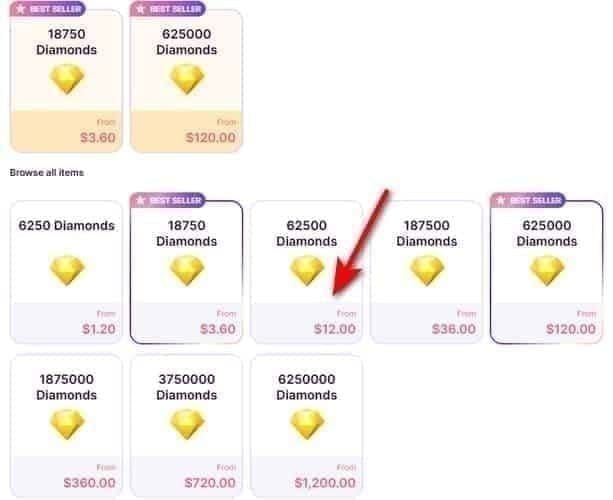
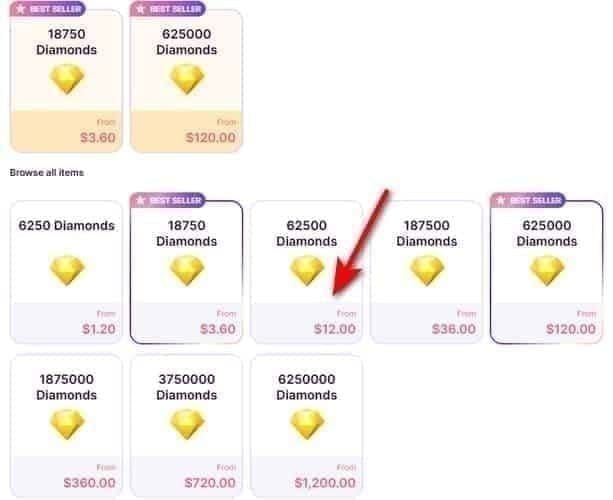
Purchase denominations: 6,250 diamonds ($1.10-$1.31), 62,500 diamonds ($10.71-$12.26), 187,500 diamonds ($32.92-$36.00). Select amounts matching recipient preferences.
Secure transmission: Encrypted messaging apps, password-protected documents, physical printed codes prevent interception. Codes are single-use—once redeemed by anyone, permanently invalid.
Clear instructions: Include validity info. Standard 365 days, VIP 90 days, promos 30-90 days. Recipients need temporal context for redemption timing.
Direct Recharge Gift Limitations
No native gifting functionality. Diamonds credit exclusively to specified User ID. No post-purchase transfers or redistribution between accounts.
Limitation stems from anti-fraud measures and platform economics. Free diamond transfers enable gray markets, account farming, value extraction undermining revenue.
To gift via direct recharge: obtain recipient's User ID, complete transaction with your payment specifying their account. Requires trust—payment info for transaction crediting another account, no reversal if wrong ID entered.
Privacy implications differ from codes. Direct recharge gifts create records linking your payment to recipient's User ID, establishing data trail connecting both parties.
Cross-Region Gifting Considerations
International gifting faces payment compatibility challenges. 60-700+ methods vary by region, some restricted to specific countries/currencies. Verify payment method processes international transactions without excessive fees.
Codes eliminate cross-region complications. Once purchased, codes work universally regardless of recipient location. US-purchased code redeems identically in Europe, Asia, anywhere Chamet operates.
Currency conversion: direct recharge processes in recipient's local currency, potentially triggering foreign transaction fees. Codes purchased in your currency avoid conversion charges—diamond value fixed regardless of redemption location.
Time zones impact promotional code validity. Code expiring March 1, 2026 reaches deadline midnight UTC—different local times across regions. Communicate expiration in recipient's time zone.
Popular Gifting Scenarios
Creator support: Fans purchase codes for streamers without revealing payment info. Share publicly during streams, send privately via DM, distribute as contest prizes.
Celebrations: Print codes on decorative cards for tangible gifts, or send via messaging for instant digital delivery. 365-day validity removes immediate redemption pressure.
Group gifting: Pool resources for higher-value codes collectively, enabling larger packages than individual budgets support.
Anonymous appreciation: Purchase codes through privacy-focused payments, share through anonymous channels. Recipient gets value without knowing donor identity.
Validity Period and Expiration Rules
Temporal constraints impact method selection for users preferring flexible redemption or managing multiple codes across campaigns.
Standard vouchers: 365 days from purchase midnight UTC. VIP codes: 90 days. Holiday promos: 30-90 days.
Typical Redeem Code Validity Timeframes
Three-tier structure:
- Standard vouchers: 365 days (most common, available through BitTopup)
- VIP codes: 90 days (premium status, higher diamond-to-dollar ratios, exclusive bonuses)
- Holiday promos: 30-90 days (New Year 2026: Feb 15-Mar 1, ~2 weeks)
Validity starts purchase midnight UTC, not transaction completion. Code bought 11:59 PM Jan 15 vs 12:01 AM Jan 16 have different expirations despite near-simultaneous purchase.
What Happens When Codes Expire
Expired codes permanently invalid, no redemption possible. System rejects with error messages. No grace periods, extensions, manual overrides—once window closes, value irretrievably lost.
Platforms typically don't refund user-caused expiration. Purchase completed successfully, delivered valid code with clear validity periods. Failure to redeem = user error, not product defect.
Tracking multiple codes: Maintain spreadsheets/calendar reminders noting purchase dates, expiration deadlines, values. Prioritize shorter-validity codes (promos 30-90 days) before longer-validity standard vouchers.
Direct Recharge Instant Crediting Advantages
Eliminates all expiration concerns. Diamonds appear within 30 seconds-5 minutes (95% instant). Once credited, remain indefinitely—free diamonds non-expiring, non-transferable.
Supports spontaneous engagement. Decide to join limited-time events, support creators during live streams, access premium features—complete recharge, immediately use diamonds.
5% requiring 1-30 minutes involve payment verification, high-value security checks, temporary gateway delays during peak periods. Still shorter than code delivery/redemption workflows.
Managing Multiple Codes and Expiration Dates
FIFO strategy: Prioritize nearest expiration dates regardless of value/source.
Tracking system: Spreadsheet with code strings, purchase dates, validity periods, diamond values, sources. Sort by expiration, include redemption status column.
Calendar reminders: Set alerts at 30 days, 7 days, 1 day before expiration. Layered system accommodates busy schedules.
Account limits: 2-3 codes/week for standard accounts (resets Monday 00:00 UTC). 10 codes require 4-5 weeks for complete redemption. Plan schedules spanning multiple weeks.
Payment Methods Comparison for 2026
Payment selection influences security, speed, fees, privacy. Chamet supports 60-700+ methods across 123+ currencies. Four categories: traditional banking (cards), digital wallets, cryptocurrency, regional solutions.
Credit and Debit Card Options
Most widely adopted globally. Visa, Mastercard, Amex, regional networks process through secure gateways encrypting card details.
Chargeback protection: Dispute unauthorized transactions or non-delivery through issuing banks. Consumer protection unavailable with irreversible methods like crypto.
Privacy limitation: Card statements display merchant names/processor IDs, creating records visible to anyone reviewing statements. Compromises privacy for shared accounts.
International fees: Cards used cross-border incur 1-3% foreign transaction fees plus unfavorable exchange rates. Verify fee structure for frequent international purchases.
E-Wallet Integration (PayPal, Apple Pay, Google Pay)
Intermediary layers between banks and merchants. Enhanced privacy via transaction aggregation, simplified checkout.
Bank statements show e-wallet provider, not Chamet-specific IDs. Pre-verified accounts enable one-click purchases, reducing data exposure across merchants.
Balance-based e-wallets: Transactions draw from preloaded balance, not directly from banks/cards. Separates purchase records from primary financial statements—resembles code privacy with direct recharge convenience.
Regional availability varies: PayPal in 200+ markets, Apple/Google Pay face geographic restrictions. Verify availability and Chamet integration before relying on these.
Cryptocurrency Payment Availability
Maximum privacy, transaction irreversibility. Bitcoin, Ethereum enable pseudonymous transactions requiring only wallet addresses, no identity verification.
Transaction finality: Once blockchain confirmations complete (10-60 minutes), permanent with no chargebacks/disputes. Benefits merchants by eliminating fraud risk, removes consumer protections.
Price volatility: Crypto amounts calculated at initiation may differ from settlement due to exchange rate fluctuations during confirmation. Account for potential slippage.
Regulatory considerations: Some regions classify crypto transactions as taxable events requiring capital gains reporting, others restrict crypto for entertainment purchases. Understand local framework.
Regional Payment Solutions and Restrictions
Geographic-specific methods address local preferences. UPI dominates India (instant bank-to-bank, no cards). Similar solutions across Southeast Asia, Latin America where card penetration limited.
Lowest fees, fastest processing within target markets—optimized for local banking infrastructure. Users in supported regions should prioritize for cost efficiency and speed.
Cross-border limitations: Regional methods restricted to intended markets. Indonesian-optimized method won't work for European transactions. Identify methods available in your specific region.
For flexible options with regional support, Chamet direct recharge best payment method through BitTopup ensures locally optimized solutions alongside global alternatives.
Currency support: Chamet supports 123+ currencies, but not all payment methods process all currencies. Verify method supports your local currency to avoid conversion fees.
Security Analysis: Protecting Your Account and Finances
Security extends beyond payment processing to account protection, fraud prevention, dispute resolution. Understanding architectures helps implement appropriate protections.
Payment Gateway Security Standards
Multi-layered architectures: encryption, tokenization, fraud detection.
SSL/TLS encryption: Protects data during transmission, prevents interception monitoring network traffic.
Tokenization: Replaces sensitive details with non-sensitive tokens. Actual card number never reaches merchant servers—unique token represents payment for specific transaction. Limits breach exposure.
3D Secure: Verified by Visa, Mastercard SecureCode add verification requiring authentication through issuing banks. Prevents unauthorized use of stolen cards, adds checkout friction.
Fraud detection: Analyzes transaction patterns, device fingerprints, behavioral signals. Unusual amounts, rapid sequences, mismatched locations trigger verification or temporary blocks pending review.
Redeem Code Fraud Prevention
Code systems face generation attacks, brute-force redemption, stolen code redistribution. Platforms implement rate limiting, pattern detection, validation algorithms.
5-7 failed attempts within 30 minutes trigger 30-minute to 2-hour lockouts, preventing brute-force. Balances security against legitimate errors (typos, formatting mistakes).
Format validation: Rejects improperly structured codes. Must match expected character counts (12 standard, 16 VIP), alphanumeric only, case-sensitive. Invalid format = 40% of failures (formatting issues, not security threats).
Verification issues: 60% of failures—expired codes, already-redeemed, failed authenticity checks against issuer databases. Prevents fraudulent usage, occasionally creates false positives requiring support.
Direct Recharge Chargeback Risks
Chargebacks protect consumers but create platform risks when abused. Users completing recharge can dispute charges claiming non-delivery/unauthorized use after receiving diamonds.
Platforms combat through transaction logging, delivery confirmation, account monitoring. Records documenting User ID, timestamp, crediting, usage patterns provide dispute evidence.
Excessive chargebacks trigger account restrictions/permanent bans. Patterns of purchase → receive → dispute face termination and potential legal action. Protects economics while creating risks for legitimate payment issues.
Crypto eliminates chargeback risks entirely. Once confirmations complete, no dispute mechanism—diamonds credit permanently, payment reversal impossible. Benefits platforms, removes consumer protections.
Two-Factor Authentication Recommendations
2FA adds verification beyond passwords: something you know (password) + something you have (mobile device, auth app).
Enable via Settings > Security > Two-Factor Authentication. Choose SMS codes or authenticator apps. Authenticator apps (Google Authenticator, Authy) stronger than SMS—immune to SIM-swapping attacks.
Profile completion: Accounts <80% complete or <30 days old face redemption restrictions preventing fraud through disposable accounts. Complete profile, maintain good standing.
Connection stability: Requires minimum 1 Mbps for redemption, preventing timeout errors and incomplete transactions creating vulnerabilities. Wait for improved network before attempting.
Cost-Effectiveness and Value Maximization
Economic optimization requires analyzing total costs: base prices, transaction fees, promotional bonuses, opportunity costs from validity periods/redemption restrictions.
Diamond pricing varies: 6,250 diamonds ($1.10-$1.31), 62,500 diamonds ($10.71-$12.26), 187,500 diamonds ($32.92-$36.00). Ranges reflect platforms, promotional periods, bulk discounts.
Bonus Diamond Promotions Comparison
Campaigns bundle bonus diamonds, reducing per-diamond costs. Direct recharge promos: 10-30% extra during seasonal events. Code promos: fixed bonuses or exclusive packages unavailable via standard recharge.
Time-limited urgency: Evaluate whether bonuses justify immediate purchase or waiting for better promos. 365-day code validity enables strategic stockpiling during optimal windows.
Tiered bonuses: Larger purchases get higher percentages. 10% small packages → 20% medium → 30% large. Calculate whether bulk discounts justify purchasing more than immediately needed.
Platform-specific promos: Compare offerings across direct recharge and code sellers during intended purchase window. BitTopup frequently offers competitive code promotions exceeding direct recharge bonuses.
Hidden Fees in Different Payment Methods
Transaction fees erode value. Credit card foreign fees (1-3%), e-wallet conversion charges, crypto network fees (gas for Ethereum, transaction for Bitcoin) add costs beyond displayed prices.
Payment selection impact: $10 purchase + 3% foreign fee = $10.30 total vs $10 fee-free. Over multiple transactions, fees accumulate substantially.
Currency conversion spreads: Processors apply rates less favorable than mid-market (1-3% spreads as profit). Compare displayed local currency prices against current rates to identify excessive conversion.
Minimum purchase/processing fees: $0.50 fee on $2 purchase = 25% overhead vs 2.5% on $20. Consolidate frequent small purchases into larger transactions.
Bulk Purchase Advantages
Volume discounts reduce per-diamond costs. 187,500 diamonds in one transaction costs less per diamond than six 31,250 purchases, plus saves transaction fees.
Purchase limit: 1-10 vouchers/transaction enables bulk code acquisition. Buy maximum during promos to lock favorable pricing for future redemption within validity.
Inventory management: Balance bulk savings against validity risks and capital opportunity costs. Money spent on 365-day codes could be invested elsewhere until needed. Calculate whether discount percentages exceed opportunity cost thresholds.
Account limits: 2-3 codes/week for standard accounts. 10 codes require 4-5 weeks for complete redemption, extending period between purchase and full value realization.
Seasonal Discounts and Special Offers
Holiday periods (New Year, Valentine's, platform anniversaries) feature deepest discounts, most generous bonuses. Flexible timing shoul