What Defines a 'Carry' Decoder in Tier 5-7
Carry decoders possess three critical attributes: accelerated cipher completion, hunter evasion tools, and minimal teammate dependency. Mechanic's robot provides 200% decoding speed with complete hunter immunity, allowing simultaneous dual-cipher pressure that low-tier hunters can't effectively counter.
Base cipher decoding time for Mechanic reaches 73.64 seconds when optimizing robot placement, reducing to 81 seconds in practical match conditions. Prisoner achieves comparable speeds through connection mechanics that boost secondary decoding 30% faster, but requires conscious cipher selection and connection management.
Mind's Eye decodes 30% faster baseline through echolocation mechanics, but her complete lack of visual hunter detection creates vulnerability in chaotic low-tier matches where hunters patrol unpredictably. Her carry potential depends entirely on player game sense development.
Why Low Tier Requires Different Decoder Priorities
Low-tier matches feature extended chase durations where hunters commit to single targets for 2-3 minutes, creating ideal conditions for decoder pressure. The standard 1-1-1-1 team structure collapses when random teammates misidentify roles, making self-sufficient decoders essential.
Calibration mechanics add 1% cipher progress on perfect timing or trigger 2-second stuns on failure. Decoders with forgiving mechanics like Mechanic's robot (automatic calibrations) or Prisoner's connection system (reduced calibration frequency) minimize this performance variance.
Chair progress operates in two stages: 0-49% allows 30-second rescue windows, while 50-99% permits single rescue attempts before elimination. Low-tier rescuers frequently misjudge these thresholds, making decoder self-reliance through cipher completion more reliable than depending on coordinated saves during the 60-second rocket chair duration.
Decoding Speed vs Survivability Balance
Pure decoding speed creates win conditions through cipher completion before hunter accumulates eliminations, while survivability extends individual contribution time when targeted first. Mechanic balances both through 200% robot speed and self-rescue capabilities, whereas Mind's Eye sacrifices all survivability for 30% decoding acceleration.
The 129 meta persona build combines Flywheel Effect (0.5-second immunity dash) with Knee Jerk Reflex (30% vault speed for 3 seconds, 40-second cooldown) to provide minimal survivability without sacrificing decoding talents. This suits pure decoders who prioritize cipher completion over extended chases.
Alternative 39 builds use Borrowed Time (50% speed and healing boost at final cipher) with Knee Jerk Reflex for endgame survivability, while 36 builds combine Borrowed Time with Tide Turner (20 seconds post-rescue invincibility) for rescue-capable decoders. Low-tier climbing favors 129 builds that maximize early-game cipher pressure.
Top Budget Decoders for Low Tier Climbing (Default Skins Only)
Budget decoder selection prioritizes base-form performance without limited skins. All recommended survivors function identically in default skins versus limited editions—Identity V maintains strict competitive integrity where skins provide zero gameplay advantages.
Mechanic (Tracy Reznik) costs 3,568 Clues or 688 Echoes, positioning her as the most accessible premium decoder with immediate impact. Her robot enables remote decoding during chases, creating dual cipher pressure that low-tier hunters can't effectively split attention to counter. Pre-placing robots during early-game setup generates 30-40 second head starts on distant ciphers.

Prisoner's connection mechanics boost teammate decoding 30% faster when properly managed, but his 988 Echo cost and higher skill floor make him secondary priority. Mind's Eye offers 30% baseline decoding acceleration at 688 Echoes but requires advanced game sense to compensate for visual detection absence.
Mechanic: Map Control Without Team Coordination
Mechanic's robot provides hunter immunity while decoding at 200% speed, completing ciphers in 81 seconds when optimally deployed. This remote decoding creates 2v1 scenarios where hunters must choose between chasing Mechanic or destroying her robot.

Strategic robot placement during chases extends contribution even when downed, as the robot continues decoding until manually destroyed. This particularly punishes low-tier hunters who tunnel vision on chases without map awareness, allowing robots to complete 40-50% cipher progress uncontested.
Self-rescue capabilities through robot control provide emergency escape options when teammates can't execute saves, though this consumes the robot and should remain last-resort. Optimal strategy pre-places robots at 98-99% cipher completion for Borrowed Time synchronization, enabling instant final cipher pops.
Prisoner: Connection Synergy for Cipher Acceleration
Prisoner connects ciphers to speed teammate decoding 30% faster, creating multiplicative efficiency gains in matches with multiple decoders. His connection mechanics require line-of-sight between ciphers and conscious positioning to maintain links, increasing mechanical complexity compared to Mechanic's straightforward robot deployment.
The stun capability through connection overcharge provides defensive options against hunter pressure, though timing requirements and connection setup make it less reliable than Mechanic's guaranteed robot immunity. Prisoner excels in semi-coordinated teams where at least one teammate understands decoder positioning.
Connection range limitations force Prisoner into predictable cipher patterns that experienced hunters exploit, whereas Mechanic's remote robot allows completely flexible positioning. This positional vulnerability makes Prisoner suboptimal for pure solo climbing despite his superior theoretical decoding speed.
Mind's Eye: High Risk Decoding for Experienced Players
Mind's Eye decodes 30% faster baseline through echolocation, matching Prisoner's connected speed without requiring setup or teammate coordination. Her complete lack of visual hunter detection creates extreme vulnerability in low-tier matches where sound cue recognition remains underdeveloped.
The echolocation mechanic provides directional hunter information through audio cues, but low-tier environmental chaos (multiple survivors running, pallet drops, ability sounds) creates audio clutter that obscures critical detection signals.
Advanced Mind's Eye players leverage her speed advantage to complete 4-5 ciphers solo in matches where teammates occupy hunter attention, but this requires game sense development beyond typical Tier 5-6 skill levels. Budget players should prioritize Mechanic's forgiving mechanics until reaching Tier 4-3 where sound cue mastery becomes essential.
Optimal Persona Builds for Budget Decoders
The 129 meta build maximizes decoder efficiency through Flywheel Effect and Knee Jerk Reflex, providing minimal survivability while preserving all decoding-focused talents. This suits Mechanic and Mind's Eye who prioritize cipher completion over extended chase duration.
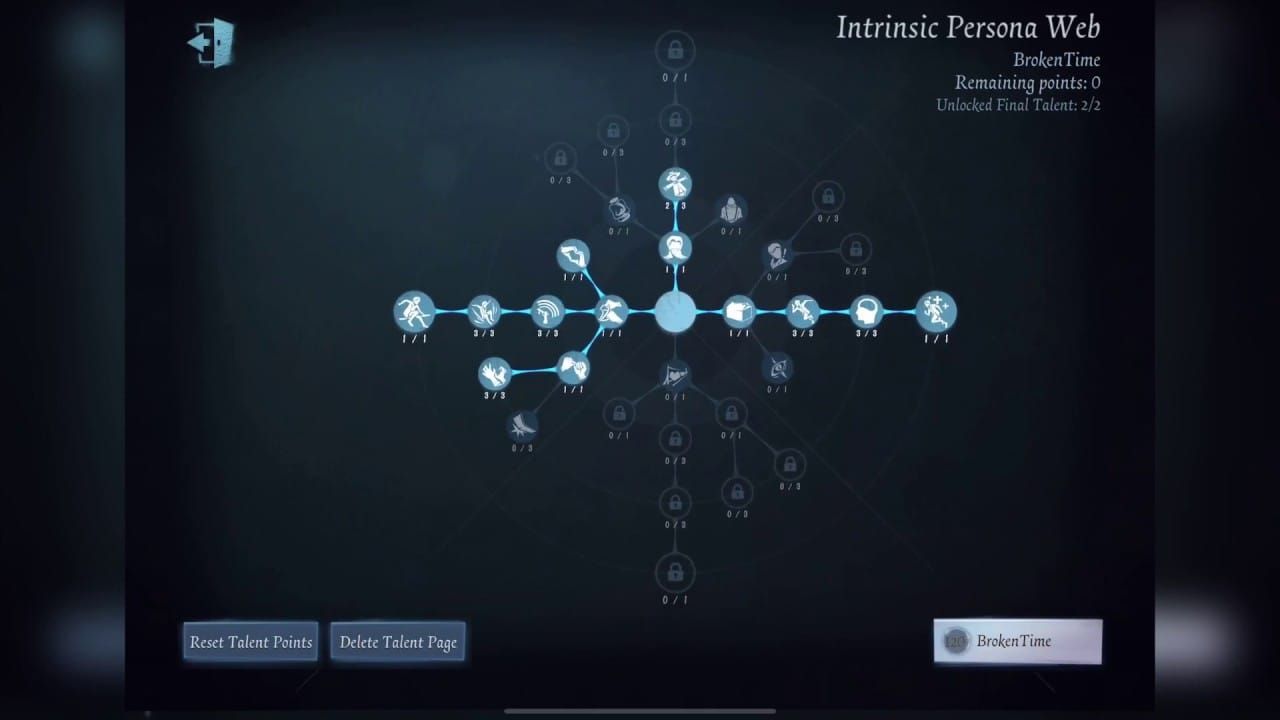
Flywheel Effect grants 0.5-second immunity dash on demand, enabling emergency pallet reaches or window vaults when caught in dead zones. The short immunity duration prevents extended chase extension but provides crucial error correction for positioning mistakes.
Knee Jerk Reflex provides 30% vault speed for 3 seconds on a 40-second cooldown, creating brief chase extension windows when combined with Flywheel Effect. The talent synergizes with decoder positioning strategies that maintain proximity to vault locations.
Alternative Persona Configurations
The 39 build combines Borrowed Time with Knee Jerk Reflex for endgame-focused decoders who survive to final cipher scenarios. Borrowed Time provides 50% speed and healing boost when final cipher completes, dramatically increasing exit gate opening speed from 18 seconds to approximately 12 seconds.
Priming ciphers at 98-99% for Borrowed Time synchronization creates coordinated final cipher pops that trigger the speed boost simultaneously across all survivors. This requires team awareness rarely present in low-tier matches, making 39 builds situational compared to universally applicable 129 configurations.
The 36 build uses Borrowed Time with Tide Turner for rescue-capable decoders who flex into support roles when primary rescuers fall early. Tide Turner grants 20 seconds post-rescue invincibility, enabling safe unhooks during Detention or basement rescues. However, decoders should avoid rescue responsibilities that compromise cipher completion efficiency.
Decoder-Specific Talent Optimizations
Mechanic benefits from 129 for pure decoding focus, as robot mechanics provide inherent survivability that makes defensive talents redundant. Advanced players occasionally run 39 builds for endgame scenarios where robot self-rescue combines with Borrowed Time for guaranteed escapes.
Prisoner's connection mechanics synergize with decoding speed talents that amplify his 30% teammate boost. The 129 build maximizes this advantage while Flywheel Effect provides escape options when hunters target him to break cipher connections.
Mind's Eye requires maximum survivability investment to compensate for visual detection absence, making 129 builds with Flywheel Effect and Knee Jerk Reflex essential. Some advanced players experiment with 39 builds for Borrowed Time endgame power, but lack of early-game survivability creates excessive elimination risk.
Low Tier Decoder Gameplay: Positioning and Decision-Making
Cipher machine priority: Decode machines furthest from likely hunter spawn locations first, then progress toward central map positions. This maximizes early-game safety while creating favorable final cipher configurations.
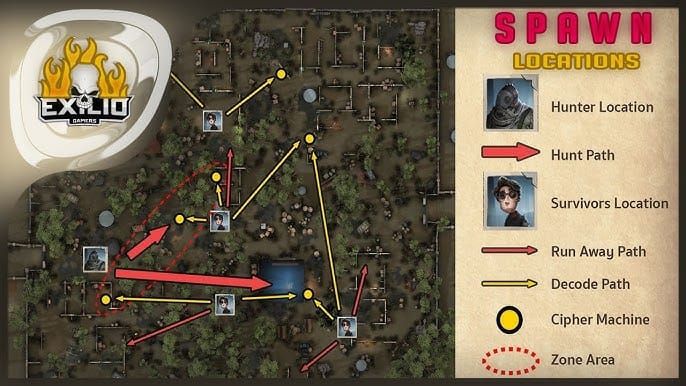
Reading hunter patrol patterns in Tier 5-6 requires attention to terror radius audio cues and teammate aura positions. Low-tier hunters typically patrol predictable routes between nearby ciphers rather than executing optimal map pressure strategies, creating exploitable gaps where decoders can complete machines uncontested for 60-90 seconds.
Rescue commitment decisions balance cipher completion value against teammate survival necessity. Optimal strategy maintains cipher pressure unless rescues occur during Stage 1 chair progress (0-49%) with clear safe unhook opportunities. Stage 2 rescues (50-99%) require Tide Turner or coordinated bodyblocking that decoders can't provide.
Cipher Machine Selection Strategy
Early game: Prioritize corner and edge ciphers when hunter location remains unknown, as these positions provide maximum distance from central spawn points and clear sightlines for hunter approach detection. Mechanic players should pre-place robots on these distant ciphers during match start, generating 30-40 second progress before first chase initiates.
Mid-game: Avoid decoding ciphers within 48 meters of hooked teammates, as this creates three-generator scenarios where hunters can simultaneously pressure chair, nearby cipher, and patrolling decoders. Exception occurs during final cipher scenarios where strategic positioning near chairs enables immediate rescues when cipher completes.
Late-game: Central map ciphers become priority targets when 2-3 machines remain, as completing these forces hunters into unfavorable patrol routes between distant final ciphers. This positioning creates exit gate access advantages.
Exit Gate Strategies for Solo Decoders
Exit gates open in 18 seconds baseline, reducing to approximately 12 seconds with Borrowed Time's 50% speed boost. Decoders should identify gate positions during early-game cipher completion, noting which gates connect to completed cipher locations for optimal escape routing.
The dungeon escape option activates when only one survivor remains alive with hatch spawning at predetermined map locations. Decoders caught in 1v1 endgame scenarios should prioritize dungeon location over gate opening, as the instant escape eliminates Detention's double-damage threat.
Detention period lasts 120 seconds with double damage, making gate opening during this window extremely risky without Borrowed Time or Tide Turner protection. Decoders should hide for 30-40 seconds after final cipher completion if Detention activates, allowing the hunter's enhanced state to expire.
Common Low Tier Decoder Mistakes and How to Avoid Them
Over-committing to failed rescues represents the most common decoder error, where players abandon cipher progress to attempt saves without proper talents or positioning. Chair saves execute 10-15% faster with dedicated rescuer talents, making decoder rescue attempts significantly slower and more vulnerable. Maintain cipher pressure unless possessing Tide Turner or clear safe unhook opportunities.
Decoding too close to teammates creates clustered cipher patterns that enable efficient hunter patrol routes covering multiple machines simultaneously. Maintain minimum 48-meter spacing between active decoders to force hunters into time-consuming cross-map rotations.
Ignoring hunter terror radius cues leads to preventable hits when decoders fail to pre-run before direct line-of-sight establishes. The terror radius provides 3-5 second advance warning before visual detection, creating sufficient time to reach nearby pallet or window vault locations.
Calibration Management Under Pressure
Failed calibrations trigger 2-second stuns that halt cipher progress and create audio cues revealing decoder positions. Low-tier players should slow calibration input speed during high-pressure scenarios (hunter proximity, teammate downs) rather than rushing inputs that increase failure probability.
Mechanic's robot performs calibrations automatically with perfect accuracy, eliminating this vulnerability entirely. Prisoner and Mind's Eye require manual calibration management, though their accelerated decoding speeds reduce total calibration attempts needed per cipher.
The 3-minute event provides 30% decoding speed boost when active, but also increases calibration frequency and difficulty. Decoders should recognize event activation through UI indicators and adjust calibration timing accordingly, prioritizing accuracy over speed.
Positioning Discipline and Map Awareness
Maintaining awareness of completed cipher positions enables strategic routing toward favorable final cipher configurations. Decoders should mentally track which machines teammates complete through aura observation, avoiding redundant progress on nearly-finished ciphers.
Pre-running from terror radius cues requires discipline to abandon cipher progress at 90-95% completion when hunter approach becomes imminent. The 5-10% remaining progress takes 4-7 seconds to complete, but attempting to finish while hunter closes distance typically results in hits that cost 15-20 seconds in recovery time plus cipher regression.
For players seeking to optimize their decoder roster, buy cheap Identity V echoes online for December 2025 events through BitTopup ensures fast, secure transactions with excellent customer service and high user ratings.
December 2025 Meta Considerations
Night Watch nerfs implemented December 1, 2025, reduced hunter detection capabilities that previously countered stealth-based decoder positioning. This adjustment reinforces cipher-focused strategies as the optimal climbing method.
Season 40 started November 27, 2025, introducing Queen Bee as a new survivor option, though her support-focused kit lacks the pure decoding acceleration necessary for low-tier carry potential. Season 41 Essence 2 releases during December 2025, but essence-exclusive survivors require gacha investment that budget players should avoid.
Recent survivor releases include Lanternist (October 10, 2025) who increases cipher interaction speed 10%, and various support characters that enhance team coordination but lack solo carry potential. The December 2025 meta maintains Mechanic's dominance as the premier budget decoder.
Current Hunter Popularity in Low Tiers
Low-tier hunter pools heavily favor basic characters with straightforward chase mechanics rather than complex ability-dependent hunters. This creates favorable matchups for decoders with strong positional play, as basic hunters lack the map pressure tools to effectively counter dual-cipher strategies from Mechanic's robot deployment.
Detention remains the most impactful hunter endgame ability, lasting 120 seconds with double damage that threatens gate opening attempts. Decoder persona builds should account for Detention through Borrowed Time investment or strategic hiding during the enhanced period.
Healing efficiency caps at 165% maximum, limiting support-based counter-strategies and reinforcing cipher completion as the primary win condition. This mechanical ceiling ensures decoder-focused teams maintain advantage over healing-stall compositions.
Seasonal Essence Survivors: Investment Analysis
Seasonal essence survivors require gacha participation with uncertain acquisition costs, making them poor investments for budget-conscious players compared to guaranteed Echo purchases. The average essence unlock cost ranges from 3,000-10,000 Echoes depending on luck, whereas direct decoder purchases cost 688-988 Echoes with immediate availability.
Limited-time essence survivors eventually enter permanent shops at standard Echo costs, making patient players better served waiting for guaranteed purchases. The December 2025 Season 41 Essence 2 follows this pattern, with featured survivors likely entering permanent rotation within 2-3 months.
No current essence-exclusive survivors provide decoder capabilities superior to Mechanic's base-form performance, eliminating competitive pressure to participate in gacha systems.
Maximizing Decoder Performance Through Strategic Echo Investment
Echo spending priority:
- Mechanic (688 Echoes) for immediate impact
- Persona page unlocks for build flexibility
- Secondary decoders like Prisoner (988 Echoes) for role diversity
This progression ensures core decoder capability before expanding roster options that provide diminishing returns in low-tier solo queue.
Free-to-play players accumulate approximately 2,000-3,000 Clues weekly through daily missions and login rewards, enabling Mechanic purchase within 2-3 weeks without Echo investment. However, Echo purchases through secure platforms accelerate this timeline to immediate availability.
Avoiding echo traps requires recognizing that support-focused survivors and complex ability-dependent characters underperform in low-tier solo queue where team coordination remains inconsistent. Investment in proven solo-carry decoders like Mechanic provides guaranteed value regardless of teammate performance.
Progression Timeline from Purchase to Mastery
Week 1-2: Basic decoder mechanics—optimal cipher selection, calibration consistency, and terror radius recognition. Mechanic players should practice robot pre-placement timing and remote control management, while Prisoner players develop connection setup routines.
Week 3-4: Positioning discipline and map awareness development. Decoders should study common hunter patrol routes, identify favorable cipher completion sequences, and practice pre-running from terror radius cues. This period typically shows win rate improvements from 40-45% to 55-60%.
Expected climbing speed from Tier 6 to Tier 4 ranges from 3-5 weeks with consistent decoder play, assuming 60%+ win rates and regular ranked participation. Progression accelerates during seasonal start periods when rank resets create favorable matchmaking.
FAQ
Which Identity V decoder is best for beginners in 2025?
Mechanic provides the best beginner experience with her 200% speed robot that decodes while immune to hunters, completing ciphers in 81 seconds. Her forgiving mechanics allow positioning errors without eliminating contribution, and she costs only 688 Echoes or 3,568 Clues.
Does Prisoner carry better than Mechanic in low tiers?
Mechanic carries more reliably in low-tier solo queue due to complete teammate independence, while Prisoner's 30% connection boost requires at least one competent teammate to maximize value. Mechanic's robot immunity and self-rescue provide superior solo-carry potential in chaotic Tier 5-6 matches.
Do skins affect survivor performance in Identity V?
No, skins provide zero gameplay advantages in Identity V. All survivors perform identically in default skins versus limited editions. Budget players can safely ignore skin investments while focusing Echoes on survivor unlocks and persona pages.
How much do decoders cost in Identity V echoes?
Mechanic and Mind's Eye cost 688 Echoes each, while Prisoner costs 988 Echoes. All decoders can alternatively be purchased with Clues currency (3,568 for Mechanic), though Echo purchases provide immediate availability versus 2-3 weeks of Clue grinding.
What persona build is best for low tier decoders?
The 129 meta build using Flywheel Effect and Knee Jerk Reflex maximizes decoder efficiency with minimal survivability investment. This configuration suits pure decoders who prioritize cipher completion over extended chases, providing emergency escape tools without sacrificing decoding-focused talents.
Can you climb out of low tiers with free survivors?
Yes, though climbing speed accelerates significantly with premium decoders like Mechanic. Free survivors lack the specialized decoding acceleration and survivability tools that enable consistent solo-carry performance, making Echo investment in proven decoders the most efficient climbing strategy.
Ready to unlock the best decoders and dominate low tier ranked? Get your Identity V Echoes instantly and securely through BitTopup—trusted by thousands of players for fast, reliable top-ups with competitive pricing and excellent customer service. Start your climbing journey today with exclusive rates on BitTopup!