What Price Drift Means for Users
Drift operates on three levels: regional rates, pack structure mods, and bonus adjustments. Current global standard of 110 coins per USD is your baseline, but it's not universal. Southeast Asia offers 43 coins per 100 INR—requires separate calculation for dollar value.
Version 9.0.80 introduced tiered bonuses adding complexity. VIP 5 grants 2-3× bonus coins, so two users buying identical packs get vastly different totals. This makes historical comparisons unreliable unless you account for current VIP level.
Refund policy updated January 2, 2026: once coins deliver, price adjustments don't trigger retroactive compensation.
Why Prices Fluctuate Without Announcements
MICO Live uses dynamic pricing responding to regional patterns, competitive pressure, and engagement metrics. The 30% MENA premium exists because regional analysis found different spending behaviors versus global markets.
Silent adjustments hit three windows: early month (days 1-7 when 29% discounts run), mid-month promos, and version updates. The December 13, 2025 nominal update preceded January 3, 2026 pricelist by three weeks—a gap where temporary rates may have masked structural changes.
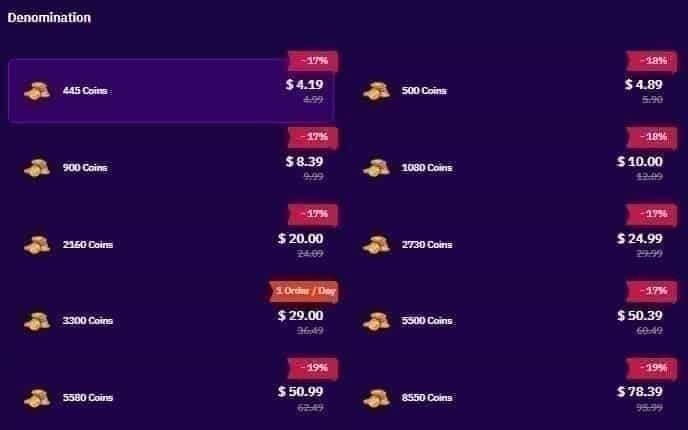
Third-party platforms add pricing layers. The 5,580 coin bundle costs $62.49 officially but appears at $44.88 on verified resellers—29% discount. However, 2-3% foreign transaction fees and potential 2.5% credit card fees reduce effective discount to 23-24%.
Financial Impact Over Time
A 5% bonus reduction on mid-tier packs means substantial annual losses. Consider the 8,550 coin package at $89.99. If bonus drops from 15% to 10%, you lose 427 coins per purchase. At two monthly purchases, that's 10,248 fewer coins annually—$93 lost value at standard rates.
Daily deals advertised at 17-29% need verification. These percentages often compare against inflated regular prices versus historical baselines. A 25% off pack may deliver worse coin-per-dollar than last month's standard rate if base amount decreased simultaneously.
The 10% coupon capped at $10 max savings demonstrates psychological pricing. This incentivizes $100 purchases (hitting the cap) while providing diminishing returns on smaller transactions.
The Coin-per-Dollar Calculation Method
Accurate assessment requires standardized methodology accounting for all variables. Basic formula: divide total coins received (base + bonus) by total cost (price + fees). This coin-per-dollar ratio becomes your universal comparison metric.
For $10 globally: 1,100 coins ÷ $10 = 110 coins per dollar. MENA: 1,430 coins ÷ $10 = 143 coins per dollar. This 30% difference makes regional selection the most impactful value decision. However, region changes require government ID, 3-month residence proof, SMS verification, and 24-48 hours processing—permitted once per 12 months.
When evaluating third-party offers, include all fees. The $44.88 price for 5,580 coins looks attractive, but adding 2.5% card fee ($1.12) brings true cost to $46.00. Actual ratio: 5,580 ÷ $46 = 121.3 coins per dollar—better than 89.3 from official $62.49, but not the 124.3 advertised price suggests.
Basic Formula: Total Coins ÷ Total Cost
Start with complete coin delivery, not base pack size. If a pack advertises 5,000 coins + 20% bonus, your numerator is 6,000, not 5,000.
Denominator must include every cost: purchase price, processing fees, foreign transaction fees, service charges. Cards deliver 95% within 5 minutes with minimal fees. Cryptocurrency completes within 30 minutes but may carry network fees. Bank transfers take 1-4 hours with fixed charges hurting smaller purchases.
Peak hours (7-11 PM) add 15-30 minutes to processing but don't typically affect fees. Some processors implement dynamic pricing during high-traffic, adding 0.5-1% to costs.
Accounting for Bonus Coins
Bonus structures create three scenarios: fixed percentage, tiered VIP, and promotional temporary bonuses. Fixed percentages are straightforward—20% bonus on 5,000 coins yields 6,000 total. Tiered VIP bonuses multiply this: VIP 5 granting 2-3× means that 20% becomes 40-60%, delivering 7,000-8,000 coins.
Promotional bonuses expire, making them unreliable for baselines. Days 1-7 monthly promos offering 29% discounts create temporary spikes that shouldn't anchor expectations. Calculate separately: coin-per-dollar during promos versus standard periods.
Version 9.0.80's tiered system requires tracking current VIP level before each purchase. A pack with excellent value at VIP 3 may become mediocre at VIP 6 if higher tiers unlock better-value larger packs.
Personal Price Tracking Spreadsheet
Effective tracking needs five columns: Date, Pack Size, Total Cost (with fees), Total Coins Received, Coins per Dollar. Add Notes for promotional conditions, VIP level, regional settings.
Record purchases immediately. The 12-15% manual UID entry error rate shows how easily details corrupt when relying on memory. Your MICO User ID—8-12 digit numeric string found by opening MICO Live, tapping profile icon bottom-right, long-pressing UID under username, tapping Copy—should be verified against each receipt.
Monthly analysis identifies trends: calculate average coin-per-dollar for each pack over 30, 60, 90-day periods. A 3% monthly decline compounds to 31% annual value loss.
Detecting Silent Pack Changes
Silent adjustments manifest in four forms: base coin reductions, bonus percentage adjustments, pack tier restructuring, price point shifts. Each requires different detection methods.
January 3, 2026 pricelist provides your current baseline. Compare against December 2025 historical data. Any discrepancies in base amounts, bonus percentages, or price points indicate drift.
For comprehensive tracking, platforms offering MICO coin per dollar tracking maintain historical databases individual users can't replicate. Cross-reference your data against aggregated records.
Base Coin Amount Reductions
A pack previously offering 5,000 base coins at $49.99 might drop to 4,750 at same price—5% reduction. With 20% bonus, you now get 5,700 coins instead of 6,000, reducing coin-per-dollar from 120.0 to 114.0. This costs 300 coins per purchase, or 3,600 annually at monthly frequency.
Detection requires comparing current in-app displays against screenshots from previous months. MICO Live doesn't highlight when base amounts change—pack position, design, and price stay identical. Only small text showing coin quantity reveals adjustment.
Global 110 coins per USD standard means a $50 pack should contain 5,500 base coins. If you see 5,250, you're experiencing regional pricing differences or base drift.
Bonus Percentage Adjustments
Bonus percentages appear in promotional banners and pack corners, but graphics don't always update when rates change. A 20% BONUS badge might remain while actual bonus drops to 15%. Only reliable verification is calculating total coins received after purchase against stated base.
Version updates frequently coincide with bonus adjustments. Version 9.0.80's tiered system introduced new VIP multipliers, but not all users got clear communication about tier changes.
Test purchases of smallest pack size provide low-cost verification. A $0.99 or $1.99 pack confirms current bonus rates without significant exposure. Calculate coin-per-dollar, then extrapolate to larger packs.
Pack Tier Restructuring
Mid-tier elimination forces users toward less efficient price points. If the $29.99 pack (historically best coin-per-dollar) disappears, you're pushed to either $19.99 (higher per-coin cost) or $49.99 (larger upfront spend).
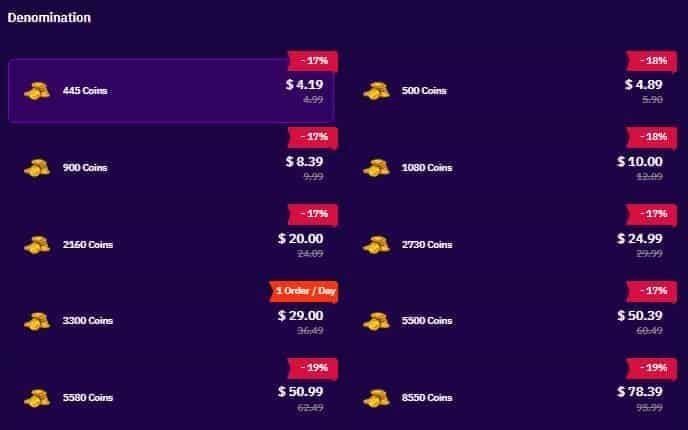
Current structure shows 5,580 coins at $62.49 and 8,550 coins at $89.99. Notice the gap—no pack between $62.49 and $89.99. This $27.50 void eliminates mid-range options for $70-80 budgets.
Restructuring often accompanies promotional periods. Days 1-7 promos might introduce temporary packs that disappear afterward, creating false baseline expectations.
Price Point Shifts
A pack maintaining 5,000 base coins and 20% bonus but increasing from $49.99 to $54.99 represents pure price drift. Coin-per-dollar drops from 120.0 to 109.1—9% value loss with zero change in what you receive.
The 5,580 bundle's $62.49 price uses psychological pricing (ending in .49). When these shift—say, $62.49 to $67.49—it signals deliberate repricing versus currency fluctuation.
Compare current price points against January 3, 2026 baseline monthly. Price drift accelerates during high-engagement periods (major events, holidays) when users are less price-sensitive.
Real January 2026 Examples
Global 110 versus MENA 143 coins per USD creates natural comparison. A user switching regions (within once-per-12-months limit) immediately gains 30% more coins per dollar—largest single drift factor available.
Third-party pricing introduces market-driven drift. The 5,580 bundle at $44.88 versus $62.49 official represents 28.2% reduction. True drift occurs when that $44.88 gradually increases to $46.88, then $48.88 over months while official price stays static.
90% of missing coin issues stem from UID/region mismatches. As error rates increase (current 12-15% manual UID entry rate), effective coin-per-dollar decreases because failed transactions need customer service, delays, and potential re-purchase at different rates.
Regional Rate Optimization
User spending $100 monthly globally receives 11,000 coins. Same user in MENA receives 14,300—3,300 monthly advantage. Over one year: 39,600 additional coins for identical spending. At standard gifting rates, approximately 132 additional premium gifts annually.
Region changes require government ID, 3-month residence proof, SMS verification, with 24-48 hour processing. Once-per-12-months restriction means this optimization is permanent for a year.
Southeast Asia rate of 43 coins per 100 INR requires currency conversion. At current exchange (approximately 83 INR per USD), this yields roughly 35.7 coins per USD—significantly worse than 110 global rate.
Bonus Percentage Fluctuation
VIP 5 granting 2-3× bonus coins creates dramatic variations. Base 20% bonus becomes 40-60% at VIP 5, transforming 5,000 coin pack into 7,000-8,000 coins. Users approaching VIP thresholds should delay large purchases until tier advancement.
Days 1-7 monthly 29% discount represents temporary bonus inflation, not sustainable baseline. Actual drift is difference between this month's days 1-7 rate and last month's days 1-7 rate, not promotional versus standard periods.
Version 9.0.80's tiered system means historical data from 9.0.79 or earlier isn't directly comparable. Recalibrate baseline using only post-9.0.80 transactions.
Third-Party Platform Variance
$44.88 third-party for 5,580 coins versus $62.49 official creates 121.3 versus 89.3 coin-per-dollar comparison (before fees). Adding 2-3% foreign transaction and potential 2.5% card fees, third-party drops to approximately 116-118 coins per dollar—still 30% better than official.
Delivery times vary by payment. Cards: 95% within 5 minutes, 100% within 30. Cryptocurrency: within 30 minutes. Bank transfers: 1-4 hours. Peak purchases (7-11 PM) add 15-30 minutes. Delayed delivery during time-sensitive events creates opportunity cost reducing effective value.
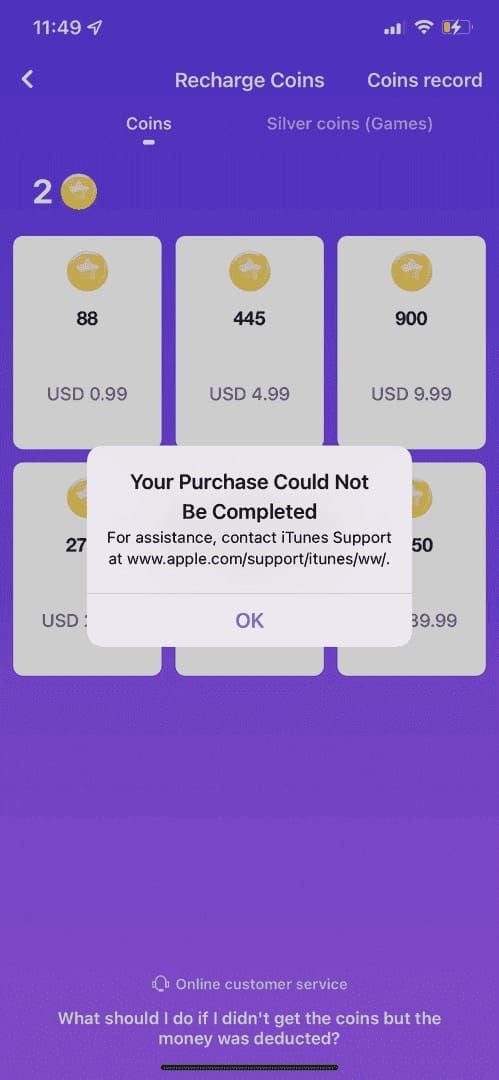
500MB+ free storage requirement means users with full device storage experience failed transactions and must re-purchase, potentially at different rates if prices shifted during resolution.
When 'Cheap' Deals Aren't Cheaper
Advertised discounts frequently compare against inflated reference prices versus historical baselines. A 40% OFF banner means nothing if reference price is 40% higher than last month's standard rate.
Limited-time offers create urgency bypassing rational assessment. A 24-hour flash sale at 30% off may deliver worse coin-per-dollar than last week's standard if base amounts decreased or bonuses dropped. Always calculate actual coin-per-dollar versus trusting promotional messaging.
10% coupon capped at $10 max savings demonstrates how caps manipulate behavior. Users buying $150 to maximize the $10 savings receive 6.7% effective discount, not 10%.
Psychological Pricing Trap
Bonus coins create illusion of free value, but they're simply pricing structure. A pack offering 5,000 coins + 1,000 bonus is functionally identical to 6,000 coins at same price. Bonus framing triggers reward psychology making users perceive greater value than exists.
Increasing bonus percentages while decreasing base amounts maintains same total but appears more generous. Shift from 5,000 base + 20% bonus (6,000 total) to 4,500 base + 33% bonus (5,985 total) looks like improved value due to higher percentage, despite delivering 15 fewer coins.
VIP tier bonuses compound this. The 2-3× multiplier on bonus coins (not base) means a pack with higher bonus percentage but lower base may deliver fewer total coins at high VIP levels than pack with lower bonus but higher base.
Limited-Time Offers with Inflated Base Prices
Flash sales often introduce temporary packs with higher base prices than standard. A special event pack at $59.99 with 35% bonus might deliver fewer coins per dollar than standard $49.99 pack with 20% bonus.
Days 1-7 monthly 29% discount repeats predictably. Missing one cycle means waiting 23 days—not a crisis. True deals are rates better than days 1-7 baseline, not better than non-promotional periods.
Countdown timers create artificial urgency for pricing that often repeats. If a 6 hours remaining offer appears monthly, it's not limited—it's recurring promotional pricing.
Comparing Advertised vs Actual Unit Price
A pack at 25% off requires knowing: 25% off what? If reference price is this month's inflated regular versus last month's actual selling price, the discount misleads. Your historical spreadsheet provides true comparison baseline.
17-29% daily deal savings range is suspiciously broad. A pack at 17% discount may be worse value than yesterday's 29% discount on different pack size. Compare coin-per-dollar across all available packs daily, not discount percentages.
Official $62.49 for 5,580 coins versus third-party $44.88 represents 28.2% price difference, but fees narrow this gap. Calculate your specific fee structure (payment method, card type, region) to determine actual discount.
'Bigger Pack Always Saves Money' Myth
MICO Coins pricing doesn't guarantee better coin-per-dollar at higher tiers. 5,580 coin pack at $62.49 official yields 89.3 coins per dollar, while 8,550 at $89.99 yields 95.0—only 6.4% improvement despite 53% higher spend.
Third-party pricing sometimes inverts this. Smaller packs may receive proportionally larger discounts because they move faster and require less capital from resellers.
Your purchasing frequency matters. If you buy monthly, a larger pack's marginal per-coin savings may be offset by opportunity cost—tying up $100 now versus $50 now and $50 next month when rates might improve.
Building Your Price Comparison Framework
Robust framework requires three components: standardized metrics, historical baselines, systematic monitoring. Standardized metrics ensure you're comparing equivalent values across pack sizes, regions, time periods. Historical baselines establish normal pricing for your pattern. Systematic monitoring detects drift early enough to adjust.
Primary metric: coin-per-dollar (total coins ÷ total cost with fees). Secondary metrics: effective discount rate (current coin-per-dollar versus historical average), bonus percentage at your VIP tier, cost per 1,000 coins.
Baseline establishment requires minimum 30 days data across at least three purchases. This captures normal variation versus actual drift. Update baselines quarterly.
Essential Metrics
Unit price (cost per coin) inverts coin-per-dollar for easier comparison. At 110 coins per USD, unit price is $0.00909 per coin. At 143 (MENA), it's $0.00699—23% unit price reduction, same as 30% coin-per-dollar increase.
Effective discount rate compares current coin-per-dollar against established baseline. If 90-day average is 115 coins per dollar and today's offer is 125, effective discount is 8.7%.
Bonus rate at your VIP tier requires knowing base bonus percentage and VIP multiplier. At VIP 5 with 2× multiplier, 20% base becomes 40% effective bonus.
Historical Baseline Establishment
Each pack size needs its own baseline because pricing structures aren't proportional. $10 pack's historical average may be 108 coins per dollar, while $50 averages 118.
Segment baselines by promotional period: days 1-7 monthly, daily deals, standard pricing. A days 1-7 purchase at 130 coins per dollar isn't drift from standard baseline of 115—it's expected promotional uplift.
Regional baselines essential for users eligible for region changes. Maintain separate baseline sets for each accessible region. 30% MENA advantage means a bad MENA deal might still beat a good global deal.
Weekly Price Check Routine
Monitor same day and time weekly to control for day-of-week variations. Monday prices sometimes differ from Friday due to engagement patterns.
Check all pack sizes, not just your usual purchase. Drift often appears in less popular packs first. A 5% reduction in $200 pack's value may signal upcoming changes to $50 pack you regularly buy.
Document promotional messaging alongside prices. If a pack shows BEST VALUE badge this week but not last, verify whether actual coin-per-dollar improved or just marketing changed.
Optimal Timing Strategy
Timing optimization operates on three cycles: monthly promotional patterns, event-based fluctuations, payment processing efficiency windows. Days 1-7 monthly 29% discount provides most predictable value window.
Monthly patterns show highest value days 1-7, moderate days 8-16 with 17-29% daily deals, lowest days 17-31 at standard pricing. However, if drift is occurring, even days 1-7 may be worse than last month's standard rates.
Event-based timing requires balancing promotional pricing against inflated demand. Major events often feature special packs with higher prices disguised by bonus coins.
Monthly Price Pattern Recognition
January 3, 2026 pricelist timing suggests early-month updates. If this pattern holds, expect potential pricing changes first week of each month. Purchases in days 25-31 of prior month lock in old rates before adjustments.
December 13, 2025 nominal update occurring mid-month demonstrates structural changes don't always align with promotional cycles. Monitor mid-month (days 12-15) for potential off-cycle adjustments, especially following version updates.
Quarter-end periods (March 31, June 30, September 30, December 31) sometimes feature clearance-style promotions or conversely, rate increases for new quarter.
Event-Based Pricing Fluctuations
Major MICO Live events create demand surges enabling price increases. Popular competitions might see temporary 10-15% rate reductions in coin-per-dollar as users purchase urgently. Pre-event purchases 3-7 days before announcement avoid surge pricing.
Holiday periods (New Year, Valentine's Day, major regional holidays) feature themed packs often delivering worse value than standard packs despite festive presentation.
Version updates like 9.0.80 introducing tiered bonuses represent structural event timing. Major version updates (X.0.X) carry higher probability of pricing changes than minor updates (X.X.1). Delay large purchases 48-72 hours post-update until new pricing stabilizes.
When to Wait vs Buy Immediately
Wait when:
- Within 5 days of monthly days 1-7 promotional window
- Version update announced but not yet released
- VIP tier within 10% of advancing to next level
- Current coin-per-dollar below 90-day baseline average
Buy immediately when:
- Current coin-per-dollar exceeds baseline by 8%+
- In days 1-7 promotional window with verified good rates
- Need coins for time-sensitive event and waiting risks missing opportunity
- Credible information suggests imminent price increases
10% coupon capped at $10 creates timing decision: use on $100 purchase for max absolute savings, or on smaller purchase during peak promos when percentage discounts stack.
Advanced Value Protection Tips
Advanced strategies combine technical tools, community resources, behavioral discipline. Price alert systems notify when rates cross thresholds. Monthly budget planning based on historical trends prevents reactive purchasing.
90% of missing coins from UID/region mismatches highlights importance of technical accuracy. Copy your 8-12 digit MICO User ID directly from app (profile icon bottom-right, long-press UID under username, tap Copy) versus manual entry. 12-15% manual entry error rate costs time and potential rate changes during resolution.
Storage management prevents operational issues. 500MB+ free storage requirement means regular device cleanup before purchases. Failed transactions due to insufficient storage force re-purchases potentially at different rates.
Setting Up Price Alert Systems
Manual alerts using spreadsheet: calculate baseline coin-per-dollar, set calendar reminders for weekly checks. If current rate exceeds baseline by threshold (suggest 8%), execute purchase. If below baseline by 5%+, delay unless urgent.
Payment method selection impacts effective rates:
- Cards: 95% delivery within 5 minutes, 2.5% fees
- Cryptocurrency: completes within 30 minutes, variable network fees
- Bank transfers: 1-4 hours, fixed fees hurting small purchases
Choose based on purchase size: cards for under $50, cryptocurrency for $50-200, bank transfers for $200+ where fixed fees become proportionally smaller.
Monthly Budget Planning
Allocate monthly budget based on historical best-value windows. If days 1-7 consistently deliver 29% better rates, concentrate 60-70% of monthly budget here. Distribute remaining 30-40% across daily deals exceeding baseline.
$100 monthly spend yielding 11,000 coins (global) versus 14,300 (MENA) demonstrates how regional optimization affects budget efficiency. User needing 15,000 coins monthly requires $136.36 globally but only $104.90 in MENA—$31.46 monthly savings or $377.52 annually.
VIP tier advancement planning: if close to VIP 5 (granting 2-3× bonus multipliers), accelerate purchases to cross threshold, then make large purchases at improved rate. Bonus multiplier increase often exceeds 20-30%.
Community Resources
User communities aggregate pricing data across regions and time periods, revealing drift patterns individual users can't detect. However, verify community-reported rates against your observations—12-15% manual entry error rate applies to community data too.
Regional pricing discussions identify which territories offer best rates. 110 global versus 143 MENA is well-documented, but Southeast Asia's 43 coins per 100 INR requires community knowledge to convert accurately.
Third-party platform comparisons show $44.88 versus $62.49 spread for 5,580 coins, but community feedback reveals which platforms have 95% within 5 minutes delivery rate versus slower services.
Avoiding Emotional Purchasing
Flash sales with countdown timers trigger urgency bypassing rational assessment. Before any flash sale purchase, calculate coin-per-dollar and compare against baseline. If it doesn't beat baseline by 5%+, the flash is marketing, not value.
Days 1-7 monthly 29% discount repeats predictably. Missing one cycle means waiting 23 days—not a crisis. Emotional urgency from limited time messaging costs money when buying at worse rates than patient waiting provides.
FOMO on special event packs drives purchases of poorly-valued themed packs. Event packs typically cost 10-20% more than standard packs for identical coin totals plus cosmetic differences.
January 2026 Pricing Outlook
January 3, 2026 pricelist and December 13, 2025 nominal update establish current baselines. Expect relative stability through January barring major platform events or competitive pressures. 110 global and 143 MENA rates show no immediate drift signals, but monthly monitoring remains essential.
Version 9.0.80's tiered bonus system is still stabilizing. As more users reach higher VIP tiers, bonus distribution patterns may shift. Monitor whether your VIP tier's bonus multiplier changes in subsequent updates.
Third-party pricing competition maintains 28-29% discount range (like $44.88 versus $62.49 spread). This gap is sustainable for resellers, suggesting stability. Narrowing below 20% might signal official price reductions coming; widening above 35% might indicate official increases.
Predicted Stability vs Volatility
Stability expected:
- Mid-January through early February (post-holiday normalization)
- Late February through March (pre-spring event quiet period)
Volatility expected:
- Early January (New Year promos winding down, potential rate resets)
- Late March (spring event preparation)
- Within 72 hours of major version updates
Once-per-12-months region change limitation means users who optimized to MENA in early 2025 can't re-optimize until early 2026. Expect potential regional rate adjustments February-March as annual restriction periods expire for large user cohorts.
Upcoming Events Triggering Changes
Major MICO Live competitions announced for Q1 2026 will likely feature event-specific packs. Historical patterns show these carry 10-15% price premiums over standard packs.
Valentine's Day (February 14) represents next major themed event. Expect themed packs February 10-16 with premium pricing. Standard packs remain available during themed events—compare both before purchasing.
Version updates beyond 9.0.80 aren't announced yet, but quarterly major updates are typical. Expect potential 9.1.0 or 10.0.0 in March-April. Monitor official channels in late February for update announcements, then delay large purchases until post-update pricing stabilizes.
Long-Term Protection Strategies
Maintain pricing spreadsheet indefinitely. Multi-year data reveals long-term drift trends invisible in monthly comparisons. 2% monthly drift compounds to 27% over 12 months.
Diversify purchase timing across month. Don't concentrate 100% in days 1-7 even though rates are typically best. Spreading purchases provides multiple price samples monthly, improving drift detection accuracy.
Build coin reserve during high-value periods. When coin-per-dollar exceeds baseline by 10%+, purchase more than immediate needs. This reserve buffers you during low-value periods, letting you wait for rates to improve.
FAQ
What is MICO Coins price drift and why does it matter?
Price drift refers to gradual changes in coins-per-dollar value through base amount reductions, bonus adjustments, or regional rate changes. A 3% monthly drift compounds to 31% annual value loss—costing a $100/month user $372 annually in lost purchasing power.
How do I calculate real price per MICO Coin?
Divide total coins received (base + all bonuses at your VIP tier) by total cost including purchase price, payment fees, foreign transaction fees, and service charges. Example: 5,580 coins ÷ $46.00 (including 2.5% card fee) = 121.3 coins per dollar, or $0.00825 per coin.
Why do pack prices change without announcements?
Silent adjustments occur during version updates, promotional transitions, and regional pricing optimizations. Platform employs dynamic pricing responding to market conditions, competitive pressures, and engagement patterns. December 13, 2025 nominal update and January 3, 2026 pricelist demonstrate this multi-week adjustment process.
What are red flags that a deal isn't better value?
Compare coin-per-dollar against historical baseline, not advertised percentages. Red flags: countdown timers on recurring promos, bonus percentage increases paired with base amount decreases, limited packs appearing monthly, discount percentages comparing against inflated reference prices versus last month's actual rates.
When is the best time to buy MICO Coins in January 2026?
Days 1-7 of each month typically offer 29% discounts—best predictable value window. However, verify current coin-per-dollar against baseline before purchasing. If days 1-7 rates are drifting downward, even this promotional period may deliver worse value than last month's standard rates.
Does BitTopup offer better prices than official sources?
Third-party platforms like BitTopup frequently offer 28-29% discounts versus official pricing (example: $44.88 versus $62.49 for 5,580 coins). After accounting for 2-3% payment fees, effective discounts reach 23-25%—substantially better than official rates. 95% of card transactions complete within 5 minutes, ensuring coins arrive when needed.
Stop overpaying for MICO Coins! Visit BitTopup now to verify real-time prices, access transparent coin-per-dollar rates, and secure genuine value on every purchase. Track price drift with confidence—your wallet will thank you.