What is Sniping vs. Standard Climbing
Standard approaches involve consistent daily gifting across November 22-December 14, accumulating XP through daily missions (1,000 XP each, totaling 23,000 XP over 23 days) and steady broadcaster support. Snipers maintain minimal visible activity until deploying concentrated strikes during high-multiplier phases when each Diamond generates maximum XP returns.
The mathematical foundation relies on multiplier stacking. During Finals December 13, the base 3-5x Finals multiplier combines with Power Hour's 3x boost (0:00 Beijing time, 8-10 PM EST, 7-9 PM GMT) and broadcaster buff cards (20-50% enhancement). A single Diamond normally yielding 1 base XP generates 18-21 XP when all multipliers align—18-21x more efficient than early-event gifting.
Why Final 5 Minutes Matter
The closing minutes exploit three factors: system lag, competitor exhaustion, and psychological pressure. Rankings update every 3-5 minutes, meaning a strike at minute 4 may not display until minute 1 or later. Competitors see outdated information and can't accurately assess threats. Most participants have allocated budgets according to visible standings, leaving insufficient reserves for counter-attacks.
Data shows 60-75% reduced competitor activity during off-peak hours (3-6 AM), but the final 60 minutes before midnight GMT+8 see concentrated activity spikes. The last 5 minutes specifically experience decision paralysis—competitors must choose between defending current positions or attempting their own snipes, often splitting focus ineffectively.
Psychological Advantages
Last-minute strikes create panic responses leading to suboptimal spending. When a competitor suddenly threatens an established position, the defender faces incomplete information: Is this the attacker's full budget or opening move? This uncertainty causes overspending on defensive gifts arriving too late or underspending that fails to secure position.
The sniper maintains advantage through information asymmetry. They've monitored competitor patterns throughout the event, estimated reserve budgets based on spending velocity, and identified targets showing confidence (reduced gifting in final hours). The sniper's reserves remain hidden until deployment, and attack timing is optimized for maximum multiplier efficiency rather than reactive panic spending.
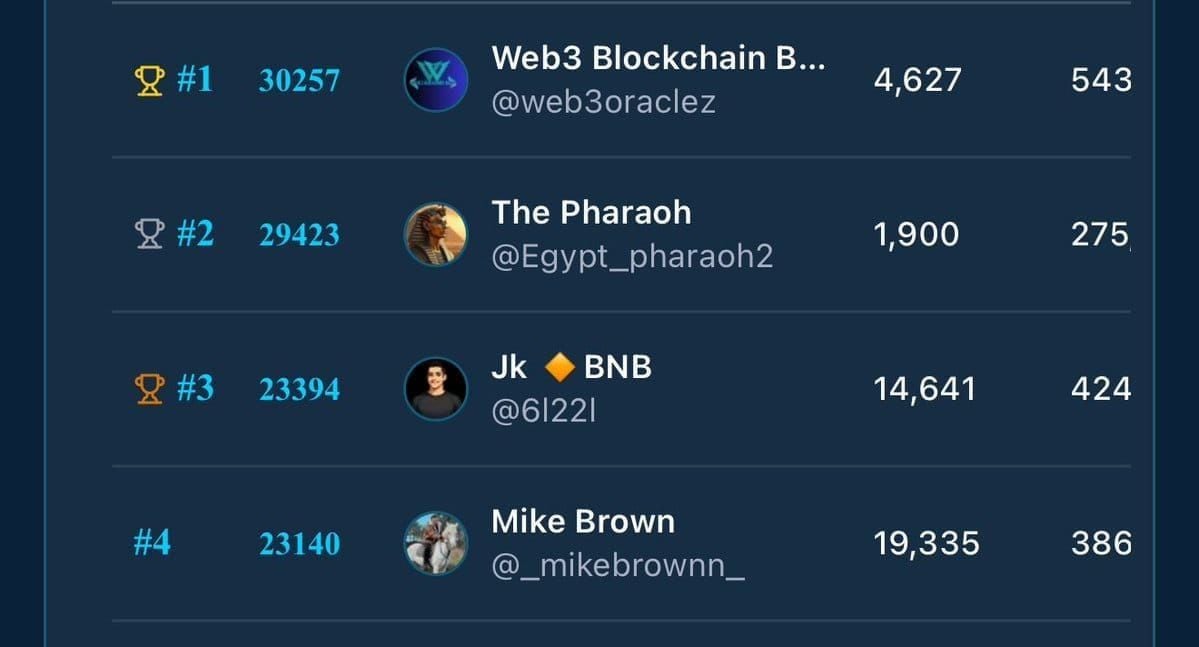
Global Gala Leaderboard Mechanics
How Rankings Calculate
Rankings derive from total XP through three sources: gift sending (1 Diamond = 1 base XP), daily mission completion (1,000 XP per mission), and PK battle participation. The system applies multipliers sequentially: Base XP × 4x Finals × 3x Power Hour × 1.5x broadcaster buff = 18x multiplied value.
Tournament phase multipliers create distinct value windows:
- Promotion/Group Matches (Dec 6-10): 1.5x
- Semifinals (Dec 11-12): 2x
- Finals (Dec 13): 3-5x
Standard budget allocation follows 40-35-25 distribution: 40% during Promotion/Group, 35% Semifinals, 25% Finals. Snipers invert this, reserving 60-70% for Finals when multipliers maximize returns.
Leaderboard Refresh Rate and Delays
The 3-5 minute refresh cycle means leaderboards display snapshots, not real-time data. When you send a gift at 11:57 PM, XP attribution processes through payment verification, server recording, and database updates before appearing on rankings. The 30-90 second delay varies based on server load, payment method, and transaction volume. During final-hour surges when thousands gift simultaneously, delays extend toward 90 seconds.
Competitors viewing leaderboards at 11:55 PM see rankings reflecting gifts sent at 11:52-11:50 PM. A sniper executing strikes at 11:56 PM remains invisible until 11:57-11:58 PM, leaving opponents 2-3 minutes to detect, calculate, and respond. Given response itself requires 30-90 seconds to process, effective counter-time shrinks to 90-150 seconds—insufficient for adequate defense.
Point Conversion for Different Gifts
Gift efficiency varies beyond base Diamond cost. High-value gifts (10,000+ Diamonds) process as single transactions with one attribution delay, while equivalent value sent as multiple smaller gifts incurs multiple delays. During final minutes, single large gifts prove more reliable than rapid-fire small gifts that may queue and process after deadline.
PK battles offer superior XP efficiency during specific windows. The 40-minute core battle phase yields 3.5-4.2x more XP per Diamond versus standard gifting. However, efficiency concentrates in minutes 0-3 (100%), drops to 80% in minutes 4-5, and falls to 60% in minutes 6-7. Snipers reserve 10-15% of budget for PK minutes 6-7 when competitors have exhausted resources but multipliers remain active.

Time Zone Considerations
The midnight GMT+8 deadline (Beijing time) translates to 11:00 AM EST, 4:00 PM GMT. Asian participants face natural timezone alignment, while Western users execute strategies during daytime hours. This creates competitive advantages for Asian region participants, reflected in 20-30% higher XP requirements for Asian regional leaderboards versus other regions.
Western snipers can leverage off-peak advantage. While Asian competitors concentrate activity around local midnight, Western snipers operating during their evening hours (Asian morning) face 60-75% reduced competition. However, the final deadline remains absolute at midnight GMT+8 regardless of local time.
Pre-Snipe Preparation
Diamond Stockpiling via BitTopup
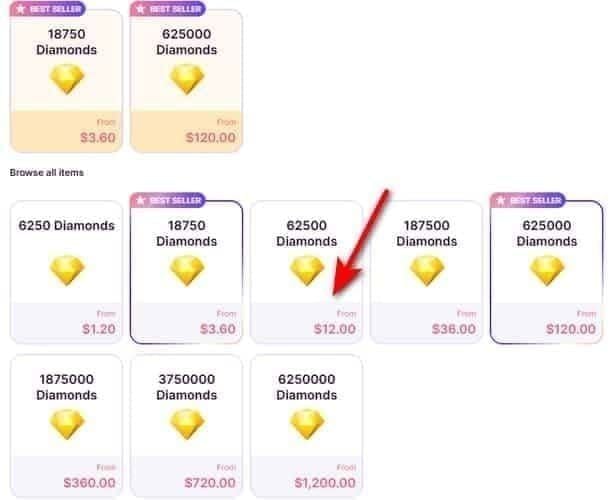
Successful snipes require liquid Diamond reserves ready for instant deployment. Attempting to purchase during the final hour introduces payment processing delays, potential transaction failures, and missed execution windows. Complete all recharges 24-48 hours before Finals.
Budget requirements scale with target positions:
- Global top 10: 290,000+ Diamonds for 50,000,000+ XP
- Top 100: 58,000-116,000 Diamonds for 5,000,000-10,000,000 XP
- Top 1000: 5,800-11,600 Diamonds for 500,000-1,000,000 XP
These assume optimal multiplier usage during Finals with Power Hour and broadcaster buffs. Add 20-30% buffer for defensive reserves and counter-snipe responses.
When preparing diamond reserves, recharge uplive diamonds through BitTopup's secure platform with excellent customer service.
Account Optimization and VIP Benefits
VIP status dramatically impacts sniping effectiveness. Gold VIP (6,500+ Diamonds lifetime spending) grants 3-5x multipliers on gifts, stacking with event multipliers. A Gold VIP sending gifts during Finals with Power Hour achieves 27-31.5x total multiplication (5x VIP × 4x Finals × 3x Power Hour × 1.5x broadcaster buff), versus 18x for non-VIP users.
Account prep includes clearing cache, updating app to latest version, and testing gift sending speed 24 hours before Finals. Network stability testing should occur during peak hours (8-10 PM local) to simulate Finals conditions. Identify your fastest gift sending method—rapid tapping, hold-and-release, or combo shortcuts—and practice to minimize seconds between decision and deployment.
Network Stability and Device Performance
Technical failures during final minutes destroy snipe attempts. Network lag, app crashes, or payment processing errors become catastrophic during the 5-minute execution window. Use WiFi rather than mobile data, close background apps to maximize processing power, and maintain device charge above 50% to prevent performance throttling.
Backup plans should include secondary devices logged into the same account or pre-loaded payment methods with one-tap confirmation. Test the complete gift-sending flow—selecting broadcaster, choosing gift, confirming purchase, verifying XP attribution—to identify friction points. Goal: reduce each transaction to under 10 seconds from decision to confirmed XP credit.
Creating Your Target Blueprint
Effective sniping requires predetermined targets rather than reactive decisions. Identify 2-3 realistic target positions based on current standings, competitor spending patterns, and available budget. For each target, calculate exact XP gap, required Diamond spend with multipliers, and estimated competitor reserve budgets based on spending velocity.
The blueprint includes trigger points: If Rank 12 shows 45M XP at 11:50 PM and Rank 10 shows 48M XP, deploy 175,000 Diamonds to generate 3.15M XP and secure Rank 10. Pre-calculating scenarios eliminates decision-making during execution. Prepare 3-5 scenarios covering different leaderboard states, each with exact Diamond amounts and timing sequences.
The 5-Minute Countdown Execution
Minute 5-4: Intelligence Gathering
At 11:55 PM (5 minutes before deadline), capture current leaderboard standings for your target range. Record exact XP values for positions immediately above and below targets. Note competitors showing recent activity (gifts within last 10 minutes)—they likely have reserves and awareness. Identify safe targets who haven't gifted in 30+ minutes and may have concluded campaigns.
Cross-reference current standings against pre-calculated scenarios. Determine which blueprint matches current conditions. Check Power Hour is active (0:00 Beijing time) and verify broadcaster buff status. Confirm Diamond balance displays correctly and payment method is ready. This minute is pure observation—no gifting yet.
Minute 4-3: Position Calculation
Calculate exact XP requirements for each potential target. If targeting Rank 10 at 48M XP while you hold 44M XP, you need 4M+ XP to overtake. With 18x multipliers active (4x Finals × 3x Power Hour × 1.5x buff), this requires 222,223 Diamonds (4,000,000 ÷ 18). Add 10% buffer for simultaneous competitor activity: 244,445 Diamonds total.
Assess competitor threat levels. Rank 11 (just below target) poses highest risk as they need less XP to reach your goal. Rank 9 (just above) may defend their position. Allocate your 25% Finals budget plus 20-30% reserved snipe budget. For 290,000 Diamond total budget, this provides 72,500 + 58,000-87,000 = 130,500-159,500 Diamonds for final-hour deployment.
Minute 3-2: Gift Selection
Select gifts based on transaction efficiency. Single high-value gifts (50,000-100,000 Diamonds) minimize attribution delays versus multiple small gifts. However, extremely large gifts (200,000+ Diamonds) may trigger additional payment verification. Optimal approach uses 3-5 large gifts (40,000-60,000 Diamonds each) sent in rapid sequence.
Pre-load gift selection screens but don't confirm purchases. Have your primary target broadcaster's page open with gift menu accessible in 2 taps. Prepare largest gift first—if time runs short, your most impactful transaction processes. Queue mental sequence: Gift A (60,000 Diamonds), wait 15 seconds for attribution, Gift B (50,000 Diamonds), wait 15 seconds, Gift C (50,000 Diamonds), assess leaderboard.
Minute 2-1: Execution Window
At 11:58 PM (2 minutes remaining), begin primary strike. Send first major gift and immediately start counting attribution delay. Don't wait for leaderboard refresh—the 3-5 minute refresh cycle means you won't see immediate updates. Trust pre-calculations and continue executing sequence. Send second gift at 15-20 second intervals to stagger attribution and maintain steady XP flow.
Monitor system responsiveness. If gifts process instantly with confirmation messages, continue sequence. If you experience lag or delayed confirmations, pause and allow processing to catch up. Sending too many gifts simultaneously during high server load causes queue backups where transactions process after deadline despite being initiated before.
Final 60 Seconds: Critical Strike Zone
At 11:59 PM, you should have deployed 70-80% of planned snipe budget. The final 60 seconds serve as adjustment window based on any leaderboard updates. If a refresh at 11:59:15 shows your strikes successfully moved you to target position, hold remaining budget for defense. If competitors appear to be counter-sniping (new gifts visible on profiles), deploy defensive reserves.
The last 30 seconds (11:59:30 PM) represent point of no return. Gifts sent after 11:59:30 face high risk of attribution processing after midnight deadline due to 30-90 second delay. Only deploy final reserves if absolutely necessary. At 11:59:45, cease all gifting and wait for final processing. Gifts sent after this point will likely miss deadline.
Gift Selection and Combo Optimization
High-Value vs. Rapid-Fire
Single large gifts provide attribution certainty but limit flexibility. A 100,000 Diamond gift commits entire budget to one transaction—if a competitor sends 110,000 Diamonds simultaneously, you can't adjust. Ten 10,000 Diamond gifts allow incremental deployment and mid-execution adjustments but incur ten separate attribution delays totaling 300-900 seconds (5-15 minutes) under high load.
Optimal strategy uses tiered gifting:
- 40% in large gifts (50,000-60,000 Diamonds)
- 40% in medium gifts (20,000-30,000 Diamonds)
- 20% in small rapid-fire gifts (5,000-10,000 Diamonds)
Deploy large gifts first for immediate XP impact, medium gifts for sustained pressure, and small gifts for final-second adjustments.
Calculating Exact Points Needed
Precision targeting prevents overspending. If Rank 10 shows 48M XP and Rank 11 shows 46M XP, you need 2,000,001 XP minimum to overtake Rank 11. But you must also exceed Rank 10's total: 48,000,001 XP. If you currently hold 44M XP, you need 4,000,001 additional XP.
With 18x multipliers, this requires 222,223 Diamonds (4,000,001 ÷ 18). However, this assumes no competitor movement. Adding 15-20% buffer accounts for simultaneous competitor gifting: 255,556-266,667 Diamonds. If your budget is 250,000 Diamonds, you can attempt Rank 10. If only 200,000 Diamonds, target Rank 11 instead (requiring 111,112 + buffer = 127,778-133,334 Diamonds), leaving reserves for defense.
Gift Animation Time
Elaborate gift animations consume 3-8 seconds during which you can't send additional gifts. High-value gifts often feature longer animations. During final minutes, these seconds matter critically. Test gift animation lengths during preparation and select gifts with minimal animation time for rapid deployment.
Leaderboard lag compounds animation delays. After sending a gift, XP attribution requires 30-90 seconds, then leaderboard refresh requires additional 3-5 minutes. A gift sent at 11:57:00 may not appear until 11:58:30-12:02:00. Snipers operate blind during execution, relying on pre-calculations rather than real-time feedback.
Reserve Gift Strategy
The 20-30% reserved budget serves as counter-snipe insurance. After deploying primary strike (70-80% of budget), monitor for competitor responses during final 90-60 seconds. If leaderboard updates show a competitor overtaking your target position, deploy reserves immediately. If no counter-attacks appear, hold reserves—you've achieved your goal without overspending.
Reserve deployment should be decisive rather than incremental. If counter-sniping, send entire reserve in one or two large gifts to definitively reclaim position. Incremental responses (sending 10,000 Diamonds, waiting, sending another 10,000) waste time and allow competitors to outpace you.
Competitive Intelligence
Identifying Active vs. Passive Competitors
Active competitors show consistent gifting patterns throughout the event with spending spikes during high-multiplier windows. They monitor leaderboards regularly and adjust spending to maintain or improve positions. These pose high snipe risk as they likely have reserves and awareness. Passive competitors show irregular gifting, long gaps between transactions, or spending concentrated in early event phases—safer snipe targets.
Track competitor activity during Semifinals (Dec 11-12) to predict Finals behavior. Competitors who deployed heavy spending during Semifinals likely have reduced reserves for Finals. Those maintaining minimal activity during Semifinals may be reserving budgets for Finals multipliers—dangerous snipe targets.
Recognizing Pre-Snipe Positioning
Experienced snipers reveal themselves through specific patterns. They maintain positions just outside target ranges (Rank 12-15 when targeting top 10) to avoid attention while staying close enough for rapid strikes. They show minimal activity during final 2-3 hours before deadline, conserving resources. They may send small test gifts 10-15 minutes before deadline to verify system responsiveness.
When you observe these patterns in competitors near your target positions, adjust strategy. If three competitors show sniper patterns around Rank 10, the position will see heavy final-minute competition. Consider targeting Rank 11-12 instead where competition appears lighter, or increase reserved budget from 20% to 30-35%.
Estimating Opponent Reserves
Competitor spending velocity throughout the event indicates remaining reserves. A competitor who spent 150,000 Diamonds during Promotion/Group (40% of budget) and 130,000 during Semifinals (35%) likely has 70,000 Diamonds remaining (25%) for Finals. If they've already spent 50,000 during early Finals, they have approximately 20,000 Diamonds left—insufficient to defend against a 50,000+ Diamond snipe.
Cross-reference spending patterns with VIP status. Gold VIP competitors (identifiable by profile badges) have spent 6,500+ Diamonds lifetime, indicating financial commitment and likely larger reserves. Non-VIP competitors in top positions have compensated through volume, suggesting either large reserves or budget exhaustion depending on spending curve.
Common Sniping Mistakes
Starting Too Early
Initiating strikes at 15-20 minutes before deadline gives competitors excessive time to detect and respond. The 3-5 minute leaderboard refresh means gifts sent at 11:40 PM appear on boards by 11:43-11:45 PM, providing competitors 15-17 minutes to mount counter-attacks.
Optimal strike window is 7-5 minutes before deadline (11:53-11:55 PM). Gifts sent during this window appear on leaderboards at 11:56-12:00 PM, leaving competitors 4-7 minutes to detect and respond. Given responses require 30-90 seconds to process, effective counter-time shrinks to 2.5-6 minutes—barely sufficient for calculated responses.
Underestimating Required Budget
Snipers frequently calculate XP requirements based on current leaderboard standings without accounting for competitor movement during execution. If Rank 10 shows 48M XP at 11:55 PM, snipers calculate they need 4M XP. However, Rank 10 may send additional gifts during final minutes, increasing their total to 50M XP—rendering the sniper's 4M XP gain insufficient.
Solution: add 15-20% buffer to calculated requirements to account for simultaneous competitor activity. If calculations show 222,223 Diamonds needed, deploy 255,556-266,667 Diamonds. This buffer ensures your strike exceeds target position even if competitors add 15-20% to their totals.
Network Lag and App Crashes
Technical failures occur most frequently during peak load periods—exactly when snipers execute strikes. Server load during final hours causes increased attribution delays, payment processing errors, and app instability. A sniper experiencing app crash at 11:57 PM loses 30-60 seconds restarting and logging in, potentially missing execution window entirely.
Mitigation requires redundancy:
- Use WiFi with wired backhaul
- Close all background apps
- Maintain device charge above 50%
- Have secondary device logged in as backup
- Test complete gift-sending flow 24 hours before Finals
Miscalculating Leaderboard Refresh
Snipers expecting real-time leaderboard updates make decisions based on outdated information. Seeing no competitor movement at 11:57 PM, they assume their strike is succeeding and hold reserves. In reality, the leaderboard shows data from 11:52-11:54 PM, and competitors have sent gifts at 11:55-11:56 PM that haven't appeared yet.
Solution: ignore leaderboards during execution. Trust pre-calculated scenarios and deploy your planned sequence regardless of what leaderboards show. Leaderboard data during final minutes is inherently delayed and unreliable for decision-making. Execute your blueprint, deploy full planned budget including buffers.
Ignoring Multi-Target Scenarios
Focusing exclusively on one target position creates vulnerability. If three snipers simultaneously target Rank 10, all three deploy large budgets, and the highest spender claims Rank 10 while the other two finish Rank 11-12 despite significant spending.
Effective snipers prepare 2-3 target scenarios with different budget allocations:
- Primary target (Rank 10): 70% of budget
- Secondary target (Rank 12): 20%
- Tertiary target (Rank 15): 10%
During execution, assess which target appears most achievable based on competitor activity and deploy budget accordingly.
Advanced Tactics
Protecting Your Position
Defenders hold psychological advantage through position ownership but face information disadvantage regarding attacker budgets. A Rank 10 holder at 11:55 PM doesn't know if attackers have 50,000 or 500,000 Diamonds reserved.
Calculate defensive requirement as 120-150% of XP gap between your position and next rank below. If you hold Rank 10 at 48M XP and Rank 11 shows 46M XP (2M gap), assume attackers will deploy enough to generate 2.5-3M XP (125-150% of gap). With 18x multipliers, this requires 138,889-166,667 Diamonds from attackers. Your defensive deployment should generate 3.5-4M XP (194,444-222,223 Diamonds) to maintain position.
Reserve Budget for Defense
Defenders should maintain 25-30% of total budget as defensive reserves for final-hour responses. If your total budget is 290,000 Diamonds, reserve 72,500-87,000 Diamonds untouched until final 60 minutes. Deploy this reserve only when detecting actual threats—competitors who have closed XP gaps or shown recent gifting activity.
Defensive deployment timing mirrors snipe timing but occurs 2-3 minutes later. When you detect a snipe (competitor XP suddenly increases on leaderboard refresh), immediately deploy your defensive reserve in one or two large gifts. Don't deploy incrementally—decisive overwhelming response discourages further attacks.
When to Abandon and Pivot
Recognizing unwinnable scenarios prevents wasted spending. If your target position shows three competitors with clear sniper patterns (minimal recent activity, positions just below target, estimated large reserves), the position will likely see 3-4x your budget deployed in final minutes.
Pivot indicators include:
- Multiple competitors closing XP gaps simultaneously
- Target competitor deploying defensive gifts larger than your total reserve
- Leaderboard updates showing your strikes immediately countered
When these occur, immediately cease attacks on that target and redeploy remaining budget to secondary targets where competition appears lighter.
Budget Planning
Calculating Top 10 Entry Cost
Global top 10 requires 50,000,000+ XP, translating to 290,000+ Diamonds with optimal multiplier usage (18x average during Finals with Power Hour and buffs). Realistic budgets should add 20-30% for suboptimal timing, missed multiplier windows, and defensive reserves: 348,000-377,000 Diamonds for reliable top 10 entry.
Regional variations significantly impact requirements. Asian regions demand 20-30% higher XP due to concentrated competition and timezone advantages. A global top 10 requiring 290,000 Diamonds might require 348,000-377,000 Diamonds in Asian regions. Regions with lower participation may see top 10 achievable with 230,000-260,000 Diamonds.
BitTopup Recharge Timing
Diamond purchases should complete 24-48 hours before Finals to ensure availability and avoid last-minute technical issues. BitTopup offers competitive pricing with secure payment options and fast delivery. Purchasing in larger single transactions often provides better per-Diamond rates than multiple small purchases.
Avoid recharging during final 12 hours before deadline. Payment processing delays, verification requirements, and potential transaction failures introduce unacceptable risk. All budget planning and purchasing should complete before December 13 begins.
Emergency Budget Allocation
Despite careful planning, unexpected scenarios occur. Emergency budgets (10-15% of total budget held in reserve beyond planned allocations) provide flexibility.
Emergency deployment follows strict criteria:
- Only deploy if opportunity provides clear ROI (securing significantly better position)
- If primary and secondary targets achieved and excess budget remains
- If technical failures require transaction retries
Never deploy emergency budget for marginal improvements or reactive emotional responses to being counter-sniped.
ROI Analysis for Positions
Position targeting should align with reward value versus Diamond cost. If top 10 provides exclusive rewards worth $500 but requires 290,000 Diamonds ($3,000+ value), financial ROI is negative. However, if rewards include rare items, exclusive badges, or significant in-app benefits enhancing future event performance, strategic ROI may justify cost.
Calculate cost-per-position improvement. Moving from Rank 100 to Rank 50 might require 50,000 additional Diamonds, while moving from Rank 11 to Rank 10 might require 100,000 additional Diamonds. Efficient snipers target positions where reward improvements justify Diamond expenditure.
Post-Snipe Analysis
Reviewing Execution Performance
After rankings lock at midnight GMT+8 December 13, conduct thorough execution review. Compare final position against targeted position: did you achieve, exceed, or fall short? Analyze spending efficiency: total Diamonds deployed versus XP gained, effective multiplier average, whether you over or underspent relative to requirements.
Document competitor behavior: which competitors counter-sniped, what budgets they deployed, which targets proved more or less competitive than estimated. Record technical issues: app performance, network stability, payment processing speed. This data informs future event strategy.
Learning from Failed Attempts
Failed snipes provide more learning value than successful ones. Analyze failure causes:
- Insufficient budget: underestimated requirements
- Poor timing: started too early/late
- Technical failures: network/app issues
- Stronger competition: multiple snipers targeting same position
Each failure type requires different corrective actions. Budget failures require more conservative estimates with larger buffers. Timing failures require adjusted execution windows. Technical failures require infrastructure improvements. Competition failures require better target selection.
Building Your Playbook
Experienced snipers develop personalized playbooks documenting optimal strategies, timing windows, budget allocations, and target selection criteria. A mature playbook includes:
- Preferred execution timeline (minute-by-minute action plan)
- Gift selection preferences (best animation-to-value ratios)
- Budget distribution formulas (percentages for primary/secondary/defensive allocations)
- Competitor analysis frameworks (how to identify and assess threats)
The playbook should include contingency plans for common scenarios with pre-planned responses eliminating decision-making during high-pressure execution.
Preparing for Next Event
Global Gala occurs regularly, providing multiple opportunities to refine strategies. Preparation for next event begins immediately after current event concludes. Review official announcements for rule changes, multiplier adjustments, or leaderboard calculation modifications. Monitor community discussions for emerging strategies or competitive trends.
Financial preparation should occur throughout inter-event period. Rather than accumulating 290,000+ Diamonds immediately before next event, gradual accumulation through periodic recharges spreads cost and reduces last-minute pressure. Set monthly Diamond acquisition targets (25,000-30,000 per month for 10 months = 250,000-300,000 total) to build reserves systematically.
FAQ
What's the best time to snipe in Uplive Global Gala?
The optimal snipe window is 7-5 minutes before midnight GMT+8 on December 13 (11:53-11:55 PM). This timing ensures gifts process before deadline while minimizing competitor response time due to the 3-5 minute leaderboard refresh cycle and 30-90 second attribution delays.
How many diamonds do I need for top 10?
Global top 10 requires 290,000+ Diamonds to generate 50,000,000+ XP with optimal multiplier usage (18x during Finals with Power Hour and broadcaster buffs). Add 20-30% buffer for defensive reserves: 348,000-377,000 Diamonds for reliable top 10 entry. Asian regions require 20-30% higher budgets (377,000-490,000 Diamonds).
Does the leaderboard update in real-time?
No. Leaderboards refresh every 3-5 minutes and display data from 30-90 seconds prior due to XP attribution delays. During final hours, leaderboards show snapshots that are 3.5-6.5 minutes outdated. This lag creates the core sniping opportunity—your strikes remain invisible to competitors for several minutes.
Can someone counter-snipe me in the last minute?
Yes. Competitors monitoring leaderboards can detect your snipe when the next refresh occurs (3-5 minutes after your gifts) and deploy defensive reserves. However, their counter-snipe faces the same 30-90 second attribution delay, and if you initiated your strike at 11:55 PM, their counter at 11:58 PM may process after midnight deadline. Reserve 20-30% of budget for defensive responses.
What gifts are most effective for sniping?
Large single gifts (50,000-60,000 Diamonds) provide optimal efficiency by minimizing attribution delays and animation time while delivering significant XP impact. Deploy 3-5 large gifts in rapid sequence (15-20 second intervals) rather than many small gifts that incur multiple delays. Avoid gifts with elaborate animations exceeding 5 seconds.
How do I prepare my account for a successful snipe?
Complete all Diamond recharges 24-48 hours before Finals through BitTopup. Achieve Gold VIP status (6,500+ Diamonds lifetime) for 3-5x multipliers. Test network stability and app performance during peak hours. Clear app cache, update to latest version, and maintain device charge above 50%. Create detailed execution blueprints with pre-calculated XP requirements and Diamond allocations for 2-3 target positions.
Ready to execute your perfect snipe? Recharge diamonds instantly at BitTopup with secure payment options and competitive rates. Get your Global Gala battle fund ready now and dominate the leaderboard!