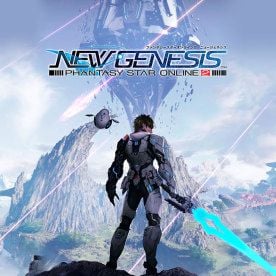
Tired of micro-stutters during 32-player trials? Apply this PSO2 NGS PC stutter fix to stabilize frame pacing and maintain a rock-solid 120 FPS across Aelio.
Nothing ruins a crisp counter-attack quite like a sudden hitch during a 32-player Urgent Quest. You line up your Photon Art, the boss swings, and your display freezes for twenty milliseconds. By the time the next frame renders, your character is flat on the pavement. The engine can easily hit 140 FPS on modern hardware, yet erratic, jagged frametimes remain widespread.
Phantasy Star Online 2 New Genesis handles system resources very differently from legacy online action titles. Relying on default settings forces the engine to fight your operating system for presentation priority. Resolving this issue is not just about lowering shadow quality; it requires cleaning up display composition, stripping out hook conflicts, and tuning frame caps so your hardware never trips over itself.
Why New Genesis Stutters When Base PSO2 Ran Smoothly
When Sega updated base PSO2 to the NGS graphics engine, they united character models and visual assets under a modern renderer. That upgrade permanently raised baseline requirements across the entire game client. Original PSO2 cruised at 1080p 60 FPS on modest cards like the Nvidia GeForce GTX 750 Ti. New Genesis pushed that same target up to an RTX 2070 Super.
Baseline Hardware Escalation:
GTX 750 Ti (Legacy PSO2 1080p/60) -> RTX 2070 Super (NGS Overhaul 1080p/60)
Base system requirements officially demand an Intel Core i5-9400, 8 GB of RAM, 100 GB of free storage space, and either an Nvidia GeForce GTX 950 or AMD Radeon R9 285 with 2048 MB of VRAM. Those specs merely boot the game. The real breakdown occurs when transitioning from solo exploration to open-world combat.
NGS open-field sectors allow up to 32 players to converge on bosses simultaneously. Even in mid-tier instances with 12 active players chaining explosive Photon Arts, visual effects hammer CPU draw calls. Benchmark testing confirms that a Ryzen 5 5600X paired with an RTX 3070 plunges from triple digits down to roughly 80 FPS during intense 12-player combat. When draw calls spike faster than the CPU can submit them, the engine hiccups.
If you run low on inventory space or seasonal cosmetic passes during these open-field grinds, grabbing a Phantasy Star Online 2 New Genesis AC Exchange Ticket gives you direct access to storage expansions and scratches without dealing with bloated web interfaces.
The table below outlines real-world performance targets and hardware baselines across the client's lifecycle.
| Specification Level | Processor (CPU) | Graphics Card (GPU) | System Memory | Storage Requirement | Target Performance |
|---|
| Official Minimum | Intel Core i5-9400 | GTX 950 / R9 285 (2048 MB) | 8 GB RAM | 100 GB free space | Bare minimum bootable state |
| Legacy PSO2 1080p Target | Intel Core i3 Tier | GTX 750 Ti | 8 GB RAM | Legacy storage specs | 1080p @ 60 FPS (Original Engine) |
| NGS 1080p 60 FPS Target | Modern 6-Core CPU | RTX 2070 Super | 16 GB RAM | 100 GB SSD storage | 1080p @ 60 FPS (NGS Engine) |
| Smooth 120 FPS High-Load | Ryzen 5 5600X or better | RTX 3070 / RX 6800 or better | 16 GB+ Dual-Channel | NVMe SSD recommended | 120 FPS target (dips to ~80 FPS in 12-player combat) |
Treat NGS as a modern AAA title rather than an older MMO port, especially for 32-player zone combat.

The Core Culprit: Overlays and Frametime Spikes
Most players struggling with frame hitching assume their graphics card is thermal throttling or maxed out. In reality, software hook injection causes the majority of spikes. Applications that draw visual overlays onto your screen—such as the Steam Overlay, Discord, the EA app, AMD Adrenalin, or the Nvidia App and GeForce Experience—hook directly into the DirectX render pipeline.
At 120 FPS, target frame times sit at a flat 8.3 milliseconds. When background overlay hooks clash with PSO2's render pipeline, frame times routinely jump from 6-8ms up to 25-40ms. Even if an in-game counter shows an average of 115 frames per second, a single 40ms frame produces an unmistakable visual hitch.
Disabling the GeForce Experience/Nvidia App in-game overlay fixes mouse movement lag, sudden FPS halving, and cyclical multi-second stuttering across modern 3D titles. Disable every background hook: shut off Discord Game Overlay, disable the Steam Community Overlay in game properties, and exit third-party capture utilities.
Exclusive Fullscreen vs Borderless: Resolving the DWM Trap
Standard Windows documentation claims modern presentation improvements make Borderless Windowed identical to Exclusive Fullscreen. Real-world benchmarks show otherwise.
Exclusive Fullscreen bypasses the Windows Desktop Window Manager (DWM). Bypassing DWM eliminates forced triple buffering, yielding a 2% to 11% framerate gain while drastically tightening frame pacing variance. Borderless Windowed routes PSO2 NGS through a desktop compositor, adding buffer delay that worsens micro-stutters during camera pans.
To lock down the display pipeline:
1. Open your NGS directory and locate the primary game executable.
2. Right-click the file, select Properties, and open the Compatibility tab.
3. Check Disable fullscreen optimizations.
4. Click Apply and launch the game.
If you use a Variable Refresh Rate (VRR) display (G-Sync or FreeSync), never leave your frame rate uncapped. Letting frames exceed your panel's physical refresh rate causes tearing, while standard V-Sync adds input lag. On a 120Hz monitor, set your frame cap 3 to 5 FPS below the panel limit (at 116 or 117 FPS). This keeps your monitor inside its active VRR window 100% of the time without queuing back-buffers.
The table below details presentation modes in PSO2 New Genesis.
| Presentation Setting | Compositor Pipeline | Measured Performance Impact | Frametime Consistency | Ideal Scenario |
|---|
| Borderless Windowed | Windows DWM Active | 2% to 11% lower FPS vs Fullscreen | Prone to pacing hitches (buffer delay) | Quick multi-tasking on secondary monitors |
| Standard Fullscreen | Hybrid Windows Presentation | Baseline reference point | Occasional micro-stutter from OS hooks | Default configurations |
| Exclusive Fullscreen (Optimizations Off) | Direct GPU Scanout (DWM Bypassed) | Highest sustained average FPS | Rock-solid pacing; minimal frame variance | Pure performance and 120 FPS target lock |
| VRR Capped (116-117 FPS on 120Hz) | Direct scanout inside VRR window | Minimal overhead (~1% CPU cap cost) | Flattest possible frametime line (6-8ms) | Eliminates tearing without V-Sync latency |
Bypassing DWM gives the NGS graphics pipeline unrestricted display access, eliminating random pacing spikes.

Step-by-Step Settings Profile for Stable 120 FPS
Particle density, terrain draw distance, and dynamic lighting contribute heavily to CPU draw call bottlenecks. Dialing these back preserves visual clarity while stabilizing frametimes.
Apply these sequential adjustments inside the NGS graphics options:
- Display Mode: Set to Fullscreen. Avoid Windowed or Borderless when optimizing for frame pacing.
- Frame Rate Limit: Select Unlimited inside the game client, then enforce a hard cap of 116 or 117 FPS in the Nvidia Control Panel or AMD Software to maintain VRR synchronization.
- Automatic Resolution Adjustment: Set to Off. Dynamic scaling introduces jarring artifacts and brief frametime stalls during sudden action.
- Player Model Display Limit: Drop this slider to 16 or 20. Leaving it at maximum forces all 32 players in an area to render simultaneously, hammering your CPU.
- Terrain Draw Distance: Set to 3 or 4 out of 5. The visual change across open fields is negligible, but this stops traversal stutters as new chunks load.
- Shadow Quality: Lower to Medium (3). Ultra shadows demand heavy compute passes that crush framerates when sunlight filters through dense foliage.
- Volumetric Fog & Blur: Turn Motion Blur Off and lower Volumetric Fog to Low. Blur ruins visual clarity, and volumetric fog adds heavy render passes during weather transitions.
- Color Lighting & Global Illumination: Set to Balanced. Maximum illumination passes trigger harsh frame drops in crowded hubs like Central City.
When should you deviate? On an RTX 4080 or faster at 1440p, raise Terrain Draw Distance to 5. Keep the Player Model Display Limit constrained regardless of GPU power; model streaming creates asset-paging overhead that raw compute cannot offset.
If you prefer spending time dressing up your character rather than tweaking sliders, picking up a PSO2 New Genesis AC Exchange Ticket lets you grab new fashion lines without dealing with market inflation.
Cleaning Up the Engine with PSO2 Tweaker
Standard storefront launchers for PSO2 New Genesis cause frequent stability issues. Whether you launch through Steam, the Epic Games Store, or the Microsoft Store, background launcher services consume resources, verify files inefficiently, and trigger permission conflicts.
PSO2 Tweaker completely replaces standard storefront launching routines. It handles game updates, verifies file integrity without wiping custom configurations, and boots the engine directly. It runs on Microsoft .NET Framework 4.6.2 and eliminates storefront bloat.
The Tweaker also passes direct command-line arguments to the executable based on your account origin:
- -playsteam (bypasses the Steam overlay hook framework while validating ownership)
- -playepic (initializes Epic services without loading background storefront processes)
- -playms (circumvents the Microsoft Store file virtualization system)
- -playjp (launches directly into the Japanese client infrastructure)
These flags prevent storefront processes from pinging your system during gameplay, keeping the CPU frametime graph steady.

System-Level Fixes: Power Plans, Memory Leaks, and Mobile GPUs
In-game settings only control part of the equation. If your operating system downclocks hardware to conserve power, frame pacing collapses. Modern processors use aggressive energy-saving states. In an open MMO, your CPU downclocks while running across empty terrain.
Engaging a 32-player boss encounter spikes power demands instantly. Under Windows "Balanced" power mode, that sudden transition causes a noticeable stutter while core clocks ramp up. Navigate to Control Panel > Hardware and Sound > Power Options and select High Performance. This prevents dynamic downclocking and forces your CPU to hold its base and boost states.
Memory management requires equal attention. Open browser tabs and heavy background apps exhaust physical RAM. When system memory fills up, Windows pages game assets to your storage drive. Even on a rapid NVMe drive, paging assets causes severe traversal hitching across Aelio. Close memory-heavy background tasks before launching the client.
On gaming laptops, PSO2 NGS often suffers from high CPU usage paired with 10-15 FPS performance because the game defaults to integrated graphics.
To force the dedicated GPU:
1. Open Nvidia Control Panel.
2. Navigate to Manage 3D Settings > Program Settings.
3. Add the PSO2 NGS executable.
4. Under Preferred graphics processor, select High-performance NVIDIA processor.
5. Set Power management mode to Prefer maximum performance.
The comparison below outlines performance across launcher environments.
| Platform / Launcher Setup | File Virtualization Overhead | Launcher Hook Injections | Startup Runtime Flags | Frame Pacing Stability |
|---|
| Steam Client Default | Low (standard Win32 path) | High (Steam Overlay + WebHelper) | Storefront Default | Moderate; micro-stutters near players |
| Epic Games Store Default | Moderate | High (EOS overlay services) | Storefront Default | Prone to initial asset-load spikes |
| Microsoft Store Default | High (UWP sandbox restrictions) | Moderate (Xbox Game Bar hooks) | Virtualized environment | High risk of file permission hitches |
| PSO2 Tweaker (Custom) | Minimal (Direct file scanout) | None (Bypasses UI overlays) | Direct (-playsteam, -playepic) | Exceptional; clean frametimes |
Using PSO2 Tweaker removes unnecessary storefront hooks, stabilizing frametimes across long play sessions.
Windows Game Mode: Thread Scheduling Trade-Offs
Official performance guides recommend leaving Windows Game Mode enabled. In theory, Game Mode prioritizes foreground CPU and GPU execution threads while throttling background OS tasks.
However, community testing reveals that Game Mode's thread scheduling can conflict with third-party capture utilities and GPU drivers. On multi-threaded setups, Game Mode sometimes shifts background audio or chat threads away from prime cores, introducing frametime variance in CPU-heavy MMOs like New Genesis.
Start with Windows Game Mode Enabled. Test frametimes during a crowded Urgent Quest. If stutter spikes occur during heavy particle effects—particularly with voice chat active—switch Game Mode Off and disable Hardware Accelerated GPU Scheduling (HAGS). Benchmark both to find what flattens your frametime line on your specific hardware.
FAQ
Why does PSO2 New Genesis stutter during open-field exploration and 32-player combat?
Massive player density and complex visual effects place extreme draw call demand on your CPU and GPU. This sudden load causes severe frame-time spikes if power plans, background overlays, or display compositors throttle rendering.
How does switching to Exclusive Fullscreen fix frametime instability in PSO2 NGS?
Exclusive fullscreen grants the game direct access to the display hardware while bypassing the Windows Desktop Window Manager. This eliminates forced triple buffering, cuts input lag, and reduces presentation latency by up to 11%.
Should I turn off the Steam and NVIDIA overlays for PSO2 NGS?
Yes, you should disable all third-party and GPU overlays immediately. Overlays inject hooks directly into the game's rendering pipeline, which frequently introduces micro-stutters and frametime spikes up to 40ms.
What is the optimal frame cap setting to achieve a smooth 120 FPS in PSO2 NGS?
You should cap your framerate 3 to 5 FPS below your display refresh rate, setting it to roughly 116 or 117 FPS when using G-Sync or FreeSync. This ensures variable refresh rate smoothing stays continuously active without triggering V-Sync latency.
Can using PSO2 Tweaker improve game performance and stability?
PSO2 Tweaker resolves game stability by bypassing corrupt files and launch bugs associated with default storefront launchers. It also facilitates direct engine launch arguments and cleanly strips away storefront overlay bloat.
Does Windows Game Mode improve or degrade PSO2 NGS performance?
Windows Game Mode generally improves frame pacing by prioritizing CPU and GPU scheduling for the active game while suppressing background tasks. However, test your specific setup, as certain system configurations report conflicts with background capture tools.
How do I ensure PSO2 NGS utilizes my dedicated GPU on a gaming laptop?
Open the NVIDIA Control Panel, select Manage 3D Settings, and designate High Performance NVIDIA Processor under Preferred Graphics Processor. This prevents the client from mistakenly assigning open-world rendering to weak integrated graphics.
Final Verdict: Clean Frametimes Over Raw Peak Frames
Chasing maximum frame numbers is counterproductive in New Genesis. A system swinging between 90 and 150 FPS feels far worse than one locked at 116 FPS with flat 8.3ms frametimes. True smoothness comes from stability: bypass the Windows Desktop Window Manager with Exclusive Fullscreen, remove overlay hooks, cap player model rendering, and lock CPU clocks using the High Performance power plan.
Once your frametime graph remains flat across 32-player trials, you can play New Genesis without sudden visual hitches. When your inventory fills up after these encounters, you can redeem a Phantasy Star Online 2 AC top-up to expand your storage and continue grinding without interruption.