Code 999 Error vs Exploit
Legitimate Code 999 errors occur from network instability, outdated clients, or server maintenance—displaying specific messages directing file verification. Exploiters previously mimicked these states to mask manipulation.
Jan 22, 2025 G.T.I. update introduced distinct error categorization. Legitimate failures generate timestamped logs with subcodes; exploit attempts trigger immediate disconnection with permanent account flags. The system maintains 10-year blacklists for 1,241 devices from the Dec 27, 2025-Jan 2, 2025 ban wave.
Pre-Patch Exploitation Methods
Exploiters used Virtual Technology (VT) and Direct Memory Access (DMA) hardware bypassing client protections. DMA devices read memory directly from hardware buses, invisible to traditional anti-cheat. December bans identified 1,394 DMA cheaters among 1,786 PC bans—72% of desktop violations.
They manipulated encrypted packets during transmission, altering damage, positions, and item flags. KernelBase detection now monitors transmission points, validating integrity through combat sanity checks detecting impossible teleportation, unrealistic accuracy, and statistical anomalies.
Season 8 Patch: Code 999 Fixes
Season 8 integrated anti-cheat into core systems, preventing exploitation at hardware/kernel levels before execution.
Server-Side Authentication
New authentication validates every client action against server combat models. When registering kills, servers independently calculate bullet trajectory, damage falloff, and hit registration. MCX LT Assault Rifle (36 base damage, 798 RPM) kills must align with physical constraints.

Checks include hit accuracy thresholds, kill statistics, and sanity checks for impossible actions. Machine Learning flags perfect aim consistency, inhuman recoil control, and instant 180° turns exceeding human capability.
Client Integrity Verification
Anti-Cheat Expert (ACE) operates at kernel level, monitoring system calls and memory access. Detects external processes reading game memory, injecting code, or modifying executables. Dec 12, 2025 update enforced zero-tolerance with HWID bans from 1 hour to 10 years—50% of serious violations receiving maximum duration.
Kernel DMA Protection remaps memory addresses dynamically, preventing DMA hardware from locating game data. Requires Secure Boot, TPM 2.0, and DMA Shield in BIOS—mandatory for Colonel+ ranked play.
Real-Time Detection
System blocked 12,443 exploitation attempts Dec-Jan, with 2,185 mid-match kicks. Detection categories: 5,417 instances of wallhacks, aimbots, VT exploits, DMA manipulation.
ML models trained on millions of gameplay hours establish baseline patterns. Deviations trigger progressive verification—subtle anomalies increase monitoring, blatant violations cause immediate disconnection. Achieved 15,993 total boots with 250,000 peak concurrent players (6.4% detection rate among flagged accounts).
Deployment Timeline
Anti-cheat PC tutorial released Dec 1, 2026 at 13:55. Queue times extended to 10-30 minutes in Colonel+ ranks post-ban wave as player pool contracted, showing significant cheater presence at high tiers.
Season 8 includes operators Lena Vandermir (Butterfly) and Vlinder, unlockable at Battlepass Level 15. Purchase Delta Force credits exclusive packs through BitTopup for efficient access.
Identifying Cheaters: Exploit Patterns
Suspicious Movement
Exploiters exhibit unnatural movement. Legitimate players move at operator-defined speeds—sudden changes exceeding limits indicate teleportation. Watch for instant cover appearances or vertical traversal without ladders/ziplines.
Aftershock map (Warfare Mode) features 95% destructible buildings with 500+ interactive objects. Cheaters position in impossible locations—inside structures, beneath map boundaries, unreachable elevations—providing unfair sightlines.

Unrealistic Damage
Weapons follow strict models. FS-12 Shotgun: 18×8 pellet damage, 12m effective range, 87% hip-fire accuracy. Consistent full pellet spreads beyond 12m violate mechanics. Assault rifles achieving 100% headshot rates exceed human capability.
Combat validation flags statistical impossibilities. Damage output 3+ standard deviations above weapon mean triggers investigation, accounting for skill variance but catching sustained perfect performance.
Inventory Manipulation
Watch for multiple unique gadgets in single matches—each operator has defined slots. Using both Butterfly's Rescue Drone (55m radius, 10m line-of-sight for final heal) and Active Defense System (20s grenade blocking, 120s cooldown) simultaneously violates restrictions.
Resource acquisition rates reveal exploitation. Excessive ammo/grenades/healing beyond map spawn rates indicate duplication. Hudson boss in Space City 2.0 Dock appears 7 minutes after start—boss-drop weapons before this timestamp = spawning exploits.
Replay Analysis
Historical Results tab provides replay access. Review deaths from opponent perspective—legitimate players show natural aim adjustment, target acquisition delays, occasional misses. Cheaters display robotic tracking, instant switching, inhuman reactions.
Focus on pre-fire behavior. Legitimate pre-fires target common angles from map knowledge/sound. Cheaters pre-fire specific positions with no information source, tracking through walls before visual contact.
Reporting Cheaters Effectively
In-Game Reporting
Fastest method: Hit R immediately after death for quick report interface. Select violation category—aimbot, wallhack, position exploit, inventory manipulation. Specific categorization prioritizes investigation.
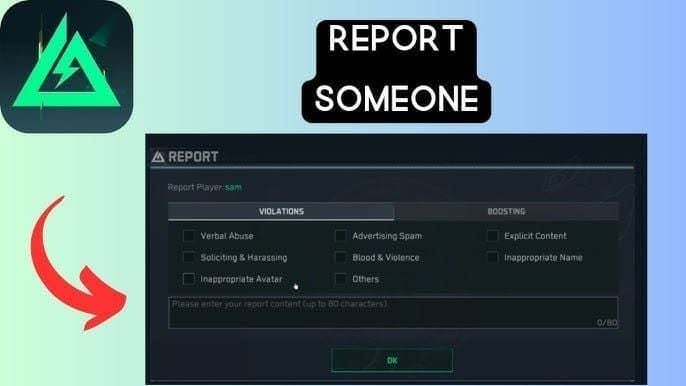
Alternative: Click exclamation mark below player banner/profile during lobby/scoreboard. Works for suspicious teammates or opponents who didn't kill you.
Post-match: Navigate to Historical Results, locate match, click exclamation mark by name, select violations, click OK. Allows replay review before submission.
G.T.I. Security Station website offers comprehensive reporting for complex cases. Select G.T.I. Security > Report, complete detailed form with timestamps, player IDs, descriptions.
Evidence Collection
Include specifics: exact timestamps, violation categories, context. Note match mode, map location, weapons. Record consistency—sustained patterns carry more weight.
Replay clips provide definitive evidence. Mark timestamps for investigator review. Highlight impossible actions—wall tracking, instant 180° flicks to off-screen targets, damage exceeding weapon capabilities.
Document statistical anomalies in scoreboards. 95%+ headshot accuracy across 30+ kills warrants investigation. Compare to pro stats—elite competitors rarely exceed 70% in public matches.
Report Priority
System prioritizes by violation severity, reporter credibility, corroborating evidence. Multiple unique reporters against same account = expedited review. First-time reporters enter standard queues.
High-priority cases (ranked matches, tournaments, multiple reports): 24-48 hour review. Standard reports: 5-7 days. Complex cases requiring manual analysis: up to 14 days.
Established reporters (70%+ accuracy) receive priority status and outcome notifications, incentivizing quality over quantity.
Following Up
Check status through G.T.I. Security Station portal. Displays pending, under review, resolved cases. Resolved shows whether action taken (specific durations confidential).
Don't submit duplicate reports for same incident. If encountering same player in subsequent matches with continued violations, submit new reports with fresh evidence/timestamps.
Maintain realistic expectations. Not all suspicious behavior = cheating—latency, spectator bugs, skill gaps create illegitimate-appearing scenarios.
Protecting Against False Positives
High-Skill Play vs Suspicious Behavior
Pro-level aim/reactions can appear superhuman. ML distinguishes through behavioral consistency. Skilled players maintain performance across varied scenarios; cheaters exhibit impossibilities—100% first-bullet accuracy, zero reaction delays, perfect tracking through obstructions.
Skilled players show natural variance—occasional misses, reaction delays under pressure, performance fluctuations. Automation lacks inconsistency. System analyzes thousands of micro-behaviors: mouse smoothness, aim adjustment, decision timing.
Avoid macros for recoil/rapid-fire—create robotic input patterns flagged by anti-debugging APIs. Use in-game sensitivity vs external mouse software.
Network Best Practices
Unstable connections mimic teleportation exploits. Maintain wired Ethernet with <50ms latency. Wireless introduces packet loss/jitter triggering position validation failures.
Disable VPNs during gameplay—adds latency variance, obscures location (both flagged). System expects consistent connection sources; frequent IP changes suggest account sharing/evasion.
Whitelist anti-cheat executables in firewall/antivirus. Blocking ACE-GAME, ACE-BASE, AntiCheatExpert prevents proper operation, triggering integrity failures.
Avoiding Software Conflicts
Disable macros, scripts, mods, overlays, hardware acceleration interacting with game processes. RGB software, streaming overlays, performance monitors sometimes inject code into memory.
Exit remote desktop, virtual machines, debugging apps before launch. These use system calls identical to cheat software. Anti-cheat can't distinguish legitimate remote access from malicious manipulation.
Enable Secure Boot, TPM 2.0, DMA Shield in BIOS—mandatory for Colonel+ ranked. Systems lacking these receive restricted matchmaking.
If Wrongly Flagged
Document system configuration, installed software, recent sessions. Submit appeal through G.T.I. Security Station with technical details: OS version, hardware specs, active background processes during flagged sessions.
Provide replay evidence demonstrating legitimate gameplay. Appeal system manually reviews flagged matches, examining whether anomalies resulted from skill/network/software vs intentional exploitation.
Don't bypass bans through new accounts/hardware—escalates to permanent HWID blacklist. 10-year device blacklist applied to 1,241 systems targets evasion. Legitimate appeals through official channels only.
Anti-Cheat System Deep Dive
Machine Learning Components
Neural networks trained on millions of gameplay hours establish baseline distributions for each weapon/operator/skill tier. System calculates expected accuracy ranges, K/D ratios, movement patterns for legitimate players at each rank.
Deviations trigger progressive monitoring. Colonel-rank player suddenly achieving Grandmaster stats receives scrutiny. System analyzes whether improvement = natural development (gradual progression) or artificial enhancement (immediate perfection).
Models continuously update as player base evolves. New operators like Vlinder (Season 8 Battlepass Level 15) require fresh baselines. System collects early adopter data, identifies norms, flags outliers.
Behavioral Analysis
Beyond statistics, system analyzes decision-making and tactical awareness. Legitimate players make information-based decisions—checking corners, using sound, rotating on visible threats. Cheaters exhibit omniscience, responding to threats outside information sphere.
Tracks pre-fire timing/accuracy. Legitimate pre-fires target common angles with moderate accuracy. Wallhack users pre-fire specific positions with high accuracy despite lacking information. System correlates pre-fire success with available info (callouts, sound, map control).
Movement analysis detects automation. Humans exhibit micro-corrections, momentum conservation, natural pathing. Bots move with geometric precision, perfect strafing, inhuman environmental reactions.
Community Integration
Player reports feed ML as training data. Multiple independent reporters flagging same account = priority analysis. Confirmed violations validate models; false reports refine thresholds reducing false positives.
System weights reports by credibility. Verified histories (70%+ accuracy) receive higher priority than first-timers. Prevents coordinated false reporting while empowering trusted members.
Feedback loops improve accuracy. When manual investigations overturn automated bans, engineers analyze triggers and adjust parameters.
Ban Wave Metrics
Dec 27, 2025-Jan 2, 2025 wave targeted 2,376 Colonel+ accounts, removing high-skill cheaters reaching competitive tiers. 70% kernel VT/DMA usage indicates sophisticated exploitation requiring hardware investments.
1,786 PC vs 552 mobile bans reflects platform-specific patterns. PC players access sophisticated tools (DMA hardware, kernel drivers); mobile cheaters use modified APKs/emulator exploits. 72% DMA among PC bans shows hardware cheating prevalence.
Queue time extensions to 10-30 minutes in Colonel+ quantify cheater density. Removing 2,376 accounts from 250,000 peak concurrent pool created noticeable delays, suggesting cheaters = 5-10% of high-rank populations.
Common Misconceptions
Myth: All Code 999 Errors Mean Cheating
Legitimate failures occur from maintenance, version mismatches, network interruptions. System distinguishes through error context/account history. Repeated errors warrant file verification, client updates, network checks—not ban risk.
Myth: VPN Usage Triggers Bans
VPNs don't automatically trigger bans. System flags VPN + other suspicious indicators—rapid IP changes, region-hopping, performance anomalies. VPNs for legitimate privacy without red flags = minimal risk. However, VPNs add latency penalties without competitive advantage.
Myth: Patch Affects Performance
Kernel-level anti-cheat has minimal overhead. Modern systems with TPM 2.0/Secure Boot experience <2-3% frame rate impact. Significant degradation = unrelated issues (outdated drivers, background processes, hardware limits).
Reality: What Changed
Core gameplay identical for legitimate players. Weapon stats, operator abilities, map mechanics unchanged. MCX LT: 36 damage, 798 RPM, 30-round mags. FS-12: 18×8 pellet damage, 12m range, 87% hip-fire accuracy.
Changes occur in backend validation—invisible during normal play. Server-side verification, encrypted transmission, behavioral monitoring operate transparently. Players notice anti-cheat only when preventing exploitation.
Playing Competitively Post-Patch
Fair Play Strategies
Focus on fundamentals: aim training, map knowledge, operator synergy, communication. Butterfly's Rescue Drone (55m radius, 10m line-of-sight for final heal) mastery creates legitimate advantages through positioning.
Study weapon mechanics. MCX LT fires 798 RPM—calculate optimal burst lengths for recoil control. FS-12's 12m effective range informs engagement distances. Mechanical knowledge separates skilled from average without exploits.
Develop game sense through replay analysis. Review deaths identifying positioning mistakes, poor timing, tactical errors. Legitimate improvement = recognizing patterns and adjusting strategies.
Building Skill
Invest in aim training using practice modes. Active Defense System blocks grenades 20s with 120s cooldown—practice timing deployments countering enemy utility. Muscle memory for operator abilities creates consistent pressure performance.
Learn map strategies. Aftershock: 95% destructible buildings, 500+ interactive objects—understand destruction patterns, sightline creation, rotation paths for information advantages without wallhacks.
Coordinate via voice. Callouts, utility coordination, trade fragging multiply individual skill. Coordinated average players defeat disorganized skilled players—teamwork = ultimate legitimate advantage.
Community Standards
Respect opponents/teammates regardless of skill. Toxic behavior—harassment, griefing, feeding—undermines integrity like cheating. Reporting addresses behavioral violations alongside technical exploits.
Share knowledge with developing players. Explaining mechanics, providing feedback, fostering positive culture elevates competition quality. Skilled players benefit from challenging opponents.
Celebrate fair victories, accept legitimate defeats gracefully. Anti-cheat ensures outcomes reflect skill vs exploitation. Trust system integrity to focus on improvement vs suspecting every skilled opponent.
Setup Optimization
Configure hardware/software for anti-cheat compatibility. Enable Secure Boot, TPM 2.0 in BIOS. Activate DMA Shield if supported. These prevent exploitation while signaling compliance.
Use wired peripherals with onboard memory for sensitivity vs software configs. External software injecting inputs creates detection risks. Configure through in-game menus when possible.
Maintain updated drivers: GPU, motherboard chipset, network adapters. Outdated drivers cause compatibility issues manifesting as performance problems/connection instability—potentially flagged as suspicious.
Future Anti-Cheat Beyond March 2026
Upcoming Enhancements
Future updates expand ML sophistication, incorporating behavioral vectors and reducing false positives. System will analyze communication patterns, economic behavior (currency spending), social connections identifying coordinated cheating rings.
Hardware authentication extends beyond DMA to peripheral verification. May require certified devices or challenge-response protocols ensuring inputs match expected profiles. Prevents hardware automation while maintaining accessibility.
Server-side simulation increases scope. Currently validating combat, future systems simulate complete match states server-side, treating client inputs as suggestions vs authoritative commands. Eliminates exploit categories by removing client authority.
Community Integration Plans
G.T.I. Security Station expands participation through verified reporter programs. High-accuracy players receive early tool access, direct anti-cheat team communication, recognition for contributions.
Transparency reports publish quarterly: total bans, violation breakdowns, false positive rates, appeal outcomes. Data-driven approach builds trust while demonstrating effectiveness.
Educational initiatives help players understand systems, reducing false reports and improving community detection. Dec 1, 2026 tutorial = initial effort—future content covers replay analysis, statistical anomaly recognition, reporting best practices.
Long-Term Initiatives
Competitive integrity extends beyond detection to matchmaking fairness, skill-based progression, accessible competitive pathways. Future seasons refine ranking ensuring appropriately skilled opponents, reducing frustration driving exploitation.
Reward systems emphasize skill demonstration over time investment. Season 8's Vlinder unlocks at Battlepass Level 15—future content may include skill challenges requiring mechanical proficiency vs grinding hours.
Partnership with hardware manufacturers establishes anti-cheat standards at device level. Gaming peripherals may include cryptographic verification preventing unauthorized firmware mods. Industry-wide approach raises baseline security across competitive games.
Enhance Experience Securely
Legitimate Improvement
Invest in training routines: aim precision, movement mechanics, utility usage, game sense. Butterfly abilities require positioning mastery—practice drone placement and healing timing.
Study pros/content creators demonstrating high-level strategies. Analyze decision-making, positioning, utility. Implement one new technique per session, gradually expanding tactical repertoire.
Join competitive communities, participate in scrimmages. Organized team play vs skilled opponents accelerates improvement beyond public matchmaking. Feedback from experienced players identifies blind spots.
Safe Currency Acquisition
Season 8 introduces exclusive operators, weapon skins, battle pass content requiring in-game currency. Legitimate channels ensure account security while supporting development.
BitTopup provides secure, instant top-ups for Delta Force credits and battle pass. Competitive pricing, fast delivery, excellent service. High ratings reflect consistent reliability and transaction security.
Avoid third-party account services, currency generators, exploit-based progression. These violate ToS, risking permanent loss. 10-year HWID bans on 1,241 devices show enforcement severity—no temporary advantage justifies permanent exclusion.
Why BitTopup
BitTopup specializes in secure gaming transactions across titles, offering wide coverage and competitive pricing. Fast delivery ensures immediate seasonal access without delays.
Transaction security protects payment info and credentials. Established track record and high ratings demonstrate consistent quality. Customer service supports transaction questions/technical issues.
Choosing legitimate providers like BitTopup maintains account standing while accessing desired content. Fair play and proper acquisition create sustainable competitive experiences without exploitation risks.
FAQ
What is Code 999 exploit in Delta Force?
Server-client authentication exploits manipulating game state data: positions, inventory, combat outcomes. G.T.I. Security encrypts data using ChaCha20/AES-128, preventing manipulation through memory editing and DMA hardware.
How does Season 8 patch fix Code 999?
Implements kernel-level detection via KernelBase monitoring, server-side combat validation, hardware protections requiring Secure Boot/TPM 2.0/DMA Shield. Validates every client action against server models, detecting impossible actions like teleportation or unrealistic damage.
Can I get banned for accidentally triggering Code 999?
Legitimate errors from network issues/version mismatches don't cause bans. System distinguishes technical failures from exploitation through error context/account history. Maintain updated files, stable network, avoid third-party software.
How do I report cheaters in Season 8?
Hit R after death for quick reporting, click exclamation mark on player banners during matches, use Historical Results for post-match reports, or submit via G.T.I. Security Station website. Include timestamps, violation categories, behavioral descriptions.
What are Code 999 exploit signs?
Impossible movement (teleportation, unrealistic speeds), damage exceeding weapon capabilities, inventory manipulation (duplicate equipment, spawned items), omniscient behavior (wall tracking, pre-firing without information). Replay analysis reveals robotic aim and instant target switching.
How effective is anti-cheat in March 2026?
Dec 27, 2025-Jan 2, 2025 wave removed 2,376 Colonel+ cheaters, blocked 12,443 exploits, issued 2,185 mid-match kicks. Achieved 15,993 total actions with 250,000 peak players, demonstrating robust detection across kernel exploits and behavioral anomalies.