Weighing CS2 Premier vs Competitive 2026? Learn how the rating system works, pick-ban strategy, MR12 economy, and how to climb out of Blue tier today.
Queueing into Counter-Strike 2 in 2026 presents a split path right on the main menu. You can pick standard Competitive, select your favorite maps, and chase classic skill icons. Or you can enter Premier, endure a team-wide veto phase, and put a raw number on the line.
Most players pick the wrong queue for their goals. They join standard Competitive expecting serious teammates, only to find unranked lobbies and griefers. Others jump into Premier without understanding pick-ban strategy or MR12 economy, plummeting straight into Grey rating. To spend your time effectively this year, you need to understand how these queues split and how to win when rating is on the line.
CS2 Premier vs Competitive: Core Format Differences
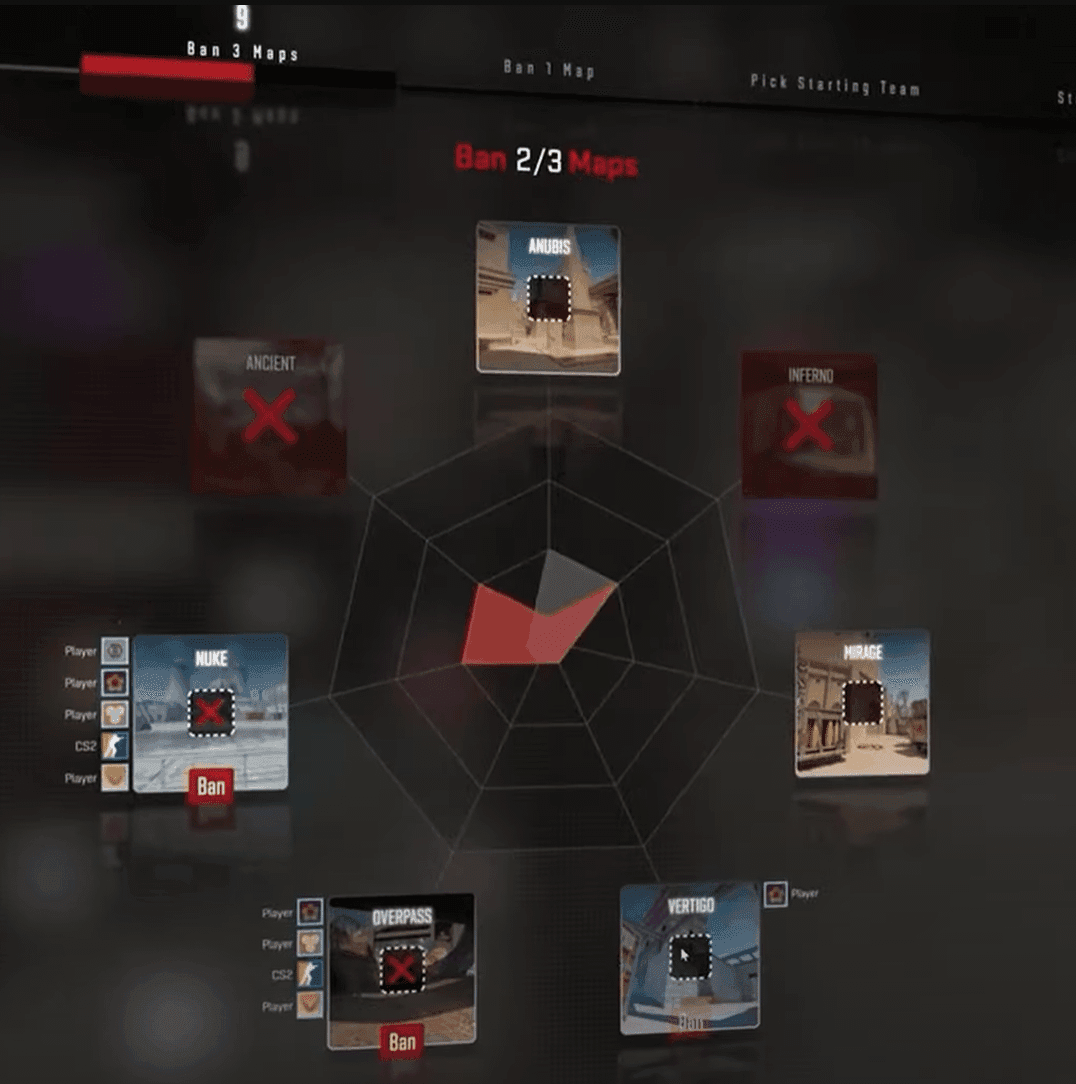
Standard Competitive and Premier share the MR12 ruleset, requiring 13 round wins in regulation. On the server, their structures diverge completely. Standard Competitive preserves the legacy system where you pick your exact map pool before searching. Premier treats every match like a tournament fixture, cycling through the seven Active Duty maps via a live ban phase.
Access requirements also separate the two ladders. Standard Competitive unlocks early at Private Rank 2. Premier acts as a walled garden: you must own paid Prime Status and reach Profile Level 10 through casual modes, Deathmatch, or Arms Race before queueing. Leaving either mode early triggers identical suspensions: 30 minutes, 2 hours, 24 hours, and finally a full week.
| Feature | Standard Competitive | Premier Mode |
|---|
| Account Requirement | Private Rank 2 | Prime Status + Profile Level 10 |
| Rating Format | 18 Skill Groups (Silver I to Global) | Continuous CS Rating (0 to 30,000+) |
| Rank Scope | Calibrated individually per map | Unified global account rating |
| Map Selection | Player-selected queue pool | Structured Active Duty pick-and-ban veto |
| Overtime Rules | None (Ends as 12:12 draw) | Single MR3 overtime (First to 16 or 15:15 tie) |
| Rank Expiration | 28 days of inactivity per map | Active throughout the competitive season |
| Calibration Cooldown | 20 hours after every 2 wins | No daily win calibration cooldown |
Premier forces you into a high-stakes environment with overtime rules and unified ranking, whereas Competitive serves primarily as a training ground for individual map mastery.
Competitive mode imposes a 20-hour lockout after every two calibration wins until you reach ten wins on that specific map. Holding simultaneous ranks on Mirage, Inferno, and Nuke requires 30 separate wins while managing individual decay timers. If you skip a map for 28 days, its rank vanishes, docking you one or two skill groups upon return.
CS Rating Explained: Distribution and Skill Tiers
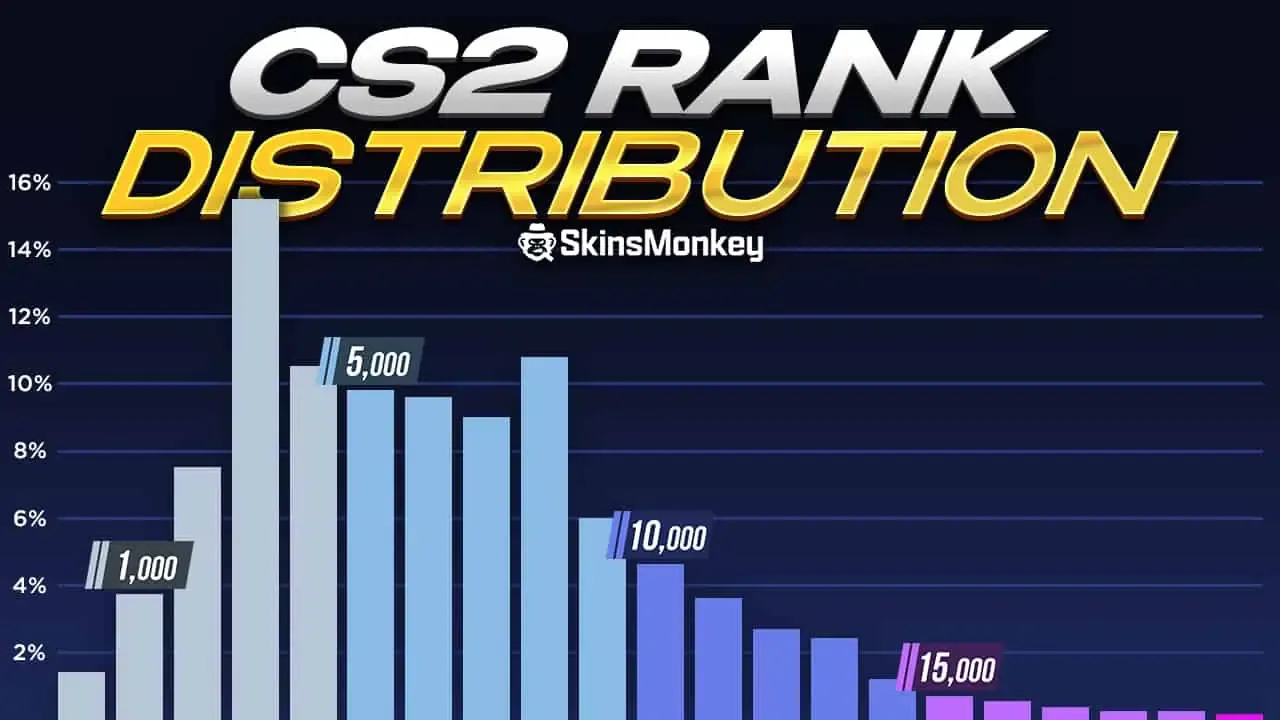
Valve abandoned the hidden MMR calculations of Counter-Strike: Global Offensive for Premier, replacing them with a visible, continuous numerical score known as CS Rating. This scale runs from 0 to beyond 30,000, split into 5,000-point color bands. Your rating shifts after every match based on win probability, rewarding underdog victories with gains up to +500 and penalizing upset losses heavily.
A pervasive community myth claims that 15,000 rating (the Purple tier) represents the average player. Active 2026 telemetry proves this false. The true median CS2 player sits between 11,000 and 12,000 rating in the Blue band. Two-thirds of the entire competitive population resides below 15,000.
| Rating Tier | Color Band | Player Base Share | Legacy Skill Group Equivalent |
|---|
| 0 – 4,999 | Grey | 18.8% | Silver I – Silver II |
| 5,000 – 9,999 | Light Blue | 22.4% | Silver III – Silver IV |
| 10,000 – 14,999 | Blue | 26.4% | Silver Elite – Gold Nova II (Median: ~11.5k) |
| 15,000 – 19,999 | Purple | 20.7% | Gold Nova III – Master Guardian I |
| 20,000 – 24,999 | Pink | 9.5% | Master Guardian II – Legendary Eagle |
| 25,000 – 29,999 | Red | 2.2% | Legendary Eagle Master – Supreme |
| 30,000+ | Gold | 0.1% | The Global Elite / Top Leaderboard |
Reaching Purple at 15,000 places you in the top 33% globally, outperforming two out of every three players in matchmaking.
Grinding late for the seasonal commemorative medal is a mistake. Valve mandates at least 25 Premier victories and an active, unexpired rating when the season closes. If you need Prime Status or want to inspect new weapon finishes while grinding, topping up your Steam balance in Russia lets you fund your account directly through regular wallet recharges.
The Seasonal Shift: Resets and Active Duty Pool Contradictions
Seasonal updates rarely follow a clean schedule in CS2. Historical documentation frequently shows conflicting dates: regional trackers logged Season 5 starting on July 6, 2026, while server telemetry logs recorded the live transition on July 8, 2026, following the close of Season 4.
Map pool documentation reveals similar contradictions. Early patch notes from Season 4 referenced Anubis entering the pool while Train was cut. Other community trackers state that Season 5 introduced Cache while removing Overpass from active rotation. In practice, you must always prepare your veto around the live seven maps presented on the Premier ban screen on game day.
Seasonal rating resets also divide player observations. While some analysts claim seasons enforce a hard reset back to unranked status, placement matches reveal an underlying soft reset. Hidden MMR remains heavily weighted, deducting roughly 1,000 to 1,500 points from your ending bracket while allowing calibrated players to regain their prior color band within two or three placement wins.
The Premier Map Veto: Pick-Ban Strategy That Wins Before Round One
Most solo queue losses occur before players even spawn. Teams routinely ban comfort picks, pick maps their teammates hate, or fail to communicate during the 15-second ban timers. The Premier veto system uses a structured 1-2-2-1 elimination format across the seven Active Duty maps.
Execute this four-step drafting protocol to control the map pool:
- Identify the Server's Auto-Loss Map: During the first 15 seconds, check teammate profile tags and recent match histories when available. If three teammates hold sub-40% win rates on Anubis or Nuke, eliminate that map immediately regardless of your personal preference.
- Target High-Variance PGM Maps: In the second ban phase, eliminate maps that demand complex T-side default coordination if you are queuing solo. Maps like Ancient require precise mid-control smokes; ban them if your squad lacks microphones.
- Bait the Opponent into Overconfidence: Leave popular aim-heavy maps open if your squad has raw mechanical skill. Dust II and Mirage encourage dry duels where disciplined CT crossfires will dismantle disorganized pug stacks.
- Secure Side Selection on the Decider: The team that does not make the final map elimination selects starting sides. On heavily CT-sided maps like Nuke, giving up the final ban to secure the CT start allows you to build an early 8-4 or 9-3 cushion.
Never waste a ban on a map the opposing team avoids. If the enemy captain immediately bans Inferno every match, let them spend their ban phase removing it while you target their secondary strengths.
Mastering MR12 Economy: Weapons, Resets, and Subtick Tweaks
The transition to MR12 made round-to-round economy far more unforgiving than in legacy CS:GO. A single careless force buy can cost you three consecutive rounds, putting your squad down 1-4 before rifles hit the floor. The game rewards disciplined bank management and punishes panic spending.
Recent balance updates lowered the price of several SMGs. The MP7, MP5-SD, and PP-Bizon each received a $100 price cut. At the same time, the MP7 and MP5-SD received improvements to base damage and damage retention over distance, turning them into reliable tools for second-round conversions.
| Round State | Bank Target | Recommended Equipment Loadout | Tactical Objective |
|---|
| Round 2 (After Pistol Win) | $3,000 – $3,700 | Kevlar + Helmet, MP7 ($1,400) or Galil/Famas, Utility | Deny enemy pistols, farm SMG kill rewards ($600) |
| Round 2 (After Pistol Loss with Plant) | $1,900 – $2,400 | Full Save or P250 ($300) without armor | Ensure a clean $4,300+ full rifle buy in Round 3 |
| Round 2 (After Pistol Loss, No Plant) | $1,400 – $1,900 | Pure Save (Spend $0) | Build loss bonus to execute a full buy in Round 4 |
| Full Buy Round (Gun Round) | $4,300 (T) / $4,700 (CT) | AK-47 / M4, Kevlar + Helmet, Smoke, 2x Flash, HE/Molotov | Execute set executes or hold map control defaults |
| Desperation Force Buy | $1,800 – $2,200 | Kevlar (no helmet), Deagle / Scout / MP5-SD, 1 Flash | Steal rifles when the opponent is sitting on weak anti-eco |
Committing to an undisciplined force buy on Round 2 without an opening pistol bomb plant destroys your MR12 half, guaranteeing your team cannot afford full rifle utility until round four or five.
Movement physics also affect round-to-round gunfights. Subtick updates refined jump landing calculations: jumps and landings no longer deplete player stamina directly, and movement inputs inside sv_bhop_time_window register consistent bunnyhops. You can clear obstacles and peek aggressive angles on Anubis and Mirage without sudden movement slowdowns.
Lineup Practice and Automation: Commands vs Menus
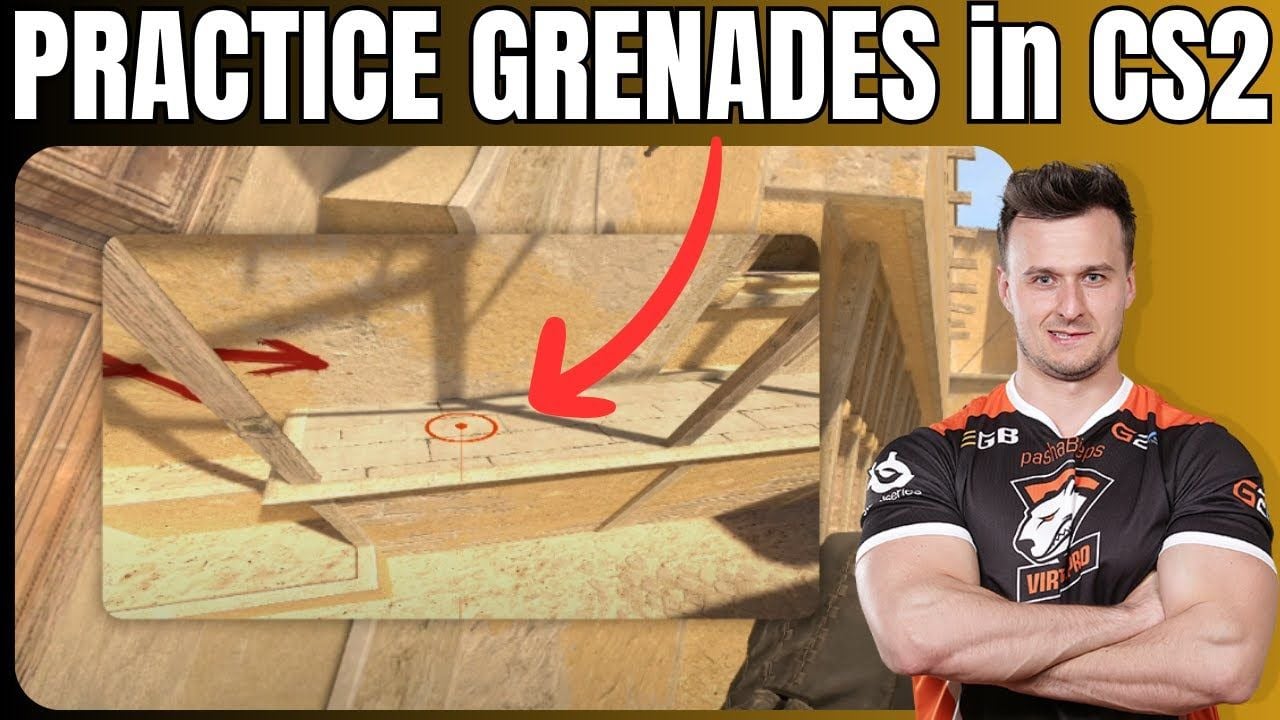
Grenade utility wins rounds, but mastering lineups no longer demands third-party practice configs. Counter-Strike 2 features integrated grenade practice modes built directly into custom offline lobbies. Enable the native Grenade Camera directly from settings to view the exact landing point and bloom of your smokes in real-time.
If you prefer running an offline server through the developer console, load a local map and execute these practice commands:
sv_cheats 1
sv_grenade_trajectory_prac_pipreview 1
sv_rethrow_last_grenade
mp_warmup_start
mp_warmuptime 3600
Setting sv_grenade_trajectory_prac_pipreview 1 displays a picture-in-picture window in the corner of your screen showing where your thrown utility lands. Binding sv_rethrow_last_grenade to a key lets you stand inside your own flashbangs to test flash effectiveness without needing a second player.
Be careful with custom input automation. Valve eliminated hardware-assisted snap-tap features and multi-command alias binds on all official matchmaking servers. Using external multi-input jump-throw binds results in command errors or server kicks. Official servers automatically normalize jump-throw release timing when you release the mouse button at the apex of a jump. Multi-input binds now only function on private dedicated servers that set cl_allow_multi_input_binds 1 under sv_cheats 1.
If you want to customize your loadout with new gloves or agent skins to show off in Premier lobbies, you can add funds to your Russian Steam account without dealing with regional marketplace roadblocks.
The Match Execution Protocol: From Pistol to Match Point
Structured execution beats frag hunting every time in Blue and Purple tiers. Premier calculates CS Rating adjustments purely on match victory and opponent team strength, giving you zero extra rating points for hunting eco frags while your team loses the round.
Apply this five-step match execution checklist across every Premier match:
- Standardize the Pistol Round Purchase: On T-side, buy two sets of armor, one smoke/flash utility pack, and have one player drop a P250 or Tec-9. On CT-side, prioritize one defuse kit per bombsite and pair it with dual Berettas or a Ghost smoke. Never play a pistol round with unspent starting cash.
- Respect the Anti-Eco Spacing: After winning the pistol round, avoid pushing tight chokepoints where upgraded enemy pistols excel. Play long sightlines using the newly buffed MP7 or Galil, maintain crossfires, and never drop a high-tier rifle to an eco rusher.
- Default Before Executing: Running five players directly into a bombsite during rifle rounds leads to disaster against crossfires and utility. Establish a 1-3-1 or 2-1-2 map presence for the first 45 seconds of the round to bait CT counter-utility and secure map control.
- Trade Every Opening Death: Solo peeking without a teammate ready to trade your life guarantees a 4v5 disadvantage. If you take an aggressive fight on banana or long doors, a teammate must trail you by two paces to re-frag immediately.
- Anchor Discipline in the Late Round: On CT defense, the bombsite anchor's job is not to win an isolated 1v3 duel. Your objective is to deploy stalling smokes, stay alive behind cover, and delay the plant until your rotators arrive.
Rating swings in Premier punish losing streaks heavily, docking up to 400 points for consecutive losses while rewarding disciplined, win-focused play.
Common Premier Mistakes That Bleed CS Rating
Players plateau between 10,000 and 14,999 not because their aim fails, but because they give away free rounds through unforced tactical errors.
- Over-Rotating on CT Defense: Leaving a bombsite completely empty because an enemy threw a single smoke grenade through apartments hands the Ts an uncontested site plant. Trust your anchor to call when bomb presence is verified.
- Hunting for Exit Frags During Key Retakes: Chasing exit kills when you should be saving your rifle—or worse, ignoring a defusable 2v2 retake—wastes precious round equity. Assess the clock: if the bomb has ticked for 15 seconds and you lack a kit, save; otherwise, execute the retake together.
- Queuing with Map-Specific Blindspots: Players who only know Mirage get exposed instantly in Premier. If you cannot call basic setups on Ancient or Anubis, you become dead weight the moment your comfort maps get banned.
- Over-Peeking with Man Advantages: Throwing away a 5v3 lead because two players dry-peek an enemy AWP gives away rounds you already won. Fall back, crossfire, and force the enemy to push into your crosshairs.
- Rage Quitting During Deficits: Leaving a match early hands you an automatic CS Rating penalty and triggers escalating competitive cooldowns ranging from 30 minutes up to an entire week.
Fixing these five habits pulls your rating out of the 11,000-point median and into the top third of the ladder.
Keeping your Steam account ready for community market weapon deals, operations, or pass activations is simple. Securing a reliable Steam Russia wallet top-up ensures you never miss out on limited-time capsule sales or market drops.
FAQ
What is the primary difference between Premier and Competitive in CS2 in 2026?
Premier uses a single global CS Rating with an Active Duty pick-ban veto and overtime rules. Standard Competitive tracks traditional 18-tier skill groups individually per map without overtime. Premier also requires paid Prime Status and profile Level 10 to queue.
Why do Competitive ranks expire while Premier ratings stay active during a season?
Competitive ranks expire after 28 days of inactivity on that specific map to prevent inactive rank holding. Premier ratings persist through the active competitive season until Valve issues a seasonal reset.
How does MR12 overtime work in CS2 Premier matches?
Matches tied at 12:12 enter a single MR3 overtime period where teams play three rounds per side. The first team to reach 16 rounds wins the match, while a 15:15 scoreline concludes the game as a draw.
Is a 15,000 CS Rating in Premier considered an average skill level?
No, a 15,000 CS Rating places you in the top 33% of the entire global player base. The true median player sits between 11,000 and 12,000 rating within the Blue color band.
Can you choose which map you play in Premier mode?
No, Premier mandates a structured ban phase across the seven Active Duty maps where teams alternate vetoes until one decider map remains. If you wish to queue a specific map like Dust II exclusively, you must play standard Competitive.
How do you earn a Premier seasonal medal?
You must secure at least 25 Premier match victories during the active season and maintain an active, unexpired rating when the season concludes. Failing to calibrate or falling short of 25 wins forfeits the medal.
What are the abandonment penalties for leaving a Premier match?
Abandoning triggers escalating matchmaking bans across four distinct tiers: 30 minutes, 2 hours, 24 hours, and 1 week. You also suffer a heavy immediate deduction to your personal CS Rating.
The Verdict: Which Queue Deserves Your Hours?
If your goal in 2026 is to actually improve at Counter-Strike 2, standard Competitive is a trap. The per-map ranking system fragments the player pool, matches you with wildly unbalanced skill groups, and forces you to juggle 28-day expiration timers across individual maps. Treat standard Competitive exclusively as a low-stakes sandbox for testing new smokes, testing off-meta weapons, or warming up crosshair placement.
Premier is the definitive competitive mode of CS2. It reflects real tournament Counter-Strike, punishes shallow map pools through the veto phase, and provides a clear mathematical ladder through your CS Rating. Grinding out of the 11,000-point median requires mastering MR12 economy, respecting the newly buffed budget weapons, and trading kills methodically. Commit your queue time to Premier, manage your buy rounds, and let your rating climb.