What Qualifies as Harassment
Sexual harassment: Unwanted advances, explicit comments, requests for sexual information
Online violence: Targeted abuse, spreading false information, sharing private info without consent, coordinated bullying
Hate speech: Targeting users based on protected characteristics
Stalking: Persistent unwanted contact across multiple sessions/rooms
Age verification is strict—all users must be 18+. Falsifying age triggers immediate suspension. Any conviction of sexual assault, physical abuse, neglect, or trafficking results in immediate penalties.
Types of Reportable Behavior
- Verbal harassment: Threats, sexual comments, discriminatory slurs, persistent insults via voice
- Textual abuse: Offensive messages, doxxing attempts, coordinated harassment in text
- Targeted abuse: Following users across rooms, creating accounts to harass individuals, organizing group harassment
Disagreement vs Harassment
Not every uncomfortable interaction is harassment. Single instances of rudeness or debates don't meet reporting thresholds.
Key differences:
- Frequency: One-time conflicts vs repeated targeting
- Intent: Expressing opinions vs deliberately causing distress
- Severity: Minor annoyances vs threats, sexual content, hate speech
- Power dynamics: Hosts abusing tools vs peer disagreements
Malicious reports—filed to harass others or settle disputes—result in penalties against the reporter.
Why Anonymous Reporting Matters
Anonymous reporting addresses the primary barrier preventing victims from seeking help: fear of retaliation.
Protection Against Retaliation
Without anonymity, reported users might:
- Target reporters with harassment campaigns
- Spread false information about reporters
- Follow reporters across rooms
- Recruit others to harass the reporter
SUGO's system prevents reported users from identifying who filed complaints, maintaining protection throughout and after investigation.
How Anonymity Works
The system separates reporter identity from case information. Moderators receive violation details, evidence, and reported user info—but not your username, profile, or account details.
This means:
- Reported users never learn who filed complaints
- Investigation communications don't reveal reporter identities
- Multiple reports remain individually anonymous
- Your report history stays private
Common Fears: Debunked
They'll know it was me: Moderators don't disclose how many reports were received or when filed. Even if you were alone in the room, the reported user gets no identifying information.
Reporting will hurt my account: Legitimate reports never negatively impact your account. Only malicious reports are penalized.
Nothing will happen: SUGO employs progressive discipline. First-time minor violations get warnings; serious offenses trigger immediate suspensions or bans.
I need perfect evidence: While evidence strengthens cases, SUGO investigates all reports. Moderators access platform logs, voice recordings, and user history to corroborate claims.
Step-by-Step: How to Report
Accessing the Report Function
Two methods:
- Direct profile: Tap harasser's profile picture/username → select block/report
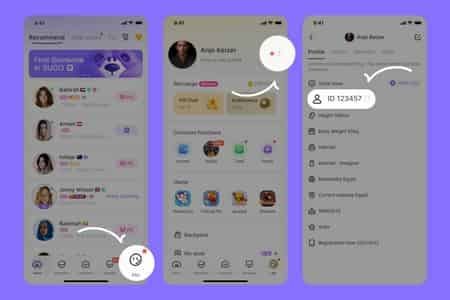
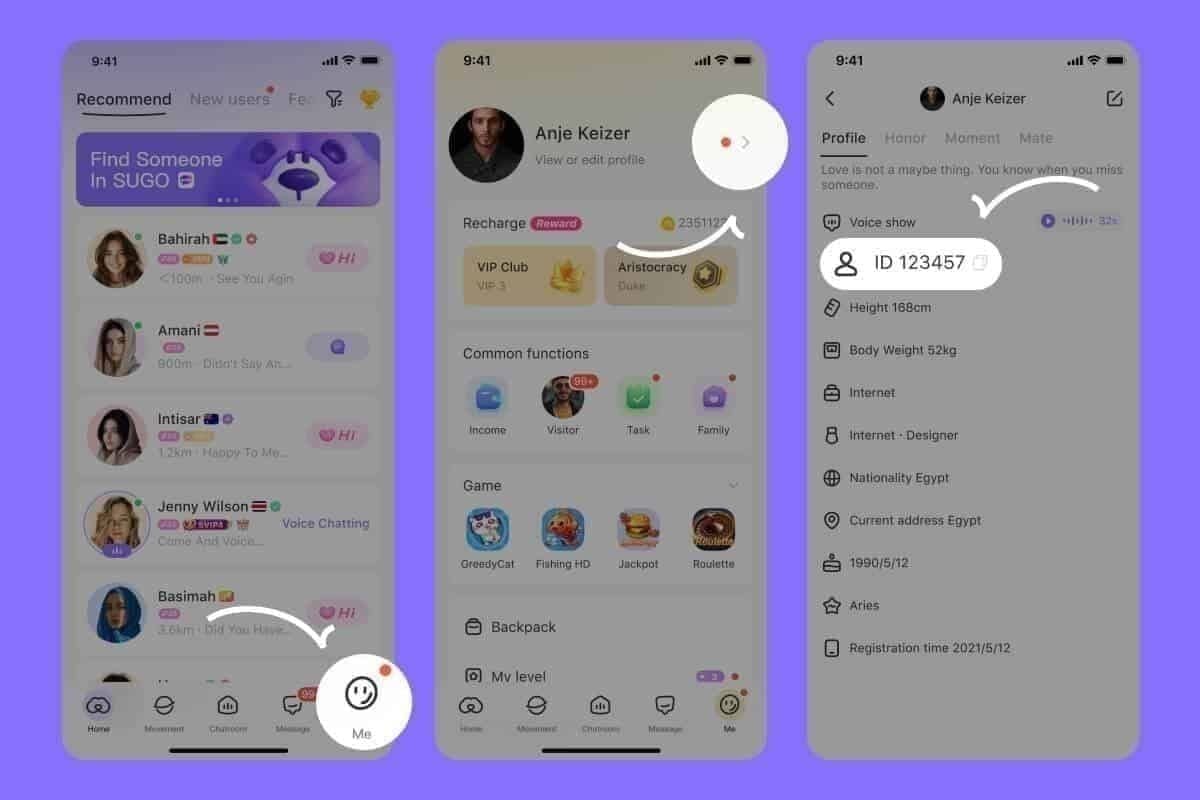
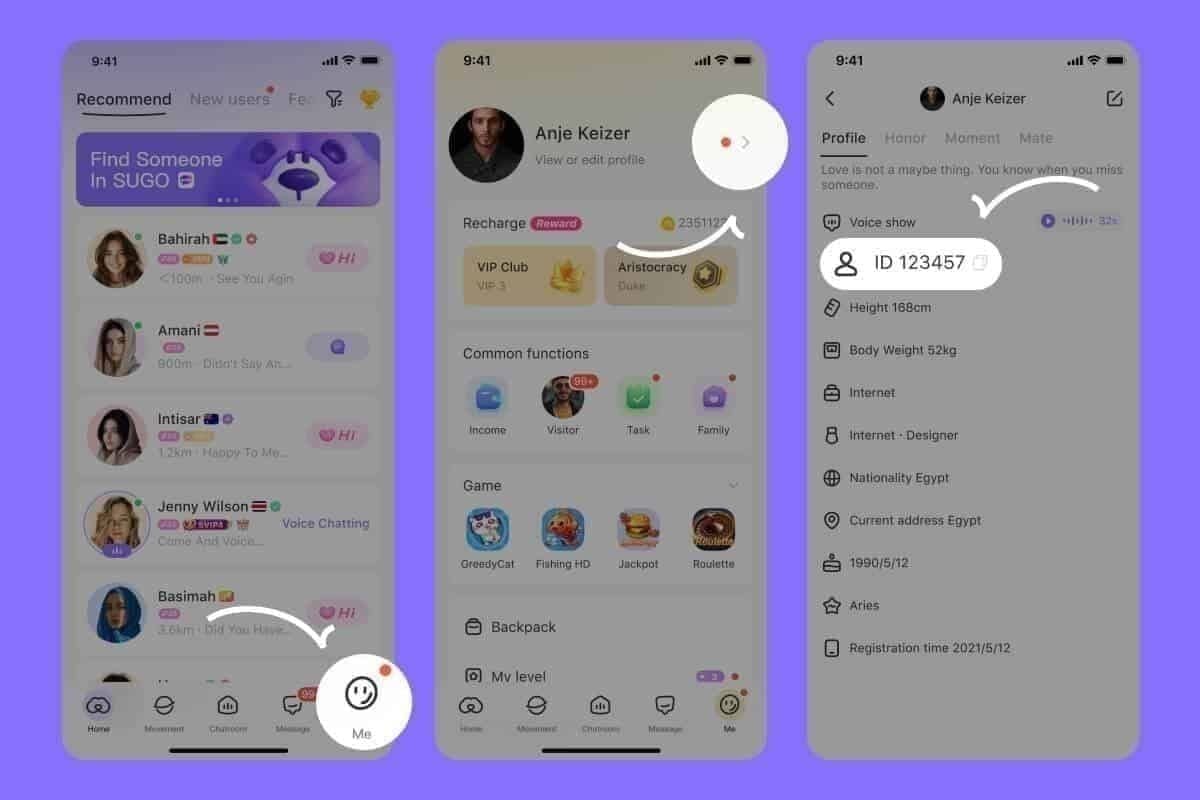
- Me tab: Navigate to 'Me' tab → 'Report User' → enter username/user ID
Direct profile works best during active harassment. Me tab suits documenting previous sessions.
Selecting the Category
- Sexual harassment
- Online violence (abuse, defamation, doxxing, bullying)
- Hate speech
- Stalking
- Underage user
- Other violations (bots, VPNs, emulators, hacks)
Select the most severe category if harassment involves multiple types. Sexual harassment and hate speech get expedited review.
Writing Effective Descriptions
Include:
- Specific quotes: Exact phrases, not paraphrases
- Timing: When harassment occurred
- Pattern info: Ongoing or first incident
- Impact details: How behavior violated policies
Example: User repeatedly made sexual comments about my voice between 8:15-8:30 PM, including asking for private photos and describing explicit acts. Third session where they've targeted me with sexual harassment despite being asked to stop.
Avoid vague descriptions like They were mean.
Submitting Evidence
Valuable evidence:
- Timestamps: Exact times violations occurred (SUGO records audio for moderation)
- Screenshots: Text chat harassment, user profiles, room info
- Pattern documentation: Dates/times of previous incidents
For premium safety controls, top up sugo app credits through BitTopup ensures fast delivery and secure transactions.
Confirming Submission
After submitting, SUGO displays confirmation with unique report ID. Save this—you'll need it to track status.
Estimated response times:
- High-priority (sexual harassment, threats, CSEA): 24 hours
- Lower-priority: 48-72 hours
Collecting Evidence
What Moderators Need
- Clear policy violations: Direct examples of prohibited behavior
- Pattern establishment: Multiple instances showing systematic harassment
- Context: Surrounding conversation proving harassment was unprovoked/persistent
- User identification: Correct usernames, user IDs, profile info
Capturing Timestamps
Best practices:
- Note time immediately when harassment occurs
- Record duration (8:15-8:23 PM not around 8 PM)
- Include time zone
- Mark multiple incidents separately
Format: Room: [Name], Date: [Date], User: [Username], Time: [Timestamp], Violation: [Description]
Documenting Patterns
For persistent harassment across sessions:
- Session dates: List each date
- Room names: Specify which rooms
- Escalation notes: Document intensification
- Previous actions: Note if you've blocked, muted, or asked them to stop
Privacy Considerations
- Don't share evidence publicly
- Limit evidence to relevant portions
- Protect other users' information
- Use evidence only for reporting
Tracking Report Status
Locating Report History
Access via 'Me' tab → 'Safety & Privacy' or 'Report History'

View all submitted reports with report ID, submission date, reported user, violation category, and current status.
Status Indicators
Pending: Received and queued. High-priority moves through quickly (hours). Lower-priority may take 24-48 hours.
Under Review: Moderator assigned and actively investigating. Typically 2-5 days.
Resolved: Investigation concluded. Action taken or determined unnecessary.
What Status Updates Mean
Pending → Under Review (6-48 hours): Report met criteria. Moderator assigned.
Under Review → Resolved (2-7 days): Investigation concluded. Check resolution details.
Resolved with Action Taken: User received penalties (warnings to permanent bans).
Resolved - No Violation Found: Behavior didn't violate policies or evidence was insufficient.
Investigation Process
How Moderators Review
- Initial assessment: Verify sufficient information
- Evidence review: Examine submitted evidence and platform logs
- Context analysis: Review surrounding conversation
- History check: Examine reported user's previous violations
- Policy application: Determine violations and severity
- Action determination: Apply appropriate penalties
Moderators access voice recordings, text logs, user interaction patterns, and previous moderation actions.
Investigation Timeline
- Critical violations (sexual harassment, threats, CSEA): 24 hours initial review, 2-3 days resolution
- Serious violations (hate speech, stalking): 48 hours initial review, 3-5 days resolution
- Standard violations: 72 hours initial review, 5-7 days resolution
What Happens to Reported Users
During investigation, reported users typically continue accessing SUGO normally. Platform doesn't suspend accounts pending investigation except for extreme cases.
Reported users receive no notification they're under investigation.
Factors Influencing Outcomes
Violation severity: Sexual harassment, hate speech, threats trigger harsher penalties
User history: First-time offenders get warnings; repeat offenders face escalated consequences
Evidence quality: Clear, timestamped evidence produces definitive outcomes
Pattern vs isolated incident: Systematic harassment receives stricter penalties
Malicious intent: Moderators assess deliberate harm vs poor judgment
Possible Outcomes
Progressive Discipline
Warnings: First-time moderate violations. Formal warnings issued from 'Me' tab.
Kicks: Users removed from specific rooms. Room hosts can issue immediate kicks.
Temporary suspensions: 24 hours to 30 days. No access to voice rooms, messages, or community features.
Permanent bans: Most severe penalty. Reserved for egregious violations, extensive violation histories, or offenses while suspended. Banned users lose all access and can't create new accounts.
Temporary Suspensions vs Permanent Bans
Suspensions address correctable behavior. Provide opportunity to reflect and return.
Permanent bans protect community from persistent harmful behavior or severe violations. Sexual assault, physical abuse, neglect, and trafficking convictions trigger immediate permanent bans.
If Report Is Inconclusive
No Violation Found doesn't mean your report was invalid. Possible reasons:
- Insufficient evidence
- Behavior inappropriate but didn't meet policy thresholds
- Context suggested misunderstanding
- Platform logs didn't capture incident clearly
If harassment continues:
- Document future incidents more thoroughly
- Report each new incident separately
- Use immediate safety tools (block user)
- Review harassment definitions to ensure alignment
Following Up
30-day appeals window. Email contact@sugochat.com with:
- Original report ID
- Device information and platform logs
- Additional evidence
- Specific explanation why determination was incorrect
Additional Safety Tools
Block and Mute
Blocking: Blocked users can't see your status/room presence, send DMs, join rooms you host, or view your profile. Use for serious harassment.
Muting: Temporarily silence users without full blocking. Use for minor annoyances.
Leaving Rooms Safely
- Silent exit: Tap leave without announcement
- Room switching: Join different room immediately
- Offline mode: Set status to offline/invisible after leaving
Privacy Settings
- Profile visibility: Limit to friends only
- Room join permissions: Invite-only or friends-only
- Direct message settings: Restrict to friends or disable
- Activity status: Hide online status from non-friends
Room Host Controls
- Auto-block profanity (50+ user rooms)
- Verified 18+ mods
- Quick kick access
- Clear room rules
- Whitelist mode (require approval to speak)
Common Reporting Mistakes
Vague Descriptions
They were inappropriate provides insufficient information. Use specific details: exact quotes, precise timestamps, clear policy violations, relevant context.
Insufficient Evidence
Common gaps:
- No timestamps for voice harassment
- Screenshots without context
- He said/she said without corroboration
- Pattern claims without documentation
Misusing Reports
Penalized misuse:
- Reporting users who disagreed with you
- Filing reports as retaliation
- Coordinating mass-reports
- Reporting minor annoyances
Not Following Up
If pending >72 hours (or >24 hours for critical violations), check notification settings or email contact@sugochat.com with report ID.
Expert Tips
Best Practices
Create harassment log: Track problematic users, dates, violation summaries
Report immediately: File while details are fresh
Use correct category: Ensures appropriate handling
Block after reporting: File first, then block
Don't announce reporting: Report silently
Maintaining Safety While Gathering Evidence
Set time limits: Don't endure extended harassment for evidence
Use mute strategically: Mute harassers while capturing timestamps
Involve trusted friends: Ask for corroboration
Prioritize wellbeing: Exit if gathering evidence becomes traumatic
Don't engage: Silent documentation more effective than confrontation
When to Report Immediately
- Sexual harassment/explicit content
- Threats of violence
- Hate speech
- Suspected minors
- CSEA content/grooming
When to Document Over Time
- Persistent low-level rudeness
- Stalking (requires pattern evidence)
- Coordinated harassment from multiple accounts
- Escalating behavior not yet violating policies
Building Support Networks
- Identify safe rooms and hosts
- Develop friend groups for corroboration
- Connect with safety-conscious users
- Participate in positive communities
FAQ
Is reporting really anonymous?
Yes. Reported users never receive information about who filed complaints. Anonymity persists throughout investigation and after resolution.
How long do reviews take?
Critical violations: 24 hours initial review, 2-3 days resolution. Standard violations: 72 hours initial review, 5-7 days resolution.
What happens to reported users?
Progressive discipline: warnings → kicks → temporary suspensions (24 hours to 30 days) → permanent bans. Severity depends on violation type and user history.
Can I appeal rejections?
Yes. 30-day appeals window. Email contact@sugochat.com with report ID, additional evidence, and explanation.
What harassment types can I report?
Sexual harassment, online violence (abuse, defamation, doxxing, bullying), hate speech, stalking, suspected minors, bots, VPN abuse, emulators, hacks.
Does SUGO require evidence?
No, but evidence strengthens cases and accelerates investigations. Moderators access platform logs and recordings, but your evidence helps locate incidents and provides context.
Stay safe in SUGO! Need premium safety features? Visit BitTopup for instant, secure SUGO recharges with exclusive bonuses.