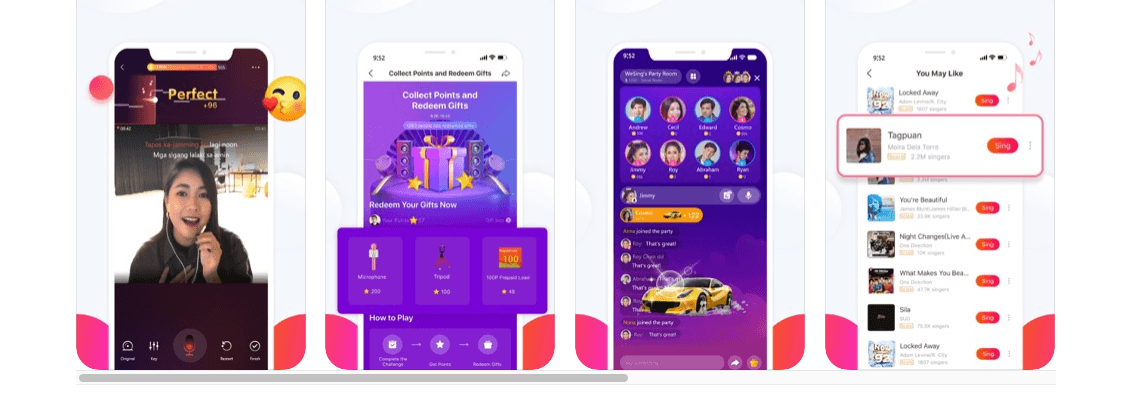
Party Room PK vs Solo Play
Party Room PK introduces real-time competitive elements absent from standard sessions. Duet pairs compete simultaneously with live audiences voting based on performance quality. Scoring algorithms weight partner coordination at 25-30% of total points—individual excellence alone won't win consistently.
Song selection must account for both singers' vocal ranges and strengths. Technical setup becomes critical—audio desync affects 30% of peak-hour sessions, directly impacting scores. Pre-session connection tests via warm-up songs identify potential issues before competitive matches.
Duet Challenge Scoring Mechanics
Four primary components determine scores:
- Pitch accuracy (35-40%): Measured against original melody. Deviations penalized in real-time
- Harmony synchronization (25-30%): 2-3x multipliers when partners achieve 80%+ score alignment
- Timing precision (20-25%): Measures rhythm marker matching
- Vocal expression (15-20%): Evaluates dynamics, vibrato, emotional delivery
The system samples vocal input every 100 milliseconds. Perfect pitch matches (within 5 cents) receive full points; 5-15 cent deviations get 80-90% points. Sustained notes multiply base accuracy scores by duration.
Ranking Tier Progression
Bronze: Basic pitch accuracy, minimal harmony coordination required
Silver: Stricter timing, consistent 70%+ accuracy needed
Gold: Advanced harmony execution, strategic song selection matching vocal capabilities
Diamond: Top 5-10% of players, mastery of all scoring components plus meta-awareness
Progression timelines with 10+ daily songs and 60% win rates:
- Bronze to Silver: 1-2 weeks
- Silver to Gold: 2-3 weeks
- Gold to Diamond: 4-6 weeks
Weekly milestones offer 50-75 Kcoins for 70+ songs and 5+ duets, accelerating progression through resource accumulation.
The Scoring Algorithm: What Actually Matters
Understanding precise mechanics separates consistent winners from average performers. Technical fundamentals outweigh stylistic flourishes—critical for budget players lacking premium boosters.
Pitch Accuracy Weight
Pitch accuracy dominates at 35-40% weight. The system evaluates each note independently, then aggregates accuracy across entire performances. Songs with wider ranges increase difficulty but proportionally reward accurate execution.
Calibration significantly impacts detection. The voice calibration tool (accessible in settings) establishes baseline pitch references, improving note identification accuracy. Recalibrate when changing microphones, environments, or after warmups. This simple step improves accuracy scores 5-10% without performance changes.
Harmony Synchronization Multiplier
When partners achieve 80%+ score alignment, the system applies 2-3x multipliers to harmony sections. These multipliers transform marginal performances into winning scores—partner coordination beats individual excellence.
Achieving high synchronization requires pre-session practice and clear role distribution. Designate primary melody and harmony parts before matches. When audio desync occurs (30% of peak hours), pause 3-5 seconds—70% success rate restoring timing. Wired headphones and 5GHz WiFi reduce desync frequency 40-50% vs wireless setups.
Timing Precision Components
Timing contributes 20-25% of scores. Visual cues indicate optimal entry points with 100-200ms scoring windows. Entries within 50ms of optimal timing receive 90-95% points; 100-150ms deviations drop to 70-80%.
Consistency matters more than occasional perfect timing. Steady 80-85% timing accuracy throughout songs outscores alternating perfect and poor sections. Practice mode rehearsals identify problematic sections for muscle memory development.
Expression Impact
Expression represents 15-20% of totals, evaluating dynamic variation, vibrato control, emotional delivery. Controlled variation—intentional dynamics without sacrificing pitch accuracy—scores highest.
Budget players maximize expression through strategic breath control and selective vibrato. Sustained notes at phrase endings provide ideal vibrato opportunities. Dynamic swells on climactic sections demonstrate engagement while maintaining technical precision. These techniques require no premium items—only vocal technique development through free practice.
Budget Resource Collection Strategy
F2P resource accumulation forms the foundation of budget-competitive strategies. Optimized collection routines earn 15-25 Kcoins daily from base activities, plus 5-15 Kcoins from notifications checked every 4-6 hours. Weekly milestones contribute 50-75 Kcoins; monthly rewards add 150-200 Kcoins. This generates 373 Kcoins over 3-4 weeks—sufficient for strategic purchases.
Daily Mission Optimization
Daily missions provide 15-25 Kcoins for completing standard activities: singing 10+ songs, 1-2 duets, community participation. Complete in single focused sessions rather than spreading across the day.
Prioritize 2-3 minute songs from familiar genres for rapid completion. During network instability, shorter songs reduce disconnection risks. Play during off-peak Asia hours (early morning/late evening) to minimize server congestion.
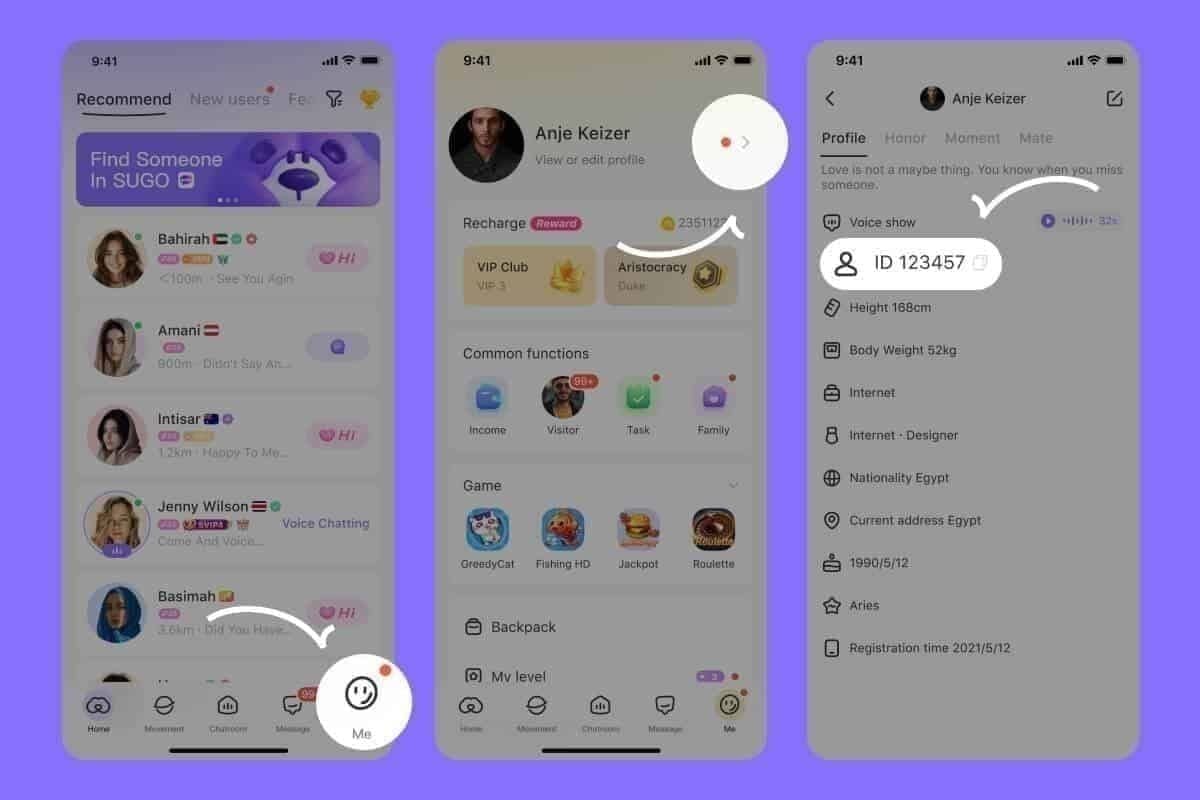
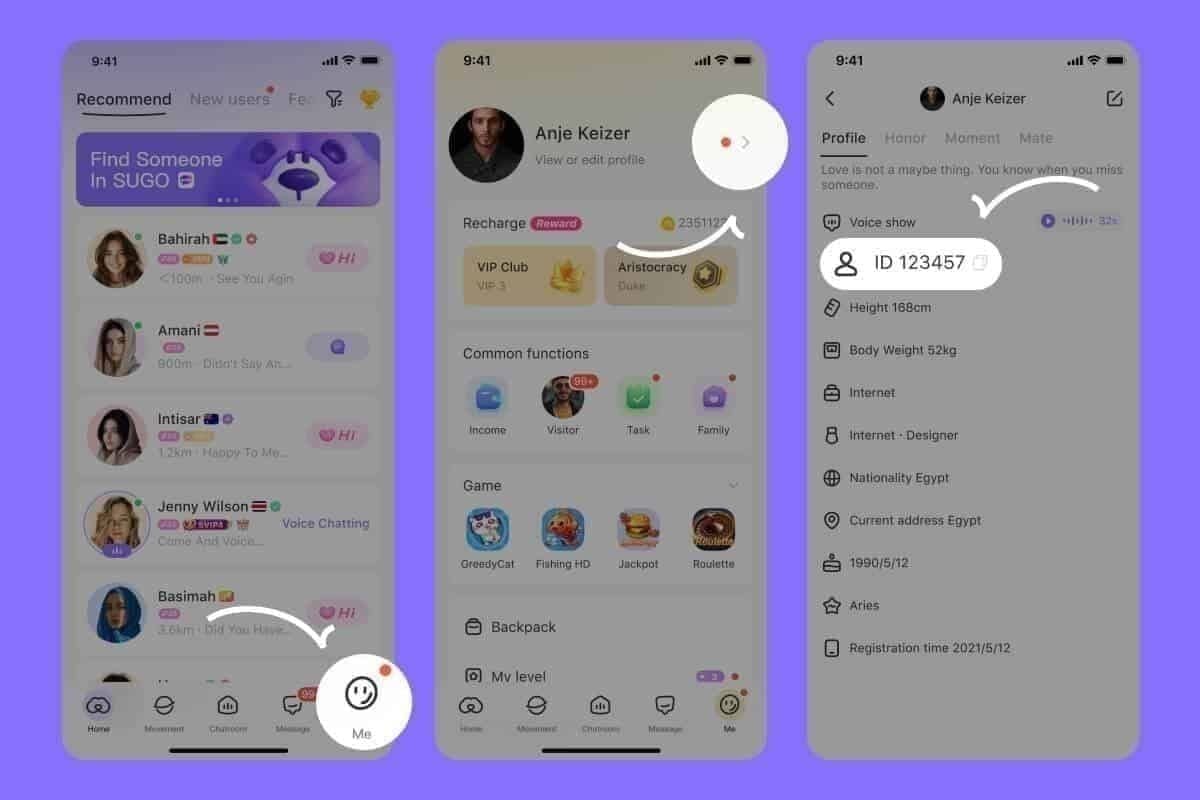
To verify your WeSing ID: login, tap profile icon twice (upper-right), check ID under nickname. Or tap Me icon (bottom right), verify ID under profile name and avatar.
Free Performance Booster Collection
Performance boosters become available through event participation and milestone achievements. Events run weekly or bi-weekly, offering boosters for participation thresholds like 20+ event songs or 5+ event duets.
Save boosters for competitive PK sessions rather than casual practice. Stack multiple boosters (pitch accuracy, timing precision, expression) during crucial tier advancement matches for marginal advantages against equally skilled opponents.
Event Participation Strategy
Special events provide premium-quality items without purchases. Limited-time competitions offer exclusive rewards: advanced boosters, unique cosmetics, bonus Kcoin packages. Events reward both participation (minimum activity) and performance (high scores/rankings).
Target the highest tier achievable with current skill level rather than overextending. Completing gold-tier requirements in three events yields more total value than struggling for platinum in one while missing others.
Strategic BitTopup Use
While free resources support progression, strategic purchases accelerate advancement during critical periods. Buy WeSing Kcoin recharge for PK through BitTopup provides cost-effective access to packs (21-5597 Kcoins) with competitive pricing and secure transactions.
Reserve purchases for high-impact moments: tier promotion matches, seasonal ranking pushes, limited-time event items. The 373 Kcoin pack matches 3-4 weeks of F2P earnings, providing one-month acceleration. Calculate minimum Kcoin requirements for specific goals before purchasing.
Partner Selection: Finding Your Perfect Match
Partner compatibility determines duet success more than individual skill. Two moderately skilled singers with excellent synchronization consistently outperform mismatched pairs of superior vocalists. Assess vocal range overlap, communication effectiveness, timing synchronization, and schedule alignment.
Vocal Range Compatibility
Test ranges systematically across 5-7 songs spanning genres and difficulty levels. Note which combinations produce natural vocal blend vs strained/clashing tones. Songs where both singers comfortably reach all notes indicate good compatibility.
Harmony distribution should feel natural. Compatible partners instinctively gravitate toward melody or harmony, with smooth role switching. Forced assignments signal fundamental incompatibility that practice can't resolve.
Communication and Timing Tests
Establish clear pre-session routines: connection tests, warm-up songs, strategy discussions. Test network stability with 5-10 minute streams before competitive sessions.
Network requirements: 5+ Mbps upload speed, sub-100ms ping. Use SE Asia servers for duets, 5GHz WiFi or wired connections. Devices need 2GB+ RAM for smooth performance without lag.
When disconnections occur (common during peak hours), the system provides 30-60 second reconnect windows. Pre-agree on protocols: continue performing or pause briefly before critical sections.
Building Long-Term Partnerships
Long-term partnerships develop intuitive coordination, improving synchronization scores 10-15% vs frequently changing partners. Regular practice (2-3 sessions weekly minimum) maintains coordination and prevents skill drift.
Align on ranking objectives. Mismatched commitment creates frustration when one partner prioritizes casual play while the other pursues aggressive climbing.
Partnership Red Flags
Persistent technical issues—repeated disconnections, unresolved audio desync, device performance problems—indicate fundamental infrastructure incompatibilities. If connection problems persist after implementing wired headphones, optimized settings, and off-peak scheduling, the partnership needs technical upgrades.
Performance stagnation signals incompatibility. Partnerships should show gradual improvement over 2-3 weeks. If synchronization scores remain static despite regular practice, fundamental vocal incompatibility may exist. If one partner consistently outscores the other by 20%+ margins, the skill gap limits overall potential.
Song Selection for Maximum Win Rate
Strategic song selection provides immediate competitive advantages without skill development or resource investment. The 6 million song library enables highly targeted choices matching vocal strengths, opponent weaknesses, and meta trends. Master song selection for 10-15% higher win rates.
Difficulty Tier Risk vs Reward
Unofficial difficulty tiers range 1-10 based on pitch range, rhythm complexity, sustained notes, harmony difficulty. Higher tiers offer increased base scores but multiply error penalties.
A tier 8 song at 85% accuracy typically scores lower than tier 5 at 95% accuracy. This favors consistent execution over ambitious attempts.
Identify personal sweet spot tiers where 90%+ accuracy is achievable. Most intermediate players find this in tiers 5-7. Advanced players can push tiers 8-9 while maintaining high accuracy.
Current Meta Trends
Seasonal meta emerges from community preferences, new library additions, event-featured tracks. Current trends favor mid-tempo pop ballads (80-110 BPM) offering sustained note opportunities without rhythm complexity.
Duet-specific meta emphasizes songs with clear harmony parts rather than unison singing, maximizing synchronization multipliers. Call-and-response structures allow partners to showcase individual strengths while maintaining coordination.
Playing to Vocal Strengths
Genre selection should align with natural vocal characteristics:
- Strong lower registers: R&B, soul
- Higher-register specialists: Pop, musical theater
- Mid-range vocalists: Country, folk
Record practice sessions and review pitch accuracy patterns to reveal which genres align with comfortable ranges. Focus 70-80% of competitive selections within strength genres; reserve 20-30% for strategic variety.
Opponent Counter-Picking
Observe opponent song histories (accessible through profiles/match histories) to reveal preferred genres, difficulty tiers, performance patterns. If opponents consistently select uptempo pop, choose mid-tempo ballads creating stylistic contrast that highlights different skill sets.
Against opponents choosing tier 7-8 songs, select tier 6 performed at 95%+ accuracy. This conservative approach proves effective when opponents overreach beyond consistent execution capabilities.
Technical Setup Optimization
Technical optimization provides the foundation for consistent performance. Proper configuration improves scores 15-20% vs default settings—effectively closing gaps against opponents using premium boosters.
Device requirements: iOS 13.0+, 344.8 MB storage, 2GB+ RAM. Close background apps before competitive sessions on older devices.
Microphone and Audio Settings
External microphones ($20-30 range) offer superior frequency response and noise rejection vs built-in mics. Position 6-8 inches from mouth, angled slightly off-axis to reduce plosives. Pop filters (under $5) further reduce interference—improving pitch accuracy 5-8%.
Use voice calibration tool (settings menu) to establish baseline pitch references. Sing sustained notes across your range. Takes 2-3 minutes but significantly improves detection accuracy, especially for unusual timbres.
Room Acoustics Management
Hard surfaces create reflections that muddy audio and confuse algorithms. Soft furnishings absorb reflections, producing cleaner signals. Sing in bedrooms/living rooms with substantial soft furnishings rather than bathrooms/kitchens.
Schedule competitive sessions during quiet periods (late evening/early morning) to minimize background noise. Wired headphones with integrated mics provide noise isolation through close positioning.
Network Performance
Test network before sessions: 5+ Mbps upload, sub-100ms ping. Use 5GHz WiFi or wired ethernet—superior stability vs 2.4GHz WiFi suffering interference from household devices.
Prioritize wired connections for persistent issues, even requiring temporary setup changes. Performance improvements from stable connections outweigh convenience sacrifices.
Voice Calibration Timing
Calibrate after 5-10 minute vocal warmups bringing voices to performance-ready states. Calibrating with cold voices establishes references that may not match performance characteristics. Recalibrate when changing microphones, environments, or after warmups shifting comfortable ranges.
Advanced Duet Techniques
Advanced techniques separate good partnerships from championship teams. Partnerships implementing these achieve 15-25% higher synchronization scores without monetary investment.
Harmony Distribution Strategy
Fluidly shift roles based on song structure and vocal characteristics rather than rigid assignments. Verses might feature one singer on melody while choruses switch roles, preventing fatigue while showcasing both partners.
Assign harmony parts sitting in each singer's optimal range—typically the middle octave where control and tone peak. Some songs require creative rearrangement to accommodate partnership-specific characteristics.
Vocal Blend and Volume Balancing
Match tone quality, vowel shapes, vibrato characteristics between partners. Record practice sessions and review playback to reveal blend issues invisible during real-time performance.
Aim for equal perceived loudness during unison sections. Intentional volume adjustments during harmony emphasize melody while maintaining audible harmony support.
Breath Control Tactics
Stagger breath points on long phrases—one singer sustains while the other breathes and re-enters seamlessly. Requires precise timing and volume matching to avoid audible transitions.
Coordinate vibrato timing and width: match characteristics for unified sound or deliberately contrast straight tone against vibrato for textural variety.
Expression Without Sacrificing Accuracy
Dynamic swells on climactic phrases, subtle tempo variations on significant lyrics, controlled vocal effects (gentle distortion, breathiness) contribute to expression scores when applied judiciously.
Maintain pitch accuracy as primary priority. Expression should enhance technically solid performances, not compensate for deficiencies. Practice variations during rehearsals to build reliable technique toolkits.
Rank Climbing: Bronze to Diamond on Budget
Systematic climbing requires strategic session planning, mental management, analytical improvement. Random play produces inconsistent results; methodical approaches accelerate progression even with moderate abilities.
Win rate requirements by tier:
- Bronze/Silver: 55-60%
- Gold: 60-65%
- Diamond: 65-70%+
Win Rate Optimization
Identify personal peak performance windows (often mid-morning or early evening after warmup before fatigue). Concentrating competitive sessions during these periods improves win rates 10-15% vs random timing.
Review potential opponents' match histories for average scores, preferred genres, consistency patterns. Avoid opponents scoring 10%+ above your average; seek similarly skilled or slightly weaker opponents.
Avoiding Tilt
Tilt—frustration impairing decision-making and performance—limits rank progression. Establish stopping rules: stop after three consecutive losses or maximum five competitive matches per session.
Take 15-30 minute breaks between sessions for emotional reset and physical recovery.
Learning From Losses
Review score breakdowns after losses to reveal specific weaknesses: pitch accuracy failures on particular ranges, timing issues on rapid sections, expression deficiencies on sustained passages.
Compare losses against victories to highlight consistency issues. If wins average 92% pitch accuracy while losses drop to 78%, focus on accuracy consistency rather than pushing peak performances higher.
Seasonal Timing
Early season (first 2-3 weeks): Chaotic as players redistribute across tiers. Skilled players rapidly climb through lower tiers but may encounter unexpectedly strong opponents.
Mid-season: Most stable competitive environments with players settled into appropriate tiers. Enables predictable progression.
Late season: Increased intensity as players push for seasonal rewards, creating opportunities to capitalize on opponents' tilt.
Common Budget Player Mistakes
Budget players frequently undermine potential through strategic errors unrelated to vocal ability. Understanding these pitfalls improves outcomes 20-30% without additional skill or spending.
Overestimating Premium Items
Performance boosters provide 10-15% score improvements for players already executing fundamentals correctly. A player at 75% accuracy won't reach 90% through items alone—the gap requires skill development.
Budget players mastering technical fundamentals often outperform moderate spenders relying on items to compensate for deficiencies.
Poor Song Choice
Selecting songs based on enjoyment rather than strategic fit limits success. A favorite song outside comfortable range will consistently underperform vs less appealing songs matching technical capabilities.
Maintain separate song lists for casual enjoyment vs competitive optimization.
Neglecting Free Resources
Inconsistent daily collection forfeits 20-30% of potential free income. Missing login bonuses, notification checks, simple missions equals hundreds of lost Kcoins over weeks.
Establish daily routines: check notifications after login, complete missions during regular practice, review bonuses before logout. Takes 5-10 additional minutes daily but generates substantial long-term value.
Partner Loyalty Over Performance
Maintaining partnerships beyond productive lifespan limits progression. When skill gaps widen beyond 15-20% average score differences, or commitment levels diverge significantly, loyalty becomes competitive liability.
End partnerships professionally when one partner consistently underperforms despite improvement efforts, or scheduling conflicts prevent regular coordination.
Maximizing Strategic Spending Value
Strategic spending accelerates progression during high-value situations where modest investments produce disproportionate returns. Approach spending as targeted investments with clear expected returns.
Smart Purchase Guide
Prioritize lasting advantages over consumables: permanent boosters, expanded library access, account features improving long-term efficiency. When temporary items are necessary, bulk purchases during bonus events provide better per-item value.
Calculate exact Kcoin requirements for targeted items before purchasing. The 373 Kcoin pack aligns with monthly strategic needs; larger packs (933, 1866) suit major event participation or seasonal pushes.
Highest ROI Items
Pitch accuracy boosters provide highest ROI—5% improvement translates to 1.75-2% overall score increase, often the difference in close matches. Timing precision boosters offer secondary value; expression boosters provide tertiary benefits.
Duet-specific items enhancing synchronization deserve special consideration given 2-3x multiplier potential.
Seasonal Event Offers
Events featuring 50%+ bonus Kcoins, bundled boosters at discounted rates, or exclusive items justify strategic spending. These occur 3-4 times annually around major holidays or anniversaries.
Evaluate by comparing total value against standard equivalents. If bundled value exceeds 150% of purchase price, the offer represents genuine value.
Sustainable Budget Approach
Set monthly spending limits: $5-15 for casual competitive, $15-30 for serious climbers. Track spending against outcomes to reveal which purchases improve results vs provide psychological satisfaction.
Treat spending as performance enhancement, not replacement. Purchases should amplify existing skills. A player with solid 85% accuracy gains meaningful benefit from boosters; a player at 70% should prioritize free practice first.
FAQ
How does WeSing Party Room PK scoring work?
Four components: pitch accuracy (35-40%), harmony synchronization (25-30% with 2-3x multipliers for 80%+ partner alignment), timing precision (20-25%), vocal expression (15-20%). Algorithm samples every 100ms, comparing pitches against references with graduated scoring.
Can you climb ranks without spending?
Yes. Earn 373 Kcoins over 3-4 weeks via daily missions (15-25), notifications (5-15 every 4-6 hours), weekly milestones (50-75 for 70+ songs, 5+ duets), monthly rewards (150-200). Reach Diamond in 8-12 weeks with 60%+ win rates through technical optimization and strategic play.
Best way to find duet partners?
Test vocal range overlap across 5-7 songs in different genres. Assess natural harmony distribution, technical compatibility through connection tests, communication effectiveness, and schedule alignment (2-3 sessions weekly minimum). Long-term partnerships develop 10-15% higher synchronization scores.
How to fix audio desync?
Pause 3-5 seconds when desync occurs (70% success rate). Use wired headphones, ensure 5+ Mbps upload and sub-100ms ping, connect via 5GHz WiFi or wired ethernet, use SE Asia servers. Pre-session connection tests via 5-10 minute streams identify issues. Play during off-peak hours.
What songs give highest scores?
Songs matching comfortable vocal range at highest difficulty tier you can execute at 90%+ accuracy (typically tiers 5-7 for intermediate players). Current meta: mid-tempo pop ballads (80-110 BPM) with clear harmony parts, sustained notes, call-and-response structures. Tier 5 at 95% accuracy outscores tier 8 at 85%.
How long to reach Diamond rank?
8-12 weeks with consistent play (10+ daily songs) and 60-65%+ win rates. Bronze to Silver: 1-2 weeks, Silver to Gold: 2-3 weeks, Gold to Diamond: 4-6 weeks. Players maintaining 70%+ win rates reach Diamond in 6-8 weeks.
Ready to accelerate your WeSing Party Room PK journey? Visit BitTopup for best value on strategic items complementing budget gameplay. Smart spending starts here—get more, spend less, win consistently.