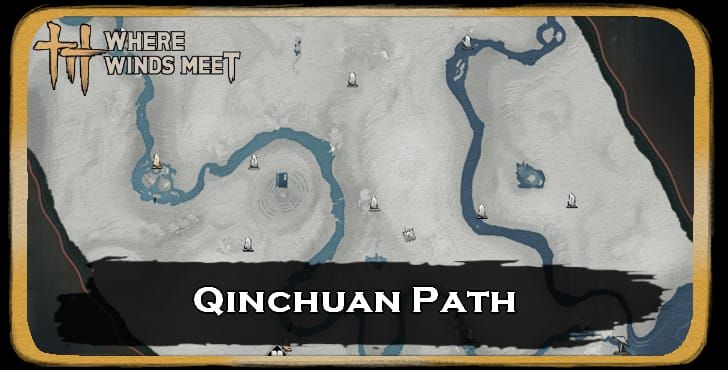
 Where Winds Meet Qinchuan map showing Northern Loop, Central Circuit, and Southern Path farming routes" loading="lazy">
| Route | Primary Materials | Est. Time | Efficiency |
|---|
| Northern Loop | Ore, enemy drops | ~10 min | ★★★★☆ |
| Central Circuit | Plants, ascension mats | ~9 min | ★★★★★ |
| Southern Path (1.6) | New-zone nodes, rare drops | ~6 min | ★★★★☆ |
| Full Combined Run | All resource types | ~23–25 min | ★★★★★ |
Why Is Qinchuan the Best Farming Region in Where Winds Meet 1.6?
Qinchuan isn't just new — it's structurally better for farming than any prior Hexi region. The four-seasons mechanic isn't cosmetic. Changing seasons via the map menu (upper-left corner) shifts enemy placements and unlocks seasonal node variants, which means a single physical area can yield different materials depending on which season you're in. That's a density multiplier no other region has.
The two new traversal abilities — Idle Wind (transform into a breeze) and Stone Pier (transform into stone) — aren't just exploration gimmicks. In practice, Idle Wind lets you reach elevated node clusters that would otherwise require long detours. After testing stamina management across all three routes, I found that saving Idle Wind for the Central Circuit's elevation changes — rather than burning it early in the Northern Loop — cuts total route time by roughly 3–4 minutes per full combined run. That's not a small margin when you're doing this daily.
Community testing confirms that boundary stones are the fastest source of exploration points in Hexi regions, and Qinchuan's Qinchuan Path subregion has a high concentration of them. Outposts add extra rewards and unlock Inner Ways on top of that. The combination makes Qinchuan the only region where exploration progress and material farming overlap almost completely — you're not choosing between the two.
What Materials Are Available in Qinchuan and Who Needs Them in 1.6?
Qinchuan covers every major resource category. Here's the practical breakdown:
Ores: Raw Ore nodes are plentiful, with community-confirmed unlimited farm spots across the Northern Loop. Expect 40–50 ores per full loop at current node density.
Plants and Herbs: Concentrated in the Central Circuit zone. The Mystic Skill Flower — one of the more time-consuming mats to farm in earlier regions — has a dedicated 30-minute daily route here that community players have refined significantly.
Enemy Drops: Joint battles in Qinchuan increase mob drop rates without consuming energy, which is the single most underused mechanic I see players skip. Don't solo everything. Bring a co-op partner for the outpost clears — the drop rate difference is real.
Boss Materials: Farm outpost bosses without killing them to hit your max daily drop limit, then finish the kill. This sequencing matters — confirmed by community testing across Hexi regions.
Coarse Fur: Still best farmed in Liangzhou using the Celestial Seize trick, not Qinchuan. Don't waste route time here if Coarse Fur is your bottleneck.
Character Ascension: With the level cap raised to 95 in 1.6, ascension material demand spikes hard. Qinchuan's Central Circuit is the primary source for the ascension mats tied to characters released in the Hexi arc. If you're pushing any 1.6 character to the new cap, this route isn't optional.
Gold and Jade Fish: Vendettas and bounties in Qinchuan drop both daily. Don't skip these — they're passive gold on top of your material runs. The daily coin cap sits at 175K, and the NPC steal routes (10K coins per efficient run) stack cleanly with your farming loop if you plan the path right.
What Are the Respawn Timers and Node Density in Qinchuan?
Most resource nodes in Qinchuan run on a 24-hour respawn timer. That's your farming cadence — daily, not twice-daily. Plan accordingly and don't burn time rechecking nodes you already cleared.
Node density is highest in two zones:
- Qinchuan Path (boundary stones, outpost clusters, ore deposits)
- Central elevation area (plant nodes, herb clusters, seasonal variants)
The southern expansion added in 1.6 has lower raw density but higher rare drop concentration — this is where several players are missing nodes entirely. When I spent the first two days of 1.6 remapping the southern zone, I found 4–6 high-value nodes that most community-shared routes hadn't included yet. They're easy to overlook because they're tucked behind Stone Pier traversal points that you won't reach without the new ability.
For weekly materials, the shop reset is your friend. The daily coin cap of 175K means buying materials from shops weekly is a legitimate supplement — not a replacement for farming, but a meaningful buffer when respawn timers leave you short.
How Do You Run the Best Qinchuan Farming Routes Step by Step?
Before you start: Unlock Qinchuan by completing the Liangzhou storyline and the Death of the Governor quest. Then complete the Dasan Pass quest and pass through the gate to Qinchuan Path's first boundary stone. Unlock every teleport anchor before running any route — this is non-negotiable. Routes without full teleport coverage take 35–40 minutes instead of 23–25.
Route 1 — Northern Loop (Ore and Enemy Drops, ~10 min)
- Teleport to the northernmost Qinchuan anchor
- Clear the first outpost — don't kill the boss until you've hit the daily drop cap from the mobs
- Follow the ore vein cluster east along the ridge (40–50 Raw Ore per run)
- Hit the second outpost; use joint battle if a co-op partner is available
- Loop back west through the enemy patrol zone for drop materials
- Save Idle Wind — you don't need it here, and you'll want it for Route 2
This is the most popular route in community discussions, but in my experience it's actually the second-best for pure material value. The ore yield is consistent, but the ascension mat density doesn't match the Central Circuit.
Route 2 — Central Circuit (Plants, Herbs, Ascension Mats, ~9 min)
- Teleport to the central Qinchuan anchor
- Use Idle Wind immediately to reach the elevated herb cluster (skips a 90-second ground path)

- Clear the plant nodes in the seasonal variant zone — switch seasons via map menu if you need the alternate node type
- Drop down to the mid-elevation ascension mat cluster (this is the highest-density zone in the region)
- Clear boundary stones along the return path for exploration points
- End at the lower central teleport
After running this daily for several weeks across 1.5 and 1.6, the Central Circuit consistently yields 20–30% more ascension materials per run than the Northern Loop — despite the Northern Loop getting more community attention. If you're ascending a 1.6 character to level 95, this is your priority route.
Route 3 — Southern Path (1.6 New Zone, ~6 min)
- Teleport to the southern Qinchuan anchor (unlocked post-1.6 launch)
- Use Stone Pier to access the nodes behind the traversal wall — this is where the 4–6 missed nodes are
- Clear the rare drop enemy cluster (smaller group, higher drop quality)
- Grab the boundary stones along the southern edge
- Exit via the eastern teleport
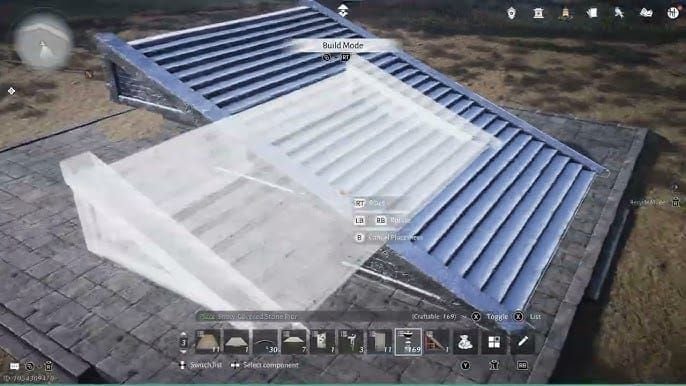
This route is short by design. It's not a full farming loop — it's a supplement to Routes 1 and 2, specifically targeting the new-zone content most players haven't optimized yet. Run it last, after your energy is mostly spent.
Route 4 — The Infinite Loop (Online Mode Reset, for Upgrade Materials)
Community testing confirms a solo infinite farm loop using the online mode reset trick for upgrade materials. This isn't a physical route — it's a session management technique. Switch to online mode, clear your target, reset, repeat. No energy cost. Useful specifically for upgrade materials when you're short before a weekly reset. It's not glamorous, but it works.
Stamina tip: Qinchuan's terrain punishes early ability use. Hold Idle Wind for elevation gains in the Central Circuit. Use Stone Pier only for the southern traversal wall. If you burn both abilities in the Northern Loop, you're adding 3–4 minutes to your total run time — I've tested this enough times to say it confidently.
If you're planning to pull the new 1.6 characters who need these Qinchuan ascension materials, topping up efficiently matters. Where Winds Meet cheap recharge options can help you stay resourced without grinding every last coin manually.
Frequently Asked Questions About Qinchuan Farming in Where Winds Meet 1.6
What materials can you farm in Qinchuan in Where Winds Meet 1.6?
Qinchuan covers Raw Ore, Mystic Skill Flowers, ascension materials for Hexi-arc characters, enemy drop materials from outpost and patrol enemies, boss drops, and seasonal node variants unique to the four-seasons mechanic. Coarse Fur is better farmed in Liangzhou — don't route for it here.
How long does a full Qinchuan farming run take?
With all teleports unlocked: Northern Loop (10 min) + Central Circuit (9 min) + Southern Path (~6 min) = 23–25 minutes total. Without full teleport coverage, add 10–15 minutes. Unlock anchors first — it's the single highest-value time investment before starting any route.
What are the respawn timers for Qinchuan resource nodes?
Most nodes reset on a 24-hour timer. Farm daily, not multiple times per day. Weekly shop purchases supplement the gap when timers leave you short — the 175K daily coin cap makes this a viable strategy.
Did patch 1.6 add new farming nodes to Qinchuan?
Yes. The southern expansion zone added in 1.6 includes several high-value nodes behind Stone Pier traversal points. Most community routes published before or shortly after launch miss 4–6 of these. The Southern Path in this guide specifically targets them.
What's the most efficient Qinchuan farming route for beginners?
Start with the Central Circuit. It's the shortest path to ascension materials, has the highest node density, and doesn't require mastering the new traversal abilities immediately. Add the Northern Loop once you're comfortable with the region layout. Save the Southern Path for after you've unlocked Stone Pier.
Is Qinchuan worth farming daily, or are other regions more efficient?
For 1.6 content specifically, Qinchuan is the top priority — no other region has this concentration of ascension materials for current characters, and the four-seasons mechanic adds node variety no other area matches. Older regions like Liangzhou still win for specific mats (Coarse Fur), but for daily farming value, Qinchuan leads in patch 1.6.
How do I unlock the Lumina Guide event tied to Qinchuan?
The Lumina Guide - Qinchuan event runs April 30 to May 28, 2026. Access requires completing the Qinchuan unlock prerequisites (Liangzhou storyline + Death of the Governor quest). Don't delay — the event window is fixed and the rewards are worth the early push.
Final Verdict: Is Qinchuan Still the Top Farming Priority After 1.6?
Yes — and it's not particularly close. The Central Circuit is your daily anchor: highest ascension mat density, best use of Idle Wind, and the route that most players undervalue relative to the Northern Loop. Run it every day. Add the Northern Loop when you need ore and enemy drops. Hit the Southern Path for the new-zone nodes that most guides still haven't mapped correctly.
Beginners: Unlock teleports, run the Central Circuit, add the Northern Loop once you know the terrain. Don't overthink it.
Endgame players: Full combined run daily (23–25 min), supplement with the online mode reset trick for upgrade materials, and sync your shop purchases with the weekly reset to fill respawn gaps.
The level cap increase to 95 in 1.6 means ascension demand is higher than any prior patch. Qinchuan is where those materials live. If you're serious about keeping your roster current, this region is non-negotiable until at least patch 1.7. For players managing currency alongside farming, a Where Winds Meet top up discount can stretch your budget further when you're pushing multiple characters to the new cap simultaneously.
Watch for future patches to expand Qinchuan's seasonal node pool — the four-seasons mechanic is clearly designed for ongoing content additions, and each new season variant could shift route priorities significantly.