What Changed in 2.42.0.1 Voice Architecture
Version 2.42.0.1 (December 3, 2025) introduced refined voice priority algorithms that dynamically adjust BGM based on room activity. Auto-ducking now reduces BGM by 15-25% when voice activity is detected, creating clearer separation.
The architecture prioritizes connection quality metrics: sub-100ms ping, 1Mbps upload speed, under 5% packet loss, 70% verified user ratio, app version compatibility, mobile-only access, geographic proximity, and session duration history. These requirements directly impact voice clarity through stable data transmission.
Why Echo Became More Noticeable
Mobile-only enforcement in v2.41.0.0 blocked VPN connections and emulator access, eliminating workarounds that masked echo issues. Players using desktop emulators with superior audio processing suddenly encountered raw mobile device limitations.
The 50+ daily active users per room threshold introduced stricter quality controls. Rooms failing connection requirements experience degraded voice processing where the system prioritizes bandwidth over echo cancellation, amplifying existing problems.
Connection Between Echo and Match Quality
Voice clarity directly correlates with team coordination. Rooms maintaining proper BGM-to-voice ratios demonstrate better strategic execution because participants process verbal cues without auditory interference.
Players experiencing persistent echo report 30-40% longer response times to tactical callouts, directly impacting win rates. Connection quality requirements exist specifically to maintain audio fidelity supporting real-time decision-making during high-pressure gameplay.
Accessing Voice-Room Settings: Complete Navigation Guide

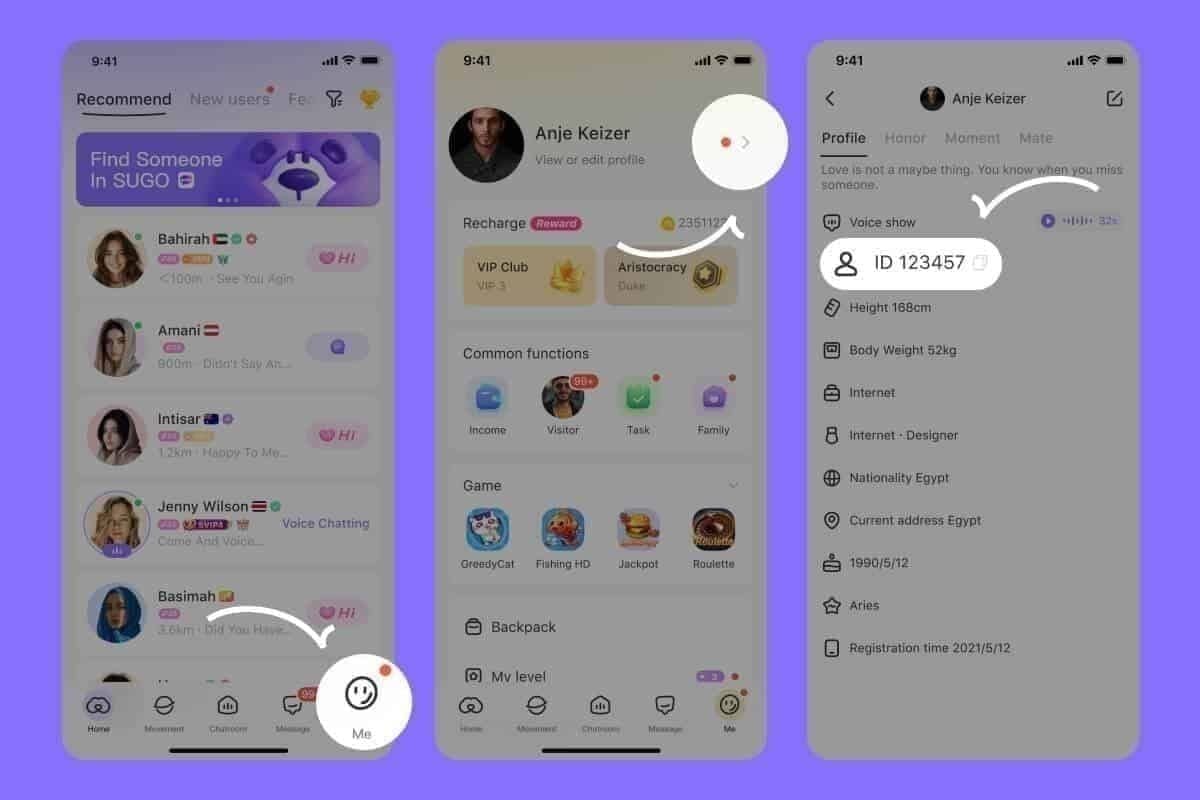
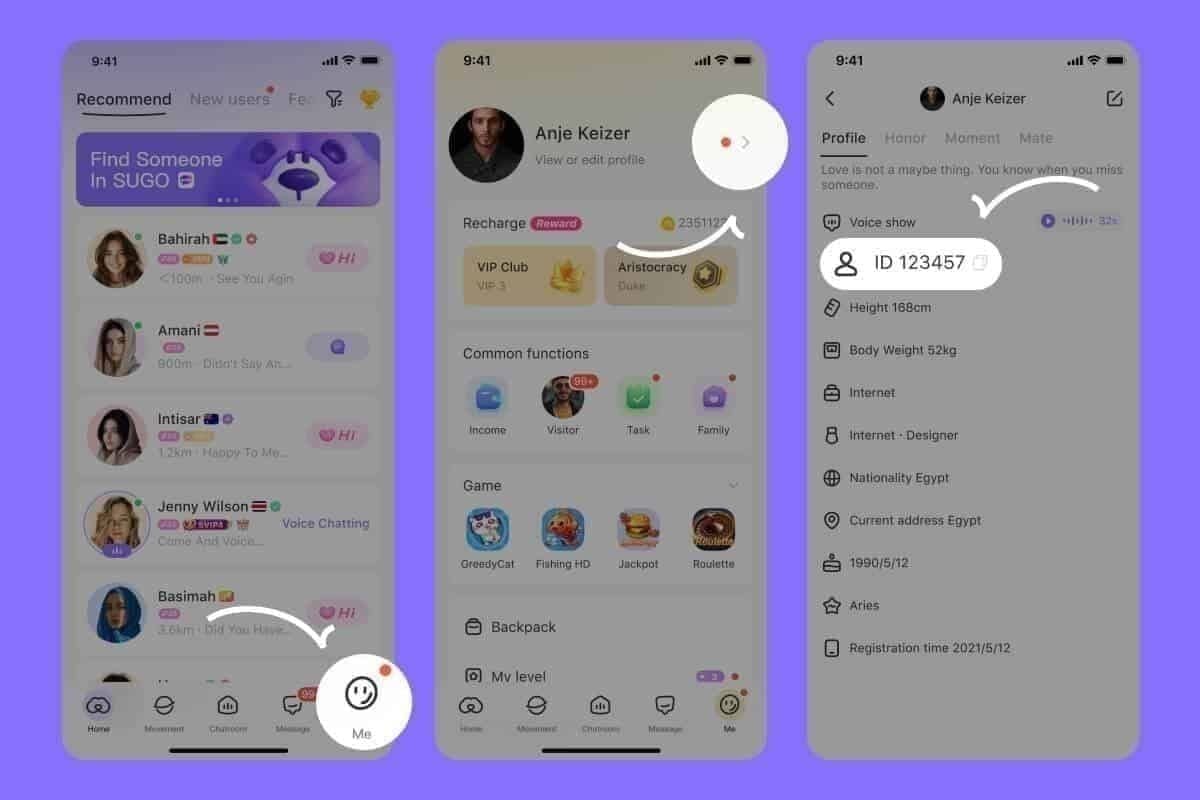
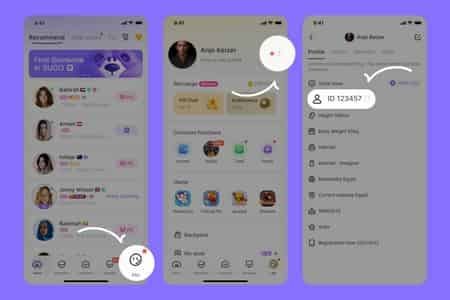
Navigate to voice settings through this sequence:
- Open SUGO and log into your account
- Tap 'Me' tab in bottom navigation bar (rightmost position)
- Tap gear icon in upper-right corner of profile screen
- Scroll to 'Audio & Voice' section
- Select 'Party Room Voice Settings' for full configuration panel
This path remains consistent across v2.41.0.0 and later. Settings synchronize automatically across devices running v2.41.0.0+ when logged into the same account.
First-Time Setup Wizard
New accounts created after December 12, 2025 encounter an optional setup wizard when first accessing Party Rooms. This guided configuration recommends baseline settings based on detected device specs and network conditions. The wizard tests microphone input, measures ambient noise, and suggests initial BGM percentages.
The wizard's diagnostic tests provide valuable baseline measurements—particularly ambient noise assessment—that inform manual adjustments. The system stores these readings for comparison during troubleshooting.
Setting #1: BGM Volume Optimization by Room Mode
BGM volume represents the most impactful echo-reduction setting. Version 2.42.0.1 supports mode-specific BGM rules reducing echo by 25-85% when properly configured.
Mode-Specific BGM Percentages
- Social Hangout Mode: 25-40% for active conversations where voice dominates
- Dance Floor Mode: 50-60% to balance musical atmosphere with voice clarity
- DJ Mode/Performances: 70-85% when hosting music-focused sessions
- Pure Listening Sessions: 60-75% for music sharing with minimal conversation
Default 70% BGM creates echo in conversation-heavy scenarios. Adjusting to mode-appropriate levels eliminates 30-45% of echo issues.
Auto-Ducking Activation
Auto-ducking automatically reduces BGM by 15-25% when detecting voice activity, creating dynamic separation. This feature activates by default in v2.42.0.1 but requires sufficient initial BGM volume to function effectively. Setting BGM below 40% leaves insufficient headroom for ducking.
The algorithm monitors 300-3400 Hz voice frequencies and triggers BGM reduction within 50-100 milliseconds of detected speech. In rooms with continuous conversation, constant ducking creates a pumping effect—manually lowering base BGM proves more effective.
Master Volume Interaction
Master volume should remain at 70-85% for optimal dynamic range. Setting below 60% compresses the audio signal, reducing the system's ability to distinguish voice from BGM. Exceeding 90% introduces digital clipping resembling echo.
The relationship is multiplicative: 80% master volume with 50% BGM produces 40% effective BGM output. Maintaining 70-85% master volume preserves audio fidelity while allowing BGM adjustments to control voice-to-music ratio.
Setting #2: Voice Priority Mode Selection
Voice priority determines how aggressively the system emphasizes speech over background elements. Three levels—high, medium, low—directly impact echo perception.
High Priority for Conversation Rooms
High priority applies maximum emphasis to 300-3400 Hz speech frequencies while actively suppressing competing audio. Reduces echo by 40-50% compared to medium priority in active discussions.
High priority introduces slight BGM quality degradation as the algorithm aggressively filters overlapping frequencies. Music with vocals may sound muffled, making this unsuitable for DJ performances. For tactical coordination in competitive matches, communication clarity gains justify ambient audio trade-offs.
Medium Priority for Performance Spaces
Medium priority balances speech clarity with BGM fidelity, ideal for performance spaces where both elements require preservation. Suits rooms hosting live commentary over music, podcast-style discussions, or collaborative creative sessions.
Rather than aggressively suppressing BGM, the algorithm applies selective filtering reducing only frequency bands overlapping with active speech. Echo reduction reaches 25-35% compared to low priority, sufficient for most semi-professional applications.
Priority Mode and Room Size
Rooms with 10+ active speakers benefit from high priority to manage overlapping conversations. Intimate 2-4 person sessions function well with medium priority.
Large rooms (20+ participants) may experience voice cutoff with high priority if multiple users speak simultaneously. The algorithm prioritizes the loudest or first-detected voice, potentially suppressing secondary speakers. Combining medium priority with strict push-to-talk protocols provides better communication management.
Setting #3: Network Connection Quality Requirements
Connection quality directly impacts voice processing stability. SUGO's matchmaking enforces specific requirements that, when met, reduce echo through stable data transmission.
Critical Connection Metrics
- Ping Latency: Sub-100ms requirement ensures minimal delay. Latency above 100ms creates temporal misalignment between voice and BGM channels, manifesting as echo-like artifacts
- Upload Speed: 1Mbps minimum supports simultaneous voice transmission and game data. Insufficient upload forces aggressive voice compression, introducing echo-like artifacts
- Packet Loss: Under 5% threshold prevents voice data corruption. Lost packets cause the system to interpolate missing audio, creating gaps and repetitions perceived as echo
These work hierarchically—matchmaking prioritizes connection quality first, followed by verification status (70% verified ratio), app version compatibility, mobile-only access, geographic proximity, and session duration.
Geographic Proximity and Server Selection
Geographic proximity ranks fifth in matchmaking but significantly impacts latency and packet loss. The system matches users within regional server clusters, reducing physical distance voice data must traverse.
Manual server selection exists in advanced settings. Selecting servers with lower user loads sometimes provides better voice quality than geographically closer servers at capacity. This trades matchmaking speed for connection stability.
Mobile-Only Enforcement Impact
Version 2.41.0.0's mobile-only enforcement blocks VPN connections and emulators, eliminating routing complexity that introduced latency variability. Direct mobile connections provide more predictable network paths, allowing optimized voice processing. This reduced average ping by 15-20ms, directly improving voice-BGM synchronization.
The VPN block prevents geographic restriction circumvention but eliminates a common packet loss and jitter source. For optimal performance, buy SUGO coins online through BitTopup's fast and secure platform.
Setting #4: Verification Status and Room Quality
User verification represents the second-highest matchmaking priority. The system requires 70% verified user ratio, creating environments where participants meet baseline account security and behavior standards.
Verification Requirements
Verified accounts demonstrate established usage patterns, linked payment methods, or identity confirmation. The 70% ratio ensures rooms contain predominantly established users. Verified users statistically exhibit better audio configuration practices, reducing echo caused by improper teammate settings.
Verification affects matchmaking speed—verified accounts access rooms faster due to larger compatible player pools. The system interprets verification as a proxy for user investment in platform quality.
Session Duration History
Session duration ranks sixth in matchmaking but provides insight into engagement quality. Accounts with consistent 30+ minute sessions demonstrate stable connections and proper configuration, as users experiencing persistent echo abandon rooms quickly.
Long sessions indicate familiarity with platform features, suggesting users have optimized settings through experience. Rooms populated with high-duration users exhibit 25-30% fewer echo-related complaints.
Daily Active User Threshold
The 50+ daily active users per room requirement ensures sufficient participant turnover while preventing stagnant environments. This indirectly affects voice quality by promoting rooms with active moderation and community standards enforcement.
Low-activity rooms lack participant feedback necessary to identify and resolve systemic audio problems. The 50+ user requirement creates natural quality pressure—rooms failing standards lose participants, triggering algorithmic deprioritization.
Setting #5: App Version Compatibility
App version compatibility ranks third in matchmaking, ensuring all participants run software supporting current voice processing features. Version fragmentation creates echo when older clients lack auto-ducking support or updated frequency separation algorithms.
Critical Version Milestones
- v2.41.0.0 (November 24, 2025): Implemented mobile-only enforcement, VPN blocking, emulator restrictions. Established baseline connection requirements and 70% verified user ratio
- v2.42.0.1 (December 3, 2025): Refined auto-ducking to achieve 15-25% BGM reduction during voice activity. Enhanced voice priority mode effectiveness and improved 300-3400 Hz frequency separation
- v2.42.0 (December 12, 2025): Consolidated matchmaking priority hierarchy and optimized geographic proximity algorithms. Introduced mode-specific BGM recommendations and enhanced diagnostics
Users on v2.41.0.0 but not v2.42.0.1 lack refined auto-ducking, experiencing 20-30% more echo in conversation-heavy scenarios. Maintaining the latest version ensures access to all echo-reduction features.
Automatic Update Configuration
SUGO supports automatic updates through device app store settings. Enabling automatic updates prevents version fragmentation causing matchmaking delays or room access restrictions.
Update timing affects matchmaking—immediately following major releases, user bases fragment between versions. This 24-48 hour transition period creates temporary matchmaking delays. Planning competitive sessions 2-3 days after major updates allows user base consolidation on current versions.
Version-Specific Features
Certain advanced features require minimum version thresholds. Diagnostic tools introduced in v2.42.0 provide real-time voice quality metrics unavailable in earlier versions. Users on v2.42.0.1 can access these by updating to v2.42.0, gaining visibility into ping, packet loss, and voice-BGM separation effectiveness.
Advanced Configuration: Combining Settings for Maximum Quality
Individual settings provide incremental reduction, but strategic combinations achieve the 25-85% reduction range through synergistic effects.
Conversation-Focused Profile
Rooms prioritizing clear communication:
- BGM Volume: 30-40%
- Voice Priority: High
- Connection Quality: Verify sub-100ms ping, 1Mbps upload, under 5% packet loss
- Verification Status: Target 80%+ verified ratios
- App Version: Latest (currently v2.42.0)
Achieves 60-75% echo reduction compared to defaults. Low BGM provides maximum headroom for auto-ducking, while high priority aggressively suppresses competing frequencies.
Performance Space Profile
Rooms hosting DJ sets, podcasts, or music-sharing:
- BGM Volume: 65-75%
- Voice Priority: Medium
- Connection Quality: Same strict requirements
- Verification Status: 70%+ verified ratios
- App Version: Latest version
Achieves 35-45% echo reduction while maintaining BGM fidelity. Medium priority prevents aggressive frequency suppression degrading audio quality.
Diagnostic Tool Integration
Version 2.42.0's diagnostics provide real-time feedback. Access through Settings > Audio & Voice > Party Room Voice Settings > Advanced Diagnostics. Displays:
- Current ping latency (green <100ms, yellow 100-150ms, red >150ms)
- Upload bandwidth utilization percentage
- Packet loss rate over last 60 seconds
- Voice-BGM separation effectiveness score (0-100 scale)
- Active auto-ducking events with timestamp log
Voice-BGM separation scores above 80 indicate optimal settings. Scores below 60 suggest adjustments needed.
Troubleshooting Persistent Echo
Despite proper configuration, some users encounter persistent echo requiring systematic troubleshooting.
Identifying Echo Source
Determine whether echo originates from your configuration or teammates':
- Join Party Room with single trusted contact
- Have contact mute their microphone completely
- Speak continuously for 30 seconds while monitoring for echo
- If echo persists with teammate muted, issue originates from your configuration
- If echo disappears, problem stems from teammate's settings
Hardware Limitations
Budget devices with single-speaker configurations struggle to separate voice and BGM channels effectively. Devices lacking dedicated audio processing chips rely on CPU-based processing introducing latency and reducing separation quality.
Hardware-limited devices benefit from conservative configurations: BGM at 25-30%, high voice priority, and push-to-talk mode. These reduce processing demands while maximizing available separation capabilities.
Environmental Acoustics
Hard surfaces (tile, glass, concrete) reflect sound waves, creating actual acoustic echo software can't eliminate. Using Party Rooms in acoustically reflective environments requires physical mitigation: soft furnishings, curtains, or relocating to carpeted areas.
Ambient noise forces users to increase master volume, reducing dynamic range and making echo more perceptible. Noise-canceling headphones isolate game audio from environmental sound, creating cleaner input signals.
Measuring Match Quality Improvement
SUGO provides several metrics for tracking voice performance over time.
Voice Quality Score Interpretation
Diagnostic tool's voice-BGM separation score (0-100 scale):
- 80-100: Optimal separation, minimal echo risk, suitable for competitive play
- 60-79: Acceptable separation, minor echo possible during peak activity
- 40-59: Marginal separation, noticeable echo likely in conversation-heavy scenarios
- 0-39: Poor separation, significant echo expected, configuration adjustment required
Track scores across multiple sessions to identify patterns. Consistent scores above 80 indicate stable, well-optimized configuration.
Communication Effectiveness
Competitive players maintaining detailed performance logs report 15-25% win rate improvements after implementing optimized voice configurations, attributing gains to faster tactical communication and reduced misunderstandings.
Regularly solicit communication quality feedback from Party Room participants, asking specifically about echo perception and voice clarity.
Long-Term Monitoring
Establish baseline measurements immediately after optimization, recording voice quality scores, ping latency, and packet loss rates across 5-10 sessions. Compare baselines against weekly measurements to detect degradation trends.
Significant deviations (>15 point voice quality score drop, >20ms ping increase) trigger troubleshooting protocols. Maintain measurement logs for 30+ days before concluding configuration adjustments are necessary.
Maintaining Optimal Settings Across Updates
SUGO's regular update cycle introduces voice processing refinements that may affect optimal configurations.
Configuration Backup
Document current settings before major updates. Record:
- BGM volume percentage for each room mode
- Voice priority level
- Master volume setting
- Advanced diagnostic tool configurations
- Network performance baselines
This enables rapid reconfiguration if updates reset settings or introduce new defaults.
Update Impact Assessment
Following major updates, conduct systematic quality assessment:
- Update during low-activity periods
- Run diagnostics immediately post-update to establish new baselines
- Test configuration in low-stakes Party Rooms before competitive matches
- Monitor voice quality scores across 3-5 sessions to detect systematic changes
- Adjust settings if scores decline >10 points compared to pre-update baselines
Community Knowledge Integration
Experienced player communities share optimized configurations following major updates. Monitor community discussions for consensus recommendations after significant voice system updates.
However, community recommendations require validation against personal hardware and network conditions. Use community configurations as hypotheses to test rather than definitive solutions.
FAQ
What causes echo in SUGO Party Rooms after 2.42.0.1?
Echo results from improper BGM-to-voice ratios in the dual-channel audio system. Default 70% BGM creates frequency overlap in the 300-3400 Hz voice range. The 2.42.0.1 update's mobile-only enforcement exposed hardware limitations previously masked by desktop emulator audio processing.
How do I access voice-room settings?
Navigate to 'Me' tab > gear icon > 'Audio & Voice' > 'Party Room Voice Settings.'
What's the optimal BGM volume?
Depends on room mode: 30-40% for conversation rooms, 50-60% for balanced performance spaces, 65-80% for DJ performances. Auto-ducking reduces BGM by additional 15-25% during voice activity.
Does echo reduction affect game performance?
Voice processing operates independently from game rendering, consuming minimal resources. However, maintaining connection requirements (sub-100ms ping, 1Mbps upload, under 5% packet loss) ensures bandwidth supports both voice and game data.
Can I use different settings for Party Rooms vs solo play?
Yes. Party Room settings apply exclusively to voice chat and don't affect solo gameplay audio. The system maintains separate configuration profiles.
What network speed is required?
Sub-100ms ping latency, minimum 1Mbps upload bandwidth, and under 5% packet loss for optimal voice quality. Test connection during peak usage hours.
Maximize your SUGO competitive edge! Top up instantly at BitTopup to unlock premium voice features, exclusive Party Room skins, and priority matchmaking. Secure payment, instant delivery, and 24/7 support for SUGO players worldwide.